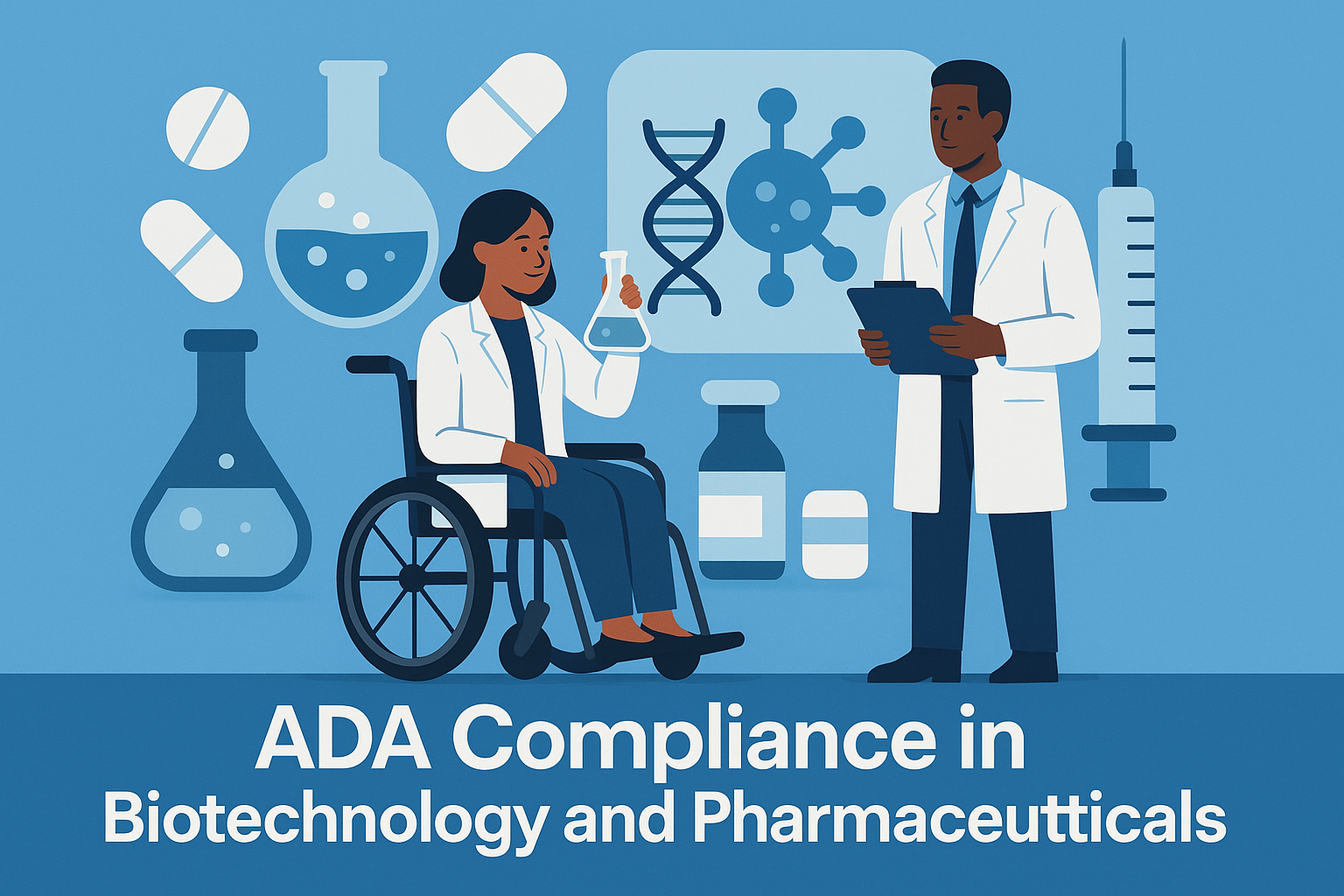
Introduction to ADA Compliance in Biotechnology and Pharmaceuticals
The Americans with Disabilities Act (ADA), enacted in 1990, plays a crucial role in ensuring equal access and opportunities for individuals with disabilities. This landmark legislation demands compliance across multiple sectors, including biotechnology and pharmaceuticals. These industries are accelerating at an unprecedented pace due to advancements in science and technology. With innovation, however, comes responsibility, particularly the responsibility to ensure people with disabilities have equal access to these new technologies and medicines.
The key terms here include “ADA compliance,” which refers to adherence to the standards set forth by the ADA, and “accessibility,” which implies making products and services available to all, regardless of ability. Why does this matter? Not only is it a legal obligation, but accessibility in biotech and pharma directly affects millions of individuals who depend on these sectors for crucial health solutions. Ensuring ADA compliance can enhance company reputation, open new market segments, and foster trust among consumers. More importantly, it resonates with the core principle of healthcare: to improve quality of life for everyone.
The Importance of ADA Compliance in Research and Development
Research and development (R&D) is the backbone of innovation in biotechnology and pharmaceuticals. However, accessibility must be a consideration in these early stages to prevent barriers later in the product lifecycle. For instance, consider clinical trials, a critical component of R&D. If people with disabilities are excluded due to inaccessible trial locations or a lack of accommodations, not only are ethical standards compromised, but the resulting data may lack inclusivity, failing to represent the diverse population the product is intended to serve.
- Ensuring accessible clinical trial sites
- Providing assistive technologies during trials
- Offering alternative formats for trial documentation
An example includes the inclusion of assistive technologies such as Braille or large print materials for trial participants with vision impairments. This proactive inclusion ensures better representation and data quality, contributing to a more equitable healthcare landscape.
ADA Compliance in Manufacturing Processes
Manufacturing processes in biotechnology and pharmaceutical companies must also embrace ADA compliance. This requires thoughtfulness not only in the production of drugs but also in the design of packaging. A common challenge in drug manufacturing is the accessibility of packaging formats. Child-proof drug containers, while essential for safety, often pose challenges for individuals with dexterity impairments.
Take the example of blister packs commonly used in pharmaceutical packaging. If a person with a disability finds it difficult to access the medication within, compliance may be in question. Solutions could include offering multiple packaging options or implementing packaging designs inclusive of tactile markers for those with vision impairments. Such adjustments not only meet legal requirements but demonstrate a commitment to consumer accessibility.
Marketing and Distribution: Elevating Accessibility
ADA compliance continues into the marketing and distribution phase of products. Accessible advertising and informational materials are paramount. Visual impairments can prevent individuals from accessing crucial product information, underscoring the need for marketing strategies that are inclusive.
Consider a company launching a new biotechnological product. Traditional advertising methods like brochures or online content must accommodate those with visual or hearing impairments through the use of closed captions or screen reader-friendly websites. Social media channels, increasingly used for marketing, should ensure accessibility features are enabled.
Another pivotal consideration is distribution channels. Pharmacies and online platforms must be accessible in terms of navigation and customer service. Inclusivity here involves training staff on ADA compliance and ensuring digital interfaces meet accessibility standards.
Regulatory Compliance and Policy Implementation
Adhering to ADA regulations is not an optional endeavor; it is a legal requirement. Companies in biotechnology and pharmaceuticals need robust policies to ensure compliance. Implementing an ADA compliance policy means regular training, audits, and updates on changing legislation.
A compelling example is the regulatory oversight by the U.S. Food and Drug Administration (FDA), which collaborates with biotechnology and pharmaceutical companies to uphold ADA standards. Ensuring accessibility in informational pamphlets, online resources, and even labeling is checked against ADA criteria. Regular audits can uncover gaps and lead to the development of more inclusive practices.
Charting a Path Forward: Key Takeaways and Action Steps
The journey towards accessibility in biotechnology and pharmaceuticals is ongoing and requires a proactive approach. Key takeaways from the discussion include the indispensable role of inclusive design in R&D, manufacturing, marketing, distribution, and regulatory compliance.
Prioritizing ADA compliance not only aligns with legal obligations but also enhances business operations by making products more accessible to a broader audience. It promotes a culture of inclusivity that can foster innovation and connect companies with untapped markets.
For stakeholders in these industries, the next step is straightforward: perform an ADA audit of your current products and processes. Identify areas where improvement is possible and start small, focusing on the most critical compliance gaps first. Engaging with accessibility experts and advocacy groups can provide valuable insights and partnerships that ensure these improvements are impactful and enduring.
In conclusion, ADA compliance in biotechnology and pharmaceuticals is not just about meeting legal requirements; it represents a commitment to equitable healthcare and innovative solutions. By embracing these principles, companies can help drive society toward more inclusive and progressive health advancements.
Frequently Asked Questions
1. What is ADA compliance and why is it important in the biotechnology and pharmaceuticals industries?
ADA compliance refers to adhering to the standards set by the Americans with Disabilities Act (ADA) of 1990, which mandates equal access and opportunities for individuals with disabilities. In the biotechnology and pharmaceuticals sectors, this compliance is crucial as it ensures that products, services, and workplaces are accessible to all individuals, regardless of their physical or cognitive abilities. This is particularly significant in these industries, as the advancements they make can dramatically impact people’s health and lives. Ensuring ADA compliance means that innovations are inclusive, providing benefits to a broader population, and preventing discrimination against those with disabilities.
In a practical sense, ADA compliance can involve various aspects ranging from providing accessible facilities and communication methods to ensuring that product information is understandable by individuals with disabilities. As these industries frequently interact with healthcare providers, patients, and the general public, ADA compliance enhances customer satisfaction and builds a positive reputation for companies committed to inclusivity. Moreover, non-compliance can lead to legal challenges and penalties, underscoring the importance of adhering to ADA standards. Therefore, ADA compliance is not only a legal obligation but also an ethical imperative that drives positive social change and business success.
2. How can biotechnology and pharmaceutical companies ensure their products are ADA compliant?
Biotechnology and pharmaceutical companies can ensure their products are ADA compliant by implementing a variety of strategies across the development, testing, and marketing phases. Firstly, during the product development stage, companies should incorporate Universal Design principles. This involves creating products that are usable by the widest range of people possible, including those with disabilities. For instance, packaging should include Braille for visually impaired individuals and easy-to-open designs for those with limited hand dexterity. The development of digital solutions, like apps or online portals, must also follow ADA guidelines for digital accessibility, ensuring compatibility with screen readers and other assistive technologies.
Additionally, companies should engage with individuals with disabilities directly or through advocacy groups for feedback on product designs and usability. Incorporating this feedback ensures that the products meet the actual needs of users with disabilities rather than just theoretical requirements. Training staff and engaging compliance experts to stay updated on ADA standards and best practices is also vital. Moreover, monitoring and evaluating product usage through post-market surveillance can help identify and rectify any compliance issues that may arise. By adopting these proactive approaches, biotechnology and pharmaceutical companies can create products that are not only compliant but also truly beneficial to all users.
3. How does ADA compliance impact the workplace in biotechnology and pharmaceuticals?
ADA compliance profoundly impacts the workplace in biotechnology and pharmaceutical companies by fostering an inclusive, accessible environment that accommodates employees with disabilities. Companies must ensure that their facilities are physically accessible. This includes having ramps, elevators, and accessible restrooms, as well as adjusting workstations to accommodate specific needs. Beyond physical accessibility, ADA compliance involves creating policies that accommodate employees with disabilities, such as flexible working hours, remote work options, and providing assistive technologies like modified keyboards or voice recognition software.
By embracing these measures, companies not only comply with legal requirements but also benefit from a diverse workforce that brings different perspectives and innovations to the table. An inclusive workplace enhances employee morale, reduces turnover rates, and helps attract a broader talent pool. Additionally, it positions the company as a socially responsible entity, improving its reputation in the eyes of customers, partners, and investors. In summary, ensuring ADA compliance in the workplace cultivates a positive, productive environment, directly contributing to the company’s success and ethical standing.
4. What challenges might companies face in achieving ADA compliance in these industries, and how can they overcome them?
Achieving ADA compliance in biotechnology and pharmaceuticals can present several challenges, but companies can overcome these with strategic planning and commitment. One significant challenge is the rapidly evolving nature of these industries, driven by continuous innovation and technological advancement. Keeping up with the latest ADA standards while ensuring new products or processes remain compliant requires constant vigilance and adaptability. Companies can tackle this by regularly training staff on ADA requirements, engaging compliance experts, and implementing a system for ongoing review and adjustment of policies and practices.
Another challenge is the need for effective communication and collaboration among various stakeholders, including design teams, marketers, compliance officers, and customers. Communication gaps can lead to misunderstandings and non-compliance. To overcome this, businesses should establish clear channels for feedback and communication, fostering a culture where all departments work together towards common accessibility goals. Lastly, cost constraints can pose a hurdle, as investing in precise ADA compliance measures may initially seem expensive. However, companies should view this as an investment in their reputation and customer loyalty, which can lead to increased profitability in the long run. Ultimately, a proactive and collaborative approach to compliance will mitigate these challenges and lead to sustained success.
5. Are there specific examples of ADA non-compliance consequences in these industries, and what can companies learn from them?
Yes, there have been instances where companies in the biotechnology and pharmaceuticals sectors faced significant consequences due to ADA non-compliance. These consequences often include costly legal battles, financial penalties, and reputational damage that can take years to rebuild. For example, some companies have faced lawsuits for failing to provide accessible digital interfaces, such as mobile applications or websites that were incompatible with screen readers used by visually impaired individuals. Others have encountered issues with product labelling that lacked essential accommodations, such as Braille or large print, excluding individuals with visual impairments from accessing critical information.
From these examples, companies can learn the importance of proactively addressing ADA compliance rather than viewing it as a secondary consideration. It is crucial for companies to embrace compliance as an integral part of their product development and corporate strategy. This involves conducting regular accessibility audits and including individuals with disabilities in usability testing to proactively identify and correct issues. By viewing compliance as an ongoing commitment rather than a one-time requirement, companies can avoid the pitfalls of non-compliance and enhance their brand’s reputation for inclusivity, ultimately leading to greater trust and loyalty among customers and stakeholders.