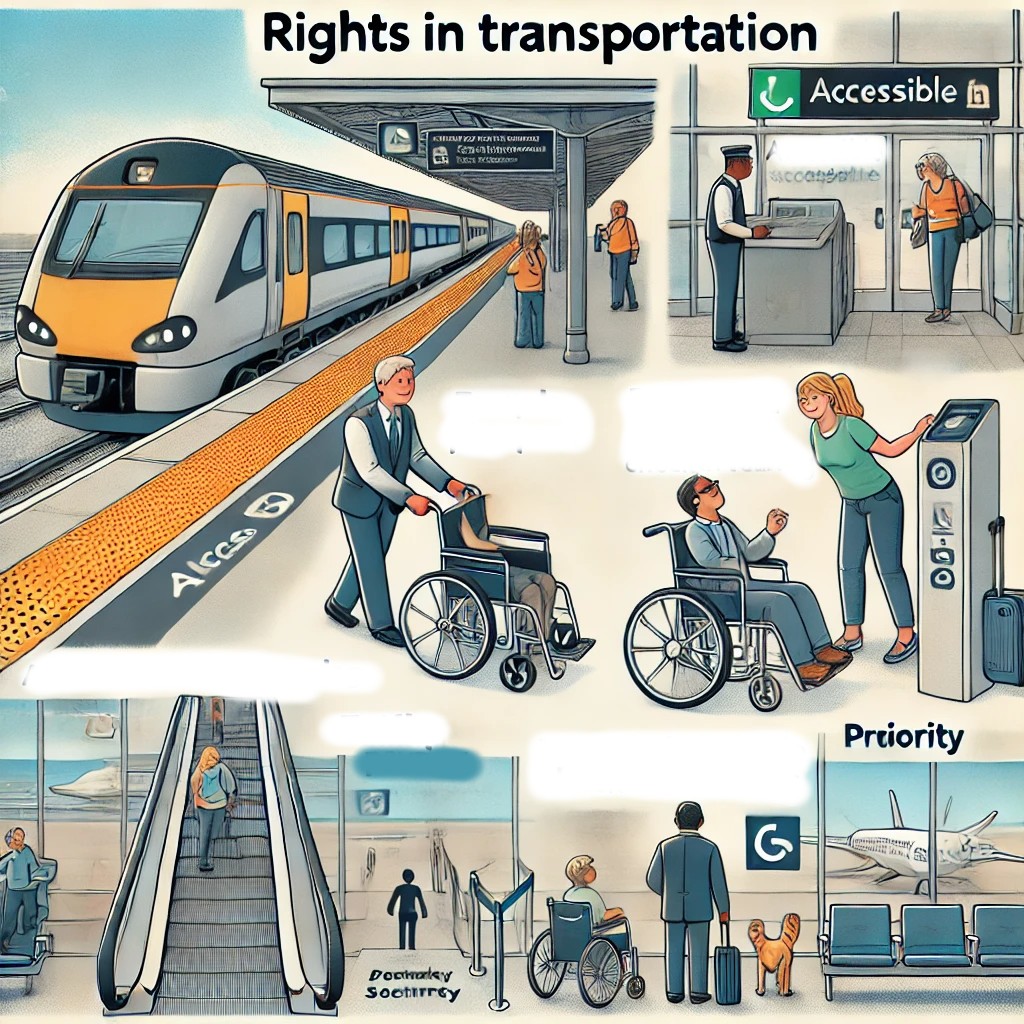
The Americans with Disabilities Act (ADA) stands as a powerful bastion against discrimination, championing the rights and freedoms of individuals with disabilities across America. While this landmark legislation heralds a new era of inclusivity and equality, its true impact is magnified when we examine real-world applications and case studies where these rights have been exercised and defended. Understanding how the ADA functions in practice, and navigating the complexities of the legal system, is crucial for individuals and organizations alike who wish to uphold these standards of equality. This article explores the journey of translating legal rights on paper into real-world actions, demonstrating cases where the ADA has truly made a difference.
Introduction
The implementation of the Americans with Disabilities Act (ADA) was a groundbreaking moment for individuals with disabilities, marking a crucial step forward in the fight for equal rights and accessibility. Enacted in 1990, the ADA aims to prevent discrimination and ensure that people with disabilities have the same opportunities and access to public life as anyone else. Despite its broad scope and significant achievements, understanding and asserting ADA rights can often be daunting. The legal system can be complex, and maneuvering through it to uphold or challenge ADA provisions requires practical knowledge and strategic planning.
Even with robust legal frameworks, real-world applications can present unique challenges. This article will delve into the ways the ADA has been applied through case studies and explore strategies for individuals and organizations to effectively navigate these legal avenues. By examining cases where individuals have successfully championed their rights, readers can gain insight into how to leverage ADA protections in various contexts, from employment to public accommodations.
Understanding ADA Rights
At the heart of the ADA are its Titles, each addressing different sectors of public life. Title I focuses on employment, mandating that employers provide reasonable accommodations for disabled employees unless doing so would cause undue hardship. Title II applies to public entities and ensures that government programs and services are accessible. Title III covers public accommodations operated by private entities, such as hotels, restaurants, and retail stores, requiring them to remove physical and communication barriers.
Understanding these core components is essential for effective advocacy and enforcement of ADA rights. Non-discrimination is a foundational principle; however, establishing what constitutes reasonable accommodation or modifications can often involve subjective judgments and negotiations. Knowing these distinctions and their legal interpretations can empower individuals to better defend their rights or advocate for enhancements in accessibility.
Case Studies of ADA in Action
To illustrate ADA’s impact, let’s examine several landmark cases. In Bragdon v. Abbott, the Supreme Court ruled that HIV was a disability under the ADA, extending protections to individuals with the virus in healthcare settings. This case reinforced the broad interpretation of what constitutes a disability, thereby expanding the spectrum of ADA protection.
In the employment sector, the case of EEOC v. UPS highlighted the importance of reasonable accommodation. The Equal Employment Opportunity Commission sued UPS for failing to provide accommodations for deaf employees, leading to a settlement that enforced significant changes in UPS’s communication methods and policies.
Public accommodations have also seen significant shifts due to ADA litigation. One notable case is the Disney Parks lawsuit, where modifications were made to provide enhanced access to rides and attractions for individuals with different cognitive and physical disabilities, showcasing how large corporations can be encouraged to rethink accessibility through legal action.
Navigating the Legal System
Despite the legal protections offered by the ADA, navigating the system can be challenging. Individuals looking to pursue an ADA claim must first understand the administrative processes. For employment-related disputes, for example, complaints typically begin with the Equal Employment Opportunity Commission (EEOC), while architectural barriers might require correspondence with local zoning or building departments.
Securing legal representation experienced in ADA law can be invaluable. An attorney can guide individuals through filing complaints, negotiate settlements, or, if necessary, litigate cases. They can also help in gathering necessary evidence, such as medical records or documentation of conversations with employers or service providers, to build a strong case.
Empowering Individuals Through Education
Education is a critical component in empowering individuals to navigate and utilize the ADA effectively. Workshops, seminars, and online courses can provide valuable information about ADA rights and the procedures to follow when these rights are violated. Additionally, disability advocacy groups play a vital role in supporting individuals through peer mentoring programs and legal advice hotlines.
Community engagement also encourages compliance. Public awareness campaigns can influence businesses and public entities to proactively update their practices to be ADA-compliant, reducing the need for litigation and promoting a more inclusive society.
ADA Challenges and Solutions in a Modern Context
With the advent of new technologies, the scope and application of the ADA are continually evolving. Digital accessibility is at the forefront of modern ADA challenges. The Robles v. Domino’s Pizza LLC case demonstrated legal recognition of web accessibility, emphasizing that websites and mobile apps should be accessible to individuals with disabilities. Addressing these contemporary issues necessitates new solutions and adaptations.
To address digital accessibility, many firms are investing in technology to make their digital platforms more accessible through screen readers, audio descriptions, or tactile feedback. Continuous education and updating of accessibility standards reflect the changing societal needs, ensuring that the ADA remains relevant in the digital age.
Conclusion
The Americans with Disabilities Act remains a critical element in the fight for equality and inclusion. Its legal framework serves as the foundation upon which individuals with disabilities can claim their rights and participate fully in society. However, understanding how to navigate this framework is an essential skill set that empowers individuals to transform legal rights into real-world results.
By examining real-world applications and case studies, we gain insight into the practical aspects of ADA enforcement and the importance of advocacy and education in driving forward progress. As accessibility challenges continue to evolve, so too must our approaches and commitments, ensuring that the doors opened by the ADA remain accessible to all.
Frequently Asked Questions
1. What is the fundamental purpose of the Americans with Disabilities Act (ADA)?
The Americans with Disabilities Act (ADA) was enacted with the primary purpose of eliminating discrimination against individuals with disabilities. It aims to promote equal opportunity, ensure accessibility, and safeguard the rights of individuals with disabilities in various areas including employment, transportation, public accommodations, communications, and government activities. By providing a comprehensive civil rights protection akin to those provided based on race, color, sex, national origin, age, and religion, the ADA ensures that individuals with disabilities have access to the same rights and opportunities as everyone else. It represents a crucial step towards achieving an inclusive society where all individuals, regardless of their physical or mental capabilities, can contribute to the community and lead fulfilling lives.
2. How does the ADA impact employment rights for individuals with disabilities?
The ADA significantly impacts employment rights by mandating that employers provide reasonable accommodations to qualified individuals with disabilities unless doing so would result in undue hardship for the business. This means employers are required to adjust or modify jobs, work environments, or the way things are usually done to ensure that a qualified individual with a disability can perform the essential functions of their job. The ADA also prohibits discrimination in all aspects of employment, including hiring, promotion, training, and compensation. In practice, this has been illustrated in numerous case studies where individuals have successfully sought legal recourse under the ADA when their employers failed to provide necessary accommodations or acted in discriminatory manners. Through these legal insights and case precedents, the employment sector continues to evolve in its understanding and implementation of ADA provisions.
3. Can you provide a case study example where ADA rights were successfully defended?
One landmark case that showcased the successful defense of ADA rights is the lawsuit involving a major retail chain that failed to accommodate an employee with a mobility impairment. The employee, who used a wheelchair, required certain adjustments to the store layout and accessible equipment in order to perform her duties. Initially, her requests were ignored, prompting her to file a complaint under the ADA. The case eventually went to court, where the judge ruled in favor of the employee, highlighting that the employer’s refusal to make reasonable accommodations constituted an ADA violation. As a result, the company was ordered to implement the requested accommodations and undergo training to prevent future incidents of discrimination. This case underscores the ADA’s strength in enforcing disability rights and serves as a cautionary tale for organizations to prioritize inclusivity and accessibility.
4. How does the ADA address accessibility in public spaces?
The ADA ensures that public spaces are accessible to individuals with disabilities by setting standards for construction and alteration of buildings, facilities, and transportation. The legislation covers a broad spectrum including walkways, restrooms, seating, and service counters, allowing for public spaces to be used freely and equally by everyone. Accessibility requirements are detailed in the ADA Standards for Accessible Design, which provides guidelines on how to make spaces usable and accessible. An interesting insight from legal cases related to public accommodations is that entities are not only required to provide physical access to buildings and facilities, but they must also ensure effective communication and service provisions to all patrons, including those with sensory or cognitive impairments. This holistic view of accessibility as portrayed in legal precedents helps refine practices and guides infrastructure development across the nation.
5. What are some common misconceptions about navigating ADA rights?
One common misconception is that ADA only applies to physical disabilities, whereas it covers a broad range of disabilities including mental health conditions that substantially limit one or more major life activities. Another misconception is that ADA compliance is a one-time commitment, when in fact, it’s an ongoing obligation that requires constant evaluation and adaptation. Additionally, some believe the ADA gives individuals with disabilities undue advantages, but it actually levels the playing field by ensuring they can access the same opportunities as everyone else. Finally, navigating ADA rights doesn’t necessarily require extensive legal knowledge; advocacy groups and legal frameworks provide support and resources to individuals seeking to understand their rights or resolve disputes. Understanding and dispelling these misconceptions through education and awareness are vital for the effective implementation and enjoyment of ADA rights.