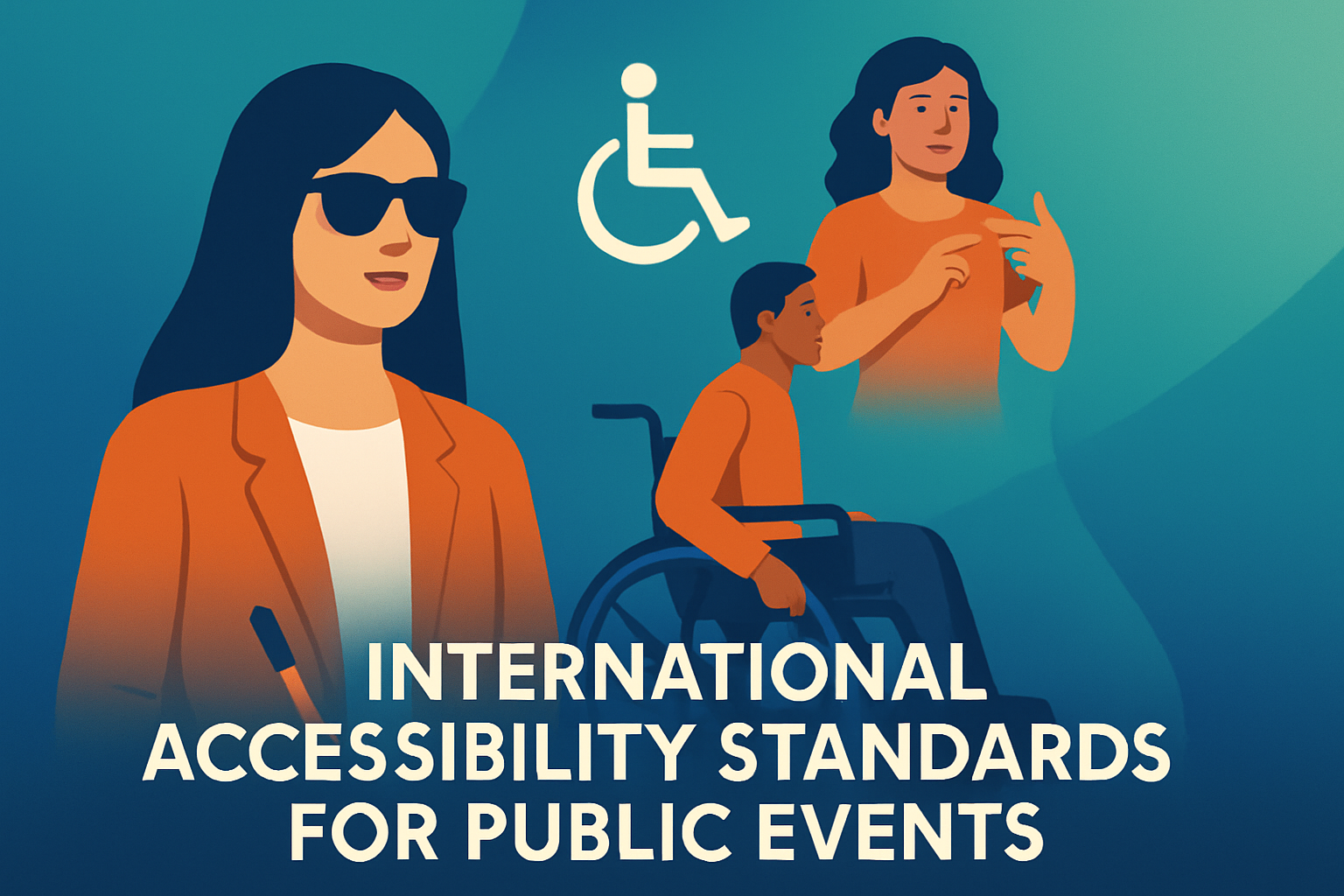
In today’s interconnected world, ensuring accessibility at public events is no longer an option but a necessity. Accessibility refers to the design of environments and experiences to be usable by all people, including those with disabilities. This encompasses a wide range of attributes, from physical access to venues to information dissemination methods, ensuring that everyone, regardless of their physical or cognitive abilities, can fully participate in all aspects of society. As the global population becomes more diverse, with differing needs and capabilities, accommodating these differences is crucial. Accessibility standards not only promote inclusivity and equality but also expand the reach of events by drawing in a more diverse audience. Ignoring these standards can lead to alienation of a segment of the population, decrease in event attendance, and even legal repercussions in some locales. Therefore, the implementation of international accessibility standards in public events matters greatly for organizers and attendees alike.
Understanding Accessibility Guidelines
International accessibility standards are established guidelines aimed at making events accessible to all individuals. One of the key examples of such guidelines is the Web Content Accessibility Guidelines (WCAG), which ensures online content is accessible to users with disabilities. These guidelines emphasize four principles: Perceivable, Operable, Understandable, and Robust, collectively known as POUR.
Take the example of a local conference that implements WCAG by ensuring all their online materials are compatible with screen readers, providing text alternatives for images, and including captions in multimedia presentations. By doing so, the organizers ensure that visually impaired participants have equal access to all digital content. These guidelines act as a framework within which event organizers can operate, highlighting the steps necessary to create an inclusive experience for all attendees.
Physical Accessibility in Public Venues
When hosting a public event, physical accessibility is a top priority. This involves ensuring that individuals with mobility impairments can easily access event venues. Key features such as ramps, elevators, accessible restrooms, and clear directional signage are essential components.
An example of successful physical accessibility can be seen in the famous Sydney Opera House, which underwent significant renovations to ensure compliance with modern accessibility standards. The addition of ramps, lifts, and designated seating areas for those with mobility constraints has allowed the iconic venue to accommodate a wider audience, seamlessly integrating accessibility into its historic structure.
Communication Accessibility Considerations
Communication barriers can significantly impact the experience of attendees at public events. Ensuring that everyone can communicate effectively is essential for inclusive participation. This can include the provision of sign language interpreters, real-time captioning, and audio descriptions.
A notable real-world example of communication accessibility can be found in the annual Global Accessibility Awareness Day (GAAD) events. During these events, sign language interpreters are readily available, and captioning services are incorporated to ensure that individuals with hearing impairments can fully engage with the sessions. Such efforts highlight the significance of communication accessibility in bridging gaps and promoting an inclusive atmosphere.
- Sign Language Interpretation
- Real-time Captioning
- Audio Descriptions
Digital Accessibility: Ensuring Inclusivity Online
In the era of digital transformation, online components of public events must be as accessible as physical ones. Digital accessibility encompasses a range of practices designed to make web and mobile content more user-friendly for people with disabilities.
A practical example can be found in the annual technology conference, CES (Consumer Electronics Show), which has implemented an online platform that caters to diverse needs. CES provides virtual tours, screen reader friendly interfaces, and comprehensive support for assistive technology. These measures ensure that even remote participants can fully engage with the event’s offerings.
Legal Implications and Compliance
Failure to adhere to accessibility standards can result in legal ramifications. Different countries have enacted their own accessibility laws and regulations, underscoring the importance of compliance with international guidelines.
In the United States, for example, the Americans with Disabilities Act (ADA) mandates accessible facilities and accommodations for disabled individuals. Event organizers are required to comply with these laws to avoid potential lawsuits and ensure equal access to all. This legal framework serves as both a motivator and guideline for international accessibility standards’ adoption, encouraging event planners to prioritize inclusivity from the outset.
| Country | Accessibility Law | Focus |
|---|---|---|
| United States | Americans with Disabilities Act (ADA) | Physical and Digital Access |
| United Kingdom | Equality Act 2010 | Public Services and Goods |
| Australia | Disability Discrimination Act (DDA) | Anti-discrimination |
Cost-Efficiency of Implementing Accessibility Standards
Implementing accessibility standards may seem like an initial financial burden, but it often results in long-term economic benefits. By widening the pool of potential attendees, organizers can enhance their revenue streams and brand reputation.
For instance, the Edinburgh Festival Fringe, one of the largest arts festivals globally, embraced accessibility by offering extensive resources for individuals with disabilities. This move attracted a broader audience and positioned the festival as a model for inclusivity, thereby boosting ticket sales and enhancing attendee satisfaction. Such examples illustrate how investing in accessibility can lead to significant returns, benefitting both the organization and the community.
Technological Innovations in Accessibility
Advancements in technology continuously offer new solutions to accessibility challenges. From specialized applications to assistive devices, innovative technologies provide tools that improve accessibility at public events.
Consider the example of the Tokyo 2020 Paralympics, where the use of technology played a central role in accessibility efforts. With features like autonomous vehicles with voice-assistive navigation and digital kiosks that catered to a variety of disabled users, the event demonstrated how modern technology can make public events more accessible and inclusive.
Creating an Inclusive Culture
Beyond infrastructure and technology, fostering an inclusive culture is a fundamental aspect of accessibility in public events. This involves training staff, promoting awareness, and cultivating environments where inclusivity is a shared responsibility.
An exemplary case is Disney Parks, which implement comprehensive training programs for all employees, ensuring they are equipped to meet the needs of guests with disabilities. These programs focus on empathy, communication skills, and emergency preparedness, creating an environment where inclusivity is woven into the fabric of everyday operations.
Conclusion: Embracing Accessibility Standards
In conclusion, the importance of international accessibility standards for public events cannot be overstated. These standards serve as a guide for creating environments that are welcoming and inclusive for all. By adhering to these guidelines, event organizers not only comply with legal requirements but also open doors to a broader audience, enhancing the overall success and impact of their events.
Key takeaways from this article underscore the essential aspects of accessibility, including understanding guidelines, focusing on physical and communication accessibility, embracing technological innovations, and fostering an inclusive culture. These elements work together to ensure that public events remain accessible and inclusive, providing equitable opportunities for all individuals to participate and engage fully.
For event organizers, the next step is to conduct a comprehensive accessibility audit of their events, identifying areas of improvement and implementing necessary changes. By doing so, they not only meet the expectations of today’s diverse society but also set a precedent for the future of inclusive public events worldwide.
Ultimately, embracing accessibility standards is not just a compliance measure, but a moral imperative that enriches society and paves the way for a world where everyone can share in the joys and opportunities of public life.
Frequently Asked Questions
1. What are international accessibility standards for public events, and why are they important?
International accessibility standards for public events are guidelines and protocols designed to make sure that people with disabilities can participate fully and equally in public events. These standards cover various aspects, including physical accessibility to venues, accessible information formats, effective communication methods, and more. The importance of these standards stems from the need to create inclusive environments that respect the rights of people with different abilities. By following these guidelines, event organizers can ensure that no person faces discrimination or exclusion due to inaccessible facilities or services.
For example, these standards can ensure that venues are equipped with ramps and elevators for wheelchair users, or that visual presentations and speeches include closed captions or sign language interpretation for those who are hard of hearing. They also address cognitive accessibility, ensuring that information is presented in clear, easy-to-understand ways, and that assistance is available for those who might need it. Having such standards is not only about legal compliance but also about embracing diversity and promoting equity in society.
2. How do these standards impact the design and planning of public events?
Accessibility standards significantly influence the design and planning stages of public events. Event organizers must consider many elements, starting from choosing a venue that can comfortably accommodate individuals with varying needs. This involves ensuring there’s adequate wheelchair access, accessible parking, and appropriate restroom facilities. In addition, the layout must avoid obstacles for people with mobility devices or those who are visually impaired.
Moreover, these planning considerations extend to communication aspects. Events must provide assistive listening devices, sign language interpreters, or real-time captioning for those who need them. Planners should also use accessible communication formats prior to the event, such as providing registration forms that are screen-reader friendly, or marketing materials that include alt text for images. This comprehensive approach ensures that before, during, and after the event, all attendees can navigate and enjoy the experience easily and independently.
3. What roles do technology and innovation play in enhancing accessibility at public events?
Technology and innovation have dramatically enhanced accessibility at public events. They provide creative solutions to some of the most significant barriers faced by people with disabilities. For instance, personal assistive devices such as smartphones and tablets can now run applications specifically designed for accessibility, like text-to-speech and speech-to-text apps, navigation aids, or real-time audio description services.
Virtual reality and augmented reality are also opening up new avenues for participation. For example, virtual tours can allow individuals who cannot physically attend due to a disability or geographical limitation to experience an event remotely. Additionally, advancements such as beacon technology are being used to guide visually impaired guests through event spaces with auditory cues and directional messages sent directly to their devices.
Implementing these technologies requires thoughtful integration into the broader event management process, ensuring that they are readily available, user-friendly, and effective in assisting those who need them. This integration not only improves accessibility but also enriches the overall event experience for all attendees.
4. How do event organizers ensure compliance with accessibility standards when hosting international events?
Ensuring compliance with accessibility standards for international events involves understanding the specific regulations and guidelines that apply, which can vary by country and region. Event organizers typically refer to internationally recognized standards like those from the World Wide Web Consortium (W3C) for web accessibility, or the International Organization for Standardization (ISO) guidelines for physical spaces.
Organizers often work closely with accessibility consultants or professionals who are experienced in identifying both the visible and hidden accessibility challenges that could affect an event. Conducting an accessibility audit before the event is a proactive measure to identify any potential issues and rectify them before attendees arrive.
Training staff and volunteers is another critical component of compliance. They need to be aware of the various accommodations and services available and be prepared to offer assistance as needed. Effective communication regarding the accessibility features of the event should be part of the registration process, ensuring that all participants are aware of the measures in place to support their needs. By taking these steps, organizers not only achieve compliance but also demonstrate a genuine commitment to inclusiveness.
5. Can you provide examples of best practices for making public events more accessible?
There are numerous best practices that event planners can implement to make public events more accessible. First and foremost is conducting thorough research and understanding the specific needs of the anticipated audience. Engaging with the community and perhaps even forming an advisory group comprising individuals with disabilities can provide invaluable insights into potential barriers and solutions.
In terms of venue selection, it’s crucial to choose locations with flat surfaces, wide doorways, and easy access to elevators and restrooms. Clear signage with large, contrasting text and Braille inscriptions can greatly aid navigation. Ensuring that there are staff or volunteers trained specifically in accessibility can enhance visitor experience by providing on-the-spot assistance to those who need it.
Utilizing technology effectively—like event apps that offer speech-to-text functions or providing portable accessibility devices such as personal amplifiers—can further ease barriers. When it comes to content delivery, it’s beneficial to offer materials in various formats, such as large print, braille, or digital files compatible with screen readers. In presentations, allowing audience interaction through multiple methods (verbal, written, or via technology) can include everyone in dialog and discussion.
By implementing these practices, event organizers not only comply with standards but also contribute to a more inclusive and equal society, where everyone has the opportunity to engage and participate fully, regardless of their abilities.