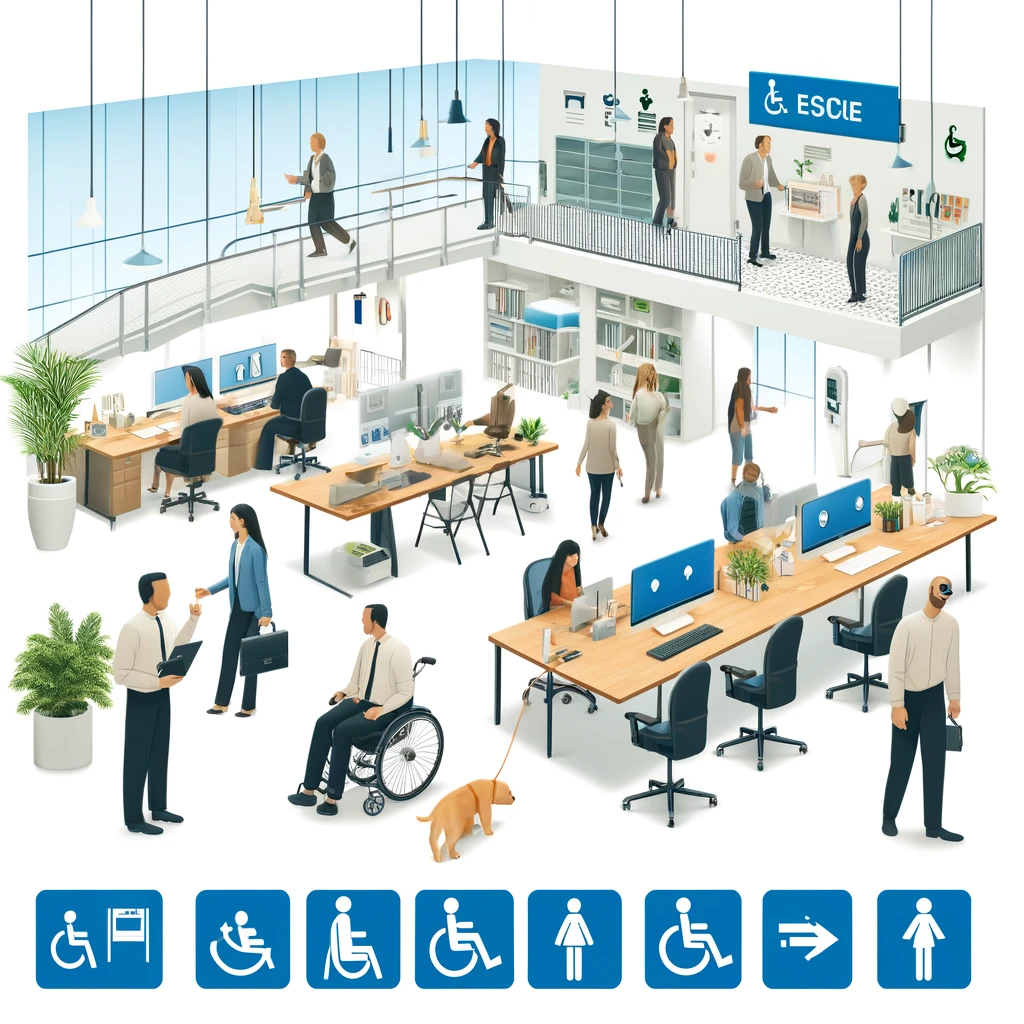
Building an annual ADA refresher training program starts with treating training as an operational control, not a yearly presentation. The Americans with Disabilities Act, or ADA, is a civil rights law that prohibits disability-based discrimination in employment, public services, public accommodations, transportation, and telecommunications. In practice, that means managers, recruiters, supervisors, customer-facing teams, facilities staff, IT teams, and executives all influence compliance every day. A refresher program is the structured process of revisiting requirements, updating employees on policy or legal changes, reinforcing role-specific responsibilities, and documenting completion. When I build these programs for organizations, the most common mistake I see is assuming one generic module covers everyone. It does not. Effective annual ADA refresher training is role-based, scenario-driven, and tied to real workflows such as hiring, leave administration, digital accessibility, service delivery, and facility maintenance.
This matters because ADA failures usually come from ordinary decisions made under time pressure. A hiring manager asks an impermissible medical question. A supervisor mishandles an accommodation request because the employee did not use formal wording. A web team launches a form that cannot be used with a keyboard. A front-desk employee denies entry to a person with a service animal. These are not abstract risks. They lead to EEOC charges, Department of Justice investigations, demand letters, customer complaints, remediation costs, and damaged trust. Annual refresher training reduces those risks when it is connected to policy, processes, and accountability. It also helps organizations align related obligations under Section 504, Section 508, state disability laws, workers’ compensation procedures, FMLA administration, and internal equal employment opportunity commitments. As a hub for Training and Role-Based Education, this guide explains how to structure the program, decide who needs what content, measure effectiveness, and connect refresher training to the wider compliance and implementation effort.
Set the program objective, scope, and legal baseline
The first step is defining what the annual ADA refresher training program must accomplish. In most organizations, the objective should be stated in operational terms: enable employees to recognize disability-related issues, respond appropriately within their role, escalate when needed, and document actions consistently. That objective is better than a vague goal like “raise awareness” because it can be measured. I usually write a short training charter that names covered populations, required courses, timing, owners, and recordkeeping rules. The legal baseline should include ADA Title I employment obligations, Titles II or III if relevant to your organization, retaliation and confidentiality rules, and overlapping accessibility duties. If your organization offers digital services, include web and document accessibility principles. If you operate physical locations, include accessible routes, service counters, parking, signage, restrooms, and maintenance responsibilities.
Scope decisions matter. A hospital, retailer, university, manufacturer, software company, and local government agency all face different ADA touchpoints. The annual program should identify enterprise-wide content for all staff, then assign role-based modules. For example, everyone may need basic disability etiquette, anti-retaliation rules, and escalation channels. Managers need the interactive process, reasonable accommodation analysis, leave and scheduling issues, and performance management boundaries. Recruiters need lawful interviewing and applicant accommodations. Facilities teams need barrier reporting and maintenance standards. Customer support teams need effective communication and service animal rules. IT and content authors need accessible procurement, remediation workflows, and testing basics. This role mapping is what turns refresher training into a usable compliance system rather than a checkbox exercise.
Build a role-based curriculum instead of a single generic course
A strong ADA training curriculum has a core module plus specialized paths. The core module should define disability in practical terms, explain prohibited discrimination, cover respectful communication, identify how to spot an accommodation request even when the employee does not use legal language, and show where to route questions. Keep this concise and annual. Then build specialized modules around job decisions. In my experience, completion rates stay high when the core runs fifteen to twenty minutes and role-based modules are targeted, not bloated.
For supervisors, the curriculum should focus on the interactive process, essential functions, undue hardship, temporary adjustments, documentation standards, confidentiality of medical information, and when HR or legal must be involved. Use examples such as modified schedules for treatment, ergonomic equipment, remote work analysis, reassignment considerations, and return-to-work restrictions. For recruiters, cover job advertisements, application accessibility, interview logistics, pre-offer versus post-offer medical inquiries, and assessment accommodations. For public-facing staff, teach effective communication with people who have hearing, vision, speech, cognitive, or mobility disabilities, along with service animal handling and auxiliary aids. For digital teams, include WCAG 2.1 AA or 2.2 AA expectations, alternative text, keyboard access, color contrast, captioning, transcripts, document tagging, and testing with tools such as axe, WAVE, NVDA, JAWS, and VoiceOver.
| Role | Annual refresher topics | Practical example |
|---|---|---|
| Managers and supervisors | Interactive process, essential functions, confidentiality, retaliation, performance discussions | Employee requests later start time for dialysis appointments |
| Recruiters and hiring managers | Accessible applications, lawful interview questions, accommodations during assessments | Candidate asks for extra time on a skills test |
| Customer-facing staff | Effective communication, service animals, accessible service delivery, escalation rules | Guest arrives with a dog trained to alert to seizures |
| IT, design, and content teams | WCAG practices, document accessibility, testing, remediation workflow, procurement language | Online payment form cannot be completed without a mouse |
| Facilities and operations | Barrier identification, maintenance, temporary obstructions, work orders, signage | Accessible entrance blocked by deliveries every morning |
Use scenarios that mirror real decisions and teach escalation
Adults remember scenarios better than definitions. The best annual ADA refresher training programs use short cases based on incidents your organization has actually faced, sanitized for privacy. I have seen one five-minute scenario about a supervisor receiving a text message that mentions anxiety produce more behavior change than twenty slides of legal standards. Why? Because employees recognize the situation. They learn what to say, what not to say, and when to involve HR, accessibility, facilities, or counsel.
Good scenarios are specific and include decision points. For instance: an employee says, “I’m having trouble getting here by 8:00 because of medication side effects.” The training should explain that this may be an accommodation request, even without formal terminology. The supervisor should acknowledge the concern, avoid demanding diagnosis details, consult the accommodation process, and document next steps. Another scenario might involve a deaf customer at a municipal counter asking for an interpreter for a public meeting. The refresher should explain effective communication obligations, available auxiliary aids, advance planning, and how to evaluate whether a requested aid is necessary in context. A digital example might show a product team launching a new PDF form that screen-reader users cannot complete. The lesson is not only how to tag the document, but also how to route accessibility defects into the same defect management process used for security or privacy issues. Escalation is the bridge between awareness and compliant action.
Choose delivery methods that fit risk, scale, and attention span
Annual ADA refresher training does not have to be one e-learning module. In fact, blended delivery is usually more effective. Use a short enterprise e-learning course for baseline concepts and documentation, then add manager-led discussions, live workshops for high-risk roles, microlearning for recurring issues, and onboarding tie-ins for new hires or newly promoted supervisors. A call center with rapid turnover may rely on LMS delivery plus monthly team huddles. A university may combine faculty guidance, disability services workshops, and digital accessibility labs. A manufacturing environment may need toolbox talks for front-line supervisors who do not sit at computers daily.
Accessibility of the training itself is nonnegotiable. Videos need captions and, when appropriate, transcripts. Platforms must support keyboard navigation and screen readers. PDFs should be tagged correctly or replaced with accessible web content. Live sessions may require CART, interpreters, accessible meeting spaces, and advance materials. If the training is inaccessible, the organization undermines its own message and may create fresh legal risk. I also recommend limiting annual refresher modules to what employees can use immediately. Reserve deeper legal analysis for HR, legal, accessibility leads, and investigators. People engage when content clearly maps to their job, and completion data improves when modules are segmented into focused blocks instead of one long annual event.
Governance, documentation, and measurement make the program defensible
A defensible ADA refresher training program has clear owners and records. At minimum, assign an executive sponsor, a content owner, an LMS administrator, and role-based approvers from HR, legal, accessibility, facilities, and operations. Version control matters. If policy language changes, the course should show the revision date and archive prior versions. Keep attendance, completion scores, accommodations provided during training, and remediation assignments for missed courses. If the organization faces an EEOC charge or demand letter, training records often become evidence that expectations were communicated and reinforced.
Measurement should go beyond completion rates. Track knowledge-check performance by topic, post-training manager confidence scores, accommodation processing errors, complaint patterns, accessibility defect trends, and time to escalation. If managers routinely miss questions about medical documentation, that is a signal to revise both training and process aids. If customer complaints involve service animals, refresh front-line materials before the next annual cycle. Practical metrics make the program useful to compliance leaders and business owners alike.
Finally, connect this hub to related implementation work. Annual ADA refresher training works best when paired with accommodation procedures, accessible procurement standards, digital accessibility testing, facilities inspection checklists, complaint response protocols, and manager toolkits. Training alone will not fix broken processes, but it can standardize how people recognize issues and act on them. Review your incident data, map content by role, update materials annually, and test whether employees can apply what they learned. That is how an ADA refresher training program becomes a durable part of compliance and implementation rather than a calendar reminder. Start with the highest-risk roles, publish a simple curriculum map, and build from there.
Frequently Asked Questions
What is the purpose of an annual ADA refresher training program?
An annual ADA refresher training program helps an organization keep disability compliance active, practical, and consistent across the business. The ADA is not a one-time topic that employees learn during onboarding and then revisit only when a problem appears. It is a civil rights law that affects hiring, workplace management, customer service, digital access, facilities, communications, and many day-to-day decisions. Because so many roles influence compliance, annual refresher training serves as an operational control that reinforces expectations, updates teams on policy and process changes, and reduces the risk of inconsistent responses.
The purpose is also to connect legal requirements to real job responsibilities. Managers need to understand accommodation requests and confidentiality. Recruiters need to know how to avoid disability-related screening mistakes. Customer-facing teams need to respond appropriately when accessibility issues arise. Facilities and IT teams need to understand how the physical and digital environment can create barriers. Executives need visibility into accountability, resources, and risk. A strong refresher program brings these responsibilities together so compliance becomes part of normal operations rather than a stand-alone annual event.
Just as importantly, recurring training supports culture. It reminds employees that accessibility and nondiscrimination are not abstract legal concepts; they shape how people are hired, supported, served, and included. When done well, annual ADA refresher training improves decision-making, increases confidence in handling sensitive situations, and helps organizations respond more quickly and appropriately when issues emerge.
Who should be included in annual ADA refresher training?
Annual ADA refresher training should reach far beyond HR or legal teams. Any employee whose decisions, actions, or communications can affect a person with a disability should be included. In most organizations, that includes managers, supervisors, recruiters, interviewers, human resources personnel, customer service teams, reception staff, facilities personnel, IT and web teams, trainers, operations leaders, and executives. Each of these groups touches a different part of ADA compliance, so a broad training audience is essential.
At the same time, the content should not be identical for everyone. A best-practice program uses role-based training so employees receive the guidance most relevant to their responsibilities. For example, managers and supervisors should receive detailed instruction on recognizing accommodation requests, engaging in the interactive process, avoiding retaliation, and handling medical information appropriately. Recruiters and hiring managers should focus on job descriptions, interviewing boundaries, essential functions, pre-employment communications, and fair selection procedures. Customer-facing teams should learn how to communicate respectfully, respond to accessibility concerns, and avoid making assumptions about a person’s needs or abilities.
Facilities teams may need refresher content on maintaining accessible routes, parking, restrooms, service counters, and temporary workarounds during repairs or renovations. IT teams may need training on digital accessibility expectations, accessible communication formats, and how software or procurement decisions can create barriers. Senior leadership should understand accountability, reporting, budgeting, and how ADA compliance ties to governance and operational performance. Including all relevant functions ensures the program reflects how compliance actually works in real life: it is distributed across the organization, not confined to one department.
What topics should an effective ADA refresher training program cover each year?
An effective annual ADA refresher training program should cover core legal principles, internal procedures, and role-specific application. Start with a clear explanation of what the ADA is, what areas of activity it affects, and why the law matters operationally. Employees should understand that the ADA prohibits disability-based discrimination and that compliance involves both equal treatment and reasonable modifications or accommodations where required. This foundation is important because it gives context to more detailed job-specific expectations.
From there, the program should address practical topics such as recognizing accommodation requests, understanding the interactive process, identifying essential job functions, maintaining confidentiality, documenting decisions, and escalating issues correctly. Training should also cover prohibited conduct, including discrimination, harassment, retaliation, and unnecessary disability-related inquiries. For public-facing operations, include accessible customer interactions, communication supports, and complaint response protocols. For digital and facilities teams, include accessibility maintenance, barrier reporting, and issue remediation processes.
The strongest programs also include scenarios, examples, and recent lessons learned from internal trends or common risk points. If the organization has experienced recurring problems in hiring, leave administration, website accessibility, service delivery, or manager response times, those issues should be built into the refresher. Training should also review any policy updates, changes to forms or workflows, vendor expectations, and internal points of contact. In other words, the curriculum should not be static. It should combine stable ADA fundamentals with current operational realities so the training stays relevant, credible, and useful.
How do you build an ADA refresher training program that is practical instead of just a yearly presentation?
To make ADA refresher training practical, begin by designing it around decisions employees actually make, not around abstract legal summaries alone. A common mistake is relying on a generic slide deck that explains the law but does not show people what to do when a candidate requests an accommodation, when an employee mentions a medical limitation, when a customer reports an access barrier, or when a system rollout affects accessibility. Practical training translates legal requirements into workflows, responsibilities, timing expectations, and escalation paths.
A strong approach is to map the training to operational touchpoints. Identify where ADA issues most commonly arise in your organization: recruiting, interviews, onboarding, performance management, leave coordination, schedule changes, facilities maintenance, digital product updates, frontline service interactions, and complaint handling. Then build modules or scenarios around those moments. Include realistic examples, short decision trees, and role-based case studies that show what good practice looks like and what common mistakes to avoid. Employees remember training better when they can connect it directly to situations they have seen or are likely to face.
It also helps to treat the program as part of a larger compliance system. That means pairing annual training with written procedures, manager toolkits, reporting channels, escalation contacts, and periodic reminders throughout the year. Many organizations get better results by using a blended format: a core annual refresher for broad awareness, plus targeted manager training, quick-reference guides, and microlearning updates when policies or risks change. Measuring completion alone is not enough. Review questions, scenario responses, incident trends, accommodation handling timelines, and accessibility complaint patterns to see whether the training is actually improving performance. When training is linked to operations, metrics, and accountability, it becomes a working control rather than a checkbox exercise.
How can an organization measure whether its annual ADA refresher training program is working?
An organization should measure ADA refresher training effectiveness through both learning data and operational outcomes. Completion rates are a starting point, but they do not show whether employees understand the material or apply it correctly. A better approach includes knowledge checks, scenario-based assessments, manager acknowledgment of responsibilities, and post-training feedback that identifies areas of confusion. If employees consistently struggle with the same scenarios, that is a signal that policies, processes, or training explanations may need improvement.
Operational indicators are even more valuable. Review trends in accommodation requests, response times, escalation quality, documentation consistency, accessibility complaints, hiring process issues, employee relations concerns, and customer feedback related to access barriers. If managers are routing requests more quickly, if documentation quality improves, if barrier reports are resolved more efficiently, and if recurring mistakes decline, those are meaningful signs the program is having a real effect. You can also audit whether teams are using the approved procedures and whether role-specific responsibilities are being carried out consistently across departments.
Another important measure is whether the program leads to better coordination across functions. ADA compliance often breaks down when HR, operations, facilities, IT, and frontline teams work in silos. If the refresher program improves handoffs, clarifies ownership, and reduces confusion about who does what, that is a major success indicator. Finally, use each annual cycle to refine the next one. Training should evolve based on incident reviews, regulatory developments, policy changes, employee questions, and audit findings. The most effective ADA refresher programs are not judged by how polished the presentation looks, but by whether they improve everyday decisions, reduce risk, and strengthen access and inclusion across the organization.