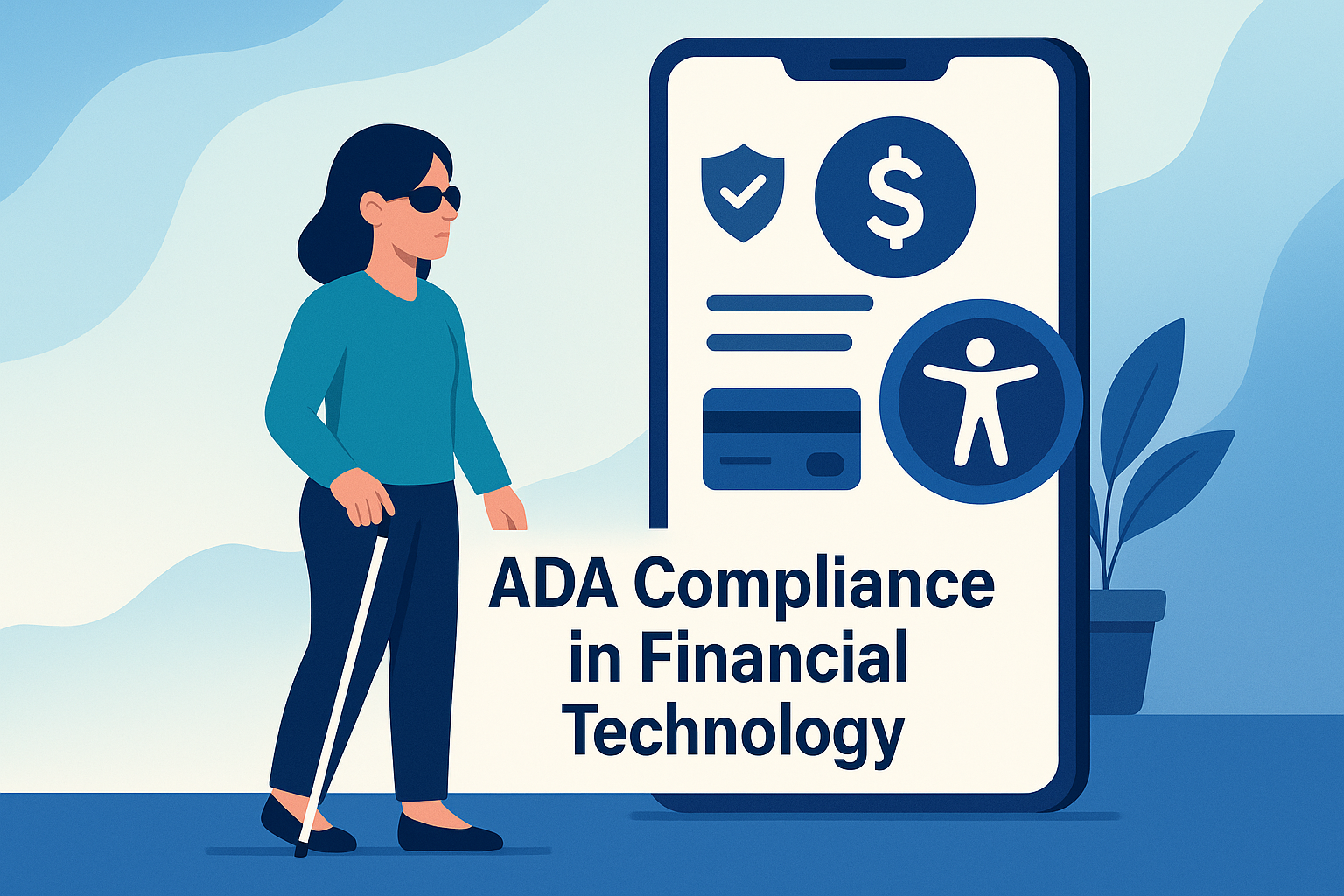
The rapid evolution of Financial Technology (FinTech) has revolutionized the financial services industry, making finance more accessible to the masses. However, with this digital transformation comes a responsibility to ensure that these technologies are accessible to everyone, including individuals with disabilities. This is where the Americans with Disabilities Act (ADA) compliance comes into play.
The ADA, established in 1990, mandates that both physical and digital spaces be accessible to people with disabilities. ADA compliance in FinTech involves designing and implementing technology solutions that remove barriers for individuals with disabilities, enabling equal access to financial services. As FinTech companies continue to innovate, ensuring ADA compliance becomes crucial to foster inclusivity and avoid legal repercussions.
Why does ADA compliance matter in FinTech? Firstly, it promotes accessibility, ensuring individuals with varying abilities can interact with financial products independently. Secondly, it serves as a safeguard against potential lawsuits and reputational damage. Lastly, it opens up market opportunities by serving the needs of diverse users. Understanding ADA compliance is crucial for FinTech companies that aim to be inclusive, lawful, and competitive in the marketplace.
ADA Compliance in Web and Mobile Applications
One of the most critical aspects of ADA compliance in FinTech is ensuring that digital platforms, such as websites and mobile applications, are accessible to users with disabilities. This involves adhering to the Web Content Accessibility Guidelines (WCAG), which provide a standard for web content accessibility.
Let’s consider a real-world example: a FinTech company offering a mobile banking app. To be ADA compliant, the app needs to include features such as text-to-speech functionality for visually impaired users, keyboard navigation for those with motor disabilities, and closed captioning for all multimedia content. Failure to implement these features could result in users being unable to access essential financial services, leading to exclusion and potential legal issues.
FinTech companies can achieve ADA compliance by conducting regular audits of their digital platforms, seeking feedback from users with disabilities, and continually updating their applications to incorporate the latest accessibility features. By doing so, these companies not only comply with legal requirements but also enhance the overall user experience for everyone.
Ensuring Accessibility in Payment Systems
Payment systems are at the heart of FinTech solutions, facilitating transactions and financial operations. Ensuring that these systems are accessible to users with disabilities is crucial to maintaining inclusive financial ecosystems.
Consider an example where a FinTech company offers an online payment gateway. ADA compliance requires that this payment gateway is navigable by screen readers, providing alternative text for images and ensuring all interactive elements are accessible via keyboard. Ensuring these features allows people with disabilities to conduct transactions independently and securely.
To make payment systems ADA compliant, FinTech companies should prioritize user testing with individuals with disabilities. Customer feedback can provide valuable insights into the barriers users face and help companies make necessary adjustments. By discovering and eliminating these obstacles, FinTech companies can create inclusive payment systems that cater to all users.
Compliance in Digital Identity Verification
Digital identity verification is a growing trend in FinTech, allowing for swift and secure verification of users. However, ADA compliance in this area is crucial, as it ensures that individuals with disabilities can also undergo identity verification seamlessly.
An example of a real-world application is the use of facial recognition in identity verification. To comply with the ADA, FinTech companies must ensure that their software accommodates users who may not be able to follow standard facial recognition cues due to various disabilities. This might include offering alternative verification methods, such as fingerprint scanning or knowledge-based authentication questions.
Ensuring ADA compliance in digital identity verification involves collaborating with specialists in disability access during the development phase. This collaboration can help identify potential accessibility issues early and integrate solutions that cater to a broad range of abilities.
The Role of Machine Learning in Enhancing Accessibility
Machine learning is playing an increasingly important role in enhancing accessibility within FinTech. These algorithms can be trained to identify patterns in users’ behaviors and preferences, offering personalized experiences that are inclusive of various disabilities.
For instance, a FinTech platform utilizing machine learning can detect if a user frequently uses text-to-speech features, adapting its interface to ensure optimal functionality. This could include larger clickable areas for easier navigation or predictive text to assist users with motor skill difficulties.
Integrating machine learning with ADA compliance measures means that FinTech companies can create adaptive interfaces that learn from user interactions, which enhances accessibility and provides a customized experience for each user. This approach not only helps in compliance but also increases user satisfaction and engagement.
Understanding Legal Implications and Risks
Failing to comply with ADA regulations can have significant legal and reputational repercussions for FinTech companies. Lawsuits related to accessibility are on the rise, as individuals with disabilities increasingly assert their rights to equal access.
For example, several high-profile lawsuits have been filed against companies that failed to make their digital platforms accessible. These legal battles not only lead to financial losses due to penalties and settlements but also damage a company’s reputation, impacting long-term profitability.
To mitigate these risks, FinTech companies must proactively incorporate accessibility into their development processes. This includes staying updated with evolving guidelines and regulations, conducting regular accessibility audits, and undergoing third-party evaluations. By taking a proactive approach to ADA compliance, companies can safeguard against potential legal challenges and build a reputation as inclusive innovators.
Implementing Accessibility Culture within Organizations
Beyond technological solutions, fostering an accessibility-focused culture within FinTech organizations is crucial for sustained ADA compliance. This involves educating employees about the importance of accessibility and how to incorporate it into their daily operations.
Consider a company that conducts regular workshops and training sessions on accessibility best practices. By investing in employee education, the company ensures that all team members understand the significance of ADA compliance and how they can contribute to creating inclusive financial products.
Building an accessibility culture requires commitment from leadership and the inclusion of accessibility goals within the organization’s broader mission. By embedding accessibility into the core values, FinTech companies can create an environment where inclusive design is seen as an essential aspect of innovation and success.
A Closer Look: ADA Compliance Checklist for FinTech
An effective way for FinTech companies to ensure ADA compliance is by utilizing an accessibility checklist. This resource can guide the development and maintenance of compliant digital products.
| Checklist Item | Description |
|---|---|
| Keyboard Navigation | Ensure all functionality is accessible via keyboard shortcuts. |
| Screen Reader Compatibility | Verify that content is readable by screen readers through proper semantic HTML. |
| Text Alternatives | Provide descriptive text for images and non-text content. |
| Color Contrast | Use sufficient color contrast between text and background for visibility. |
| Captioning | Include captions for all multimedia content. |
Regularly updating this checklist to align with the latest WCAG guidelines ensures that companies remain compliant. Moreover, involving users with disabilities in usability testing can provide valuable feedback to identify areas of improvement.
Conclusion: Embracing ADA Compliance as a Strategic Advantage
In conclusion, ADA compliance is more than a legal requirement; it is a strategic advantage in the competitive FinTech landscape. By prioritizing accessibility, FinTech companies can reach a broader audience, enhance user satisfaction, and establish themselves as leaders in inclusive innovation.
The key takeaways from this exploration include the necessity of integrating accessibility into digital platforms, ensuring compliance in payment and identity verification systems, leveraging machine learning for adaptability, understanding legal implications, and fostering an organizational culture of accessibility. These steps not only align with ADA regulations but also position companies as socially responsible businesses that value inclusivity.
The path forward for FinTech companies is clear: embrace ADA compliance as an integral part of their innovation strategy. Promoting awareness within the organization, conducting regular audits, and engaging with the disabled community are actionable steps that can lead to successful implementation. In doing so, companies can prepare to meet the evolving accessibility standards while simultaneously enhancing their reputation and market reach.
Your next step is to evaluate your current ADA compliance status and identify areas for improvement. Consider forming partnerships with accessibility experts and actively involve users with disabilities in the development process. By taking these steps, your company can ensure that it is on the right path to creating accessible, inclusive FinTech solutions for all users.
Frequently Asked Questions
1. What is ADA Compliance in the context of FinTech?
ADA Compliance refers to adhering to the regulations set forth by the Americans with Disabilities Act (ADA) of 1990, which mandates accessible environments and technologies for individuals with disabilities. In the context of Financial Technology (FinTech), ADA compliance implies that digital financial services, such as mobile banking apps, online payment systems, and financial advisory platforms, must be designed to be usable by people with various impairments, be it visual, auditory, cognitive, or physical.
This involves implementing specific features like screen reader compatibility, text-to-speech functions, keyboard navigation, and alternative text for images. The aim is to ensure that individuals with disabilities can engage with and benefit from financial services just as much as those without disabilities. It’s more than a legal requirement; it’s a moral obligation to foster inclusivity and equality in the financial sector.
2. Why is ADA compliance important for FinTech companies?
ADA compliance is essential for FinTech companies because it ensures their services are accessible to all potential users, which reflects a commitment to inclusivity and corporate social responsibility. By meeting these standards, FinTech companies not only adhere to legal requirements, avoiding potential lawsuits and penalties but also expand their consumer base to include people with disabilities who represent a significant portion of the market.
Beyond legal obligations and market expansion, there’s also a reputational component. Companies that prioritize accessibility are often viewed more favorably by both consumers and stakeholders, enhancing brand loyalty and trust. Additionally, ADA compliance drives innovation, pushing companies to create more efficient, user-friendly interfaces that benefit all users, not just those with disabilities. Therefore, adherence to ADA not just fulfills a legal need but aligns with ethical, commercial, and developmental goals.
3. How can FinTech companies implement ADA Compliance in their digital products?
FinTech companies can implement ADA compliance in their digital products by incorporating several design and technological features tailored for accessibility. Firstly, they should conduct accessibility audits of their platforms to identify areas that require improvement. This involves assessing the product’s compatibility with screen readers, ensuring keyboard navigability, and providing alternative text for all media types.
Furthermore, FinTechs should adhere to the Web Content Accessibility Guidelines (WCAG), a comprehensive framework providing actionable steps to make web content more accessible. Companies can also employ inclusion experts and involve users with disabilities in testing phases to provide firsthand insights on usability and necessary adjustments.
Ongoing training for developers and content creators about the importance and methods of implementing ADA compliance is vital, as this ensures that accessibility remains a core aspect of all product design and development processes. Regularly updating platforms as technology and accessibility standards evolve is equally crucial.
4. What are the potential consequences of failing to comply with ADA regulations in FinTech?
Failure to comply with ADA regulations can result in several consequences for FinTech companies. Legally, non-compliance opens the door to lawsuits and penalties, often involving hefty fines and costly settlements. These legal battles not only drain financial resources but can divert focus from innovation and growth objectives.
On a reputational level, non-compliance can severely damage a company’s brand image. In an era where corporate responsibility and ethics are highly regarded, companies that neglect accessibility may face public backlash, losing the trust and loyalty of existing customers while deterring potential clients.
Moreover, there’s a financial aspect to consider. By not making services accessible, FinTech companies forfeit the opportunity to serve a broader audience, thus losing out on potential revenue from a sizable and often overlooked demographic of consumers with disabilities. In sum, non-compliance can incur legal, reputational, and financial drawbacks that can significantly impede a company’s success and longevity.
5. Are there any resources available for FinTech companies seeking to achieve ADA compliance?
Yes, there are many resources available to assist FinTech companies in achieving ADA compliance. For starters, the Web Content Accessibility Guidelines (WCAG) provide a detailed framework for making digital platforms accessible. These guidelines are a valuable resource and highlight best practices for designing web content that is more inclusive.
Additionally, organizations like the World Wide Web Consortium (W3C) offer tools and documentation to assess and improve digital accessibility. Companies can also consult accessibility experts and firms that specialize in ADA compliance audits and training, providing tailored insights and solutions.
Furthermore, several online platforms and courses offer training for developers and designers on accessibility principles to ensure that all new and existing products conform to ADA standards. Engaging in industry forums and community groups focused on accessibility can also provide FinTech companies with insights and support from other businesses facing similar challenges. Effectively utilizing these resources can help ensure that FinTech companies not only meet legal obligations but also lead the charge in creating a more inclusive digital financial landscape.