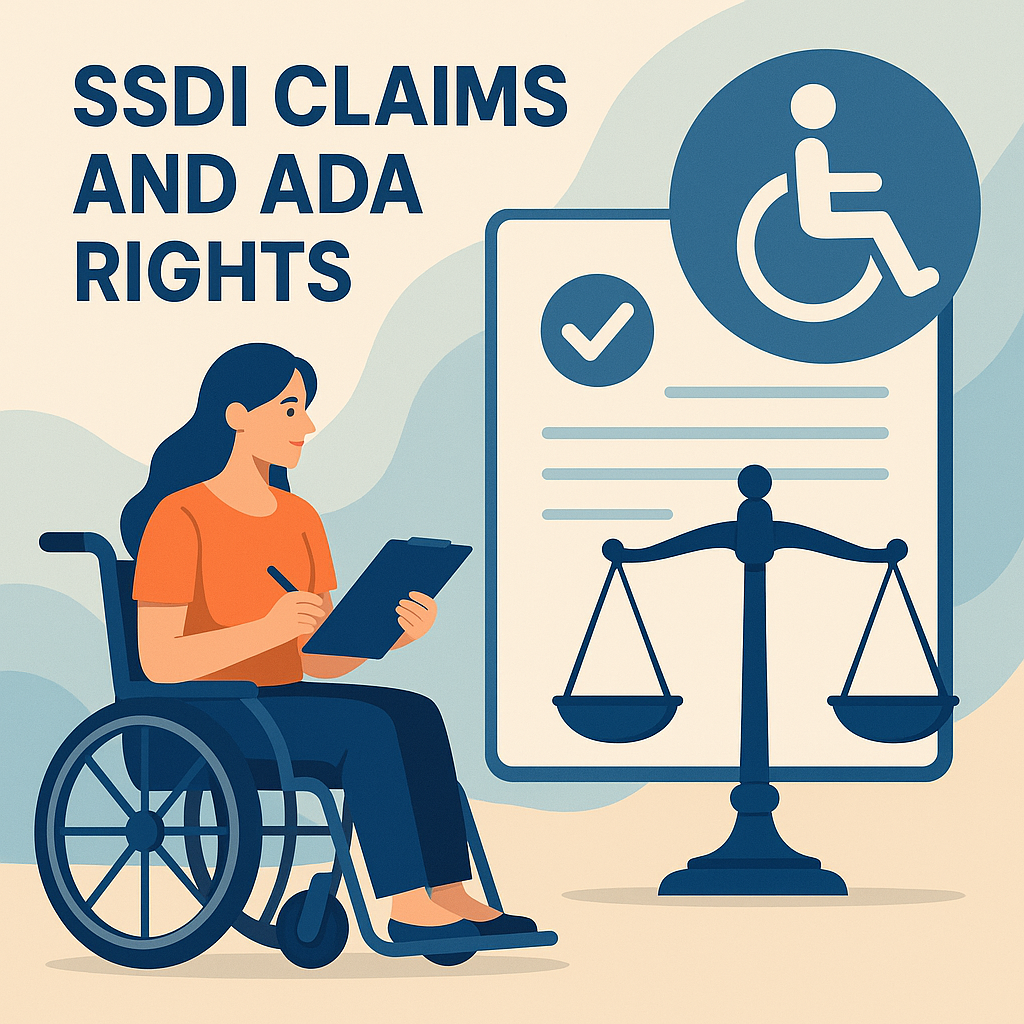
The case of Cleveland v. Policy Management Systems Corp. touches upon a significant intersection between the Social Security Disability Insurance (SSDI) claims and the Americans with Disabilities Act (ADA) rights. At the heart of this legal issue is the apparent conflict that arises when claimants receive SSDI benefits, acknowledging their inability to work, and simultaneously file discrimination claims under the ADA, which requires them to be still capable of performing job functions, with reasonable accommodations. This matter holds considerable importance as it highlights the nuanced legal interpretations and the real-world repercussions for individuals who are navigating the complexities of both federal systems. As more individuals rely on these systems for support and protection, understanding their interplay becomes crucial. The Cleveland case not only clarifies legal ambiguities but also serves as a landmark decision, guiding future claimants, attorneys, and employers in understanding how SSDI claims might impact ADA rights. Its implications extend beyond the courtroom, affecting policy formation, workforce dynamics, and disability rights activism.
The Origin of the Conflict: Understanding SSDI and ADA
To grasp the significance of Cleveland v. Policy Management Systems Corp., we must first understand the foundational components of the Social Security Disability Insurance (SSDI) and the Americans with Disabilities Act (ADA). The SSDI program provides financial assistance to individuals whose disabilities make it impossible for them to engage in gainful employment. By contrast, the ADA is a civil rights law that prohibits discrimination against individuals with disabilities, emphasizing the need for reasonable accommodations in the workplace. Here lies the controversy: SSDI claims claim an inability to work, whereas ADA claims assert that the individual can work with accommodations. This duality sparked a legal debate, raising questions about the integrity and coherence of simultaneously pursuing claims under both laws.
The Case of Cleveland in Court
In Cleveland v. Policy Management Systems Corp., Carolyn Cleveland, the plaintiff, was initially awarded SSDI benefits after she suffered a stroke that impacted her cognitive abilities, rendering her unable to perform her job duties effectively. Despite this, she filed a complaint under the ADA, claiming that her employer had discriminated against her by not providing reasonable accommodations following her disability. The lower court ruled against Cleveland, arguing that her SSDI claim inherently contradicted her ADA claim. Yet, upon reaching the Supreme Court, the case took a pivotal turn. The Court noted that a plaintiff’s SSDI statement regarding total disability does not automatically negate the possibility of a valid ADA claim. This landmark decision underscored the Supreme Court’s recognition that the mere receipt of SSDI benefits doesn’t preclude an employee from asserting ADA protections if the perceived disability could be managed with adequate accommodations.
Implications for Employees and Employers: Navigating Dual Legal Waters
The Cleveland verdict bears far-reaching implications for employees and employers alike. Employees who find themselves in similar situations must ensure a coherent narrative when filing claims, paying careful attention to how disabilities are framed across both systems. Employers, on the other hand, are prompted to revise their understanding of what constitutes reasonable accommodation and evaluate each case on an individual basis, free from preconceived notions drawn from an employee’s SSDI status. A refreshed approach is essential to avoid allegations of discrimination or failure to accommodate an employee’s needs.
| Aspect | SSDI | ADA |
|---|---|---|
| Objective | Financial support due to total disability | Protection against workplace discrimination |
| Claim Requirement | Inability to work | Capability to work with accommodations |
| Legal Focus | Disability status | Discrimination prevention |
The Role of the Supreme Court: Creating a Legal Framework
The U.S. Supreme Court’s decision in the Cleveland case provided a much-needed framework for handling cases where SSDI claims overlap with ADA claims. The Court established that discrepancies between SSDI and ADA narratives can be reconciled by introducing specific evidence that demonstrates how a plaintiff could work with reasonable accommodations, despite SSDI determinations. This legal clarification allows courts to adopt a more individualized approach, where the nuances of each case are considered, rather than solely depending on the generalized premises of one system over the other. This flexibility underlines the evolving nature of disability law, emphasizing the necessity for ongoing updates and interpretations to cater to varying circumstances.
Real-World Application: A Case Study
Consider the real-world scenario of John Doe, a hypothetical employee who, like Cleveland, received SSDI benefits following a debilitating injury that impacted his mobility and cognitive abilities. After securing SSDI on account of being unable to return to his previous line of work, John discovered a potential position that could potentially be performed with certain accommodations. He filed an ADA claim after the company rejected him on the grounds of his SSDI status. Guided by the Cleveland precedent, John successfully argued that, despite his SSDI claim, he could fulfill job duties if provided with the required accommodations. His evidence included vocational expert testimonies and medical evaluations illustrating feasible accommodations that would facilitate his employment. This example highlights the practicality of the Supreme Court’s decision, suggesting that even after SSDI approval, one can reassess their employment potential under supportive conditions.
Addressing Concerns and Future Directions
The convergence of SSDI and ADA claims, amplified by the Cleveland decision, does generate some concerns within the legal and business communities. Primarily, the potential for increased litigation and administrative burden poses significant challenges for both legal practitioners and businesses. Employers could face escalated pressures to justify employment decisions, which may, in some cases, deter them from hiring individuals with disabilities to avoid potential legal consequences. Yet, these are surmountable challenges that can be efficiently managed through informed policies, comprehensive training programs for managers, and the creation of inclusive workplace cultures that embrace diversity. Future directions may involve legislative enactments or updated guidelines that provide clearer pathways for claimants to navigate both SSDI and ADA systems simultaneously, balancing rights preservation with administrative feasibility.
Conclusion: Navigating the Intersection for a Better Outcome
In conclusion, Cleveland v. Policy Management Systems Corp. stands as a pivotal case in disability law, bridging the gap between SSDI claims and ADA rights. Its essence encapsulates the importance of understanding and effectively navigating these dual systems, not only for claimants who deserve fair treatment and opportunities but also for employers striving to maintain equitable workplace environments. For individuals with disabilities, this case serves as an instrumental reminder to clearly and consistently document their disabilities and required accommodations while pursuing both SSDI and ADA claims. For employers, the outcome of this case emphasizes the importance of reassessing accommodation requests with fresh perspectives, remaining vigilant and open-minded regarding each employee’s unique situation. Ultimately, the Dallas decision paved the way for a more nuanced judicial and societal understanding, reminding us all of the importance of flexibility, accommodation, and empathy when addressing disability rights in the modern world. As the landscape of disability law continues to evolve, stakeholders are called to engage proactively, ensuring that these legal frameworks resonate with the lived experiences and legitimate needs of individuals they aim to serve.
Readers and stakeholders must therefore take active steps, whether by updating company policies, seeking legal advice, or advocating for legislative refinements, to align individual and organizational practices with the principles elucidated in the Cleveland decision. By doing so, we ensure that justice, equity, and inclusion form the cornerstone of disability policies across every sphere of society.
Frequently Asked Questions
1. What is the main conflict addressed in the Cleveland v. Policy Management Systems Corp. case?
The core issue in Cleveland v. Policy Management Systems Corp. revolves around the potential conflict that arises when individuals who receive Social Security Disability Insurance (SSDI) benefits, which imply an inability to work, also file claims under the Americans with Disabilities Act (ADA). The ADA presumes that claimants are capable of fulfilling job duties with reasonable accommodations. The crux of the case is understanding how a person can legally claim that they are disabled enough to receive SSDI while simultaneously asserting the capability to work under the ADA.
2. How does receiving SSDI benefits conflict with filing an ADA claim?
When an individual receives SSDI benefits, they have officially declared that they are unable to engage in substantial gainful activity due to a disability. This seems to be at odds with filing an ADA claim, which hinges on the assertion that the person can perform job functions, provided they receive reasonable accommodations. The conflict arises from the necessity to reconcile these seemingly contradictory statements about a person’s capacity to work.
3. Does receiving SSDI automatically disqualify me from filing an ADA claim?
No, receiving SSDI benefits does not automatically bar a person from filing an ADA claim. The Supreme Court in Cleveland v. Policy Management Systems Corp. established that while there is an inherent tension between claiming SSDI and pursuing an ADA claim, the two can coexist. To do so, the plaintiff must provide a sufficient explanation reconciling the statements made in the SSDI application and those made in the ADA claim, showing that despite receiving SSDI, they can still perform their job duties with reasonable accommodation.
4. What type of explanation is required to pursue both SSDI and ADA claims?
The explanation required lies in detailing how an SSA (Social Security Administration) determination of disability does not preclude ADA protections. For instance, a claimant could argue that advancements in medical treatment, specialized accommodations they did not previously have access to, or changes in their job environment now allow them to perform essential job functions. It’s crucial to outline how, with reasonable accommodations, they can fulfill their work responsibilities contrary to the initial implications of total disability under SSDI.
5. What important precedent did the Cleveland v. Policy Management Systems Corp. case set?
This case set an essential precedent by affirming that courts must evaluate the unique circumstances presented by each individual who seeks both SSDI and ADA benefits. The ruling emphasized that individuals receiving SSDI benefits can still pursue ADA claims, provided they can sufficiently explain the seeming contradiction. This means the courts will not rigidly interpret the relationship between SSDI and ADA qualifications, allowing disability claimants more flexibility in seeking rights and protections under both legal frameworks. The decision has far-reaching implications for people with disabilities, ensuring they aren’t penalized or precluded from claiming their rights under the ADA due to their receipt of SSDI benefits.


