The Americans with Disabilities Act (ADA), a robust piece of civil rights legislation, was signed into law on July 26, 1990. It was a landmark moment intended to ensure that individuals with disabilities have the same rights and opportunities as everyone else. The ADA is far-reaching and has impacted multiple facets of society, including employment, education, and public services. One of the significant areas where the ADA has made its mark is within the entertainment industry. Whether it’s movies, theaters, concerts, or television, the ADA has been instrumental in breaking down barriers and promoting inclusivity. This article dives into how the ADA has influenced the entertainment industry, shedding light on successes and ongoing challenges.
The entertainment industry is known for its ability to touch lives, elicit emotions and bring varied experiences to a wide audience. However, for a long time, those with disabilities were largely excluded from these experiences, primarily due to physical, technological, and social barriers. The ADA has played a pivotal role in changing this scenario. Pursuant to the regulations entailed in the ADA, entertainment venues and organizations are required to make their services, programs, and activities accessible to people with disabilities. This regulatory mandate has not only helped in making entertainment activities inclusive but also paved the way for a broader societal acceptance.
Impact of ADA on Physical Accessibility in Entertainment Venues
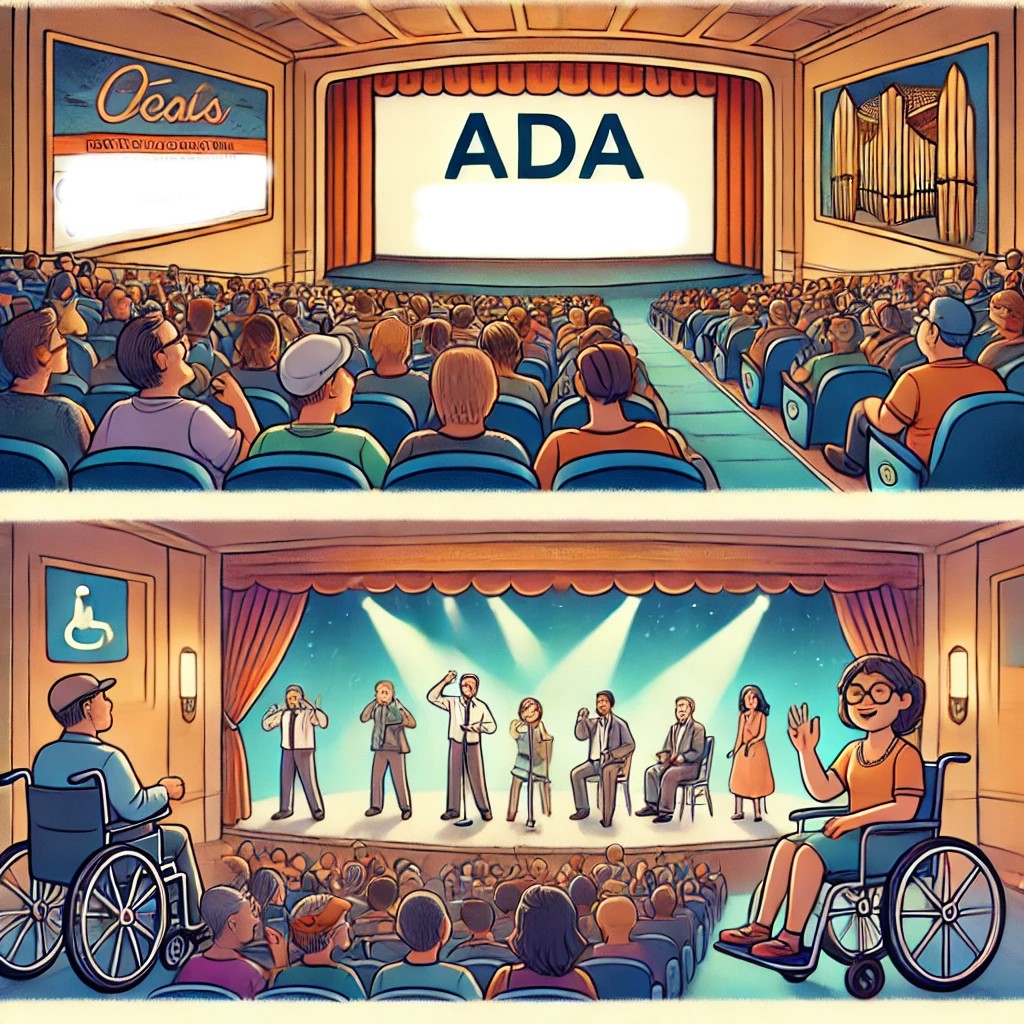
One of the most visible impacts of the ADA on the entertainment industry is the improvement in physical accessibility of venues. Concert halls, movie theaters, sports arenas, and amusement parks have undergone significant changes to comply with the ADA’s accessibility standards. These changes include the integration of ramps, elevators, and accessible seating areas to ensure that individuals with disabilities can navigate and enjoy these spaces just like anyone else.
In theaters, both the stage and the audience areas are required to be accessible. This has led to the installation of platforms, railings, and improved restroom facilities among other changes. For instance, many museums and amusement parks offer tactile exhibits and assistive technologies to enhance the experience for visitors with disabilities. Prior to the enactment of the ADA, such accommodations were rare, leaving many feeling excluded from participating in cultural and entertainment activities.
These modifications have not only made it easier for individuals with disabilities to access entertainment venues but also increased the inclusivity of these spaces. Entertainment organizations that fail to comply with ADA standards face legal consequences, which serves as a strong deterrent against non-compliance. Over the years, this has led to a more inclusive entertainment environment where everyone, regardless of their physical capabilities, can immerse themselves in a variety of experiences.
Technological Advancements and the Role of ADA
The ADA has also catalyzed technological innovations aimed at making entertainment accessible for individuals with disabilities. For instance, captioning services in movie theaters and on television have become a standard requirement. This allows individuals who are deaf or hard of hearing to follow along with the dialogue and enjoy the plot just as much as anyone else. Technological advancements such as audio descriptions for the visually impaired have made it possible for them to understand the visual elements of a movie or a play.
Moreover, streaming services have also adopted accessibility features in compliance with ADA regulations. Platforms like Netflix, Amazon Prime, and Disney+ offer a variety of accessibility options including subtitles, Closed Captioning (CC), and audio descriptions. This ensures that their content is accessible to everyone, regardless of disabilities.
The emergence of new technologies such as Virtual Reality (VR) and Augmented Reality (AR) also holds promise for further enhancing accessibility in the entertainment industry. As these technologies continue to develop, it is crucial that developers integrate accessible features from the beginning. The ADA serves as a guiding framework for such initiatives, ensuring that innovation in entertainment technology is inclusive and accessible for all.

Employment Opportunities for Individuals with Disabilities
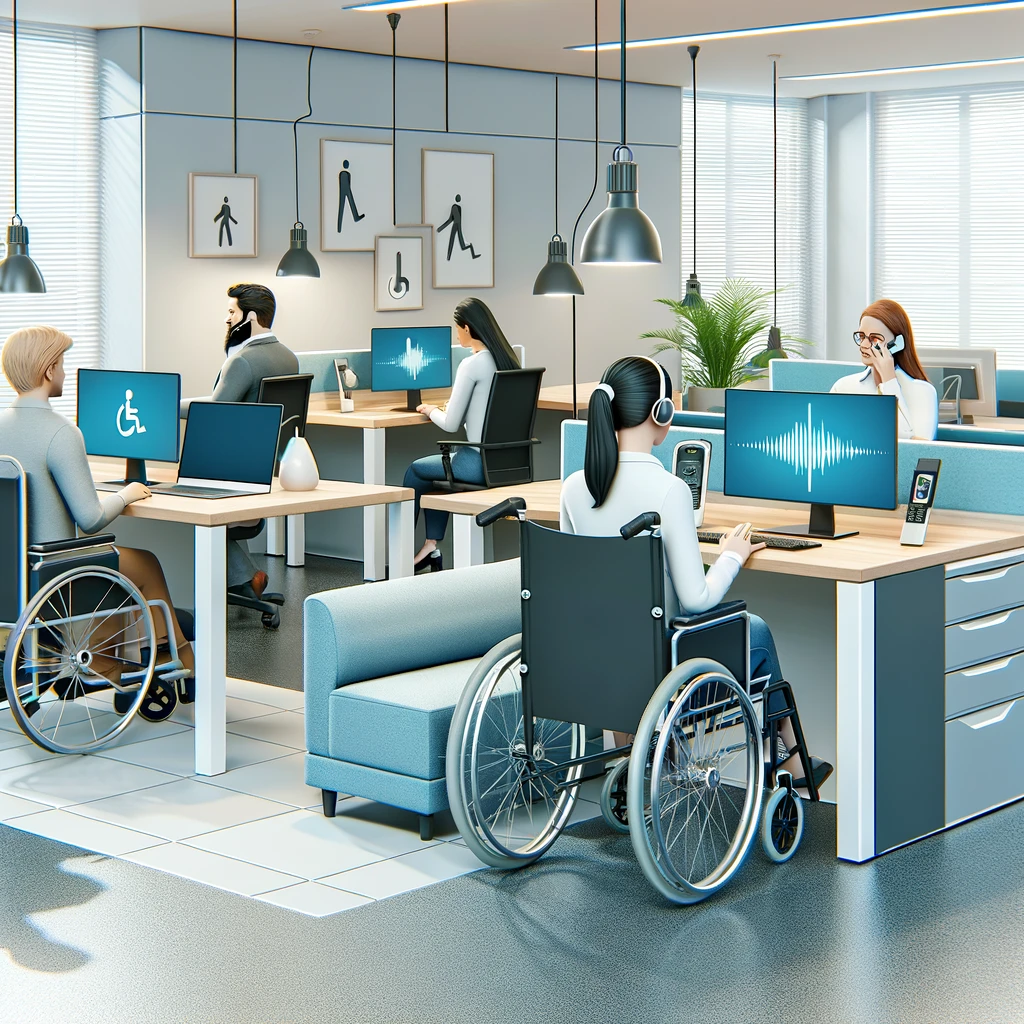
Another significant contribution of the ADA in the entertainment industry is the creation of employment opportunities for individuals with disabilities, both in front of the camera and behind the scenes. The ADA prohibits discrimination based on disability and mandates reasonable accommodations in the workplace. This has led to an increase in the employment of individuals with disabilities in various roles within the entertainment industry, from actors and musicians to writers and directors.
Take, for example, Marlee Matlin, an Academy Award-winning actress who is deaf, or Ali Stroker, the first actress in a wheelchair to win a Tony Award. These individuals have broken barriers and served as inspirations for many. Behind the scenes, there has been a concerted effort to employ people with disabilities in technical roles, production, writing, and more. This shift not only creates job opportunities but also ensures that diverse perspectives are represented in the content that is produced.
Furthermore, organizations within the entertainment industry are recognizing the value of accessibility consultants who can provide insights and recommendations to make their productions more inclusive. This includes crafting accessible scripts, designing sets, and implementing technologies that make entertainment accessible to all. Such initiatives not only comply with ADA regulations but also resonate well with audiences and promote a culture of inclusivity.
Challenges and Ongoing Efforts
While significant strides have been made, there are still challenges that need to be addressed to fully realize the vision of the ADA in the entertainment industry. One of the primary challenges is the inconsistency in accessibility across different venues and platforms. While some have fully embraced ADA standards, others lag behind, either due to financial constraints, lack of awareness, or resistance to change.
Additionally, the representation of individuals with disabilities in media and entertainment remains an area that requires significant improvement. Often, the portrayal of characters with disabilities is not authentic, and many roles that should ideally be played by actors with disabilities are instead given to able-bodied actors. This not only undermines the inclusivity efforts but also perpetuates stereotypes and misconceptions about individuals with disabilities.
Advocacy groups and organizations continue to work tirelessly to address these challenges. They are pushing for stricter enforcement of ADA regulations, fostering collaborations between the entertainment industry and disability organizations, and promoting awareness campaigns to highlight the importance of accessibility and inclusivity. Furthermore, as technology evolves, there is an ongoing need to update and expand ADA regulations to encompass new forms of media and entertainment.
The Future of ADA in the Entertainment Industry
The future of ADA in the entertainment industry looks promising, with a growing recognition of the importance of accessibility and inclusivity. Emerging technologies and innovative solutions are poised to further enhance the entertainment experience for individuals with disabilities. For example, advancements in Artificial Intelligence (AI) can offer personalized accessibility options, while advancements in 5G and the Internet of Things (IoT) can revolutionize how entertainment is delivered and consumed.
Moreover, the entertainment industry is becoming more proactive in seeking the perspectives and participation of individuals with disabilities. This collaborative approach is likely to lead to more nuanced and authentic portrayals of disability in media and an increased presence of individuals with disabilities in all facets of the industry. Additionally, as consumers become more aware of and demand inclusivity, the industry will be compelled to adhere to ADA standards and beyond.
Government bodies and regulation authorities will continue to play a crucial role in this journey by updating and enforcing ADA compliance, facilitating funding for accessibility projects, and supporting research into innovative accessibility solutions. The combined efforts of all stakeholders will ensure that the entertainment industry evolves to become truly inclusive, offering a rich and diverse experience for everyone.
Conclusion
In conclusion, the Americans with Disabilities Act has profoundly influenced the entertainment industry by breaking down barriers and promoting inclusivity. From ensuring physical accessibility in venues to driving technological advancements for accessible content, the ADA has paved the way for a more inclusive entertainment environment. It has also fostered employment opportunities for individuals with disabilities, allowing them to contribute their talents and perspectives to the industry.
Despite the significant progress, challenges remain, particularly in terms of consistent accessibility across all venues and authentic representation of disabilities in media. However, ongoing efforts by advocacy groups, technological innovations, and a growing industry commitment to inclusivity paint a promising picture for the future. By holding onto the principles of the ADA and adapting to new developments, the entertainment industry can continue to evolve into a space where everyone, regardless of their abilities, can participate, enjoy, and thrive.
Frequently Asked Questions
1. How has the ADA affected accessibility in movie theaters?
The enactment of the ADA dramatically reshaped the landscape for accessibility within movie theaters, a critical component of the entertainment industry. Prior to the ADA’s implementation, movie theaters were notoriously inaccessible to individuals with disabilities, often lacking basic accommodations like wheelchair-accessible seating or assisted listening devices. The ADA ushered in a new era, mandating that theaters remove architectural barriers, including providing accessible seating options that ensure individuals using wheelchairs can enjoy films alongside their friends and family with ease.
Additionally, the ADA requires theaters to offer assistive technologies for hearing-impaired customers, such as closed captioning devices and audio description services. Beyond fulfilling legal obligations, these changes speak to the growing recognition of inclusivity and the moral imperative to make entertainment experiences shared and accessible to all. This transformation in theater accessibility signifies a cultural shift towards recognizing the importance of equal opportunity in leisure activities, while also setting a precedence for other public venues to follow suit.
2. What role does the ADA play in ensuring accessibility in live entertainment venues?
Live entertainment venues, ranging from concert halls to sports arenas, have also been significantly impacted by the ADA. The Act has played a pivotal role in ensuring that these venues are not only physically accessible but also equitable for all patrons. Buildings constructed or altered after the ADA’s passage must adhere to stringent accessibility guidelines, including the installation of ramps and elevators, tactile signage, and audio-visual aids for those with vision or hearing impairments.
The ADA goes beyond just structural changes. It also encompasses accessibility in ticketing and seating arrangements. Live entertainment venues are required to offer accessible ticket purchasing options, allowing individuals with disabilities to purchase tickets online or through accessible means, and to inform them about their seating choices, ensuring that they receive the same quality of experience as other attendees. Additionally, ADA compliance includes providing auxiliary aids and services, such as ASL interpreters and captioning for performances, so that attendees can fully engage with the event. These stipulations serve to make live entertainment an inclusive affair, fostering a more diverse audience and allowing venues to embrace a broader array of patrons without discrimination.
3. How does the ADA impact employment opportunities within the entertainment industry?
The ADA’s influence extends far beyond consumer-focused accessibility; it has a significant impact on employment opportunities within the entertainment industry. The ADA mandates that employers, including production companies, theaters, and music labels, provide equal employment opportunities and reasonable accommodations to qualified individuals with disabilities. This means adjustments can be made to the hiring process, workplace environment, and certain job functions to allow individuals with disabilities to perform their roles effectively.
For instance, a production company might provide assistive technology for an employee with visual impairment or modify a rehearsal space to accommodate a performer with mobility challenges. By requiring such adaptations, the ADA has opened doors for countless talented individuals who may have been excluded from employment opportunities in the entertainment industry prior to its enactment. The result is a richer, more diverse creative landscape where diverse voices and abilities are celebrated and incorporated. Compliance with the ADA in employment not only protects individuals against discrimination but enhances the cultural fabric of the industry by promoting inclusivity and equity.
4. What challenges do entertainment venues face in implementing ADA regulations, and how are they overcoming them?
Entertainment venues face a range of challenges when implementing ADA regulations, primarily due to financial constraints, the architectural design of older structures, and the complexities of keeping abreast with current technology and accommodation standards. Retrofitting older buildings to align with ADA standards can be both costly and logistically daunting, particularly when trying to balance historical preservation with accessibility requirements.
To overcome these challenges, many venues are leveraging grants and tax incentives available for ADA compliance improvements. Touching base with experts in universal design and accessibility can provide venues with insightful, practical solutions tailored to their individual constraints. Additionally, industry collaboration and sharing best practices have become pivotal, helping venues learn from one another’s successes and innovations. The continuous engagement of advocacy groups and individuals with disabilities in consultation processes ensures that changes are user-informed and genuinely accessible. By welcoming feedback and embracing a mindset of continuous improvement, venues can sustainably embed ADA compliance in their operations while enhancing the overall experience for all patrons.
5. In what ways has the ADA inspired further legislative or industry standards for accessibility?
The ADA has served as a benchmark for numerous subsequent legislative efforts and industry standards aimed at improving accessibility not only within the United States but globally. Its comprehensive framework has propelled awareness and advocacy, inspiring jurisdictions worldwide to adopt similar legal protections for individuals with disabilities. On the industry front, the ADA has prompted the development of industry-specific accessibility standards, such as those for digital media platforms, ensuring inclusivity in both physical and digital entertainment spaces.
Beyond legislative influence, the ADA has also sparked corporate social responsibility initiatives within the industry, encouraging businesses to voluntarily exceed compliance in pursuit of innovative accessibility solutions. The adoption of progressive accessibility standards like immersive audio technologies, augmented and virtual reality applications adapted for inclusivity, and AI-driven captioning services reflect the expanding horizons of what is possible post-ADA. Ultimately, the ADA’s legacy within the entertainment industry is one of ongoing transformation, a catalyst for a more inclusive world where barriers continue to be broken down, enabling everyone to participate and contribute to the communal joy and creativity that entertainment embodies.