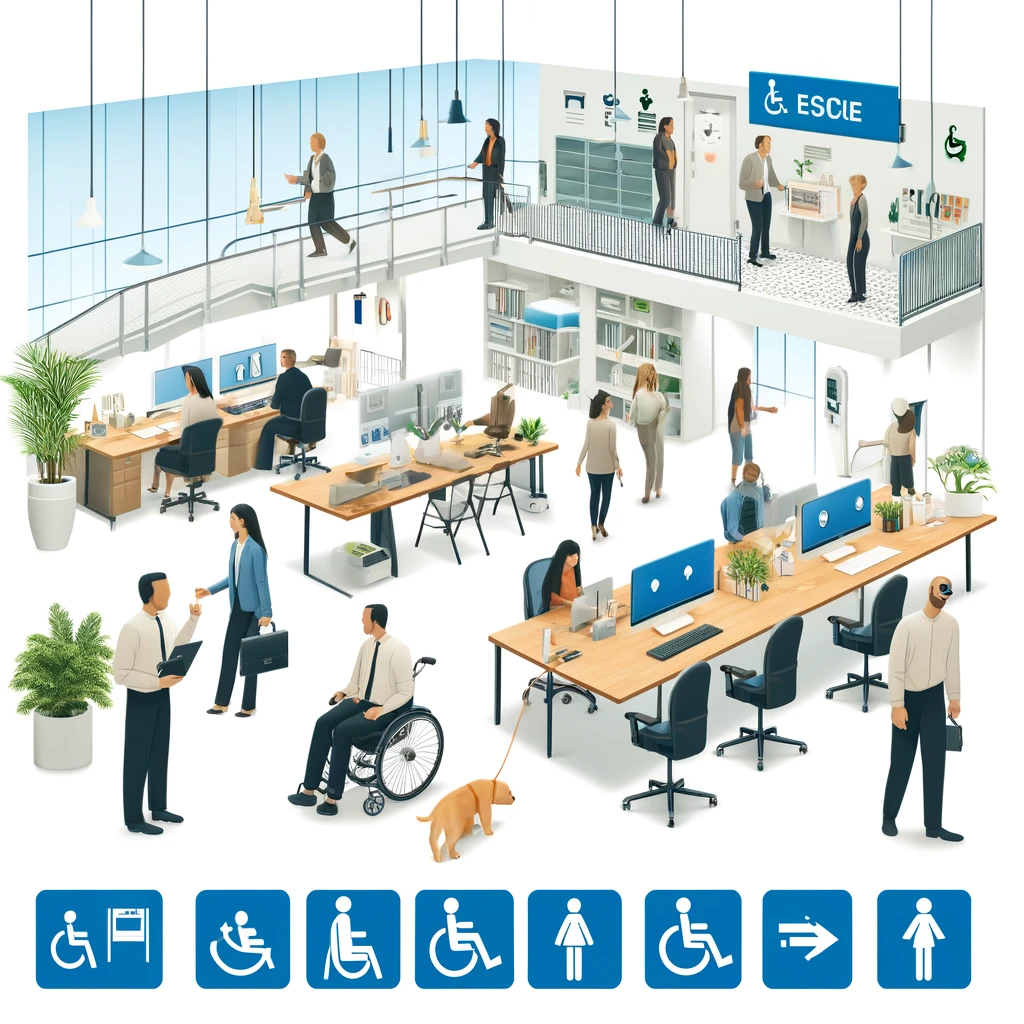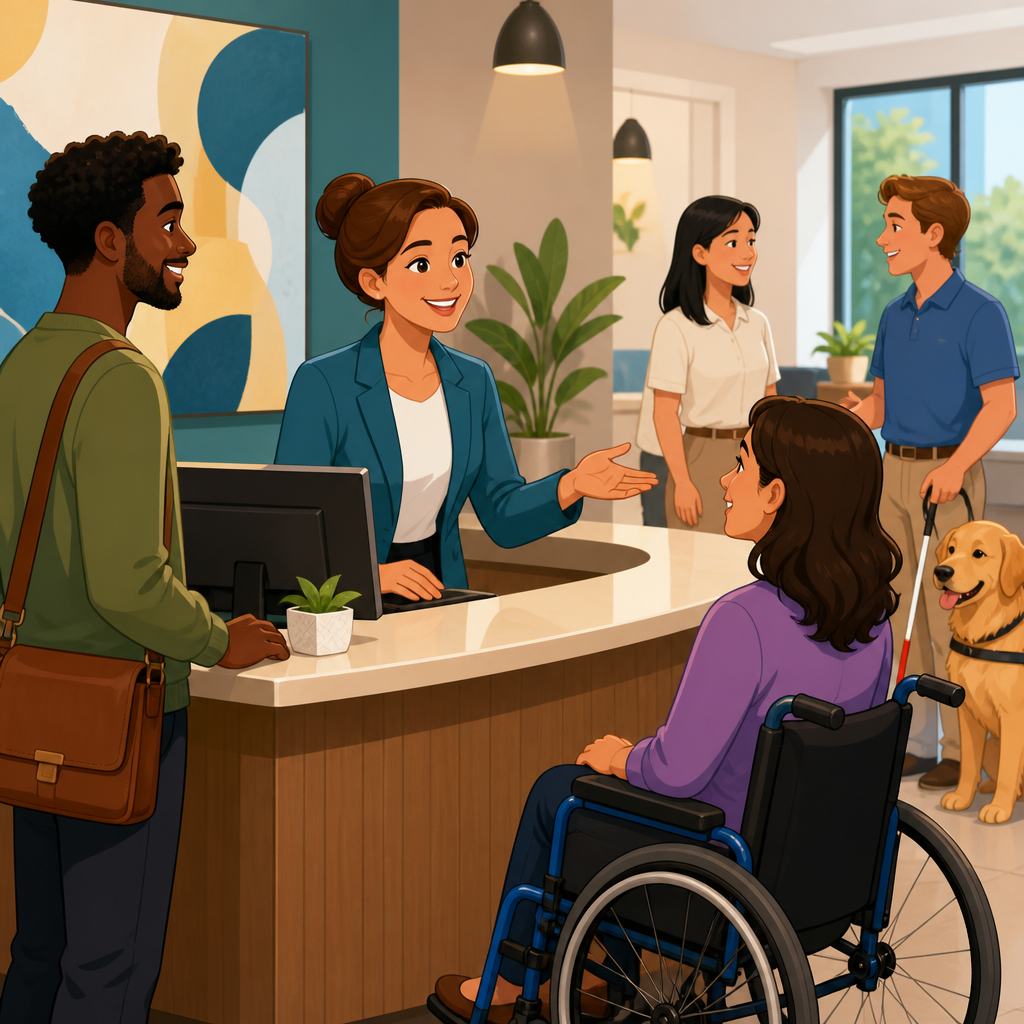
ADA training for front desk and customer service employees is the practical foundation of accessible service, because these roles handle first contact, shape visitor expectations, and often determine whether a business meets its legal and operational duties under the Americans with Disabilities Act. In daily operations, I have seen accessibility succeed or fail in the first two minutes of an interaction: a receptionist who knows how to greet a deaf visitor, a call center representative who understands relay services, or a concierge who offers assistance without making assumptions can prevent complaints and build trust immediately. For organizations in healthcare, hospitality, retail, education, housing, and professional services, this training is not optional in any meaningful sense. It is a core compliance function, a customer experience standard, and a risk management discipline.
In this context, ADA training means structured instruction that teaches employees how to communicate effectively, provide reasonable modifications in service practices, use accessible procedures, and escalate issues correctly when a request goes beyond routine front line authority. Front desk staff include receptionists, greeters, schedulers, admissions personnel, security desk teams, and lobby attendants. Customer service employees include phone representatives, chat agents, retail associates, guest services teams, and anyone responsible for handling questions, appointments, transactions, or complaints. Role-based education matters because these employees do not need the same depth of instruction as facilities managers or legal counsel, but they do need precise operational guidance tied to the situations they face every day. A generic annual compliance video will not prepare them for real interactions, and that gap is where mistakes happen.
The ADA matters at the service level because Titles II and III require accessible communication and equal access to programs, goods, and services, while Title I shapes employment practices that often intersect with frontline interactions. The U.S. Department of Justice has consistently emphasized effective communication, reasonable modifications, and the removal of unnecessary eligibility barriers. Front desk and customer service employees are usually the people implementing those principles in real time. If they do not understand auxiliary aids, service animal rules, mobility access etiquette, or how to respond when a customer asks for an accommodation, an organization can create discrimination through ordinary workflow. Strong training turns abstract legal requirements into repeatable behaviors, scripts, and decision trees that employees can apply under pressure.
What ADA training for front desk and customer service employees must cover
A complete training program starts with the service obligations employees control directly. Staff should understand disability as a broad legal and functional concept, but the training should quickly move from definitions to actions. Employees need to know how to welcome customers with disabilities without singling them out, how to ask “How can I help?” instead of making assumptions, and how to provide the same information through more than one communication method when needed. They should be trained on person-first and identity-first language nuance, but the operational priority is respectful communication and equal access to the service being offered.
Effective communication is the center of most frontline ADA training. Employees should know when to slow down speech, move to a quieter area, write information down, use captioned phone options, or bring in a qualified interpreter through established organizational procedures. They need to understand that speaking louder is not a universal solution, that lipreading is unreliable for many people, and that passing a printed form across a counter is not sufficient for a blind customer who needs the information read aloud or provided in an accessible digital format. In practice, the strongest programs include examples for in-person, phone, email, chat, and video interactions because communication barriers shift across channels.
Service animal rules are another essential topic because misunderstandings are common and legally risky. Front desk staff should know that in most public accommodation contexts, staff may ask only two questions when the need is not obvious: whether the dog is required because of a disability and what work or task the dog has been trained to perform. They should know that emotional support alone does not automatically make an animal a service animal under public accommodation rules, and that staff generally cannot request documentation, require a special vest, or separate the handler from the animal. This is a straightforward area of law, but it causes repeated friction when employees rely on myths instead of training.
Mobility access and physical navigation also belong in role-based education. Employees should know how to guide a visitor to an accessible entrance, seating area, restroom, elevator, or service counter without treating those features as exceptional. They should understand basic etiquette, such as not leaning on a wheelchair or touching mobility devices without permission. If temporary barriers appear, such as a blocked ramp or an out-of-service automatic door, the frontline team must know the immediate workaround and the escalation path. In my experience, many organizations focus so heavily on permanent building features that they forget the customer-facing process for temporary disruptions, even though that is where complaints often begin.
How role-based education should be structured
The most effective ADA training for front desk and customer service employees is not a single broad module. It is a tiered curriculum that starts with baseline awareness and then branches into role-specific scenarios. Reception staff need one set of examples, call center staff need another, and managers need escalation training that includes documentation, judgment standards, and exception handling. A good program distinguishes what employees must do themselves, what they may offer, and when they must escalate. That division reduces hesitation and prevents both overpromising and unnecessary refusals.
Training should be organized around workflows, not just legal topics. For example, a medical office receptionist needs to understand appointment scheduling for patients who need additional time, companions, accessible forms, or communication supports. A hotel front desk agent needs to know how to discuss accessible room features accurately, avoid overselling availability, and coordinate maintenance if a visual alarm or shower seat is missing. A retail associate needs to know how to retrieve merchandise from inaccessible displays and how to assist with checkout alternatives if a payment terminal is positioned poorly. These are not edge cases. They are normal service situations that deserve standard operating procedures.
Scenario-based instruction consistently performs better than policy-only instruction because frontline employees remember specific moments. During workshops I have led, the strongest retention usually comes from short scenarios with decision points: a customer arrives with a service dog and another guest complains; a deaf visitor asks for help at check-in; a blind client cannot use a signature pad; a person with a speech disability calls to dispute a bill through a relay operator. When employees work through these situations and practice the exact phrasing they should use, confidence rises and complaint rates drop. Training should include scripts, but scripts should support judgment rather than replace it.
Frequency matters as much as content. New hires should receive ADA training during onboarding before they begin unsupervised customer interactions. Refresher training should happen at least annually, with shorter updates whenever procedures, technology, or facility conditions change. High-volume environments may benefit from quarterly microlearning because turnover is often high and frontline responsibilities shift quickly. The best programs also trigger training after incident reviews, customer complaints, mystery shopping findings, or policy updates from legal and compliance teams.
| Role | Core ADA topics | Key scenarios to practice | Escalation triggers |
|---|---|---|---|
| Front desk receptionist | Effective communication, service animals, accessible routes, form assistance | Visitor check-in, escort requests, auxiliary aid coordination | Interpreter requests, inaccessible equipment, denied access complaints |
| Call center agent | Relay services, speech disability etiquette, alternate verification methods | Billing dispute through relay, extended call handling, accessible follow-up | Authentication barriers, repeated communication failures |
| Retail or guest services staff | Queue access, merchandise assistance, payment accessibility, service recovery | High counter transactions, aisle obstruction, customer complaint response | Physical access barriers, repeated equipment outages |
| Supervisor or manager | Reasonable modifications, documentation, complaint handling, policy exceptions | Accommodation approval, conflict de-escalation, incident review | Legal risk, pattern complaints, unresolved access failures |
Core service situations every frontline employee should master
The first situation is greeting and intake. Employees should ask open, respectful questions and focus on the service goal. Instead of saying, “What is wrong with you?” or talking to a companion instead of the customer, staff should say, “Welcome. How can I assist you today?” That wording is simple, neutral, and effective. It avoids medical inquiry while inviting the customer to identify what support is useful. Frontline employees should also know how to maintain privacy. Discussing a disability-related need across a crowded lobby can create embarrassment and unnecessary exposure of personal information.
The second situation is handling forms, signatures, and identity verification. Many organizations accidentally create access barriers through routine paperwork. A blind customer may need a document read aloud or sent in an accessible electronic format. A customer with limited dexterity may need an alternative to a hard-to-use signature pad. A person with a cognitive disability may need plain-language explanation of a process without being infantilized. Verification rules still matter, but methods often need flexibility. If training never addresses alternatives, employees assume the standard process is mandatory in every case, and that is where exclusion happens.
The third situation is wait times, queues, and physical access. Long standing lines can create barriers for people with mobility disabilities, chronic pain, or stamina limitations. Customer service staff should know whether the organization offers seated waiting, call-ahead options, text notifications, or priority handling where permitted by policy. They should also know how to keep accessible routes clear. Boxes in hallways, wet floor signs placed in narrow passages, and decorative furniture near reception counters routinely interfere with access. These may seem like facilities issues, but frontline teams are usually the first to notice and correct them.
The fourth situation is complaint handling and service recovery. When a customer says they could not access a service, employees should not become defensive or argue technicalities. The correct response is to acknowledge the issue, solve the immediate problem if possible, and escalate according to policy. A useful structure is listen, clarify, act, document, escalate. This approach reduces conflict and creates a record the organization can use to fix root causes. In practice, complaint handling is where training proves its value because employees must combine communication skills, policy knowledge, and judgment in real time.
Tools, standards, and documentation practices that strengthen training
ADA training works best when it is supported by documented procedures and recognized standards. The ADA itself sets the legal framework, and the Department of Justice provides practical guidance on service animals, effective communication, and general nondiscrimination duties. For built environment questions, organizations often rely on the 2010 ADA Standards for Accessible Design to understand routes, counters, restrooms, signage, and parking. If digital forms, kiosks, or customer portals are part of the service journey, training should connect frontline procedures to digital accessibility practices commonly aligned with WCAG. Employees do not need to become technical experts in every standard, but they should know what tools and teams exist inside the organization.
Documentation is a major differentiator between weak programs and mature ones. Front desk and customer service staff should have quick-reference resources: a service animal guide, an interpreter request workflow, alternate format procedures, a list of accessible entrances, and a simple escalation matrix with phone numbers or ticketing paths. Knowledge articles inside systems such as Zendesk, Salesforce Service Cloud, ServiceNow, or Microsoft Dynamics can embed these instructions where employees already work. That is far more effective than expecting staff to remember every rule from an annual training module.
Measurement also matters. Organizations should track complaint themes, accommodation response times, interpreter fulfillment rates, inaccessible equipment incidents, and frontline confidence scores from post-training assessments. Mystery shopping and call reviews can test whether employees use respectful language and proper escalation steps. In one service program I reviewed, refresher coaching reduced recurring communication complaints because supervisors found that employees understood the policy but hesitated during live interactions. The fix was not another legal lecture. It was repeated role-play tied to actual calls and lobby encounters.
Training should also align with internal links across the wider compliance program. This hub naturally connects to deeper resources on service animal compliance, effective communication, digital accessibility, physical access audits, accommodation request procedures, and manager escalation training. That internal structure helps employees and compliance owners find the right level of detail quickly, and it prevents the hub from becoming a dead-end summary page. As a central resource, this article’s role is to define the training landscape and direct implementation toward specialized procedures.
Common mistakes and how to build a durable training program
The most common mistake is treating ADA training as a one-time legal obligation instead of an operational capability. When organizations buy a generic course, mark completion, and move on, employees are left without practical judgment. Another common mistake is overemphasizing prohibited behavior while underteaching positive service actions. Staff leave knowing what not to say, but not what to do when a customer needs help right now. A third mistake is failing to involve supervisors. Frontline employees need confidence that if they escalate a complex request, a trained manager will respond consistently.
A durable program is built on policy, scenarios, reinforcement, and accountability. Start with a clear service standard that applies across locations and channels. Translate that standard into role-specific procedures, scripts, and job aids. Train managers first so they can coach to the same expectations. Use realistic scenarios drawn from incident logs, complaints, and common customer journeys. Then measure outcomes and revise the training when patterns emerge. This cycle keeps the program current and credible.
ADA training for front desk and customer service employees delivers a direct benefit: it turns compliance into reliable service. Customers get better access, employees feel prepared, and organizations reduce avoidable complaints and reputational damage. The key takeaway is simple: train to the role, train to the workflow, and train to the actual moments where access can break down. If you manage a compliance and implementation program, use this hub as the starting point for your training architecture, then map each frontline role to detailed procedures, refreshers, and escalation paths your team can use every day.
Frequently Asked Questions
Why is ADA training especially important for front desk and customer service employees?
ADA training is particularly important for front desk and customer service employees because they are usually the first point of contact for customers, visitors, patients, tenants, or members of the public. That first interaction often determines whether a person with a disability feels welcomed, respected, and able to access the business on equal terms. In practice, accessibility often succeeds or fails in the opening moments of service. A receptionist who knows how to communicate clearly with a deaf visitor, a customer service representative who understands how to assist someone with a speech disability, or a front desk employee who knows how to respond when a person arrives with a service animal can prevent confusion, delay, embarrassment, and potential legal exposure.
From a compliance standpoint, these employees help carry out many of the day-to-day responsibilities that support ADA compliance, including effective communication, nondiscriminatory service, reasonable modifications to policies when appropriate, and equal access to programs and services. But beyond legal duties, good training improves operations. It reduces complaints, avoids unnecessary conflict, helps staff respond confidently, and creates a more professional customer experience for everyone. Businesses that invest in ADA training at the front line are not just managing risk; they are building a culture of accessible service that customers notice immediately.
What topics should ADA training for front desk and customer service staff include?
Effective ADA training should cover both legal basics and practical service scenarios employees actually face during a typical shift. Staff need a clear understanding of what the ADA requires in public-facing interactions, including the principle that individuals with disabilities must have an equal opportunity to access goods, services, and information. Training should explain disability etiquette, person-first and respectful communication practices, and the importance of addressing the customer directly rather than speaking only to a companion, interpreter, or aide.
Training should also address effective communication with people who are deaf, hard of hearing, blind, have low vision, have speech disabilities, cognitive disabilities, mobility disabilities, or invisible disabilities. That includes practical skills such as how to offer assistance without being patronizing, how to communicate when someone uses a communication device, how to read from and describe written materials when appropriate, and how to handle situations where a person requests an accommodation. Employees should understand how to respond to service animals, how to maintain accessible queuing and reception areas, and how to avoid common mistakes such as refusing entry, speaking too quickly, or insisting on unnecessary documentation.
Strong training also includes policies for phone, email, chat, and in-person communication, because accessibility obligations are not limited to the physical front desk. Call center and customer service employees should know how to handle relay calls, be patient with alternative communication methods, and avoid hanging up on calls that sound unfamiliar or take longer than expected. Scenario-based examples are especially valuable because they help employees apply the rules in real time rather than memorizing abstract legal language. The most useful training leaves staff knowing not just what the ADA says, but what respectful, compliant service looks like in everyday interactions.
How should employees respond when a customer or visitor requests an accommodation?
When a customer or visitor requests an accommodation, the best response is calm, respectful, and solution-oriented. Employees should listen carefully, avoid making assumptions, and focus on what is needed for the person to access the service or complete the interaction. In many cases, the request will be straightforward, such as asking for written communication, extra time, assistance locating an accessible entrance, or help completing a form. Front-line employees should be trained to recognize that these requests are a normal part of providing equal access, not a special favor or inconvenience.
Staff should avoid defensive responses such as “we’ve never done that before,” “that’s our policy,” or “you’ll need to prove your disability.” Instead, they should follow established internal procedures: provide the accommodation if it is within their authority, or promptly escalate to a supervisor who can assist without delay. The goal is to remove barriers efficiently and respectfully. Employees should also understand that not every request will be framed in legal language. A customer does not need to say “I am requesting a reasonable accommodation under the ADA” for the business to recognize and respond appropriately to an access-related need.
Good training emphasizes that the interaction matters as much as the outcome. Even when an employee cannot personally solve the issue, they should communicate with empathy, explain next steps clearly, and stay engaged until the customer is connected to someone who can help. This approach reduces frustration, demonstrates professionalism, and supports both legal compliance and customer trust.
What are common ADA mistakes front desk and customer service teams make?
Some of the most common ADA-related mistakes happen not because employees intend to discriminate, but because they have not been trained on what accessible service requires. One frequent problem is making assumptions about a person’s abilities or needs, such as speaking to a companion instead of the individual, deciding what assistance is needed without asking, or treating someone as incapable because of a visible disability. Another common mistake is failing to communicate effectively, whether that means rushing a conversation, refusing to use alternative communication methods, mishandling relay calls, or not knowing how to assist a person who is deaf or blind.
Service animal misunderstandings are also common. Employees may improperly ask for documentation, demand that the animal demonstrate its work, or deny access based on generalized fears or pet policies. Inaccessible procedures can create additional barriers, such as requiring all customers to stand in line without alternative arrangements, handing forms to someone who cannot read standard print without offering assistance, or directing visitors to an entrance that is technically accessible but locked, blocked, or poorly marked. Another major issue is inconsistency: one employee may know what to do while another does not, leading to unpredictable service and increased complaints.
Training helps prevent these problems by giving staff clear standards, practical scripts, and examples of what compliant service looks like. It also teaches employees what not to say, when to escalate an issue, and how to respond in a way that is respectful and legally sound. Small mistakes at the front desk can quickly become serious customer service failures, but they are often preventable with proper preparation and reinforcement.
How often should businesses provide ADA training to front desk and customer service employees?
ADA training should not be treated as a one-time event during onboarding and then forgotten. At a minimum, front desk and customer service employees should receive training when they are hired, with periodic refreshers scheduled afterward. Annual training is a strong baseline for many organizations, but businesses may need more frequent updates depending on staff turnover, the complexity of services offered, customer volume, policy changes, or prior complaints and incidents. Refresher training is especially important for roles with constant public interaction, because even good employees can lose confidence or fall back into habits when expectations are not reinforced.
Businesses should also provide targeted follow-up training whenever there are operational changes that affect accessibility, such as a new phone system, digital check-in process, service model, building renovation, or revised accommodation policy. Supervisors and managers should receive deeper instruction so they can support front-line staff and handle escalated situations consistently. The strongest programs combine formal training with practical reinforcement, including job aids, scripts, internal FAQs, scenario practice, and coaching based on real customer interactions.
Regular ADA training sends an important message internally and externally. Internally, it tells employees that accessible service is a standard part of the job, not an optional extra. Externally, it helps create a customer experience that is more welcoming, reliable, and professional for people with disabilities. In short, frequency matters because accessibility is a daily operational responsibility, and maintaining it requires ongoing attention rather than a one-time lesson.