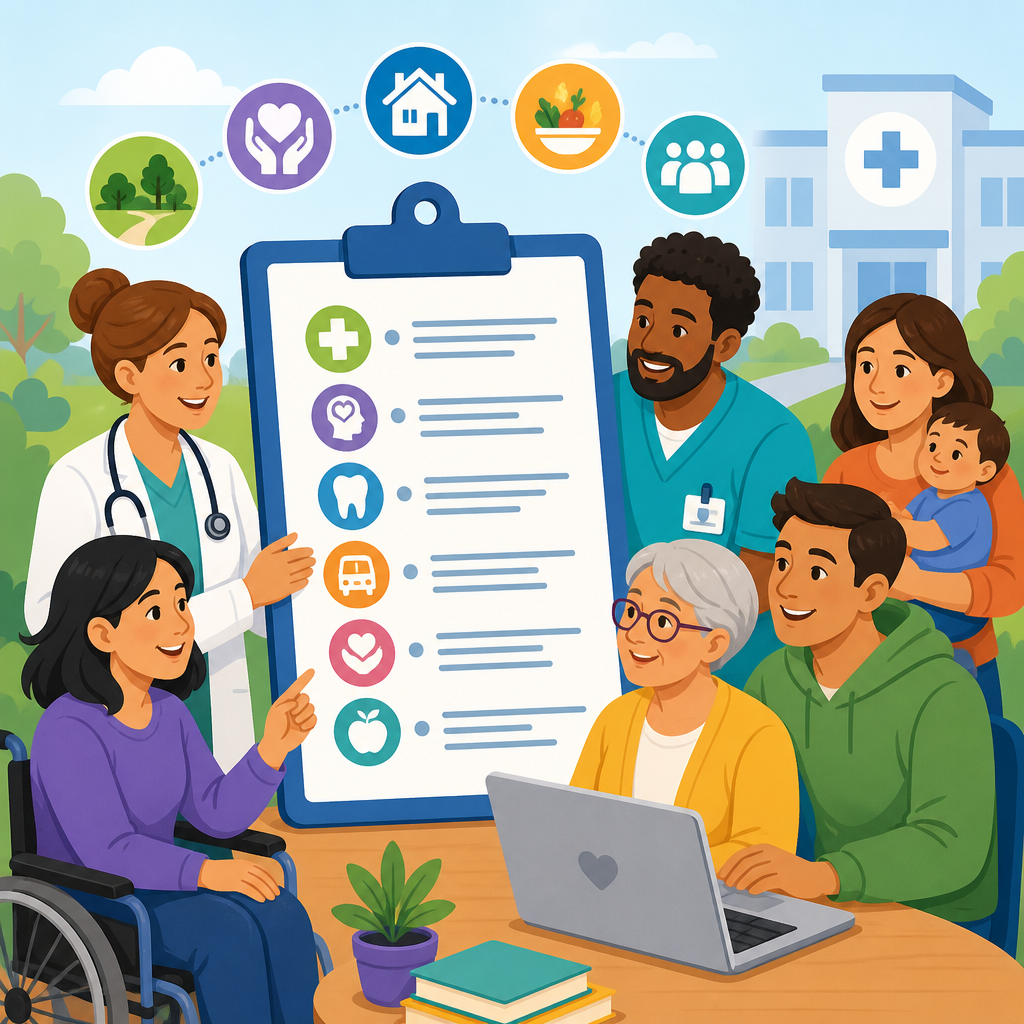
Accessible health care resource lists help providers and patients find disability-specific services, legal guidance, communication tools, transportation support, and community programs without wasting time on scattered searches. In health care, “accessible” means more than a readable brochure or a wheelchair ramp. It includes materials in plain language, braille, large print, captioned video, screen-reader-friendly webpages, interpreter access, accessible medical equipment, and referral pathways that respect disability rights. A strong health care resource list brings those elements together in one place, organized so clinicians can act quickly and patients can use it independently. I have built these lists for clinics, hospital departments, and community partnerships, and the difference is immediate: staff make better referrals, patients miss fewer appointments, and care plans become more realistic because support options are visible at the point of care.
This topic matters because people with disabilities still face preventable barriers across the care journey. The Americans with Disabilities Act, Section 504 of the Rehabilitation Act, and Section 1557 of the Affordable Care Act establish core expectations for equal access, effective communication, and nondiscrimination in many health care settings. Yet compliance alone does not produce a usable resource hub. Providers need practical directories for sign language interpreters, accessible transportation, home and community-based services, durable medical equipment vendors, benefits counseling, peer support, and condition-specific advocacy groups. Patients need the same information presented clearly, with contact details, eligibility notes, language options, and instructions for requesting accommodations. When a resource list is designed well, it becomes an operational tool for care coordination, discharge planning, chronic disease management, and preventive care.
As a sub-pillar hub under Resources and Support, this page covers specialized ADA resources and support in a comprehensive way. It explains what should appear on an accessible health care resource list, how providers should organize information, which national organizations and government programs are most useful, and how patients can use these lists to advocate for appropriate care. It also addresses an important reality: not every resource fits every disability, insurance type, geography, or income level. That is why the best lists combine national resources with state and local contacts, distinguish legal rights from optional services, and include quality checks so outdated entries do not create new barriers. For clinics, practices, health systems, public health teams, and patient navigators, this hub provides the framework needed to build or improve a reliable directory of specialized ADA resources and support.
What an Accessible Health Care Resource List Should Include
An accessible health care resource list should answer the practical question, “What does this person need to obtain care safely, understand it, pay for it, and follow through?” In my experience, the most useful lists are structured around functions rather than broad labels. Start with communication access: qualified sign language interpreter services, CART captioning, relay services, translation lines, plain-language materials, and braille or large-print document providers. Next include physical access support, such as clinics with height-adjustable exam tables, wheelchair-accessible weight scales, accessible mammography equipment, patient lifts, and non-emergency medical transportation. Add care coordination resources, including social work referral lines, Medicaid waiver contacts, centers for independent living, and area agencies that help with benefits, home care, and community services.
The list should then extend into rights and problem-solving. Patients and clinicians often need rapid access to disability rights organizations, ombuds programs, legal aid, Protection and Advocacy agencies, and complaint pathways for inaccessible care. The Administration for Community Living supports a national network of Centers for Independent Living and disability information resources that can help with housing, transportation, employment, and long-term services. For older adults and many disabled adults, Area Agencies on Aging and Aging and Disability Resource Centers are often critical referral points. Include contact methods, service area, hours, referral requirements, and whether self-referral is allowed. A resource without those details is less useful during discharge planning or a same-day access issue.
Condition-specific support also belongs in a specialized list, but it should not overwhelm the core access categories. National organizations such as the National Federation of the Blind, Hearing Loss Association of America, National Association of the Deaf, United Spinal Association, The Arc, and Autism Society can provide education, peer support, and local chapter connections. Disease-focused groups like the American Diabetes Association, American Cancer Society, National Multiple Sclerosis Society, and Muscular Dystrophy Association often offer navigation services, equipment guidance, or financial assistance information. The key is to explain why each resource matters. For example, a patient with low vision may need both orientation support and medication label accessibility, while a patient with cerebral palsy may need accessible equipment plus transportation and personal care attendant coordination. Good resource lists make those use cases obvious.
Core ADA and Disability Support Resources for Providers and Patients
Every hub on specialized ADA resources and support should anchor itself in a small set of high-value national resources. These sources establish rights, offer technical assistance, or connect users to state and local help. Providers should know them well enough to guide patients in real time, and patients should be able to reach them without legal training. The ADA National Network is one of the most important entries because it provides region-based technical assistance on disability rights and accessibility obligations. The U.S. Department of Justice ADA information line and website help users understand public accommodation requirements and complaint processes. For federally funded programs and many health systems, the Office for Civil Rights at the U.S. Department of Health and Human Services is essential for issues involving effective communication, discrimination, or denial of accommodations.
For community-based living and supports, the Administration for Community Living is a cornerstone. Its networks include Centers for Independent Living, State Councils on Developmental Disabilities, and programs that support aging and disability access. State Protection and Advocacy systems are another mandatory category because they investigate abuse, neglect, and rights violations and can advise on systemic barriers. On the financing side, Medicaid, Medicare, state Medicaid waiver offices, and State Health Insurance Assistance Programs should appear prominently. Many barriers that look like “noncompliance” are actually coverage problems, prior authorization delays, or gaps in support for transportation, home care, or durable medical equipment. A resource list that ignores benefits navigation will not solve real access problems.
| Resource Type | Why It Matters | Examples to Include |
|---|---|---|
| Rights and complaints | Helps resolve discrimination, denied accommodations, and inaccessible services | ADA National Network, HHS Office for Civil Rights, state Protection and Advocacy agencies |
| Independent living support | Connects patients to community services that affect health outcomes | Centers for Independent Living, Administration for Community Living programs |
| Insurance and benefits | Addresses coverage barriers that block treatment and equipment access | Medicaid offices, Medicare, SHIP counselors, waiver program contacts |
| Communication access | Ensures understanding of diagnosis, consent, discharge, and follow-up | Interpreter vendors, CART providers, relay services, plain-language materials |
| Transportation and mobility | Reduces missed appointments and unsafe care transitions | Paratransit, non-emergency medical transportation, accessible taxi services |
Providers should also include evidence-based public health and emergency preparedness resources that patients can trust. The Centers for Disease Control and Prevention offers disability and health guidance, and many state health departments have disability inclusion materials relevant to vaccination, emergency alerts, and chronic disease prevention. For behavioral health, the Substance Abuse and Mental Health Services Administration and 988 crisis resources should be listed with accessibility notes, especially for deaf, hard of hearing, autistic, or intellectually disabled users who may need adapted communication. In practice, the strongest lists combine these national anchors with local service providers, because rights information alone does not schedule a ride, secure an accessible scale, or replace a broken power wheelchair battery.
How Providers Should Organize and Maintain Resource Lists
The best accessible health care resource lists are built like clinical tools, not marketing pages. Organization should follow the moments when people need help: before an appointment, during the visit, after discharge, and during ongoing management of disability-related needs. I recommend creating primary categories for communication, physical access, transportation, insurance and financial help, equipment, home and community services, legal rights, peer support, and condition-specific organizations. Within each entry, include a brief description, phone number, website, email if available, service area, cost, eligibility, languages, accessibility features, and date last verified. If a clinic serves a multilingual population, note whether forms and navigation support are available in Spanish and other common languages. If a resource is digital, confirm that the webpage works with screen readers and keyboard navigation.
Maintenance is where many directories fail. A resource list becomes risky when phone numbers disconnect, eligibility rules change, or a listed service no longer accepts referrals. Set a review schedule at least quarterly for high-use entries and semiannually for the full list. Assign ownership to a specific role, such as a care manager, patient navigator, community health worker lead, or compliance manager. In health systems, this responsibility should not sit informally with whoever notices a problem first. Version control matters too. Staff should be able to see the current approved list inside the electronic health record, intranet, or referral platform rather than relying on downloaded PDFs from years ago. If the list is public-facing, keep the web version as the source of truth and archive obsolete copies.
Usability testing is just as important as legal accuracy. Ask patients with different disabilities to try the list and complete common tasks: find a sign language interpreter request path, identify accessible transportation for an early morning appointment, locate legal help after a denied accommodation, or search for a local independent living center. Watch where they get stuck. In one clinic project, we discovered that staff loved alphabetical order while patients preferred “what do you need help with today?” categories. We reorganized the directory by task, added icons and plain-language summaries, and saw faster referral completion. Accessible health care resource lists work best when they reduce cognitive load, not when they simply collect links.
Patient Uses, Provider Workflows, and Real-World Examples
Patients use accessible health care resource lists to solve immediate problems and to prepare for future care. A deaf patient may use the list before a specialist visit to understand how to request a qualified sign language interpreter and what to do if the office offers only written notes. A wheelchair user may check whether the imaging center has an accessible entrance, transfer support, and an adjustable exam surface before booking. A patient with an intellectual disability may need plain-language discharge materials, support person coordination, and a community agency that can reinforce medication instructions. When these answers are collected in one credible place, patients are less likely to delay care because of uncertainty or previous negative experiences.
For providers, the list should fit into workflows rather than sit unused on a website. Front-desk teams need appointment accommodation scripts and quick access to interpreter scheduling. Nurses need location-specific notes on accessible equipment and transfer assistance protocols. Social workers and discharge planners need referral pathways for home modifications, Medicaid waivers, meals, attendant services, and transportation. Compliance and patient relations teams need legal resources and escalation channels when barriers arise. A primary care practice, for example, can link the directory to annual wellness planning so staff proactively ask about transportation, communication access, and home support. An oncology clinic can use the same hub to arrange accessible chemotherapy chairs, financial counseling, and peer support for a newly disabled patient coping with treatment side effects.
Real-world examples show why integrated lists matter. Consider a blind patient starting insulin. The clinical need is straightforward, but success depends on accessible glucose monitoring instructions, medication labeling options, diabetes education in nonvisual formats, transportation to follow-up visits, and insurance support for devices. Or consider a patient with a spinal cord injury discharged after pressure ulcer treatment. Healing depends not only on wound care orders but also on pressure-relieving equipment, caregiver training, paratransit reliability, and home nursing availability. In both cases, the medical plan fails if the support plan is invisible. Specialized ADA resources and support give clinicians a way to match treatment recommendations with the lived conditions that determine whether those recommendations can be carried out.
Common Gaps, Quality Standards, and What to Do Next
The most common gap in accessible health care resource lists is assuming that one disability accommodation solves all access needs. It does not. Captioned videos do not replace interpreters for many sign language users. A ramp does not guarantee an accessible exam table. A patient portal is not useful if forms are written above the reading level of the audience or break with assistive technology. Another gap is overreliance on national organizations without adding state and local contacts. Patients often need county paratransit numbers, local legal aid, nearby wheelchair repair vendors, or regional developmental disability services. Lists should also distinguish emergency resources from long-term support, because a patient in crisis needs immediate actions, not a general directory.
Quality standards should be explicit. Use plain language, clear headings, and consistent entry fields. Follow recognized digital accessibility guidance such as the Web Content Accessibility Guidelines for public-facing pages. Verify whether listed providers actually offer accessible services rather than repeating marketing claims. If your organization lists accessible diagnostic sites, confirm details like automatic doors, transfer space, lift availability, and staff training. Include a feedback mechanism so patients and staff can report broken links, incorrect eligibility information, or inaccessible encounters. In my work, adding a simple “report a problem with this resource” form improved accuracy more than any annual audit because users surfaced issues quickly. Trust is built when a directory acknowledges limits and fixes mistakes promptly.
Accessible health care resource lists are not side projects. They are infrastructure for equitable care. A strong hub on specialized ADA resources and support helps patients understand their rights, helps providers coordinate realistic care, and helps organizations move from isolated accommodations to consistent access practices. The essentials are clear: organize by need, include legal and practical supports, verify entries regularly, and design for real users with different disabilities. If you manage a clinic, hospital program, advocacy group, or patient education site, start by auditing your current directory against those standards. Then build a living resource list that patients can actually use and staff can trust at the moment care decisions are made.
Frequently Asked Questions
What is an accessible health care resource list, and why does it matter for both providers and patients?
An accessible health care resource list is a curated guide to services, tools, and organizations that people can actually use when they need support navigating care. It goes beyond a basic directory of phone numbers or websites. A truly accessible list helps patients, caregivers, and health care teams quickly find disability-specific services, legal advocacy resources, transportation options, communication accommodations, accessible medical equipment providers, and community-based programs. The goal is to reduce the time and stress involved in searching across scattered systems while making sure the information itself is usable by people with different access needs.
In practice, accessibility means the resource list should be available in formats and channels that work for a wide range of users. That may include plain-language summaries, large print, braille on request, translated materials, captioned video explanations, screen-reader-friendly webpages, and contact methods for people who use relay services or interpreters. For providers, this kind of list supports better referrals, more efficient care coordination, and improved patient trust. For patients, it can make the difference between getting timely support and abandoning a search because the process is too confusing, fragmented, or inaccessible. When a resource list is built thoughtfully, it becomes part of equitable care delivery rather than just an administrative handout.
What kinds of resources should be included in an accessible health care resource list?
A strong accessible health care resource list should cover the full range of needs that affect a person’s ability to receive and manage care. That usually starts with clinical and disability-related services, such as specialists, rehabilitation providers, home health supports, durable medical equipment suppliers, behavioral health programs, and organizations focused on specific disabilities or chronic conditions. It should also include communication access resources, such as sign language interpreter services, captioning providers, assistive technology programs, alternative and augmentative communication tools, and guidance for requesting accommodations in medical settings.
Just as important are nonclinical supports that often determine whether someone can follow through with treatment. These may include accessible transportation programs, paratransit information, legal aid related to disability rights and health coverage, insurance navigation assistance, benefits counseling, care coordination services, housing support, peer support groups, and local community organizations. A useful list should identify eligibility requirements, service areas, costs when known, languages offered, accessibility features, and the best contact method. Including this level of detail helps providers make better referrals and helps patients avoid calling resources that are not a fit. The most effective lists recognize that health care access depends on many connected systems, not just medical appointments alone.
How can providers make sure a health care resource list is truly accessible and not just informative?
Providers can start by treating accessibility as a practical standard, not a marketing claim. A list is not truly accessible if it contains helpful resources but is published in a format that many patients cannot read, navigate, or request accommodations from. To improve usability, providers should present information in plain language, organize it with clear headings, and avoid dense blocks of jargon. Digital versions should be compatible with screen readers, use meaningful link text, and support keyboard navigation. Printed versions should be available in large print, and organizations should have a process for braille, translated copies, or audio versions when needed.
Accessibility also depends on whether the listed resources themselves can meet accommodation needs. Whenever possible, providers should verify whether organizations offer interpreter access, wheelchair-accessible facilities, accessible exam equipment, multiple communication options, and staff trained to work with disabled patients. Including notes like “ASL interpretation available upon request,” “accessible van transportation,” or “website screen-reader friendly” can save patients time and frustration. It is also helpful to include referral pathways, such as who to contact first, what documents may be required, and whether a physician order is needed. The best approach is to review the list regularly with input from patients, caregivers, disability advocates, and front-line staff so accessibility is measured by real-world use, not assumptions.
How often should accessible health care resource lists be updated, and what should be checked during a review?
Accessible health care resource lists should be reviewed on a regular schedule because health care and social support systems change constantly. A quarterly review is a good standard for high-use lists, while at minimum they should be audited at least twice a year. Contact information, eligibility rules, wait times, funding availability, transportation routes, language access, and accessibility accommodations can all change without much notice. A list that was accurate six months ago may now send patients to disconnected phone lines, outdated websites, or programs that no longer accept referrals.
During each review, providers should confirm basic operational details such as phone numbers, website links, office locations, service areas, hours, and intake processes. They should also verify accessibility-specific information, including availability of interpreters, large-print or translated materials, accessible parking, telehealth accommodations, captioned content, and accessible medical equipment. It is especially valuable to test how easy it is to use the listed services from a patient perspective. For example, can someone using a screen reader navigate the website, or can a patient easily learn how to request an accommodation before an appointment? Adding a “last updated” date to the resource list builds trust and signals that the information is maintained, not static. A list becomes far more reliable when updates are systematic rather than occasional.
What are the biggest benefits of accessible resource lists for care coordination and patient outcomes?
Accessible resource lists improve care coordination by making it easier for providers to connect patients with the right support at the right time. Instead of relying on memory, outdated handouts, or fragmented internet searches, clinicians and staff can use a centralized tool to guide referrals for transportation, communication accommodations, disability services, legal assistance, and community support. This reduces delays, lowers administrative burden, and helps teams respond more consistently to patient needs. It also strengthens discharge planning, follow-up care, and chronic disease management because patients are more likely to access services when referrals are clear and realistic.
For patients, the benefits are both practical and personal. A well-designed resource list can reduce confusion, prevent missed appointments, improve communication with care teams, and increase confidence in navigating complex systems. It also supports patient autonomy by giving people information in formats they can use and by pointing them toward services that match their circumstances. Over time, this can contribute to better treatment adherence, fewer avoidable barriers, and a stronger sense that the health care system is responsive rather than exclusionary. In short, accessible resource lists are not minor administrative tools. They are part of delivering safer, more equitable, and more effective care for people with disabilities and for anyone who benefits from clearer pathways to support.


