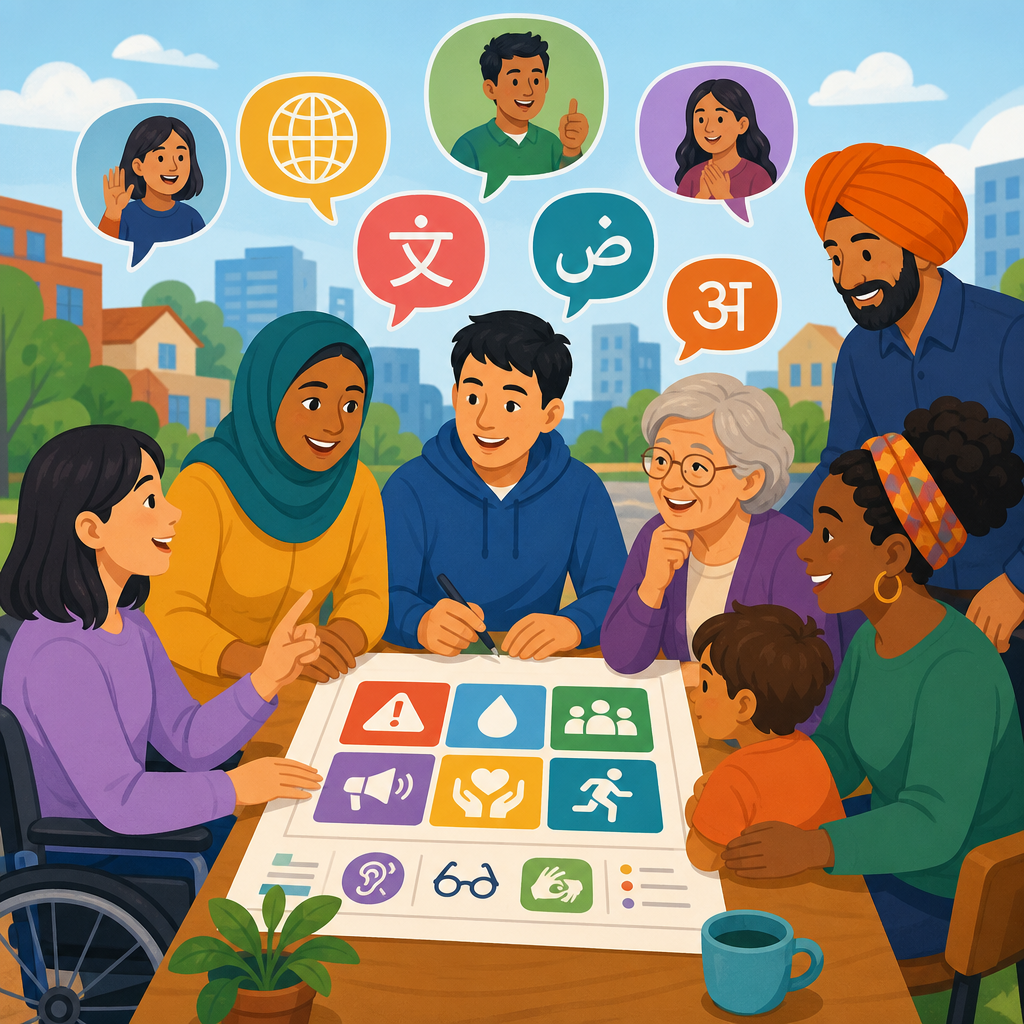
Accessible communication plans for multi-language communities are the foundation of equitable public service, emergency readiness, healthcare navigation, education access, and civic participation. A communication plan is the documented system an organization uses to decide what information must be shared, who needs it, in which languages and formats, through which channels, and on what timeline. Accessibility means people with disabilities can perceive, understand, navigate, and act on the message. Multi-language means communication is intentionally designed for people who use languages other than English, including people with limited English proficiency, bilingual households, Deaf communities using American Sign Language, and newcomers with different literacy levels. When these needs overlap, standard outreach fails quickly.
I have built communication workflows for public agencies, clinics, and nonprofit programs, and the pattern is consistent: organizations often translate a flyer, post it online, and assume they have solved inclusion. They have not. Real accessibility requires planning before content is created. The plan must account for plain language, reading level, alternative formats, captioning, sign language interpreting, translated web content, multilingual phone trees, staff scripts, and follow-up mechanisms that verify whether people actually understood the message. It also must cover routine updates and high-pressure situations such as severe weather alerts, policy changes, service disruptions, and health advisories.
This matters because inaccessible communication has direct consequences. A parent may miss a special education meeting because the reminder was only sent in English. A patient may misunderstand medication instructions because the translated handout used technical terms instead of plain language. A Deaf resident may not receive evacuation guidance because a live briefing had no qualified interpreter and no accurate captions. A worker may lose benefits because a portal was screen-reader incompatible and the call center did not offer language access. These failures are not minor customer service problems. They affect safety, legal compliance, public trust, and measurable outcomes.
Strong plans are especially important within resources and support programs because these services often reach people during stressful moments. Housing assistance, food support, legal aid, behavioral health, transportation coordination, and school-family engagement all depend on communication that is timely, understandable, and actionable. Community engagement and advanced ADA support belong in the same conversation because disability access and language access are operationally linked. If an organization treats them separately, people fall through the cracks. The most effective hub strategy is to design one communication system that can deliver the right message in the right language and format, through the right channel, with accountability built in.
What an accessible communication plan includes
An accessible communication plan should answer six practical questions. First, who are the audiences? Segment by language, disability, age, digital access, and setting rather than using a vague “general public” category. Second, what information is essential? Prioritize deadlines, eligibility rules, steps to act, locations, costs, safety warnings, and contact options. Third, which formats are required? Common needs include translated print materials, large print, Braille on request, accessible PDFs, mobile-friendly web pages, audio versions, captioned video, transcripts, relay-compatible phone access, and ASL interpretation. Fourth, which channels will reach people reliably? Email alone is rarely enough; plans should combine text messaging, phone outreach, websites, social media, community radio, in-person partners, mail, and trusted messengers.
Fifth, who owns each task? I recommend a responsibility matrix that names content owners, reviewers, interpreters, translators, web publishers, and frontline staff. Without assigned owners, urgent messages stall. Sixth, how will the organization verify comprehension and improve the process? This is where many plans become static documents instead of working systems. Every major communication should have a feedback loop: click-through data, call center summaries, interpreter notes, frontline observations, and short user tests with community members. If people cannot explain the next step after receiving the message, the message failed regardless of how polished it looked.
Plans should align with recognized standards and legal obligations. For digital content, Web Content Accessibility Guidelines 2.2 provide the clearest benchmark for perceivable, operable, understandable, and robust content. For disability rights, Americans with Disabilities Act requirements shape effective communication obligations, while Section 504 and Section 1557 may also apply in education and healthcare contexts. For language access, Title VI responsibilities and local language access policies often guide when translation and interpretation are required. Good planning treats these standards as minimums, not stretch goals.
How to assess language access and disability access together
Start with a joint assessment instead of separate audits. Pull service area data from the U.S. Census Bureau’s American Community Survey, school district home language surveys, hospital utilization reports, and local nonprofit intake records. Map the top languages, but do not stop there. Review literacy levels, common devices used for internet access, rates of broadband availability, disability prevalence, and preferred community channels. In one county project, Spanish and Vietnamese were the most requested languages, yet call logs showed older Russian-speaking residents relied heavily on phone outreach and printed letters. A web-first plan would have missed them.
Then inventory every communication touchpoint. This includes websites, online forms, appointment reminders, front desk signs, voicemail menus, public meetings, webinars, emergency alerts, social posts, printed applications, consent forms, and staff scripts. For each touchpoint, ask whether a person using a screen reader, a person needing plain language, a Deaf signer, and a person with limited English proficiency can complete the task independently or with timely support. You will usually find hidden barriers in forms, recorded messages, and event logistics rather than in flagship brochures.
Testing must involve users, not just internal reviewers. Automated tools such as WAVE, axe, and Lighthouse are useful for catching missing alt text, color contrast problems, and form label issues, but they cannot judge whether a translation is culturally clear or whether captions preserve meaning. I have seen technically accessible pages fail because they used bureaucratic language no one would act on. Pair automated checks with moderated usability sessions, bilingual reviewer panels, and disability community feedback. The goal is not only compliance; it is successful completion of the intended action.
Building workflows for translation, interpretation, and plain language
The most reliable communication plans build accessibility into content creation from the first draft. Write the source message in plain language before translating it. Use short sentences, active voice, familiar terms, and explicit calls to action. Replace “documentation must be furnished” with “bring these papers.” Replace “benefits may be discontinued absent recertification” with “send your renewal by May 31 to keep your benefits.” Plain source content reduces translation cost, speeds review, and improves comprehension across every language.
Translation and interpretation serve different purposes and must be managed differently. Translation is written; interpretation is spoken or signed. Written translations need glossaries, approved terminology, version control, and review by native speakers familiar with the service context. Interpreting needs scheduling protocols, qualified providers, backup arrangements, and staff guidance on how to work effectively with interpreters. Do not use children, untrained bilingual staff, or machine translation alone for high-stakes conversations such as medical consent, legal rights, disciplinary action, or individualized education planning.
Organizations also need clear thresholds for what gets translated in full, summarized, or interpreted on demand. Critical life, safety, rights, and eligibility information should be translated proactively into top languages. Less frequently used documents can be supported through notice-of-language-assistance statements and rapid interpretation pathways. The point is consistency. Staff should never guess in the moment whether language support is available. When policy is defined in advance, service quality improves and risk declines.
| Communication task | Minimum accessible practice | Better practice |
|---|---|---|
| Emergency alert | Translate top languages and send text plus email | Add captioned video, ASL clip, voice call, and website banner |
| Public meeting | Offer interpreter on request | Promote translated notices, live captions, ASL, and accessible agenda files |
| Benefits renewal notice | Translated letter with deadline | Plain-language letter, text reminder, phone support, and screen-reader tested portal |
| Health instruction | Translated handout | Teach-back method, pictograms, interpreter support, and follow-up call |
Choosing channels that communities actually use
The best message still fails if it appears in the wrong place. Channel selection should come from behavior data and community interviews, not assumptions. Younger audiences may respond to SMS and mobile-first web pages. Older adults may rely on phone calls, postal mail, local radio, or faith-based networks. Newly arrived families may trust information relayed through schools, mutual aid groups, ethnic media, or community health workers more than official social accounts. Rural communities may need offline distribution because connectivity is inconsistent. A hub page under resources and support should connect these channel decisions to detailed guidance on outreach, digital accessibility, emergency communications, and frontline service standards.
Redundancy is essential for high-stakes communication. Send the same core message through at least three channels in equivalent accessible formats. For example, if a clinic changes vaccine hours, publish an accessible webpage, send translated text messages, update voicemail in multiple languages, post signage at entrances, and brief partner organizations that help with appointment scheduling. Consistency across channels prevents confusion. It also improves discoverability because people encounter the same wording in search results, inboxes, social feeds, and in-person interactions.
Community messengers deserve formal roles in the plan. Libraries, disability organizations, immigrant support groups, tenant associations, parent liaisons, and promotores de salud often know which messages need extra explanation. Build a distribution list, train partners on key terms, and provide ready-to-share assets in accessible formats. In my experience, trusted intermediaries are especially effective when policies are changing quickly or when communities have reason to distrust official institutions. They do not replace direct communication, but they dramatically increase reach and credibility.
Training staff and measuring whether communication works
Even a well-written plan breaks down if staff do not know how to use it. Training should cover how to identify communication needs, how to book interpreters, how to use relay services, how to create accessible documents, how to write plain-language messages, and how to escalate urgent access issues. Frontline staff need scripts that normalize offers of assistance: “What language do you prefer?” “Do you need this in another format?” “Would captions, an interpreter, or a phone call help?” These questions reduce friction and signal respect.
Measurement should focus on outcomes, not vanity metrics. Page views matter less than whether people completed the intended task. Track form completion rates by language, no-show rates after reminder redesigns, call abandonment in multilingual lines, video watch completion for captioned content, event attendance after translated outreach, and complaint patterns related to access barriers. In healthcare and benefits settings, the teach-back method is one of the most practical quality checks: ask people to explain the next step in their own words. If they cannot, simplify and resend.
Review the plan at least annually and after every major incident. Update language priorities, vendor contracts, staff rosters, templates, and accessibility checks. Archive old versions so no one accidentally reuses outdated instructions. Most importantly, connect this hub to deeper operational resources: accessible document creation, multilingual web strategy, inclusive event planning, ADA accommodation workflows, and emergency notification protocols. When accessible communication is treated as a system rather than a translation task, organizations serve more people accurately, reduce preventable harm, and strengthen trust. Audit your current channels, fix the biggest barriers first, and build the plan before the next urgent message has to go out.
Frequently Asked Questions
What is an accessible communication plan for multi-language communities?
An accessible communication plan for multi-language communities is a documented, repeatable system that helps an organization share important information clearly, consistently, and equitably with people who speak different languages and people with disabilities. It defines what information needs to be communicated, who needs to receive it, which languages and accessible formats are required, which channels will be used, who is responsible for each step, and how quickly messages must go out. The goal is not simply translation. It is making sure people can perceive, understand, navigate, and act on the information in real-world conditions.
In practice, that means planning for written translations, interpretation, plain language, captioning, screen-reader-friendly digital content, large print, audio, Braille when appropriate, and non-digital outreach for people with limited internet access. A strong plan also identifies priority audiences, such as speakers of commonly used non-English languages, Deaf and hard-of-hearing community members, blind and low-vision residents, people with intellectual or developmental disabilities, and older adults. When built well, the plan supports public service delivery, emergency alerts, healthcare access, school communication, and civic participation by reducing confusion and preventing avoidable barriers.
Why is it important to create a communication plan instead of translating messages only when needed?
Relying on last-minute translation is risky, inefficient, and often inequitable. Without a formal communication plan, organizations tend to react after a problem appears, which can delay critical information and leave entire communities without timely access. In emergencies, these delays can affect health and safety. In healthcare, they can interfere with informed decision-making. In education and public services, they can prevent families from understanding their rights, deadlines, or available support.
A communication plan solves this by creating a structure before communication needs become urgent. It establishes language priorities based on community data, sets standards for accessibility, identifies approved vendors or interpreters, and outlines workflows for review and distribution. This preparation improves speed, quality, and consistency. It also reduces the likelihood of errors that happen when staff rely on machine translation, untrained bilingual employees, or family members to interpret sensitive information. Most importantly, a plan shows that equitable access is part of the organization’s core operations, not an afterthought. That builds trust, improves participation, and helps organizations meet legal, ethical, and service obligations more effectively.
What should be included in an effective accessible communication plan?
An effective accessible communication plan should include several core elements. First, it should identify the audiences the organization serves, using demographic data, service usage patterns, community input, and language access needs assessments. Second, it should define the types of communication the organization sends, such as emergency alerts, appointment reminders, policy updates, enrollment materials, public notices, website content, and in-person communication. Third, it should specify which languages are required for each type of message and what accessible formats must be provided based on disability access needs.
The plan should also document communication channels, including websites, email, text alerts, social media, phone systems, printed materials, community partners, in-person meetings, and local media outlets. For each channel, it should explain how accessibility will be maintained, such as captioned video, accessible PDFs, HTML-first web publishing, keyboard navigation, alt text, and compatibility with assistive technology. Just as important, the plan should assign roles and responsibilities so staff know who drafts content, who approves it, who arranges translation and interpretation, who checks accessibility, and who oversees final distribution. Clear timelines, escalation procedures for urgent messages, quality assurance steps, vendor management, staff training requirements, and a regular review schedule should also be included. Together, these elements turn accessibility and language access from general intentions into a practical operating system.
How can organizations make sure messages are both multilingual and accessible to people with disabilities?
Organizations should approach multilingual access and disability access as connected responsibilities, not separate projects. A translated message is not fully accessible if it is posted as an unreadable image, buried in a confusing website, or shared only in an audio format without captions or transcript. Likewise, a technically accessible webpage is not equitable if the content is available only in one language. To do this well, organizations need an integrated process that starts with inclusive message design. Content should be written in plain language, structured clearly, and organized so it can be translated and reformatted without losing meaning.
From there, organizations should use qualified translators and interpreters, test digital materials for accessibility, and provide multiple format options when needed. For example, an emergency update might need translated text messages, captioned videos, interpreter support at live briefings, accessible website updates, phone hotlines with language options, and printable materials distributed through trusted community locations. User testing is especially valuable. Asking community members and people with disabilities to review messages can reveal barriers that internal teams miss. It is also important to avoid assumptions. Different communities may prefer different channels, and not everyone uses websites or social media the same way. The most effective organizations combine standards-based accessibility practices with community-informed language access strategies so information is usable, not just technically available.
How often should an accessible communication plan be reviewed and updated?
An accessible communication plan should be reviewed on a regular schedule and updated whenever community needs, regulations, services, or communication tools change. At a minimum, an annual review is a strong baseline, but many organizations benefit from quarterly check-ins for high-impact areas such as emergency management, healthcare communication, or school-family engagement. The plan should also be revisited after major incidents, public campaigns, website redesigns, policy changes, or feedback from community members that reveals gaps in access.
Regular review matters because communities are not static. Language demographics can shift, new accessibility technologies can emerge, and communication channels that worked a year ago may be less effective now. A useful review process looks at measurable outcomes, such as translation turnaround time, accessibility error rates, participation levels across language groups, interpretation usage, complaint patterns, and feedback from community partners. It should also verify that contact lists, vendor agreements, staff roles, and emergency procedures are still current. The strongest plans improve over time because they are treated as living documents. When organizations build in ongoing evaluation and community feedback, they are better positioned to provide timely, understandable, and actionable information to everyone they serve.


