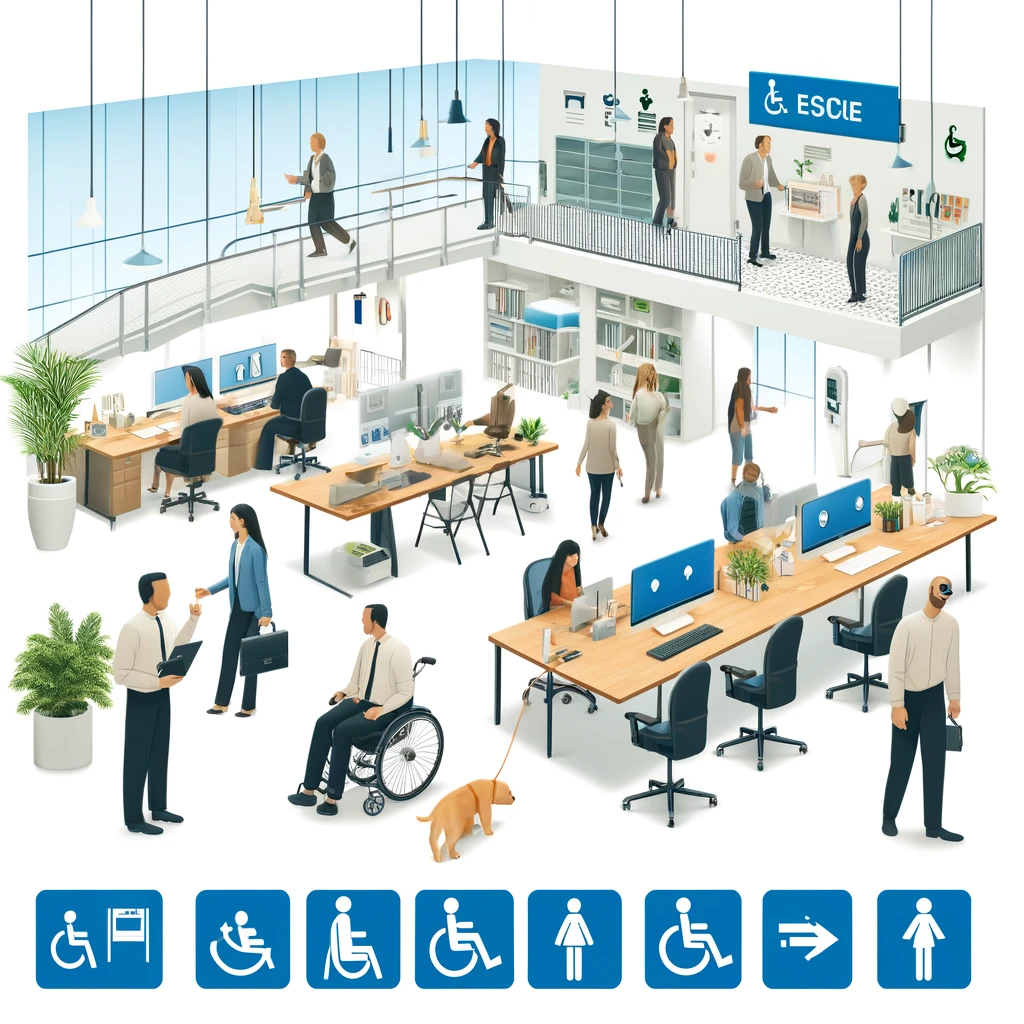
Building a cross-department ADA committee around the coordinator is one of the most practical ways to move disability compliance from a reactive obligation to an organized implementation program. In public entities, schools, transportation agencies, counties, and large private organizations, the ADA coordinator is often assigned broad responsibility but limited operational authority. That mismatch creates delays, fragmented decisions, and inconsistent access outcomes. A cross-department committee closes that gap by connecting policy, facilities, digital services, procurement, human resources, communications, and frontline operations to a single governance structure.
In my work with organizations updating transition plans and grievance procedures, the strongest programs never rely on one person carrying the entire ADA workload alone. They build a repeatable system. In this context, an ADA coordinator manages compliance oversight, complaint routing, training priorities, and implementation tracking. A transition plan is the documented roadmap for removing barriers in programs, services, communications, websites, and facilities, especially where structural changes are needed. The committee becomes the operating engine that turns those documents into action.
This matters because accessibility failures rarely begin in one department. A facilities team may renovate a restroom without consulting standards, an IT team may launch a form that fails keyboard navigation, procurement may buy inaccessible software, and communications may post videos without captions. Each decision can create legal exposure under Title II or Title III, but more importantly, each one blocks equal access for real people. A coordinated committee helps organizations identify barriers earlier, prioritize resources better, document decisions clearly, and maintain accountability across the entire compliance and implementation process.
Why the ADA Coordinator Needs a Cross-Department Committee
An ADA coordinator is essential, but the role works best when supported by formal cross-functional governance. The coordinator typically receives accommodation requests, oversees grievance procedures, interprets policy, supports staff training, and tracks compliance obligations. Yet most barriers sit inside departments the coordinator does not directly manage. Facilities controls alterations and maintenance. IT controls platforms and software. Procurement controls vendor requirements. Human resources shapes employment processes. Communications influences public notices, documents, and media. Legal or risk management evaluates exposure. Without a committee, the coordinator becomes a messenger instead of a manager.
A committee changes that dynamic by assigning responsibility where decisions are made. It gives the coordinator a structured forum to review open barriers, set priorities, escalate unresolved issues, and confirm deadlines. It also creates continuity when staff turn over. In several transition plan projects I have supported, the organizations that improved fastest were not necessarily the ones with the largest budgets. They were the ones that met monthly, used a defined agenda, and required each department to report progress against assigned accessibility actions.
The committee is also the natural hub for ADA Coordinators and Transition Plans because those two functions are inseparable. The coordinator needs current inventories, capital schedules, website remediation timelines, and complaint data to keep the transition plan alive. The transition plan gives the committee a prioritized worklist, cost assumptions, and sequencing logic. When these pieces are integrated, the organization can answer basic but critical questions: what barriers exist, who owns each barrier, what standard applies, what will it cost, when will it be fixed, and how will users be informed in the meantime.
Who Should Serve on the Committee
The best ADA committees are small enough to act but broad enough to represent every major accessibility risk area. At minimum, include the ADA coordinator, facilities or public works, information technology, procurement, human resources, communications or public information, program operations, legal or risk management, and a budget or finance representative. In education, add student services and academic affairs. In healthcare, include patient access and clinical operations. In transit, include planning, customer service, and maintenance. For municipalities, representation from parks, libraries, police, courts, and permitting may also be appropriate depending on service volume.
Membership should reflect authority, not only subject matter familiarity. If a department sends staff who cannot approve work, allocate funds, or revise procedures, the committee becomes informational rather than operational. I recommend a core group of decision makers plus ad hoc contributors when specific issues arise, such as architects, website developers, emergency managers, or contracted accessibility specialists. The coordinator should chair or co-chair the group, but executive sponsorship is equally important. A deputy director, city manager, superintendent, or chief administrative officer should authorize the committee and require participation.
People with disabilities should also shape the committee’s work, though the structure can vary. Some organizations include internal employees with disabilities as standing members, while others use an advisory panel, public input sessions, or targeted user testing. The key principle is straightforward: accessibility decisions are stronger when informed by lived experience. Standards tell you whether a door clear width complies or whether color contrast meets minimum ratios. Users tell you whether wayfinding works in practice, whether an online form is understandable, and whether an accommodation process feels usable under real conditions.
How to Define Scope, Authority, and Decision Rules
Most committee problems begin with vague charters. The written charter should define purpose, authority, membership, meeting frequency, quorum, escalation routes, and reporting obligations. It should state that the committee oversees implementation of ADA policies, transition plans, barrier removal priorities, digital accessibility coordination, grievance trend review, training needs, and integration of accessibility into procurement and project planning. It should also specify what the committee can decide directly and what must be elevated for executive approval, such as capital expenditures above a threshold or policy changes affecting collective bargaining terms.
Decision rules should be practical. Routine remediation items can be approved by the owning department if they fit within budget and align with adopted standards. Cross-department issues, disputed priorities, or exceptions should come to the committee. Significant unresolved barriers should be escalated to executive leadership with a recommendation, cost estimate, interim access strategy, and timeline. I have seen committees stall because every item was treated like a major legal question. In practice, most issues are operational and can move quickly when the standards, responsible owner, and desired completion date are clear.
Documentation matters. Every meeting should produce an action log showing barrier description, location or system, applicable standard, assigned owner, target date, status, and notes on interim accommodations. This is not bureaucracy for its own sake. It is the record that demonstrates good-faith implementation, helps defend budget requests, and prevents repetitive debates. For public entities covered by Title II, this record also supports program access planning and updates to the transition plan. For private organizations, it provides evidence of systematic barrier removal and policy governance.
Building the Committee Around the Transition Plan
The transition plan should be the committee’s central management document, not a binder that sits untouched after adoption. A strong plan includes barrier inventories, methods used to assess compliance, public input, prioritization criteria, estimated costs, responsible parties, and a schedule for corrective action. The committee’s job is to convert that plan into quarterly work. If the plan identifies inaccessible curb ramps, noncompliant service counters, inaccessible PDF forms, or missing caption workflows, those items should move onto department workplans with dates and owners.
Prioritization should follow a consistent hierarchy. Life safety and emergency access come first. Core public services and high-volume programs come next. Repeated complaint themes, barriers that affect multiple user groups, and issues with relatively low remediation cost but high access benefit should move quickly. Structural changes often require capital planning, but many high-impact improvements do not. Revising procurement language, implementing captioning procedures, training content editors on heading structure, or relocating a public meeting to an accessible room can often happen faster than teams expect.
| Committee Function | Primary Owner | Typical Deliverable | Review Cycle |
|---|---|---|---|
| Facility barrier tracking | Facilities/Public Works | Updated transition plan inventory and capital schedule | Quarterly |
| Website and software accessibility | Information Technology | Remediation roadmap, testing results, vendor action items | Monthly |
| Procurement controls | Procurement | Accessible solicitation language and contract requirements | Quarterly |
| Accommodation and grievance review | ADA Coordinator/Human Resources | Trend report, response timelines, policy updates | Monthly |
| Public communication access | Communications | Captioning, alternative format, and plain-language workflows | Monthly |
The committee should revisit the transition plan at least annually, even if major updates are scheduled less often. Regulations, technology, facilities conditions, and service delivery models change. A plan written before a major website redesign, online permitting rollout, or office relocation will become stale quickly if not maintained. Annual review keeps the plan useful and signals that accessibility is a standing operational responsibility rather than an occasional project.
Operational Systems That Make the Committee Effective
Effective committees run on systems, not enthusiasm. Start with a standard agenda: open actions, new barriers, grievance and accommodation trends, project review, procurement review, training needs, and executive escalations. Then create intake channels. Staff need to know how to report a broken door opener, inaccessible map, or form field that screen readers cannot interpret. Community members need a clear public method for requesting accommodation or reporting access problems. The coordinator should triage submissions, assign owners, and bring systemic issues to the committee.
Data discipline is equally important. Track remediation by asset type, service area, cost range, and user impact. If complaints show repeated problems with inaccessible meeting notices, that is not just a communications issue; it may reflect weak workflows, insufficient training, or absent policy review. If multiple software products lack keyboard access or caption support, procurement controls are probably failing. Named tools can help, but tools alone do not solve governance problems. Commonly used resources include issue trackers such as Jira or ServiceNow, facilities databases, website scanning tools such as axe DevTools and WAVE, and manual testing using NVDA, JAWS, VoiceOver, and keyboard-only navigation.
Training should be role based. Facilities staff need practical understanding of the 2010 ADA Standards for Accessible Design, including common errors in routes, parking, door hardware, restrooms, signage, and service counters. Digital teams need competence with WCAG conformance, document accessibility, multimedia access, and testing methods. Procurement staff need contract language requiring accessibility documentation, remediation obligations, and testing cooperation. Managers need to understand reasonable modification, effective communication, and how to avoid creating new barriers during routine operations. When training is generic, teams leave with awareness but no operational change.
Common Failure Points and How to Avoid Them
The first failure point is treating the committee as a complaint review group only. Complaints matter, but a mature ADA committee works upstream. It reviews planned projects, technology purchases, policy revisions, and public engagement processes before barriers are created. The second failure point is excluding budget staff. Accessibility priorities that never connect to operating or capital cycles will remain unresolved, no matter how committed the coordinator is. The third is overreliance on external consultants. Outside expertise is valuable for audits, plan development, and technical interpretation, but ownership must stay inside the organization.
Another frequent mistake is separating employment access from program access so completely that lessons are lost. Human resources may see patterns in accommodation requests that reveal broader digital or physical barriers. For example, repeated requests for application assistance may indicate an inaccessible recruiting platform. Repeated need for alternative meeting formats may show that standard communication practices are failing. The committee should share trend data while protecting confidentiality. Accessibility improves faster when departments see the full pattern rather than isolated incidents.
Finally, do not confuse standards compliance with full usability. A facility or webpage may technically satisfy many requirements and still frustrate users. That is why field verification and user feedback matter. I have seen compliant ramp slopes paired with confusing entrances, and accessible PDFs posted inside impossible navigation structures. The coordinator and committee should verify that people can actually complete the task the service requires. Equal access is measured in outcomes, not only checklists.
Measuring Success and Sustaining Momentum
A strong committee needs performance measures that executives can understand. Track percentage of transition plan items completed on schedule, average time to close accessibility issues, number of staff trained by role, percentage of contracts with accessibility terms, captioning turnaround, website error reduction, and proportion of capital projects reviewed for accessibility before design approval. Also track qualitative indicators: fewer repeated grievances, improved user feedback, and more departments raising issues proactively instead of after failure. These measures show whether accessibility is becoming embedded in daily management.
Sustaining momentum requires visible reporting. Provide quarterly summaries to leadership and annual public-facing updates where appropriate. Celebrate practical wins, such as fixing entrance routes before winter, converting high-use forms to accessible formats, or updating purchasing templates so future software buys include accessibility testing. Those wins matter because they demonstrate that the committee is producing tangible access improvements, not just meetings. Over time, the goal is cultural normalization: every department considers accessibility early, the coordinator has real governance support, and the transition plan remains a living implementation tool.
Building a cross-department ADA committee around the coordinator gives organizations the structure needed to turn scattered obligations into measurable progress. The coordinator remains the central point of expertise and accountability, but the committee distributes ownership to the departments that shape real access every day. When paired with a current transition plan, defined authority, reliable data, and executive backing, this model reduces risk, improves service delivery, and makes accessibility part of ordinary operations instead of a last-minute fix.
If you are responsible for compliance and implementation, start with three steps: appoint the right members, adopt a written charter, and align the committee’s first-year agenda to the transition plan. Then meet consistently, track actions visibly, and require every department to own its part of access. That is how ADA coordinators and transition plans become effective in practice, and that is how organizations build access that lasts.
Frequently Asked Questions
Why should an organization build a cross-department ADA committee around the ADA coordinator?
Building a cross-department ADA committee around the ADA coordinator helps turn ADA compliance into a coordinated operational function rather than a series of isolated responses. In many organizations, the ADA coordinator is responsible for overseeing compliance, receiving concerns, and guiding implementation, but does not directly control budgets, facilities, technology, human resources, transportation, procurement, communications, or academic and program operations. That gap often leads to delays, inconsistent decisions, and unresolved barriers because the people who own the systems affecting accessibility are not regularly working together. A committee solves that problem by creating a structured forum where decision-makers and operational staff can align priorities, clarify responsibilities, and address barriers before they become complaints or legal exposure.
This structure is especially useful in public entities, school systems, transit agencies, counties, universities, healthcare systems, and other large organizations where accessibility obligations touch nearly every department. Physical access may involve facilities and capital planning, effective communication may involve IT and public information staff, employment accommodations may involve human resources, and program access may depend on department heads who control service delivery. When those functions remain siloed, the ADA coordinator is left trying to influence outcomes one issue at a time. A cross-department committee gives the coordinator a working mechanism for implementation, allowing accessibility concerns to be reviewed through a shared process, tracked over time, and resolved with broader institutional support.
Just as importantly, a committee helps create consistency. It allows the organization to standardize how it handles accommodation requests, digital accessibility, policy updates, facility modifications, event planning, emergency procedures, and procurement decisions. Instead of each department interpreting requirements independently, the committee becomes a place to establish common expectations and practical workflows. Over time, that improves access outcomes, strengthens internal accountability, and demonstrates that accessibility is being managed as an ongoing governance issue rather than a reactive compliance burden.
Who should serve on an ADA committee, and how do you choose the right members?
The most effective ADA committees include representatives from the departments that shape how people access facilities, services, information, employment, and public programs. At a minimum, organizations should consider including the ADA coordinator, facilities or operations staff, human resources, information technology, communications or public affairs, legal or compliance personnel, procurement or purchasing, risk management, and senior representatives from major service-delivery departments. In education settings, that may also include student services, special education leadership, transportation, athletics, and campus operations. In local government, it may include public works, parks and recreation, law enforcement, court administration, libraries, and community development. The exact membership should reflect where accessibility barriers are most likely to arise within the organization.
Member selection should focus on authority, relevance, and continuity. It is not enough to appoint staff members who are generally interested in accessibility if they cannot influence departmental decisions. The strongest committee members are people who understand how their department works, can identify barriers and constraints, and can carry committee decisions back into operations. In many cases, organizations benefit from choosing managers or senior staff who can speak for the department and coordinate implementation internally. That said, subject-matter staff are also valuable when the organization needs practical expertise on facilities standards, web accessibility, accommodations, or communications access.
It is also wise to consider including people with lived experience of disability, whether through internal employee participation, advisory input, or a structured connection to external community stakeholders. While the committee itself is typically an internal management group, accessibility planning improves when decisions are informed by the experiences of people who encounter barriers firsthand. Organizations should be thoughtful about how they gather that input and ensure it is used meaningfully. The goal is to build a committee that is broad enough to address real operational issues, stable enough to maintain momentum, and empowered enough to move accessibility work forward across departments.
What responsibilities should a cross-department ADA committee have?
A cross-department ADA committee should have clearly defined responsibilities that support both day-to-day coordination and long-term accessibility planning. At the operational level, the committee can review recurring access issues, coordinate responses to complex accommodation matters, identify trends in complaints or grievances, and help departments resolve barriers that require cross-functional cooperation. For example, a program access issue may involve policy changes, staff training, website updates, facility modifications, and communications planning all at once. Without a committee, those pieces often move separately or not at all. With a committee, the organization can assign roles, set deadlines, and track implementation in a consistent way.
At the strategic level, the committee should help the organization prioritize accessibility improvements, monitor compliance risks, and support the ADA coordinator in maintaining a structured implementation program. Common responsibilities include reviewing self-evaluation findings, monitoring transition plan progress, supporting digital accessibility initiatives, developing internal procedures for reasonable modifications and effective communication, advising on accessible procurement standards, and recommending training priorities for staff and leadership. The committee can also help identify where policies are outdated, where access barriers are recurring, and where capital planning or technology investments should incorporate accessibility from the start.
Strong committees also play an important governance role by documenting decisions, maintaining visibility on unresolved issues, and creating accountability across departments. This does not mean the committee should replace normal management authority or become a bottleneck for every accommodation decision. Instead, it should function as a coordination and oversight body that handles systemic issues, shared responsibilities, and implementation gaps the ADA coordinator cannot solve alone. When responsibilities are written into a charter or operating document, the committee is more likely to remain focused, productive, and aligned with the organization’s broader compliance and access goals.
How often should the ADA committee meet, and what makes those meetings productive?
Most organizations benefit from meeting at a regular, predictable interval, such as monthly or every other month, depending on size, complexity, and the volume of accessibility-related issues. Organizations with active construction projects, digital remediation efforts, policy updates, or a high volume of accommodation requests may need more frequent meetings, especially during implementation-heavy periods. Smaller organizations may do well with quarterly meetings if they also maintain a process for addressing urgent matters between sessions. The key is consistency. If meetings happen only when a complaint arises or after a problem becomes public, the committee will remain reactive rather than functioning as a true implementation structure.
Productive meetings usually follow a clear agenda tied to actionable work. That often includes reviewing open items from prior meetings, tracking the status of barrier-removal or policy initiatives, discussing new issues that require cross-department input, identifying upcoming projects that need accessibility review, and assigning next steps with owners and deadlines. The ADA coordinator typically plays a central role in setting the agenda, but the most successful meetings invite active participation from all departments rather than relying on the coordinator to carry every topic alone. Written meeting notes, status trackers, and action logs are especially valuable because they create continuity and make it easier to hold departments accountable over time.
Meetings are most effective when they focus on implementation rather than abstract discussion. That means identifying exactly what needs to happen, who is responsible, what resources are required, and when follow-up will occur. Leadership support also matters. When senior leadership expects attendance, values accessibility work, and reinforces committee decisions, members are more likely to prioritize the work and move it forward internally. Over time, a disciplined meeting structure helps the committee become a reliable management tool rather than a symbolic group with little operational impact.
How can leadership support an ADA committee without making the ADA coordinator solely responsible for every accessibility issue?
Leadership supports an ADA committee best by making accessibility a shared institutional responsibility while still recognizing the ADA coordinator’s central coordinating role. In practice, that means giving the committee a formal mandate, identifying participating departments, expecting meaningful attendance, and communicating that accessibility is part of normal operations, planning, and service delivery. Leadership should not frame the coordinator as the person who personally fixes every barrier. Instead, the coordinator should be positioned as the organizer, subject-matter guide, and oversight lead who helps departments implement their own responsibilities in a consistent and compliant way.
One of the most important leadership actions is to align authority with responsibility. If the coordinator is expected to oversee compliance, leadership should ensure the committee has access to decision-makers, the ability to elevate unresolved issues, and a process for securing resources when accessibility improvements require funding, policy changes, technology updates, or capital planning. Leaders should also require departments to participate in accessibility planning early, rather than after complaints arise. For example, facilities staff should consider access in renovation planning, procurement teams should include accessibility standards in purchasing, communications staff should address accessible formats proactively, and IT should integrate digital accessibility into web and software governance. That kind of expectation reduces the burden on the coordinator and embeds accessibility into routine operations.
Leadership can further strengthen the committee by reviewing progress periodically, asking for metrics or implementation updates, and reinforcing that unresolved barriers are organizational issues, not just compliance office issues. Training, staffing, and budget support also matter. When leaders invest in accessible systems and practical implementation capacity, the committee becomes more than a discussion forum. It becomes a durable mechanism for improving access. The result is a healthier structure for the ADA coordinator, clearer accountability for departments, and a much stronger organization-wide approach to disability compliance and inclusion.