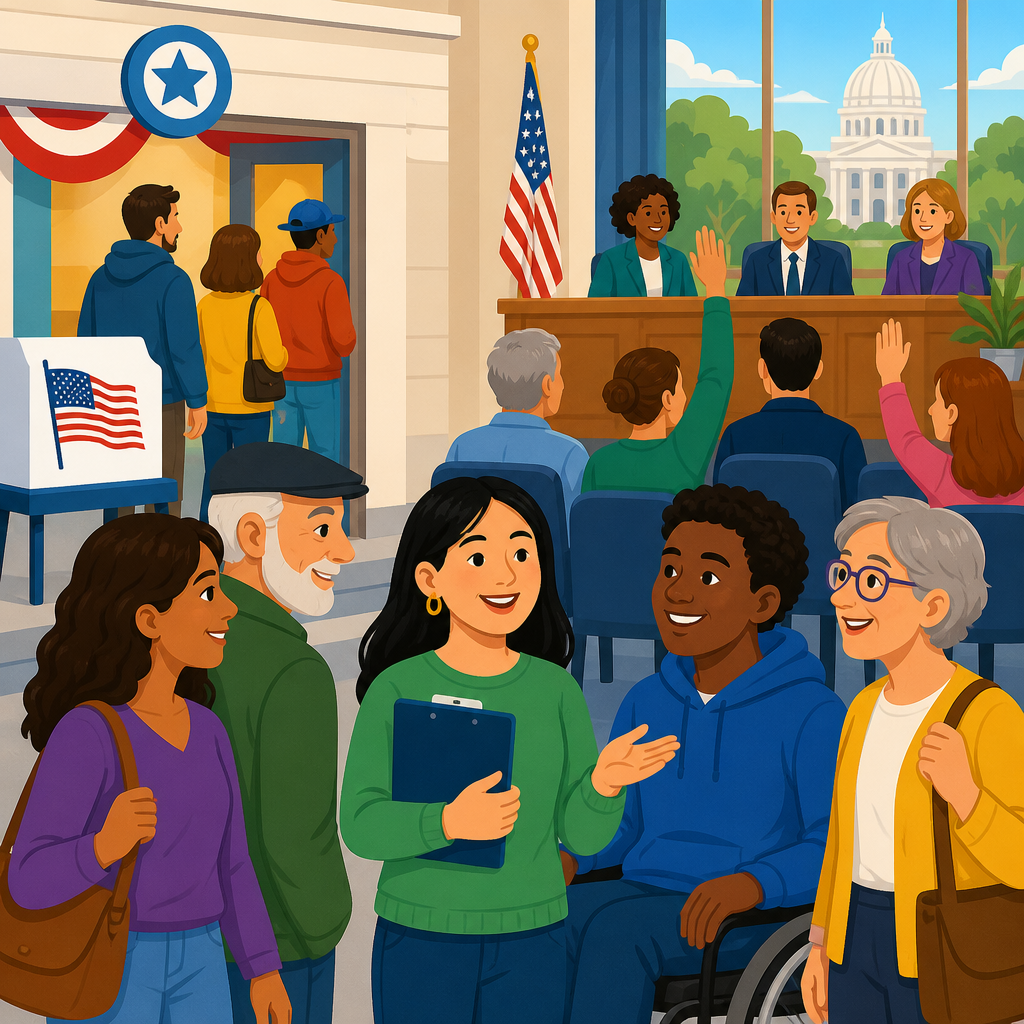
Polling places and public meetings are where civic life becomes real, yet they are also places where disability access is tested in practical, visible ways. For people with disabilities, the question is not only whether a right exists on paper, but whether the route to the entrance is usable, the voting machine works with assistive technology, the speaker can be heard, the agenda is available in an accessible format, and staff know how to respond lawfully. That is why understanding ADA rights at polling places and public meetings matters. These settings sit at the intersection of civil rights, government services, and democratic participation. When access fails, people can be excluded from voting, speaking, observing, or influencing public decisions.
The Americans with Disabilities Act, or ADA, is the primary federal civil rights law prohibiting disability discrimination in many parts of public life. In this context, key terms matter. A polling place is the physical location where voters cast ballots in person. A public meeting is a meeting held by a government body, school board, city council, county commission, transit authority, or similar entity where the public may attend, observe, or participate. Accessibility means more than ramps. It includes physical access, effective communication, program access, reasonable modifications to policies, and auxiliary aids and services such as captioning, sign language interpreters, assistive listening systems, accessible electronic documents, and materials in alternative formats.
In my work reviewing access barriers in local government settings, the same issues appear repeatedly: inaccessible parking and curb ramps, temporary signs that block routes, podiums with no microphone feed to assistive listening equipment, inaccessible livestream platforms, and election workers who incorrectly believe they cannot assist a voter with a disability. These are not minor inconveniences. Title II of the ADA applies to state and local governments, and Section 504 of the Rehabilitation Act often applies when federal funding is involved. The Voting Rights Act also protects voters who need assistance because of disability, and the Help America Vote Act requires at least one accessible voting system in each polling place for federal elections. Together, these rules create a practical framework for equal civic participation.
This hub article explains what rights people with disabilities have at polling places and public meetings, what governments must do, where the common friction points are, and how to respond when access breaks down. It also serves as a gateway for deeper, focused explorations of ADA rights, from effective communication to digital accessibility to service animal access and grievance procedures. If you need a working overview that answers immediate questions and points toward next-step topics, this page is designed to do that clearly.
Core ADA rights in civic spaces
At polling places and public meetings, the central rule is equal access to government programs, services, and activities. Under Title II, a public entity must operate each service so that, when viewed in its entirety, it is readily accessible to and usable by people with disabilities. That standard is called program access. It does not always require every old building to be fully altered, but it does require the government to provide access in a way that is actually usable. For voting, that may mean relocating an inaccessible precinct site, providing curbside voting where state law permits, fixing temporary barriers, or offering an accessible ballot marking device. For meetings, it may mean moving the event to an accessible room, providing interpreters, enabling remote participation, or making handouts accessible.
Equal access also includes reasonable modifications to policies, practices, and procedures when necessary to avoid discrimination, unless doing so would fundamentally alter the nature of the service or create an undue financial or administrative burden. In plain terms, staff cannot hide behind routine practice when a simple change would enable participation. A voter may need extra time, permission to sit while waiting, or assistance from a person of their choice, with narrow exceptions such as an employer or union representative. A meeting attendee may need to submit comments in writing instead of speaking at a podium, use a service animal, or receive agenda materials in a screen-reader-friendly format.
Effective communication is a separate and critical obligation. Public entities must take appropriate steps to ensure communications with people with disabilities are as effective as communications with others. For people who are deaf or hard of hearing, that can include qualified sign language interpreters, real-time captioning, assistive listening systems, or clear masks in limited contexts. For people who are blind or have low vision, it can include electronic documents that work with screen readers, Braille or large print where appropriate, and verbal descriptions of visual content. For people with speech disabilities, staff must allow meaningful communication and may need to accept relay calls or communication boards. The right is to effective communication, not merely any communication.
These broad protections are the foundation for every focused exploration of ADA rights in civic settings. If a subtopic asks whether a person can enter, hear, understand, communicate, vote privately, or take part safely, the answer almost always turns on program access, reasonable modification, and effective communication.
Rights at polling places: access, assistance, and privacy
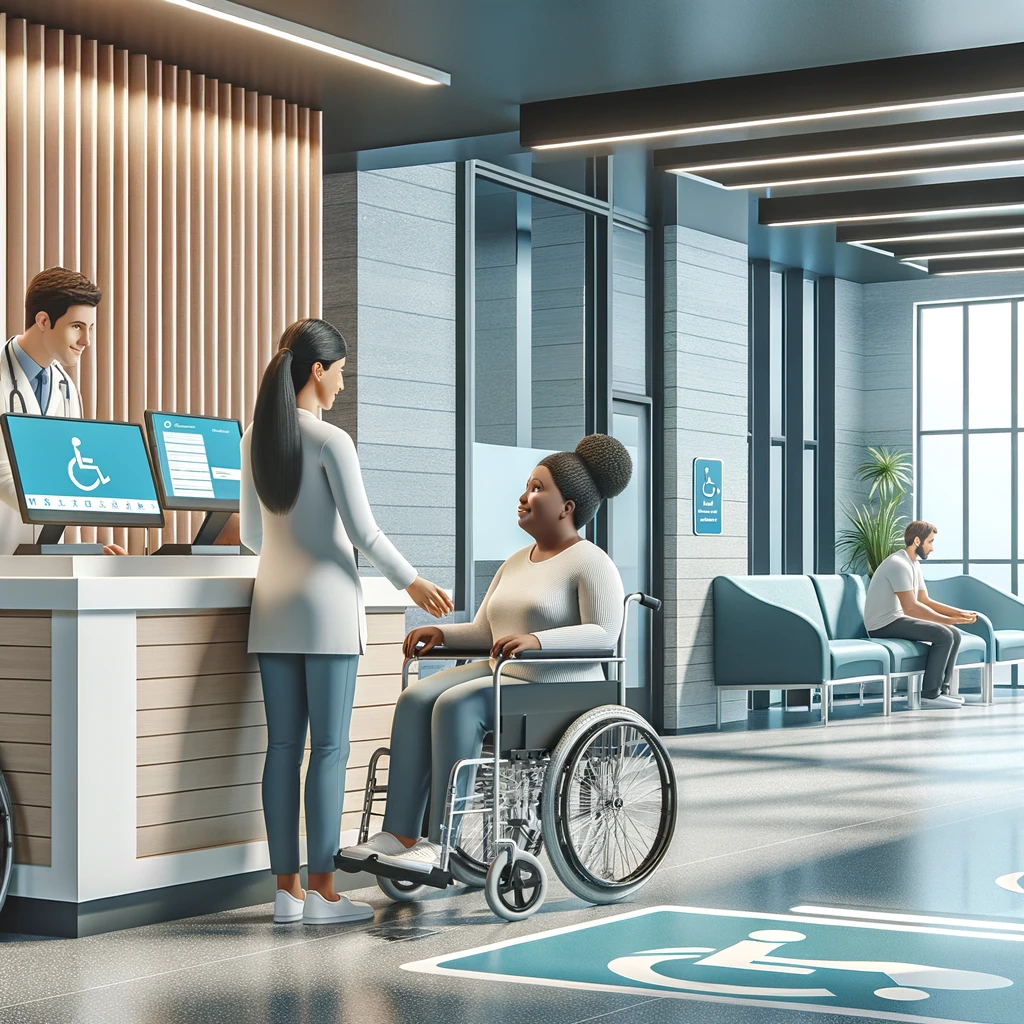
Polling place access begins before a voter reaches the doorway. Accessible parking, passenger drop-off, curb ramps, stable and slip-resistant routes, adequate door width, and an entrance that can be used independently all matter. The U.S. Department of Justice has long used an ADA checklist for polling places because temporary barriers are common and often fixable. I have seen a site fail access because the accessible parking sign was missing, the route crossed grass, and a door closer required too much force. Those conditions can disenfranchise voters even when the room inside is technically available.
Once inside, voters with disabilities have the right to an accessible voting experience, including privacy and independence to the maximum extent possible. The Help America Vote Act requires each polling place in a federal election to have at least one voting system accessible to people with disabilities, including nonvisual accessibility for blind and visually impaired voters. In practice, that often means a ballot marking device with audio output, tactile controls, adjustable display settings, or compatibility features. The machine must not simply exist in a corner unplugged or without trained staff. Election workers must know how to activate it, troubleshoot basic issues, and preserve the voter’s privacy.
Voters also have rights related to assistance. Under federal law, a voter who needs help to vote because of disability may receive assistance from a person of the voter’s choice, other than the voter’s employer or union representative. That rule matters when poll workers mistakenly insist that only election staff may help. The chosen assistant can read the ballot, mark selections, or help navigate equipment, but must follow the voter’s directions. Jurisdictions may also offer curbside voting or vote-by-mail accommodations under state law, but those options do not eliminate the obligation to make in-person voting accessible.
Another recurring issue is line management. Long waits can be a serious barrier for voters with mobility disabilities, chronic pain, fatigue, heat sensitivity, or certain medical conditions. While procedures differ by jurisdiction, election officials should be prepared to modify standard line practices when necessary to provide equal access, such as allowing seating, permitting a companion to hold a place in line where lawful, or directing a voter to an accessible processing area. What they cannot do is treat disability-related needs as a disruption or force a voter to abandon the process because ordinary procedures were designed without accessibility in mind.
Rights at public meetings: attendance, participation, and communication
Public meetings raise a broader range of ADA issues because they combine physical access, information access, public comment rules, and increasingly digital access. A city council meeting in an inaccessible second-floor chamber without elevator access is an obvious problem, but subtler failures are just as consequential. If the agenda packet is posted as an image-only PDF the night before the meeting, a blind resident may have no meaningful chance to review it. If a planning board relies on color-coded maps with no verbal explanation, attendees with low vision may miss the substance. If the only microphone is fixed high on a podium, a wheelchair user may be unable to give comments in the same way as others.
The ADA does not require governments to abandon standard meeting rules, but it does require modifications that make participation real. A speaker who cannot stand at a podium should be allowed to speak from an accessible location. Time limits may still apply, but staff should not cut off a speaker because an interpreter or communication device takes additional time to facilitate equivalent participation. If a hearing is remote or hybrid, the platform must support captioning and keyboard navigation, and posted links and documents should be accessible to screen readers. Hybrid meetings create a new layer of risk because an accessible building does not solve an inaccessible webcast.
Advance notice is essential. Many public entities ask attendees to request accommodations several days before a meeting, and that is a useful administrative practice, but the ADA does not let a government refuse an accommodation solely because the request came late if it can still be provided. I have seen agencies successfully arrange captioning on short notice and move a meeting room within the same building after discovering a route problem. Good faith, planning, and a clear ADA contact can prevent disputes. The strongest public bodies publish accommodation instructions on agendas, websites, and livestream pages, then train clerks and moderators to act quickly.
Common accommodations and when they apply
Specific rights become clearer when tied to common accommodations used in civic settings. The examples below are not exhaustive, but they cover the issues that arise most often in polling places and public meetings.
| Need | Typical accommodation | Where it applies | Practical example |
|---|---|---|---|
| Mobility access | Accessible route, ramp, relocated room, seating | Polling places and meetings | A town moves check-in from a stage area to the ground floor to eliminate stairs. |
| Deaf or hard of hearing access | Qualified interpreter, CART captioning, assistive listening system | Meetings; voter education events | A county provides live captioning for a budget hearing and an interpreter for a voter forum. |
| Blind or low vision access | Screen-reader-friendly documents, large print, Braille, audio ballot interface | Polling places and meetings | An election site activates headphones and tactile controls on a ballot marking device. |
| Speech disability access | Extra time, alternative communication method, relay acceptance | Meetings and election communications | A board accepts comments read from a tablet-generated voice output device. |
| Service animal access | Permission to enter all public areas open to attendees | Polling places and meetings | A resident attends a zoning hearing with a service dog without being separated from the audience. |
| Sensory or medical needs | Modified waiting process, breaks, remote attendance where offered | Polling places and meetings | A voter with heat sensitivity is allowed to wait seated indoors until called forward. |
What makes these accommodations lawful is not convenience alone but necessity for equal access. Public entities may choose among effective options, but they cannot select an option that leaves the person unable to participate meaningfully. For example, offering written notes instead of live captioning may not be effective for a fast-moving hearing. Likewise, telling a blind voter to bring a friend is not a substitute for accessible voting equipment when privacy and independence are required by law.
Limits, tradeoffs, and how to enforce your rights
ADA rights are strong, but they are not unlimited, and understanding the limits helps people advocate more effectively. A public entity does not have to adopt an accommodation that would fundamentally alter the nature of the program or impose an undue financial or administrative burden. Those defenses are narrower than many agencies assume. Cost alone is not enough, especially for core civic functions. The entity must consider all resources available for the program and look for alternative steps that would still provide access. In practice, most disputes at polling places and meetings involve planning failures, not legitimate legal exceptions.
Enforcement usually starts locally. Document the barrier, ask for the ADA coordinator, election supervisor, clerk, or meeting organizer, and state the accommodation needed in direct terms. Photos, timestamps, inaccessible links, and names of staff are useful. If the issue concerns voting, report it immediately because real-time fixes matter more than later apologies. Many jurisdictions have election protection hotlines, disability rights organizations, or protection and advocacy agencies that can intervene quickly. For public meetings, follow up in writing, request accessible records, and ask whether the entity has a grievance procedure under the ADA. Title II entities with fifty or more employees are generally expected to have one.
Formal options include administrative complaints to the U.S. Department of Justice, complaints to federal funding agencies under Section 504, state election complaints where available, and lawsuits seeking injunctive relief. Still, the most effective strategy is often a combination of immediate problem-solving and systematic follow-up. If a city repeatedly posts inaccessible agenda packets, the durable fix is procurement standards, staff training, and document templates, not a one-time correction. If a polling place keeps using a site with broken access features, the answer may be relocation, a pre-election ADA inspection, and worker training based on the DOJ checklist.
Focused explorations of ADA rights within this hub
This hub supports a broader set of focused explorations of ADA rights that deserve their own detailed treatment. Start with physical access: parking, routes, doors, restrooms, seating, podiums, witness tables, and emergency egress procedures. Then move to effective communication: interpreters, captioning, assistive listening technology, accessible agendas, plain-language notices, and multilingual access questions where disability and language needs overlap. Digital accessibility is its own major branch, covering online agendas, registration forms, webcast players, posted recordings, and PDF remediation under WCAG-based practices increasingly used by public entities.
Other subtopics include voting machine accessibility, assistance rights at the polls, service animals in government buildings, remote participation accommodations, grievance procedures, record requests in accessible formats, and retaliation protections when a person complains. Each topic seems narrow until a failure occurs. Then it becomes the deciding factor in whether a resident can vote independently, address a school board, challenge a zoning change, or follow a hearing that affects benefits, housing, transportation, or safety. Use this page as the starting map: identify the barrier, match it to the relevant ADA principle, and then go deeper into the specific right involved.
The key takeaway is simple: disability access in civic spaces is not optional hospitality. It is a legal requirement tied to equal participation in democracy and public decision-making. At polling places, that means accessible routes, working equipment, lawful assistance, and private, independent voting. At public meetings, it means accessible rooms, accessible documents, effective communication, and fair participation rules. If you encounter barriers, document them, ask for a prompt fix, and keep pushing for systemic improvements. Explore the related articles in this ADA rights hub to understand each protection in depth and to turn broad rights into practical action.
Frequently Asked Questions
What accessibility rights do people with disabilities have at polling places and public meetings?
People with disabilities generally have the right to meaningful access, not just technical permission to be present. At polling places, that means the voting location should be reachable and usable, including accessible parking if parking is offered, an accessible path of travel, an entrance that can be used by voters with mobility disabilities, and a voting process that allows a person with a disability to cast a ballot privately and independently when required by law. At public meetings held by government bodies, accessibility usually means more than opening the doors. It can include wheelchair-accessible seating and routes, effective communication for people who are deaf, hard of hearing, blind, have low vision, or have speech disabilities, and reasonable modifications to policies or procedures when needed to allow equal participation.
Under the Americans with Disabilities Act, state and local governments must provide equal access to their programs, services, and activities. Polling places and public meetings are classic examples of those activities. The legal standard is often practical: can a person with a disability actually enter, participate, understand what is happening, and use the same civic process as everyone else? If the answer is no because of a removable barrier, lack of auxiliary aids, inaccessible documents, or staff refusal to make an appropriate modification, there may be an ADA issue. The key point is that disability rights in these settings are about full participation in civic life, not symbolic access.
What should I expect from an accessible polling place on election day?
An accessible polling place should allow you to arrive, enter, navigate, and vote with dignity and as much independence as the law requires. In practice, that may include van-accessible or accessible parking spaces, curb cuts or ramps, a clear route to the entrance, doorways wide enough for mobility devices, and an entrance without unnecessary barriers such as steps or heavy doors that no one will assist with. Inside, there should be adequate space to move through check-in and voting areas, and the voting setup should not force a voter with a disability into a separate or lesser process without justification.
You should also expect an accessible voting system where required, including equipment that allows voters with disabilities to vote privately and independently. Depending on the jurisdiction and the available equipment, that can include features such as audio ballots, tactile controls, adjustable displays, or compatibility with certain assistive tools. Poll workers should understand basic accessibility procedures, know how to activate or set up accessible voting equipment, and avoid unlawful practices such as speaking only to a companion instead of the voter or demanding unnecessary proof of disability. If the main entrance is temporarily unusable or a barrier arises, staff should have a lawful, workable alternative rather than simply turning voters away. Accessibility on election day is not a courtesy; it is part of ensuring equal access to the voting process.
Can I ask for accommodations or accessible materials at a public meeting?
Yes. If a city council meeting, school board meeting, planning commission hearing, or similar public meeting is run by a state or local government, you can generally request reasonable accommodations and effective communication aids so you can participate equally. That can include sign language interpreters, real-time captioning, assistive listening systems, accessible seating arrangements, agendas or handouts in accessible electronic formats, large print materials, or other modifications depending on your disability-related needs. The ADA does not require a person to use the same exact method every time; it requires an effective method of access appropriate to the situation.
It is often helpful to make requests as early as possible because some accommodations take time to arrange, but a short timeline does not automatically relieve a public entity of its obligations. If the need is obvious or the request is straightforward, the agency should still respond reasonably. The best approach is to contact the organizer or ADA coordinator, explain what you need to participate effectively, and keep a record of the request. A public body is not free to deny an accommodation just because it is inconvenient or unfamiliar. If one requested aid is not available, the agency should consider other effective options rather than simply saying no. The central question is whether the meeting can be made accessible in a way that gives you a real opportunity to hear, understand, speak, and follow the proceedings.
What if poll workers or meeting staff do not know the rules or refuse to help?
Staff confusion is common, but it does not erase legal obligations. If poll workers or meeting staff appear unsure, calmly and specifically explain the barrier and what you need. For example, you might ask for the accessible voting machine to be activated, request entry through the accessible entrance, ask for a chair to be moved to create a wheelchair space, or remind staff that you need an interpreter or accessible materials that were requested in advance. Many problems can be resolved quickly when the issue is stated clearly and the right supervisor is contacted.
If frontline staff refuse to help or insist on a policy that blocks access, ask for the site supervisor, election judge, clerk, meeting organizer, or ADA coordinator. Take notes about names, times, what was said, and what barrier you encountered. If possible, save emails, notices, photos, or screenshots showing the inaccessibility. At a polling place, you may also be able to contact local election officials, an election protection hotline, or disability rights organizations while the issue is happening. At a public meeting, you can follow up with the government entity in writing and request a prompt corrective response. Documentation matters because ADA and voting access complaints are strongest when they show not just that a right existed, but exactly how access failed in practice and who had an opportunity to fix it.
What can I do if a polling place or public meeting is inaccessible or my rights are violated?
Start by trying to get the problem corrected in real time if you safely can. Immediate fixes are often possible: opening an accessible entrance, adjusting seating, turning on assistive listening equipment, locating accessible documents, or setting up the accessible voting machine. If the issue is not corrected, report it as soon as possible to someone with authority, such as the election administrator, municipal clerk, public body chair, agency ADA coordinator, or another designated official. If voting is affected, ask what alternative method is available that still protects your right to vote privately and independently to the extent required by law.
Afterward, consider making a formal complaint. Depending on the circumstances, that may involve the relevant election office, the government agency hosting the meeting, a state protection and advocacy organization, the U.S. Department of Justice, or another enforcement body. You may also want to consult an attorney, especially if the barrier was repeated, intentional, or part of a broader pattern. Include specific facts: the date, location, the barrier encountered, the accommodation requested, who responded, and what happened as a result. The goal is not only to address your experience, but also to prevent the same problem from affecting others. Inaccessible polling places and public meetings can undermine core civic rights, and complaints help push public entities to train staff, remove barriers, update procedures, and comply with the ADA in a meaningful way.