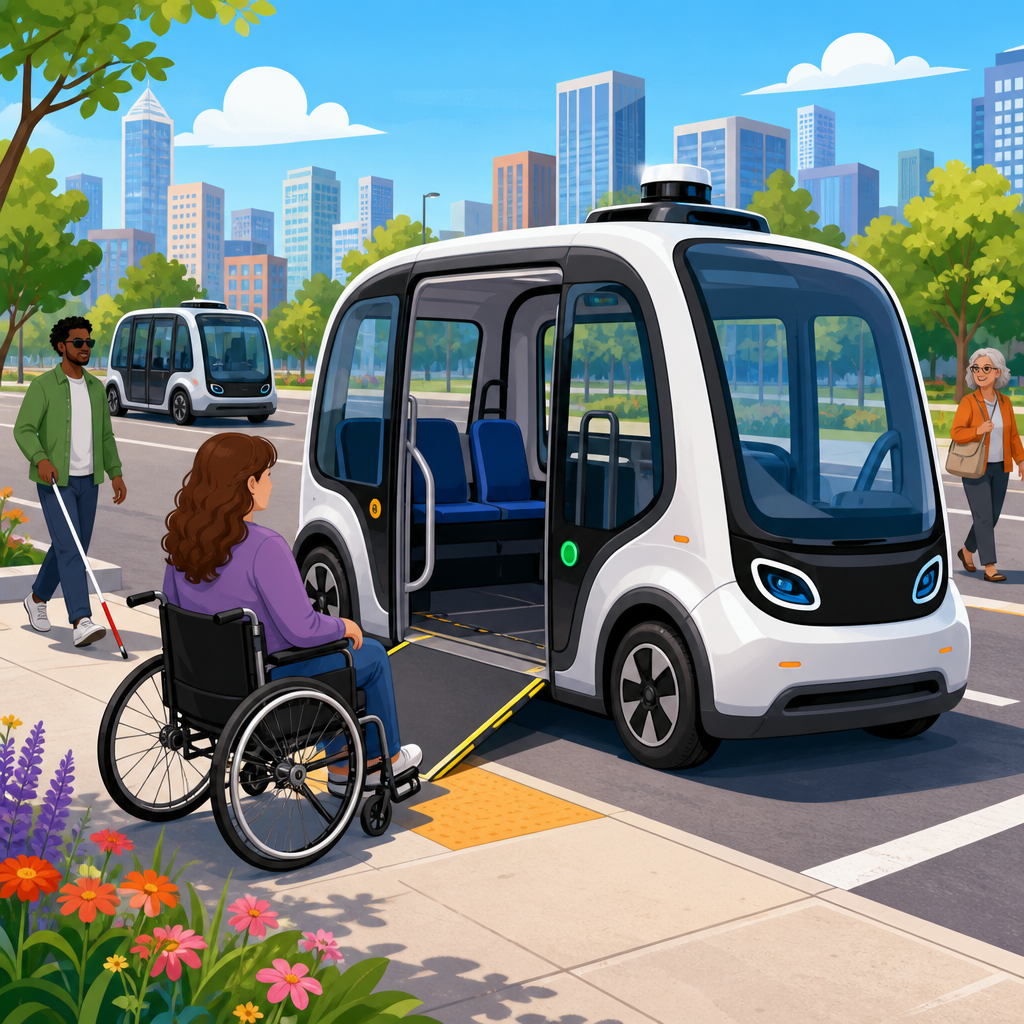
Autonomous vehicles are forcing disability law into unfamiliar territory, and recent ADA challenges involving autonomous vehicles and WAV access show how quickly transportation innovation can outrun civil rights compliance. In this context, autonomous vehicles are self-driving systems that perform some or all driving tasks through sensors, mapping, machine learning, and onboard computing. WAV access refers to wheelchair-accessible vehicle availability, including ramps or lifts, securement areas, and space that allows a wheelchair user to board and ride safely. The Americans with Disabilities Act, especially Titles II and III, remains the central federal framework for public entities and private transportation providers, but applying older statutory language to driverless fleets has become one of the most consequential legal questions in mobility.
I have worked on transportation accessibility issues long enough to see the same pattern repeat: a new service launches, convenience is celebrated, and disabled riders are told accessibility will come later. Courts and regulators are increasingly less willing to accept that answer. The issue matters because transportation is not a luxury; it determines access to work, school, medical care, voting, and community life. If autonomous vehicle networks scale before accessibility obligations are clarified and enforced, unequal access can become deeply embedded in software, fleet procurement, dispatch logic, and operating policies. That risk is exactly why recent ADA disputes now focus not only on vehicles themselves, but also on wait times, app usability, reasonable modifications, equivalent service, and whether a company can lawfully deploy a transportation system that excludes wheelchair users at launch.
This hub article explains the emerging challenges and recent ADA legal developments shaping autonomous mobility and WAV access. It covers the main legal theories, the agencies and standards influencing outcomes, the practical barriers that generate complaints, and the likely direction of future litigation. It also serves as the central overview for related case analyses under the broader legal cases and precedents topic, giving readers a structured foundation before they dig into individual decisions, settlement terms, and policy changes.
The Core ADA Question: Must Autonomous Mobility Be Accessible From the Start?
The most important legal question is straightforward: when an autonomous vehicle service is offered to the public, must meaningful access for wheelchair users exist at launch, or can it be postponed? Disability advocates generally argue that delayed accessibility violates the ADA because separate or later service is rarely equivalent service. Providers often respond that early deployment requires technical iteration, that accessible vehicles are limited in supply, and that safety validation for autonomous WAVs takes longer because ramps, securement systems, and interior layouts alter vehicle design and operating assumptions.
Under ADA analysis, however, transportation access is usually judged by outcomes rather than branding. A rider who cannot summon a vehicle, board it, secure mobility equipment, or complete a trip independently has not received equal access. For public transit agencies and paratransit operators, that principle has long been familiar. The novel wrinkle is whether a private autonomous fleet should be treated like a transportation operator, a place of public accommodation, a contractor to a public entity, or some combination. Litigation increasingly tests all three paths at once, especially where a city, airport, transit authority, or medical district authorizes service.
Another complication is the role of the absent driver. In conventional ride-hailing, a human driver may help unfold a ramp, confirm securement, or provide limited boarding assistance where policy allows. In a driverless deployment, those functions must be replaced by design, remote assistance, trained support staff, or station-based operations. That means the ADA inquiry extends beyond the vehicle body to the full service model. A company cannot claim accessibility by pointing to a theoretically accessible van if no practical method exists for boarding, securement verification, emergency communication, or rerouting after a breakdown.
Recent Litigation Themes and Enforcement Pressure
Recent ADA legal developments show a shift from abstract advocacy to targeted enforcement theories. Plaintiffs are increasingly challenging exclusion at the system level, not just one inaccessible ride. Complaints often allege that providers launched services with no wheelchair-accessible option, imposed materially longer wait times on disabled riders, required advance reservations inconsistent with on-demand service, or used apps and customer support channels that were inaccessible to blind, deaf, or cognitively disabled users. These cases treat digital barriers and operational barriers as part of the same discrimination claim.
A major litigation theme is equivalency. If non-disabled riders receive spontaneous, app-based transportation in ordinary sedans while wheelchair users are told to book elsewhere, book earlier, or pay more, plaintiffs argue that the difference is discriminatory even if some alternative transportation exists. Courts evaluating similar issues in ride-hailing disputes have paid close attention to whether the substitute service is genuinely comparable in response time, geographic coverage, hours of operation, and cost. That reasoning is highly relevant to autonomous fleets.
Regulators are adding pressure even when no final merits ruling exists. The Department of Justice, the Department of Transportation, and state civil rights agencies all influence compliance through investigations, technical assistance, grant conditions, and settlement expectations. The National Highway Traffic Safety Administration does not enforce the ADA, but its vehicle safety exemption process can affect accessibility because unconventional autonomous designs may seek approval without traditional controls. When companies pursue deployment while accessibility features remain unresolved, legal risk increases across multiple fronts at once.
Airports and transit hubs are becoming common flashpoints. These environments involve public-private partnerships, controlled access zones, and intense demand for first-mile and last-mile transportation. If an airport authorizes an autonomous shuttle or curbside robotaxi pilot that excludes wheelchair users, plaintiffs can frame the case not merely as a private product dispute but as denial of access to a core public transportation node. That broader framing tends to attract stronger scrutiny.
Where WAV Access Breaks Down in Practice
Most ADA disputes involving autonomous vehicles begin with practical failures rather than grand theory. A wheelchair user may be unable to locate an accessible option in the app. If one exists, estimated arrival may be forty minutes while standard vehicles arrive in six. Boarding may fail because the curb is too steep for a ramp deployment angle, the securement area is blocked by fixed seating, or the rider cannot independently verify that tie-downs are correctly engaged. Emergency procedures may also be inaccessible if instructions rely only on audio, only on touchscreens, or only on a remote agent who cannot see the cabin clearly.
In my experience, companies often underestimate how many components have to work together for accessibility to be real. The vehicle must physically accommodate mobility devices that vary in width, turning radius, weight, and battery profile. The software must identify suitable pickup points that have enough space for ramp slope and side clearance. Customer support must understand disability-related issues without forcing riders to repeatedly explain basic needs. Maintenance teams must keep lifts, kneeling systems, and restraint hardware in service. A single failure in that chain can make the entire offering unusable.
| Accessibility issue | How it appears in autonomous service | Typical legal concern |
|---|---|---|
| No WAV option at launch | Fleet consists only of standard vehicles | Exclusion from a public transportation offering |
| Excessive wait times | Accessible rides require long dispatch delays or reservations | Failure to provide equivalent service |
| Inaccessible app flow | Booking, support, or emergency tools fail with screen readers | Digital access barriers under disability law |
| Unsafe boarding design | Ramp angle, doorway width, or securement layout prevents use | Lack of usable vehicle access despite nominal availability |
| No boarding assistance model | Driverless service lacks remote or in-person support protocols | Failure to make reasonable modifications in operations |
These failures matter legally because accessibility is measured in lived use. Providers sometimes point to pilot status, but pilot programs are not exempt from civil rights obligations simply because they are experimental. If the program serves the public, especially in partnership with a public agency, courts and regulators are likely to ask whether disabled riders were included in planning, testing, and deployment from the beginning.
Key Legal Standards, Agencies, and Technical References
The ADA is the anchor, but it does not operate alone. DOT regulations governing transportation services, DOJ interpretations, and longstanding accessibility design standards all shape how courts evaluate autonomous vehicle access. For vehicle geometry and securement, practitioners still look to established transit accessibility principles, even when the platform is novel. The Architectural and Transportation Barriers Compliance Board, commonly called the Access Board, remains influential because its guidelines inform what usable boarding space, maneuvering clearance, and accessible features should look like in transportation settings.
Section 504 of the Rehabilitation Act also matters when federal funding touches a project. A city receiving federal transportation funds cannot sidestep accessibility by outsourcing service to an autonomous vendor. Likewise, state disability statutes, public utility rules, and local franchise agreements may impose parallel duties or create additional remedies. In several transportation matters I have reviewed, the contract between a public authority and a private mobility company ended up being as important as the statute, because performance metrics, nondiscrimination clauses, reporting obligations, and insurance requirements created evidence that accessibility was foreseeable and manageable.
Technical references increasingly include the Web Content Accessibility Guidelines for apps, human factors standards for emergency communication, and voluntary industry safety frameworks. These materials do not replace the ADA, but they help establish what competent design looks like. If a provider ignores WCAG-based accessibility testing for booking tools or omits visual and tactile backup communication inside a driverless cabin, that omission can undermine claims that barriers were unavoidable. The legal trend is clear: novel technology does not erase familiar accessibility obligations; it multiplies the number of places where compliance must be built in.
Emerging Case Patterns in Robotaxi, Shuttle, and Public Transit Programs
Autonomous mobility disputes are developing across three main service models. First are robotaxi programs operated directly by private companies. Here the central issue is usually whether on-demand public rides can be offered without an accessible counterpart that is genuinely comparable. Second are fixed-route or geofenced shuttles, often serving campuses, airports, downtown loops, or business parks. In those matters, the strongest claims often involve denial of access to a specific destination network rather than general marketplace exclusion. Third are public transit integrations, where an agency uses autonomous vehicles for circulator service, feeder routes, or paratransit experimentation. These cases raise the highest stakes because public entities have direct statutory obligations.
Recent legal developments also show that plaintiffs are becoming more sophisticated in remedy requests. They are not just seeking damages. They want injunctive relief requiring accessible fleet procurement timelines, service-level parity metrics, usability testing with disabled riders, transparent complaint handling, and periodic reporting. That matters because compliance in this space is operational. A settlement that says “improve accessibility” is weak. A settlement that requires maximum average wait-time differentials, minimum WAV fleet percentages, WCAG-conforming app updates, and independent monitoring is much stronger and more likely to change behavior.
Another pattern is the use of state and local proceedings to shape federal ADA outcomes. Disability advocates may challenge permits, airport concessions, or municipal operating agreements before a full federal case develops. That can force providers to address WAV access earlier, because deployment approvals depend on local relationships and public confidence. In practice, many companies would rather revise operations than litigate whether a celebrated innovation excluded wheelchair users by design.
What Companies, Cities, and Advocates Should Expect Next
The next phase of autonomous vehicle accessibility law will likely focus less on whether access is required and more on what operational parity demands. Expect disputes over acceptable wait-time differences, how many accessible vehicles must be in a fleet, what level of human assistance can be required, and whether remote operators may legally and safely support boarding or emergency evacuation. There will also be hard questions about vehicle classes. Some small autonomous pods may simply be too compact for meaningful WAV design. If so, providers may need mixed fleets rather than one universal vehicle type.
Cities and agencies should expect procurement documents to become more explicit. The smartest public entities already require accessibility plans, testing with wheelchair users, maintenance protocols for ramps and securement systems, and data reporting on denied trips and response times. Companies should expect that inaccessible pilots will generate reputational damage alongside legal exposure. Building access late is more expensive than specifying it at design review, supplier selection, and software architecture stages.
Advocates should expect progress, but not automatic progress. The strongest results usually come from combining legal pressure with technical specificity. A complaint that names inaccessible pathways, cites relevant regulations, identifies feasible design alternatives, and documents unequal trip outcomes is far more powerful than a general allegation that innovation should be inclusive. Autonomous transportation can expand independence for many disabled riders, but only if accessibility is treated as a launch requirement, a safety issue, and a civil right at the same time.
Conclusion
Recent ADA challenges involving autonomous vehicles and WAV access reveal a simple truth: transportation technology is changing faster than old compliance habits, but civil rights obligations still apply. The emerging cases are not only about futuristic cars. They are about whether wheelchair users and other disabled riders can access the same mobility networks, with comparable speed, dignity, safety, and independence. Courts, regulators, cities, and advocates are increasingly examining the whole service stack, from app design and pickup logic to boarding hardware, securement, emergency communications, and public contracting terms.
For readers following legal cases and precedents, this sub-pillar hub provides the framework for understanding the next wave of disputes. Watch for decisions and settlements that define equivalency, clarify launch obligations, and require measurable operational standards rather than vague promises. If you work in law, compliance, transportation planning, or disability advocacy, use this overview as your starting point and then move into the related case-specific articles to track how these principles are being tested in real deployments.
Frequently Asked Questions
What ADA issues are emerging most often with autonomous vehicles and wheelchair-accessible vehicle access?
The most common ADA issues center on whether new autonomous vehicle services are being designed and deployed in ways that provide meaningful access to riders with disabilities, especially wheelchair users. A major concern is the lack of wheelchair-accessible vehicles, or WAVs, in autonomous fleets. If a company offers widespread self-driving transportation but does not include enough vehicles with ramps or lifts, securement systems, and sufficient interior space, people who use wheelchairs may be excluded from the service in practice even if the platform appears neutral on its face.
Other recurring issues involve how the service functions beyond the vehicle itself. ADA compliance questions can arise from inaccessible booking apps, poor communication options for riders with vision, hearing, mobility, or cognitive disabilities, and pickup or drop-off procedures that assume a passenger can walk to or from a curb without assistance. In autonomous systems, the absence of a human driver also raises new concerns about boarding help, securement support, and what happens when a rider encounters a malfunction or needs immediate assistance during a trip.
Recent legal and policy challenges reflect a broader principle: transportation innovation does not eliminate civil rights obligations. If autonomous mobility becomes an important part of public transportation or quasi-public transportation networks, providers may face scrutiny over whether they are offering equivalent service, reasonable modifications, effective communication, and nondiscriminatory access. In short, the ADA questions are not limited to whether a self-driving vehicle can move safely on the road. They also include whether disabled riders can actually use the service reliably, independently, and with dignity.
Why is WAV access such a central issue in legal challenges involving self-driving transportation?
WAV access is central because physical access remains the threshold issue for many riders with mobility disabilities. A transportation service is not meaningfully available if a wheelchair user cannot enter the vehicle, position safely inside it, and complete the trip under conditions comparable to those offered to other riders. In autonomous vehicle programs, this becomes especially important because companies often launch with limited fleet types that were not originally designed for wheelchair accommodation. That gap can quickly translate into an exclusion problem.
Legal challenges often focus on whether wheelchair users are receiving service that is equivalent in availability, wait times, geographic coverage, reliability, and overall user experience. If non-disabled riders can summon a self-driving vehicle quickly while riders who need WAVs face long delays, limited service zones, advance reservation requirements, or no service at all, plaintiffs and regulators may view that disparity as evidence of unequal access. The ADA is concerned not just with formal availability, but with real-world usability.
WAV access also matters because it exposes how accessibility must be integrated at the design stage rather than added later as an afterthought. Autonomous vehicle companies may emphasize future plans to expand accessible offerings, but disability law often evaluates current access, not just promised improvements. As a result, WAV availability has become a practical and symbolic measure of whether emerging transportation systems are being built with disabled riders in mind from the outset.
How does the lack of a human driver complicate ADA compliance for autonomous vehicle services?
The absence of a human driver changes the compliance landscape in important ways. In traditional transportation settings, drivers often provide assistance with boarding, deploying ramps, securing mobility devices, confirming destination details, and responding to unexpected rider needs. In an autonomous vehicle model, those tasks may need to be handled by remote support staff, automated systems, redesigned vehicle hardware, or a mix of all three. If those alternatives are not effective, riders with disabilities may lose access that was previously available in human-assisted transportation.
This creates difficult questions about what level of assistance must be built into the service. For example, if a wheelchair user needs help with securement, or if a blind passenger needs confirmation that the correct vehicle has arrived, the company must consider how that support will be delivered safely and reliably. Similarly, if a rider is deaf or hard of hearing, emergency instructions and customer support systems must still be accessible. If a passenger has a cognitive disability and needs clearer prompts or modified instructions, the user interface may need adaptation as well.
From an ADA perspective, the key issue is functional access. A company cannot simply point to automation as a reason assistance is unavailable. If the service model removes the human role that previously enabled access, the provider may need to replace that support through thoughtful vehicle design, remote operations, accessible software, and reasonable modifications to policies and procedures. In this way, autonomy does not erase the duty to accommodate; it shifts where and how accessibility must be delivered.
Can autonomous vehicle companies face ADA liability even if the technology is still new and evolving?
Yes, novelty does not automatically shield a company from ADA scrutiny. Courts and regulators generally do not treat emerging technology as exempt from civil rights laws simply because it is innovative or still developing. If an autonomous vehicle provider offers transportation services to the public, partners with public agencies, or operates in a setting covered by disability access laws, it may be required to ensure that disabled individuals are not excluded, denied benefits, or subjected to unequal treatment.
That said, the legal analysis can be fact-specific. A central question is often how the service is classified and which ADA provisions apply. Depending on the provider’s business model, issues may arise under rules governing public entities, public accommodations, transportation services, or related state and local disability laws. There may also be disputes over what modifications are reasonable, what accessibility measures are technically feasible, and whether the company is offering equivalent service in a meaningful sense. Those questions can be complex, but the complexity of the technology does not remove the underlying obligation to address accessibility barriers.
In practice, companies that wait for litigation before addressing disability access often face greater risk. The stronger legal and operational approach is to incorporate accessibility into procurement, design, testing, pilot programs, contracts, and rollout plans from the beginning. As autonomous transportation becomes more integrated into daily mobility systems, providers that fail to account for ADA requirements may face complaints, enforcement actions, reputational harm, and pressure to retrofit systems that should have been accessible from the start.
What steps can autonomous vehicle providers take to reduce ADA risk and improve WAV access?
The most effective step is to build accessibility into the service from the earliest stages of development rather than treating it as a later compliance project. That means planning for a meaningful number of wheelchair-accessible vehicles, not just a token presence in the fleet. Providers should evaluate whether riders can board independently, whether ramps or lifts function reliably, whether securement systems are practical in an autonomous setting, and whether interior layouts allow safe, comfortable use by people with different mobility devices.
Companies should also review the full user journey. Booking platforms must be accessible to screen readers and other assistive technologies. Riders should be able to identify accessible vehicle options easily, receive accurate arrival information, communicate with customer support in multiple accessible formats, and request reasonable modifications without unnecessary friction. Pickup and drop-off protocols should account for real-world barriers such as curb height, sidewalk conditions, and the need for safe loading space. Emergency and in-ride communication systems should be designed for users with sensory, speech, and cognitive disabilities.
Equally important, providers should work directly with disability communities, accessibility consultants, and legal counsel experienced in ADA compliance. Pilot programs should include disabled riders in meaningful testing, and feedback should influence both design and policy decisions. Providers should document accessibility standards, training, maintenance procedures, and response protocols so that compliance is not merely aspirational. When companies approach WAV access as a core performance and civil rights issue, they are far better positioned to reduce legal exposure while delivering transportation that is usable by a broader public.


