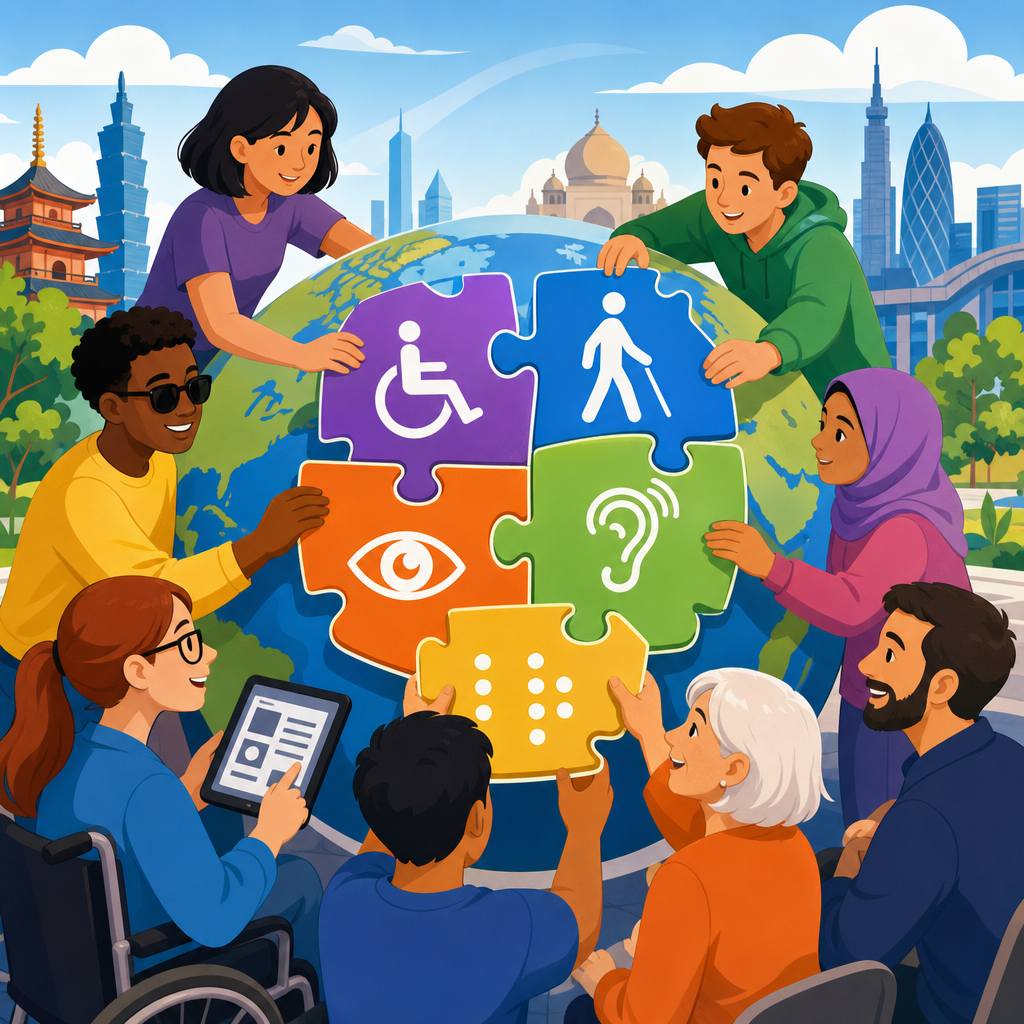
The future of international accessibility standards harmonization will shape whether disabled people can participate fully in education, work, transport, healthcare, culture, and digital life across borders. Accessibility standards harmonization means aligning laws, technical requirements, procurement rules, testing methods, and enforcement practices so that a product, building, document, or service judged accessible in one country is substantially accessible in another. In practice, that touches everything from website code and mobile apps to ticket machines, public procurement templates, classroom materials, passports, kiosks, and cross-border banking flows. I have worked on accessibility programs that spanned multiple jurisdictions, and the biggest lesson is simple: inconsistency creates avoidable barriers. When rules conflict, organizations delay compliance, vendors build fragmented solutions, and users encounter uneven experiences that undermine disability rights.
This topic matters because disability rights are now a global governance issue, not a niche compliance task. More than one billion people worldwide live with disabilities, according to the World Health Organization, and the economic impact of exclusion affects labor markets, public services, and international trade. The United Nations Convention on the Rights of Persons with Disabilities established a rights-based foundation, while regional instruments such as the European Accessibility Act and national laws like the Americans with Disabilities Act translate principle into obligations. Yet the standards landscape remains complex. Technical specifications may reference WCAG for digital content, EN 301 549 for ICT procurement, ISO standards for usability and ergonomics, or local building codes for the built environment. Harmonization is the effort to make those layers work together so accessibility travels with the person instead of stopping at a border.
As a hub for the wider discussion on the future of global accessibility and disability rights, this article explains where harmonization is heading, what is driving it, which barriers remain, and what organizations should do now. It covers digital accessibility, the built environment, transport, procurement, certification, enforcement, assistive technology, and emerging technologies such as AI. It also addresses a question many leaders ask directly: will the world ever have one universal accessibility standard? The realistic answer is no single document will govern everything, but the direction is unmistakable. Countries and industries are converging around interoperable frameworks, shared terminology, common testing baselines, and stronger rights enforcement. The future is not identical rules everywhere. The future is compatible rules that consistently protect access, usability, dignity, and independent participation.
Why harmonization is accelerating now
International accessibility standards harmonization is accelerating because three forces are converging: rights law, market pressure, and digital interdependence. First, disability rights have moved from policy aspiration to enforceable expectation. The UN convention pushed governments to review legislation, procurement, and service delivery through a non-discrimination lens. Courts and regulators increasingly treat inaccessible systems as barriers to equal participation rather than minor defects. Second, multinational companies need scalable compliance models. A software platform launched in twenty countries cannot sustain twenty incompatible accessibility interpretations without raising cost and risk. Third, digital services are inherently cross-border. A streaming platform, airline app, university portal, or payment wallet may serve users globally on day one, so accessibility failures spread internationally just as fast as successful design patterns.
I have seen procurement teams become unexpected catalysts. When a government or enterprise inserts a harmonized accessibility requirement into tenders, suppliers adapt quickly because revenue is at stake. That is why procurement standards matter so much. They operationalize rights into measurable checkpoints: captions for video, keyboard operability, screen reader compatibility, color contrast, reflow, accessible PDFs, and support documentation in accessible formats. EN 301 549 has been especially influential because it ties procurement language to specific ICT accessibility requirements and aligns many web provisions with WCAG. Similar referencing patterns appear outside Europe, creating de facto alignment even where legal systems differ. The lesson is clear: harmonization often advances through buying power before it is fully settled in legislation.
Another accelerator is the maturing evidence base. Organizations can no longer claim accessibility is too subjective to standardize. WCAG success criteria, usability research, AT compatibility testing, and plain language standards provide concrete benchmarks. At the same time, disability advocacy has become more globally networked. Disabled users compare experiences across countries, expose inaccessible products publicly, and push institutions toward consistent commitments. International events, remote work, online learning, and telehealth have also revealed the cost of fragmented standards. If a webinar platform supports captions in one market but not in another, or if accessible identity verification works only with local documents, exclusion becomes immediately visible. That visibility is turning harmonization from a technical debate into a mainstream governance priority.
The standards and laws shaping the global baseline
No single instrument defines accessibility worldwide, but several frameworks set the practical baseline. For digital accessibility, the Web Content Accessibility Guidelines remain the dominant reference point. WCAG 2.1 and 2.2 are not laws by themselves, yet they are embedded in legislation, settlement agreements, procurement requirements, and internal policies globally. Their strength is portability. Whether an organization is in Canada, Japan, Brazil, South Africa, or the European Union, WCAG provides a shared vocabulary for perceivable, operable, understandable, and robust content. In implementation work, I have found that this common language reduces disputes between legal, engineering, and design teams because everyone can map issues to the same criteria.
For ICT procurement and product requirements, EN 301 549 has become highly influential because it extends beyond websites to software, documents, hardware, telecommunications, and support services. In the United States, Section 508 standards play a similar role for federal procurement and have influenced broader market behavior. At the rights level, the Americans with Disabilities Act, the Rehabilitation Act, the Equality Act in the United Kingdom, the Accessible Canada Act, and the European Accessibility Act each contribute different enforcement models and coverage scopes. The built environment draws from separate but related systems, including national building codes, ISO concepts on ergonomics and usability, and transport regulations covering signage, boarding, seating, and wayfinding.
| Framework | Main scope | Why it matters for harmonization |
|---|---|---|
| UN Convention on the Rights of Persons with Disabilities | Human rights obligations | Creates the global rights foundation and policy direction |
| WCAG 2.1/2.2 | Web and digital content | Provides the most widely shared technical baseline |
| EN 301 549 | ICT products and services | Links procurement to measurable accessibility requirements |
| Section 508 | US federal ICT procurement | Influences vendor practices and cross-market product design |
| European Accessibility Act | Selected products and services in the EU | Expands market-wide consistency across member states |
The future of harmonization will likely involve more cross-referencing among these instruments rather than replacement by one global code. That approach is practical. Legal systems differ, languages differ, and public infrastructure varies widely. But alignment can still occur through shared definitions, mutual recognition of testing methods, common conformance reporting, and synchronized update cycles. The most effective model is modular: rights conventions establish the principle, sector laws define obligations, technical standards specify measurable criteria, and procurement rules drive adoption. When those pieces align, accessibility becomes easier to implement at scale and easier to defend legally.
From digital access to whole-of-life accessibility
The next phase of global accessibility and disability rights will move beyond websites toward whole-of-life accessibility. Digital compliance opened the door because it was measurable and urgent, but disabled people do not live in separate channels. They move between online booking, physical travel, customer support, payment, documentation, and aftercare. Harmonization therefore must connect digital interfaces with the built environment, transport systems, consumer products, and public services. A rail journey is a useful example. True accessibility requires an accessible app for booking, compatible kiosks at stations, tactile and visual wayfinding, platform safety design, audio and visual announcements, wheelchair boarding procedures, trained staff, and accessible disruption communications. A failure in any link breaks the journey.
This integrated view is already reshaping policy. The European Accessibility Act covers e-commerce, banking, ticketing, e-books, and communications services because lawmakers recognized that digital transactions are core participation channels. Airlines and airports are under pressure to standardize service requests, mobility aid handling, and passenger information. Universities are being pushed to align learning management systems, digital documents, classroom technology, and campus navigation. In healthcare, patient portals, telehealth platforms, consent forms, pharmacy labeling, and diagnostic equipment are increasingly discussed together rather than as separate compliance categories. Harmonization succeeds when accessibility is treated as a service chain, not a checklist attached to one asset.
That shift also changes how organizations should measure progress. Instead of tracking only issue counts in audits, mature programs assess task completion by disabled users across journeys: applying for benefits, opening an account, completing coursework, renewing a passport, or boarding a train independently. This is where standards need to evolve thoughtfully. Technical conformance remains essential, but user outcomes must guide updates. If a service technically passes a narrow set of criteria yet remains confusing with a screen reader, speech input, or cognitive support needs, the harmonized framework is incomplete. The future baseline will combine technical specifications with stronger usability validation across disability groups.
The hard problems: language, enforcement, AI, and uneven capacity
Harmonization faces real obstacles, and ignoring them leads to weak policy. Language is one barrier. Terms such as accessibility, reasonable accommodation, universal design, and usability may carry different legal implications across jurisdictions. Translation can distort technical requirements, especially for cognitive accessibility, caption quality, or plain language expectations. Enforcement is another challenge. Some countries rely on litigation, others on regulators, ombuds systems, procurement controls, or negotiated settlements. A harmonized standard means little if oversight bodies lack expertise, budgets, or authority to impose remedies. I have seen organizations comply quickly when procurement auditors ask for evidence, but move slowly where standards exist without credible enforcement.
Capacity gaps are equally important. Large multinationals may have accessibility teams, design systems, and legal counsel, while small vendors and public agencies often do not. In lower-resource settings, the challenge may include limited local testing expertise, shortages of assistive technology, unreliable connectivity, or dependence on imported platforms not designed for local languages. That does not weaken the case for harmonization; it changes the implementation strategy. Standards must be accompanied by training, open testing guidance, procurement templates, and realistic transition periods. Otherwise, harmonization becomes formal alignment on paper without practical accessibility in people’s lives.
Artificial intelligence introduces both opportunity and risk. AI can improve automated captioning, image description support, speech interfaces, reading assistance, and testing workflows. It can also scale exclusion through inaccessible chatbots, biased hiring systems, opaque decision-making, and interfaces that break assistive technology compatibility. Future harmonization will need explicit requirements for AI systems: accessibility of model outputs, human override options, transparency, error handling, and testing with disabled users. The same applies to immersive environments, biometric identity systems, and digital public infrastructure. If accessibility is not embedded early, these technologies will create a new generation of cross-border barriers. The right approach is not to treat AI as a special exemption, but to apply established accessibility principles to new interaction models rigorously and early.
What governments and organizations should do next
The most effective path forward is practical coordination. Governments should align legislation with international rights commitments, reference mature technical standards, and publish clear enforcement guidance. They should use procurement aggressively, because it creates immediate market incentives and rewards accessible design before disputes arise. They should also require standardized accessibility conformance reporting for suppliers, support multilingual guidance, and fund capacity building for local agencies and smaller vendors. Public reporting matters as well. When accessibility statements, remediation timelines, and complaint channels are visible, standards become part of governance rather than hidden legal text.
Organizations should stop waiting for perfect global uniformity and build to the strongest common baseline now. In operational terms, that means adopting WCAG-based design and engineering practices, mapping products against EN 301 549 or equivalent procurement requirements, integrating accessibility into design systems, and testing with users of screen readers, magnification, switch access, voice control, captions, and cognitive support strategies. Internal policies should cover documents, video, procurement, software development, third-party tools, and customer support. Teams also need evidence. Maintain issue logs, accessibility statements, VPAT-style disclosures where relevant, training records, and remediation plans. Those artifacts reduce legal risk and make cross-border scaling much easier.
Most importantly, include disabled people continuously, not symbolically. Advisory panels, paid user research, co-design sessions, and accessibility leadership roles produce better standards and better products. In every program I have seen succeed internationally, disabled experts shaped priorities early, challenged assumptions, and caught problems that automated scans missed. Harmonization is strongest when it reflects lived experience alongside technical precision. The future of international accessibility standards harmonization will not be defined by one document. It will be defined by consistent, interoperable practices that let disabled people move through the world with fewer friction points and more autonomy. That is the core benefit for governments, businesses, and society. Use this hub as your starting point, then review your standards, procurement rules, and product journeys now.
Frequently Asked Questions
What does international accessibility standards harmonization actually mean?
International accessibility standards harmonization is the process of bringing different countries’ accessibility rules, technical specifications, testing methods, procurement requirements, and enforcement approaches into closer alignment. The goal is not necessarily to make every law identical, but to ensure that accessibility expectations are compatible enough that a product, building, document, platform, or service that meets accessibility requirements in one country will also be substantially accessible in another. That matters because people move, study, work, travel, and access digital services across borders every day, and inconsistent standards can create avoidable barriers.
In practical terms, harmonization affects far more than websites. It can shape how public transport is designed, how payment terminals and kiosks are built, how educational materials are formatted, how healthcare information is delivered, how consumer electronics handle captions and screen reader support, and how procurement contracts define accessibility. It also influences conformance testing, certification, and the language organizations use when they claim a product or service is accessible. When these systems are misaligned, businesses face duplication, governments face inefficiency, and disabled people face uncertainty about whether they will be able to independently use services in another jurisdiction.
A strong harmonization framework usually combines legal alignment with technical consistency. For example, countries may reference similar international standards for digital accessibility, adopt comparable criteria for the built environment, or use shared terminology for concepts such as reasonable accommodation, usability, interoperability, and assistive technology compatibility. The future of harmonization will likely depend on how well governments, standards bodies, disability advocates, industry groups, and testing organizations collaborate to make accessibility more portable, more measurable, and more enforceable worldwide.
Why is harmonizing accessibility standards so important for disabled people’s everyday lives?
Harmonized accessibility standards can directly affect whether disabled people can participate fully and independently in cross-border education, employment, travel, healthcare, commerce, and civic life. If accessibility expectations differ dramatically between countries, a person may find that a website they can use at home becomes inaccessible abroad, that public transit information is available in one place but not another, or that a workplace tool compatible with assistive technology in one market fails in another. These inconsistencies can limit freedom of movement and reinforce exclusion in situations where equal participation should be routine.
The benefits of harmonization are especially clear in digital and service environments. A student using captions, keyboard navigation, structured documents, and screen reader-compatible learning systems should not lose access simply because a university platform was built under a weaker or different standard. A traveler who relies on tactile signage, audible announcements, accessible ticketing systems, and step-free routes should not face a completely new and unpredictable experience in each country. Likewise, a patient accessing telehealth services or medical forms should be able to expect consistent support for plain language, accessible PDFs, compatible forms, and alternative communication formats.
Harmonization also has an important dignity and rights dimension. Accessibility should not depend on geography, market size, or regulatory luck. More aligned standards help move accessibility from a patchwork of local exceptions toward a baseline expectation of equal access. That creates a more stable environment in which disabled people can plan, participate, and advocate with greater confidence. It also strengthens accountability, because service providers and governments have fewer excuses for offering inconsistent access when clear international benchmarks exist.
What are the biggest obstacles to global accessibility standards harmonization?
One of the biggest obstacles is that countries are starting from very different legal, economic, technical, and political positions. Some jurisdictions have mature accessibility laws with active enforcement, detailed technical references, and strong disability rights frameworks. Others rely on voluntary guidance, fragmented sector-specific rules, or outdated standards that do not reflect current technologies. Harmonization becomes difficult when the underlying legal systems, compliance cultures, and enforcement capacities vary so widely.
Another major challenge is the breadth of accessibility itself. Harmonization is not just about websites or apps. It spans the built environment, transportation systems, consumer products, public procurement, audiovisual media, telecommunications, education, emergency communications, and more. Each area has its own technical complexities, industry stakeholders, and legacy systems. Aligning standards across these sectors requires sustained coordination between governments, standards organizations, manufacturers, developers, disability communities, and auditors. Even when there is agreement on broad principles, detailed technical alignment can be slow and resource-intensive.
There are also risks tied to weak implementation. A country may formally adopt an international standard but apply it inconsistently, enforce it unevenly, or fail to train procurement teams, designers, developers, inspectors, and regulators. In that case, harmonization exists on paper but not in practice. Language differences, testing inconsistencies, and conflicting certification schemes can further complicate matters. Some organizations also worry that harmonization could become a race to the middle if it prioritizes convenience over disability rights. That is why the quality of harmonization matters just as much as the fact of harmonization. Effective alignment should raise accessibility expectations, not dilute them.
How will technology influence the future of international accessibility standards?
Technology will be one of the strongest drivers of future harmonization because digital products and connected services routinely cross borders long before laws catch up. Cloud platforms, mobile apps, online education systems, streaming services, banking tools, workplace software, and AI-enabled interfaces are often launched in multiple markets at once. That creates pressure for common accessibility benchmarks, since maintaining different accessibility architectures for different countries is inefficient and often impractical. As a result, international technical standards and widely recognized guidelines are likely to play an even larger role in shaping accessibility expectations worldwide.
Emerging technologies will also force standards bodies to address new accessibility questions more quickly and collaboratively. Artificial intelligence, biometric systems, virtual and augmented reality, smart city infrastructure, automated transport, wearable devices, and real-time translation tools all introduce accessibility opportunities and risks. For example, AI can improve captioning, image description, and personalization, but it can also amplify bias, mislabel content, or create inaccessible interfaces if accessibility is not built into design and testing requirements. Harmonized standards will be increasingly important for defining what accessible innovation looks like in these fast-moving areas.
At the same time, technology can improve the harmonization process itself. Shared testing tools, open technical references, international developer practices, interoperable accessibility APIs, and common procurement language can help organizations build to more consistent standards from the start. Data can also support better monitoring by showing where barriers persist across products and jurisdictions. However, technology alone will not solve the problem. The future depends on whether disabled people are meaningfully involved in standard-setting, whether conformance models reflect real-world usability, and whether innovation is matched by enforceable accessibility requirements across international markets.
What would successful international accessibility harmonization look like in the future?
Successful harmonization would mean that accessibility becomes more predictable, portable, and enforceable across borders. A disabled person should be able to reasonably expect that core elements of access will travel with them: websites that work with assistive technologies, transport systems with consistent information access, documents available in accessible formats, products with interoperable controls and feedback, and public services designed with inclusive use in mind. Success would not require every country to have identical legislation, but it would require enough alignment that accessibility outcomes are substantially consistent and rights are not undermined by jurisdictional differences.
From an institutional perspective, success would include several visible changes. Governments would reference internationally recognized accessibility standards in laws and procurement rules. Public and private organizations would use clearer, more consistent conformance methods. Accessibility claims would be backed by credible testing and user involvement rather than vague marketing language. Regulators would have stronger enforcement tools, and disabled people would have clearer complaint pathways when access fails. Cross-border businesses would be able to design once to a high accessibility baseline instead of navigating a maze of contradictory requirements.
Most importantly, successful harmonization would be measured by lived experience rather than by the number of standards documents published. If disabled students can access international education platforms, workers can use enterprise tools in global workplaces, travelers can navigate transport systems more independently, and patients can engage with health systems across borders without encountering basic communication barriers, then harmonization is working. The future of international accessibility standards harmonization should ultimately be judged by whether it expands real participation, reduces inequality, and makes accessibility a normal feature of global life rather than an exception that depends on location.