Effective communication in classrooms, events, and campus services shapes how students learn, how families engage, and how institutions build trust. In education, communication is not limited to lectures or emails. It includes every spoken announcement, captioned video, emergency alert, help-desk interaction, orientation session, advising appointment, parent meeting, and public event. When communication works, students know what to do, instructors teach with fewer barriers, and campus operations become more efficient. When it fails, confusion multiplies quickly: deadlines are missed, support services go unused, accessibility gaps widen, and safety risks increase.
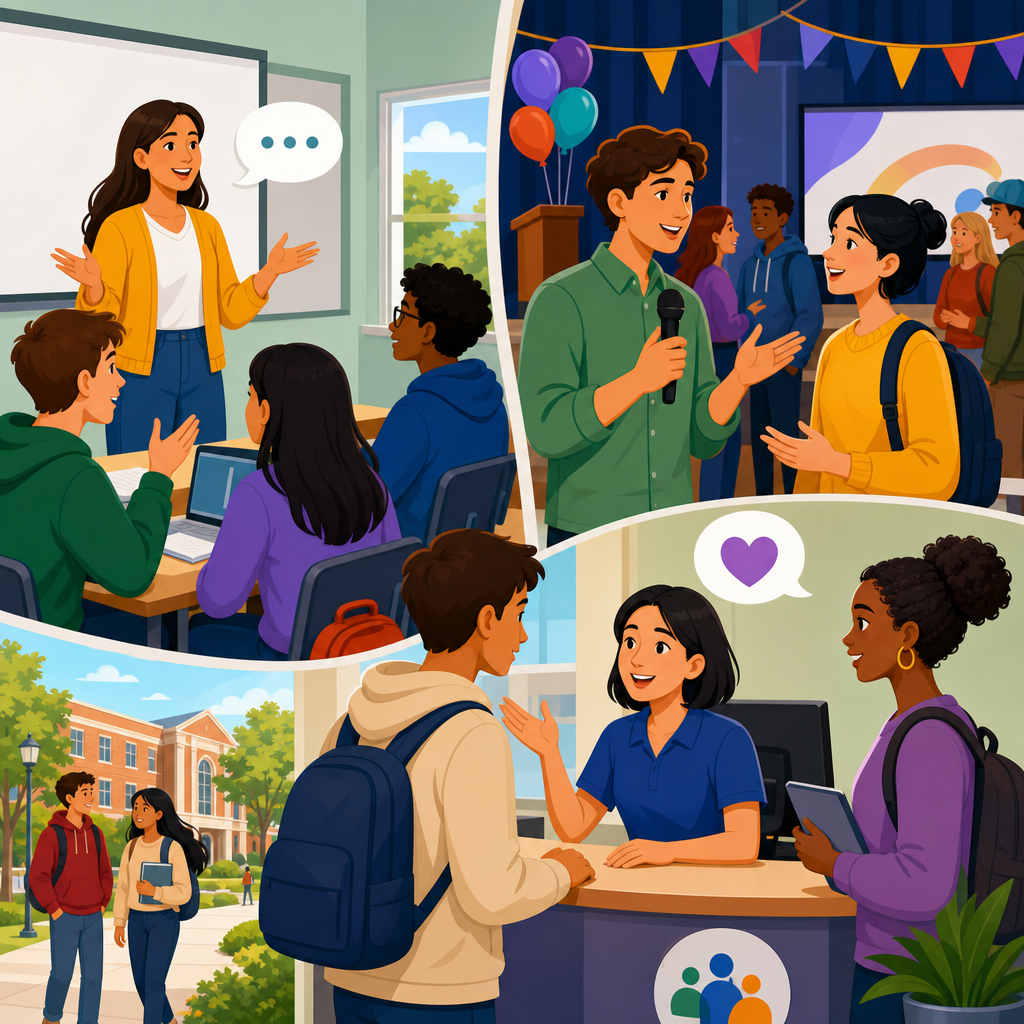
In practice, educational communication spans three connected environments. Classrooms are where instruction happens and where clarity directly affects comprehension, participation, and retention. Events are where institutions present information at scale, from open houses and graduation ceremonies to research symposia and athletics. Campus services include admissions, registrar offices, financial aid, libraries, counseling centers, IT support, disability services, and security teams. Each environment has distinct demands, yet they share the same core requirement: information must be understandable, timely, inclusive, and easy to act on.
After working with schools, colleges, and university operations teams, I have seen the same pattern repeatedly. Institutions often invest heavily in curriculum, facilities, and technology, but communication systems remain fragmented. One department sends polished updates while another relies on unclear PDFs. A professor speaks clearly in person but posts inaccessible materials online. An event team manages logistics well but overlooks multilingual signage. These gaps are rarely caused by lack of effort. More often, they stem from missing standards, inconsistent processes, and tools that were adopted without a campus-wide strategy.
That is why effective communication in education matters beyond convenience. It influences academic outcomes, enrollment yield, student belonging, compliance, and reputation. It also intersects with legal and operational obligations. Accessibility standards such as WCAG inform digital content. Privacy rules like FERPA shape how student information is shared. Emergency notification protocols require fast, consistent language across channels. Institutions that treat communication as infrastructure, rather than a soft skill, are better positioned to serve diverse learners and respond under pressure.
What Effective Communication Means in Education
Effective communication in education is the reliable transfer of information in ways the audience can receive, understand, trust, and use. Reliability matters because students and families rarely interact with a single channel. They move between learning management systems, text alerts, websites, email, digital signage, classroom screens, and in-person conversations. A message is only effective when those touchpoints align. If a professor’s syllabus says one thing, the LMS says another, and the department website says nothing, students will default to guesswork.
Clarity starts with message design. Good educational communication uses plain language, defined terms, visible deadlines, and explicit next steps. Instead of saying “submit supporting materials promptly,” a stronger message says “upload your immunization record in the student portal by August 1.” The second version reduces interpretation and supports action. This principle applies equally to assignment instructions, event registrations, advising reminders, and service notices. The most useful campus messages answer four questions immediately: what is happening, who it affects, when it matters, and what to do next.
Inclusivity is equally important. A campus audience includes native and non-native English speakers, students with hearing or vision impairments, neurodivergent learners, parents, guests, and staff with different levels of technical fluency. Effective communication accounts for this diversity from the start. Captions, transcripts, alt text, readable typography, multilingual wayfinding, and accessible document structures are not add-ons. They are baseline requirements for equitable access. Universal Design for Learning supports the same idea in teaching: present information in multiple formats so more people can engage with it successfully.
Consistency turns good individual messages into a dependable institutional experience. I have seen campuses reduce support tickets simply by standardizing naming conventions, response templates, and announcement formats across departments. When students recognize how information is organized, they spend less time decoding systems and more time completing tasks. Consistency does not mean every message sounds robotic. It means the institution establishes predictable structures, approved terminology, and service expectations that reduce friction.
Communication in Classrooms: Teaching for Understanding and Participation
Classroom communication begins before anyone speaks. Course design, syllabus structure, assignment calendars, and LMS organization all communicate expectations. The strongest instructors I have worked with front-load clarity. They publish learning outcomes in concrete language, explain how participation is assessed, and break complex assignments into milestones. Students perform better when they know not just what to submit, but why it matters and how success will be judged. Rubrics, model responses, and brief video walkthroughs are especially effective because they translate abstract expectations into visible standards.
Live instruction requires more than subject expertise. Pace, signposting, repetition, and comprehension checks determine whether students can follow the lesson in real time. In a large lecture, a professor might say, “There are three causes you need to know,” then label each one on the slide and summarize them again at the end. That simple structure improves retention because it reduces cognitive load. In seminars, communication quality often depends on facilitation: setting discussion norms, inviting quieter students in, and restating complex comments in plainer language without diluting meaning.
Technology can improve classroom communication when it is selected for pedagogy rather than novelty. Polling tools such as Poll Everywhere, Mentimeter, and Zoom polls can surface misconceptions instantly. Captioning in lecture capture platforms helps students review material and benefits far more than deaf or hard-of-hearing learners alone. LMS announcements work best when paired with predictable weekly modules and due-date reminders. The common mistake is tool sprawl. When instructors use five platforms without a clear logic, students miss information. A smaller, integrated stack usually communicates better than a large, fragmented one.
Feedback is where classroom communication becomes personal. High-quality feedback is specific, timely, and actionable. “Good job” has little instructional value. “Your thesis is clear, but your evidence in paragraph three does not yet support the claim; add one peer-reviewed source and explain the connection” tells a student what to improve. Audio or video feedback can add tone and nuance, but written summaries remain important for reference and accessibility. In my experience, institutions that train faculty on feedback practices often see stronger student satisfaction than those that focus only on presentation skills.
Communication at Educational Events: Scaling Information Without Losing Clarity
Educational events test communication under complexity. Orientation, commencement, parent programs, alumni gatherings, career fairs, public lectures, and campus tours all involve moving audiences through time, space, and information. The stakes are practical and reputational. A well-run event signals institutional competence; a confusing one makes attendees doubt everything else. Effective event communication starts long before the day itself. Invitations, registration pages, confirmation emails, maps, parking instructions, accessibility details, and FAQs should answer logistical questions in plain terms.
Onsite communication must be layered. Attendees need advance information, visible wayfinding, staffed help points, stage announcements, and digital updates that reinforce one another. For example, a university open day may use confirmation emails for arrival instructions, SMS for last-minute schedule changes, digital signage for room locations, and printed maps for backup. Redundancy is not wasteful in this context. It is risk management. People miss messages, phones die, Wi-Fi fails, and crowded spaces make verbal announcements hard to hear.
Accessibility often determines whether an event feels welcoming or exclusionary. The basics include captioned presentation screens, hearing assistance systems where appropriate, step-free routes, readable signage, and clear instructions for accommodation requests. Multilingual elements may also be necessary, especially for admissions events and community outreach. I have seen registration abandonment drop when institutions simply clarified whether interpretation, parking support, or dietary accommodations were available. People attend more confidently when uncertainty is removed before arrival.
| Event Type | Primary Communication Need | Most Effective Channels | Common Failure Point |
|---|---|---|---|
| Student orientation | Sequencing tasks and locations | Email, SMS, maps, signage, app | Too many last-minute updates |
| Commencement | Crowd movement and timing | Tickets, FAQ page, signage, PA system | Unclear guest entry instructions |
| Career fair | Employer and student preparation | Registration page, reminders, floor plan | No guidance on expectations |
| Campus tour | Wayfinding and narrative consistency | Confirmation email, trained guides, QR codes | Different guides giving conflicting information |
Event teams also need a command structure for live updates. Who approves schedule changes? Who posts to screens, sends texts, updates social channels, and briefs staff? Without that structure, different teams improvise and messages diverge. The most reliable events use a run-of-show document, a single source of truth for schedule and scripts, and prewritten contingency language for weather delays, room changes, or transportation disruptions. That operational discipline is what keeps communication calm and credible when conditions change fast.
Communication Across Campus Services: Making Support Visible and Usable
Campus services succeed only when students understand what is available, when to use it, and how to access it. This sounds obvious, yet many service failures are communication failures in disguise. A counseling center may offer urgent appointments, but if that information sits three clicks deep on a poorly labeled webpage, students will assume help is unavailable. A financial aid office may process appeals efficiently, but confusing terminology can make eligible students give up before applying. Clear service communication improves utilization and equity because it lowers the effort required to seek support.
Service design and communication design should be treated as one discipline. Start with user journeys: a first-generation applicant, an international student, a working adult learner, a parent trying to pay a bill, a student locked out of an account at midnight. Each journey reveals communication needs at different points. Admissions requires deadline messaging and status updates. Registrar services need precise policy language. IT support needs searchable knowledge bases and escalation cues. Libraries need discoverability across chat, website navigation, and physical signage. The best campuses map these journeys and rewrite content around real tasks rather than internal department structures.
Channel strategy matters here more than most institutions realize. Email remains useful for formal notifications, but it is weak for urgent action when inboxes are overloaded. SMS works for reminders and outages, but not for nuanced policy explanation. Chatbots can answer repetitive questions about hours, forms, and locations, yet they should hand off smoothly when issues become sensitive or complex. CRMs such as Slate and Salesforce Education Cloud help institutions coordinate outreach, while service platforms such as Zendesk and Freshservice improve triage. The tool itself is not the solution; governance, content quality, and response standards are.
Measurement is where service communication becomes manageable. Track open rates, click paths, search queries, ticket categories, no-show rates, call reasons, and page exits. If hundreds of students search “transcript request” and abandon the page, the content is failing. If a bursar office gets the same payment-plan question every week, the website or reminder sequence needs revision. I have watched departments cut repeat inquiries by rewriting one paragraph, changing one button label, or moving one deadline higher on the page. Small language changes can produce large operational gains.
Building a Campus-Wide Communication Strategy
A strong education communication strategy connects teaching, events, and services instead of treating them as separate silos. Start with governance. Someone must own standards for voice, accessibility, templates, crisis language, approval workflows, and channel use. On many campuses, marketing controls brand style, IT manages systems, academic departments control course-level messaging, and student affairs oversees student engagement. Without a shared framework, each unit optimizes locally and students experience the result as inconsistency. A cross-functional governance group can align practices without centralizing every message.
Documentation is the next priority. Institutions need message hierarchies, channel guidelines, accessibility checklists, terminology standards, and response-time expectations. For example, define when a notice belongs in email, in the LMS, on signage, or in text. Define what “urgent” means. Define approved terms for academic standing, holds, appeals, and support categories. These details matter because ambiguity at the process level becomes confusion at the user level. Standard operating procedures are especially valuable during peak periods such as enrollment, move-in, finals, and emergencies.
Training closes the gap between policy and practice. Faculty need support in syllabus design, accessible content, feedback methods, and discussion facilitation. Event teams need guidance on wayfinding, contingency messaging, and accommodation workflows. Service staff need training in plain language, trauma-informed communication, de-escalation, and privacy-aware writing. This is not cosmetic work. It directly affects retention, belonging, and compliance. Institutions that invest in communication training usually see the payoff in fewer escalations, better survey results, and stronger cross-department trust.
To strengthen education communication across your institution, audit your current channels, identify the top student questions, standardize high-impact messages, and fix the places where people get stuck. Clear communication improves learning, event experiences, and service access at the same time. It helps students act confidently, helps staff work efficiently, and helps institutions earn trust every day. Use this guide as the hub for your education planning, then turn each area—classrooms, events, accessibility, digital content, and student services—into a focused improvement roadmap.
Frequently Asked Questions
Why is effective communication so important across classrooms, events, and campus services?
Effective communication is the foundation of a successful educational environment because it influences learning, participation, safety, trust, and day-to-day operations all at once. In classrooms, clear communication helps students understand expectations, follow instruction, ask better questions, and stay engaged with course material. At events, it ensures attendees know where to go, what to expect, how to participate, and how to access support if they need it. Across campus services such as advising, financial aid, housing, registration, and help desks, strong communication reduces confusion and helps students solve problems more quickly and confidently.
What makes this especially important is that communication in education happens through many channels, not just lectures or mass emails. It includes spoken announcements, websites, digital signage, text alerts, orientation sessions, video content, meeting materials, front-desk conversations, and emergency instructions. If even one of these touchpoints is unclear, delayed, inaccessible, or inconsistent, students and families can miss key information or feel excluded. When communication is well planned and delivered in formats people can actually use, institutions create a more supportive experience, reduce preventable misunderstandings, and build credibility with the communities they serve.
What does accessible communication look like in an educational setting?
Accessible communication means information is designed so that people with different hearing, vision, language, cognitive, mobility, and technology needs can receive and understand it without unnecessary barriers. In practice, this includes using captioned videos, microphones for spoken presentations, readable documents, clear visual contrast, plain language, accessible websites, interpreters when needed, and multiple ways to receive the same message. In a classroom, accessibility might mean providing written instructions in addition to verbal ones, using captions for recorded lectures, and making sure discussion formats allow all students to participate. At events, it can include assistive listening support, visible signage, accessible seating information, and advance details about accommodations.
In campus services, accessible communication also means staff members are trained to communicate respectfully and clearly, to confirm understanding, and to avoid assuming that one format works for everyone. A student should not have to struggle to understand advising steps, financial deadlines, or safety information because the message was only delivered in a way that was hard to access. Strong institutions treat accessibility as a proactive communication standard, not a last-minute adjustment. This approach improves the experience for everyone, including multilingual families, first-year students, visitors, and people navigating stressful or unfamiliar situations.
How can schools and colleges improve communication with students and families?
Schools and colleges can improve communication by focusing on consistency, clarity, timeliness, and format choice. One of the most effective strategies is to identify the most important messages students and families need at each stage of the academic journey, then deliver those messages through multiple coordinated channels. For example, orientation information might be shared through email, text reminders, website updates, printed guides, and live sessions. Academic deadlines should be explained in plain language, repeated at appropriate times, and linked to clear next steps. Families also benefit when institutions explain processes instead of assuming prior knowledge, especially around enrollment, support services, billing, transportation, and student success resources.
Another major improvement comes from training faculty and staff to communicate in a way that is both informative and approachable. Students are more likely to seek help when instructions are understandable and service interactions feel respectful rather than rushed or overly technical. Institutions should also review whether their messages are easy to scan, translated when appropriate, accessible on mobile devices, and aligned across departments. Conflicting or fragmented communication can quickly undermine trust. Regular feedback from students and families is equally important because it reveals where messages are being missed, misunderstood, or delivered too late to be useful. The best communication systems are not just efficient; they are responsive and designed around real user needs.
What are the most common communication barriers on campus, and how can they be addressed?
Common communication barriers on campus include unclear language, inconsistent messaging between departments, information overload, inaccessible formats, poor audio in presentations, lack of captioning, jargon-heavy instructions, and an overreliance on a single communication channel. Timing is another frequent issue. Even accurate information can fail if it reaches students too late, appears in a place they do not check, or assumes they already understand institutional systems. For families and visitors, unfamiliar terminology and complicated administrative processes can make campus communication feel confusing and unwelcoming.
Addressing these barriers starts with intentional design. Messages should be written in direct, plain language and organized around what the audience needs to know, what action they need to take, and where they can get help. Important communications should be available in more than one format, such as email plus text alerts, spoken announcements plus on-screen text, or website guidance plus live support. For in-person events and classroom settings, reliable microphones, captions, clear signage, and visible presenter materials can make a significant difference. Institutions should also create internal communication standards so departments are not sending contradictory instructions. When communication is tested, reviewed, and improved with accessibility and user experience in mind, many of the most common campus barriers become preventable rather than inevitable.
How does strong communication improve trust, student success, and campus operations?
Strong communication improves trust because it shows students, families, employees, and visitors that the institution is organized, transparent, and attentive to people’s needs. When expectations are clearly explained and updates are timely, people feel more confident navigating classes, services, and events. Students are more likely to attend, participate, meet deadlines, ask for support, and stay engaged when they understand what is happening and what is required of them. Instructors also benefit because clear communication reduces repeated confusion, missed instructions, and avoidable disruptions in the learning process.
From an operational perspective, good communication helps campuses run more smoothly. Service desks spend less time correcting misunderstandings, event teams manage attendance more effectively, and emergency messaging becomes more actionable when systems are already trusted and accessible. Over time, communication quality becomes part of the institution’s reputation. Families remember whether they could get clear answers. Students remember whether support services felt navigable or frustrating. Staff members notice whether cross-campus information is aligned or disjointed. Effective communication is therefore not just a soft skill or branding exercise; it is a practical strategy for improving student outcomes, strengthening relationships, and making campus systems work better for everyone involved.