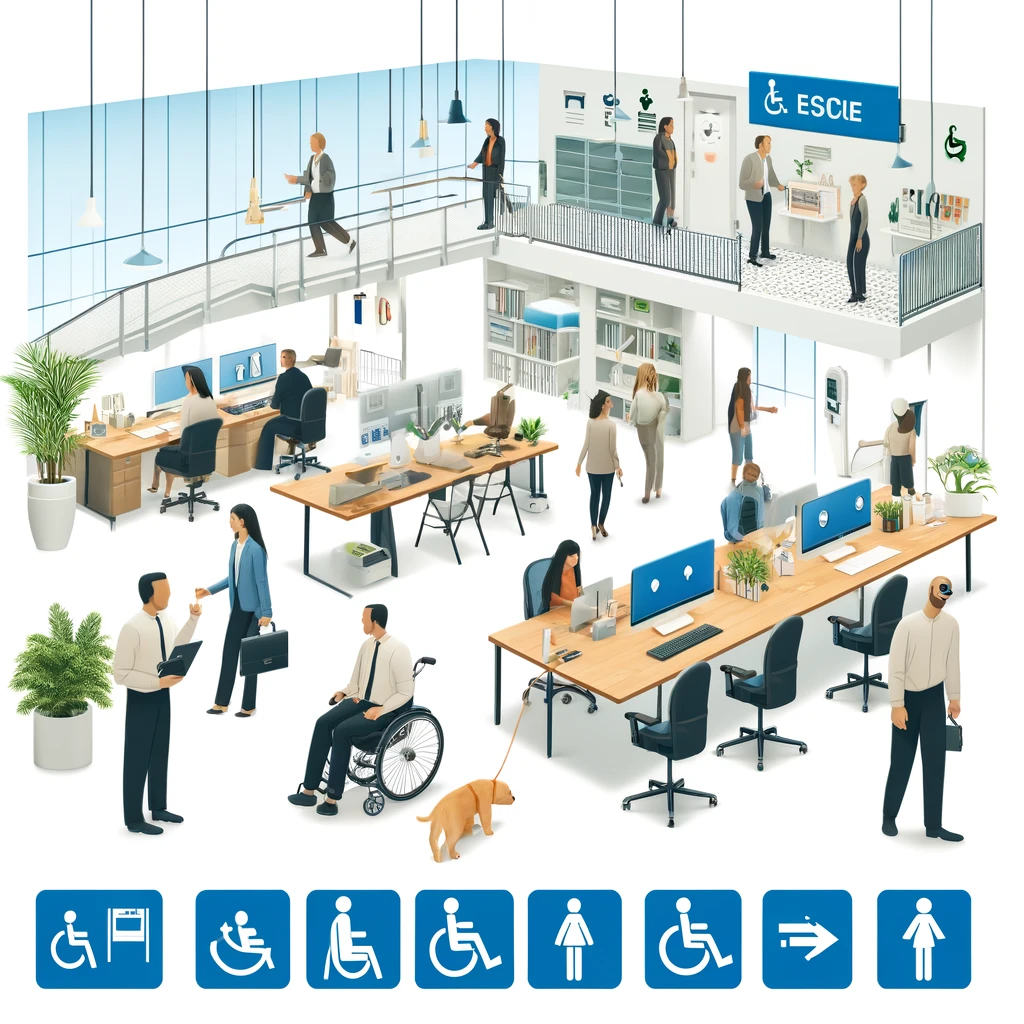
Readily achievable barrier removal is the practical starting point for many businesses learning ADA compliance, because it focuses on removing access barriers when doing so is easily accomplishable without much difficulty or expense. Under Title III of the Americans with Disabilities Act, places of public accommodation have an ongoing duty to improve access for customers with disabilities, even in older buildings that were constructed before modern accessibility standards took effect. For beginners, that single concept unlocks the broader introduction to ADA compliance: the law is not only about new construction, ramps, and lawsuits, but about day-to-day decisions that let people enter, move through, use, and benefit from a business on equal terms.
In practice, I have seen owners assume ADA compliance only matters during a renovation or after receiving a complaint. That is a costly misunderstanding. ADA compliance is a framework for identifying barriers, prioritizing fixes, documenting decisions, and improving accessibility over time. A barrier can be physical, such as a heavy entrance door or a restroom with no grab bars. It can also involve policies, communication, or maintenance. However, this hub article centers on the physical access side of introduction to ADA compliance, especially the readily achievable standard that applies to existing facilities.
Key terms matter. A public accommodation includes most privately operated businesses open to the public, such as restaurants, retail stores, hotels, medical offices, gyms, theaters, banks, and professional service firms. Barrier removal means taking away obstacles that limit access for people with mobility, vision, hearing, or other disabilities. Readily achievable means feasible in light of the business’s size, resources, operations, and overall cost. This is a flexible standard, not a blanket excuse. A national chain may be expected to do more than a single-location shop, and a low-cost parking sign may be expected sooner than a full structural alteration.
Why does this matter so much? First, accessibility expands customer reach. More than 61 million adults in the United States live with a disability, according to the CDC, and those individuals travel, shop, dine, and seek services every day. Second, barrier removal reduces legal exposure. The Department of Justice enforces Title III, and private lawsuits often focus on barriers that could have been fixed with modest effort. Third, accessibility supports operational quality. Clear routes, better signage, stable flooring, and easier door hardware improve usability for parents with strollers, delivery workers, older adults, and temporary injury patients as well. In short, barrier removal is both a compliance obligation and a sound business practice.
What readily achievable barrier removal means under ADA compliance
Readily achievable barrier removal means a business must remove architectural barriers in an existing facility when removal is easily accomplishable and able to be carried out without much difficulty or expense. This standard appears in ADA Title III and is interpreted in light of the business’s resources, not just the price tag of one item. If a fix is simple, inexpensive, and materially improves access, it is usually the first place to act. Common examples include installing an accessible parking sign, adding offset hinges to widen a doorway, lowering a paper towel dispenser, rearranging furniture to create a compliant route, or adding grab bars in a restroom.
Beginners often ask whether older buildings are exempt. They are not. Facilities built before the ADA may not need full reconstruction immediately, but they still carry ongoing obligations for barrier removal where readily achievable. If a structural fix is not readily achievable now, the business should consider alternatives that improve access in another way. For example, if regrading a steep entrance is not feasible this year, the owner may improve directional signage, provide staff assistance, or evaluate a secondary accessible entrance while budgeting for a future capital project. The duty is continuous, and changed finances can change what is readily achievable later.
Another common question is whether compliance is all or nothing. It is not. The ADA expects prioritization. Department of Justice guidance has long emphasized four broad priorities: access from arrival points such as parking and sidewalks, access to goods and services, access to restrooms when provided, and access to other amenities. That prioritization helps beginners focus on the customer journey rather than chase isolated measurements. When I conduct site reviews, I start outside, follow the route to the entrance, test the door, evaluate circulation, then review service counters and restrooms. That sequence mirrors how real customers experience a property.
How to evaluate barriers in an existing facility
An effective ADA compliance review begins with an access survey. This is a systematic walkthrough comparing existing conditions against the 2010 ADA Standards for Accessible Design and relevant state or local rules. The ADA Standards are the primary technical benchmark for measurements such as parking dimensions, door clear width, maneuvering clearance, ramp slope, restroom turning space, and mounting heights. State codes can be stricter. California, for example, has additional accessibility rules and a Certified Access Specialist program, so businesses there should not rely on federal standards alone.
During a survey, document each issue with photographs, measurements, exact location, user impact, and a recommended corrective action. Use a tape measure, digital level, door pressure gauge when needed, and a simple floor plan. I advise clients to separate barriers into three groups: quick fixes, moderate-cost modifications, and capital improvements. Quick fixes can often be completed by maintenance staff in days. Moderate-cost items may require a handyman or specialty vendor. Capital improvements involve design professionals, permits, or significant construction and should be folded into budgeting cycles. This classification keeps ADA compliance actionable instead of overwhelming.
It is also important to distinguish barrier removal from alterations. If a business renovates an area, the altered portion must meet applicable accessibility requirements, and the project may trigger path-of-travel obligations. That is a different standard from readily achievable removal in untouched areas. Beginners should understand both because a simple remodel can expand compliance duties quickly. For instance, renovating a sales counter or restroom can require accessible features in the altered area that go beyond what the business had previously addressed through minor barrier removal measures.
| Area | Common Barrier | Typical Beginner Fix | Why It Matters |
|---|---|---|---|
| Parking | Missing signs or access aisle markings | Install compliant signage and repaint striping | Lets drivers identify and use accessible spaces safely |
| Entrance | Round doorknob or high threshold | Replace hardware or reduce threshold height | Improves independent entry for wheelchair and limited-grip users |
| Interior route | Narrow aisles blocked by displays | Rearrange merchandise and maintain clear width | Allows customers to reach goods and services |
| Restroom | No grab bars or inaccessible dispenser heights | Add grab bars and remount accessories | Supports safe and usable restroom access |
| Service counter | Counter too high for seated transactions | Create a lowered accessible portion | Enables equal service and payment access |
Examples of readily achievable barrier removal for beginners
For most businesses, the easiest wins are outside and at the entrance. Re-striping parking, posting correct signage, repairing vertical level changes in walkways, and improving lighting are common starting points. A small café I worked with corrected three barriers in one afternoon: it moved a sandwich board out of the route, added an accessible parking sign at the right height, and adjusted the entrance closer so the door was not excessively hard to open. None of those changes required a major project, yet they immediately improved access and reduced obvious compliance risk.
Inside, many readily achievable fixes involve layout and hardware. Retail stores frequently narrow aisles with promotional displays; removing just one fixture can restore a usable route. Examination rooms often need only better furniture placement to preserve turning space. Restrooms commonly benefit from mirror, soap dispenser, and paper towel adjustments, plus insulated sink pipes and proper grab bar installation. These are not glamorous upgrades, but they are exactly the kind of practical measures the ADA expects businesses to evaluate early. Where counters are too high, some businesses add a fold-down shelf or designate a nearby accessible writing surface while planning a more durable counter modification.
Not every barrier has an inexpensive answer. A historic storefront with steps at the only entrance may require engineering analysis, landlord approval, or local preservation review before a ramp or lift is possible. In those cases, the business should document options considered, costs obtained, and interim access methods. Documentation matters because ADA compliance is judged partly by whether the owner took the obligation seriously. A written barrier removal plan, dated estimates, and completed work orders show ongoing effort. They also help owners prioritize spending based on customer impact rather than guesswork or fear.
Costs, priorities, and documentation in a compliance plan
Businesses often want a dollar threshold for what counts as readily achievable, but the ADA does not provide one fixed amount. Instead, decision makers should weigh the nature and cost of the action, the overall financial resources of the site, the number of employees, the effect on expenses and operations, and, when relevant, the resources of a parent company. That means a $2,000 fix may be readily achievable for one organization and not for another. What matters is a reasoned, supportable assessment tied to actual business conditions.
A sound compliance plan ranks barriers by impact and feasibility. Start with items that affect basic entry and core services. If a customer cannot park, get through the door, or reach the checkout, other improvements matter less. Next, address restroom access where restrooms are provided to the public. Then move to secondary amenities such as fitting rooms, drinking fountains, or seating areas. Put each item into a schedule with responsible parties, target dates, estimated costs, and status updates. I recommend revisiting the list at least annually and again whenever the business undertakes maintenance, remodeling, or lease negotiations.
Documentation should be practical, not performative. Keep survey notes, bids, invoices, photographs before and after correction, maintenance logs, and written explanations for deferred items. If an action is not currently readily achievable, note why and when it will be reconsidered. This record supports continuity when managers change and helps counsel or consultants evaluate risk accurately. It also improves vendor coordination. A contractor who sees exact measurements and scope notes is more likely to install compliant features correctly the first time, which avoids the common and expensive problem of fixing the same barrier twice.
Common mistakes beginners make with ADA compliance
The biggest beginner mistake is treating ADA compliance as a one-time checklist. Accessible features require maintenance. Parking access aisles fade, door closers drift out of adjustment, restroom grab bars loosen, and merchandise slowly encroaches into circulation paths. A business that was compliant after a remodel can become noncompliant through neglect alone. Regular inspections are essential. Another mistake is assuming building code approval equals ADA compliance. Local permit sign-off does not eliminate federal obligations, and code officials may not review every operational detail affecting accessibility.
Landlord-tenant confusion is another frequent problem. Lease language may assign some responsibilities, but both parties can have exposure under Title III. Tenants should not assume the property owner will address parking, routes, or restroom barriers without explicit coordination. Similarly, owners should not assume a tenant’s interior fit-out resolves all public access issues. I have seen straightforward fixes stall for months because no one clarified who would pay for hardware, striping, or signage. The practical solution is to identify responsibilities early and document them in writing during leasing, renewal, or build-out planning.
Businesses also get into trouble by relying on generic internet checklists without measuring actual conditions. A restroom may have grab bars but still be unusable because they are mounted at the wrong height or length. A ramp may exist but exceed allowable slope. A counter may look low enough yet lack required knee or clear floor space. Precision matters in ADA compliance. When conditions are complex, use a qualified accessibility consultant, architect, or contractor familiar with the 2010 ADA Standards and any stricter state requirements. Good advice costs less than repeated corrections or litigation.
How this hub connects to the wider introduction to ADA compliance
Readily achievable barrier removal is one part of a larger compliance and implementation picture. Beginners should also understand accessible new construction, alterations, effective communication, reasonable modifications to policies, website accessibility, service animal rules, and employee training. Still, barrier removal is the most practical entry point because it turns ADA compliance from an abstract legal topic into visible action. When a business learns how to survey a site, rank barriers, budget fixes, and document progress, it builds the habits needed for the rest of the compliance program.
The main lesson is simple: ADA compliance starts with understanding how people actually use a space and then removing obstacles in a realistic, prioritized way. Readily achievable does not mean optional, and it does not mean perfect overnight. It means taking the next reasonable step now, then the next one after that. Businesses that approach accessibility this way serve more customers, make better capital decisions, and reduce preventable legal risk. If you are beginning your introduction to ADA compliance, start with an access survey, create a barrier removal plan, and address the easiest high-impact fixes first. That is how real compliance begins.
Frequently Asked Questions
What does “readily achievable barrier removal” mean under the ADA?
“Readily achievable” is a legal standard under Title III of the Americans with Disabilities Act that means barrier removal is expected when it is easily accomplishable and able to be carried out without much difficulty or expense. In simple terms, it is the ADA’s practical way of saying that many businesses should make reasonable access improvements even if their buildings are older and were built before current accessibility rules existed. This requirement applies to places of public accommodation such as stores, restaurants, hotels, medical offices, theaters, banks, and many other customer-facing businesses.
The idea is that accessibility is not limited to brand-new construction. A business may not have to completely renovate an older property all at once, but it does have an ongoing responsibility to remove barriers when doing so is feasible. That can include steps like adding accessible parking signs, installing grab bars in restrooms, lowering a paper towel dispenser, adjusting door hardware, rearranging furniture to widen routes, or adding a small ramp at a single step if it can be done safely and affordably.
Whether something is readily achievable depends on the specific situation. The ADA looks at factors such as the nature and cost of the fix, the financial resources of the business, the number of employees, the effect on operations, and the resources of any parent company or related entity. Because of that, the same improvement might be readily achievable for one business but not for another. The key point for beginners is that this is a flexible, case-by-case standard designed to move businesses toward better access in practical, manageable steps.
Who has to comply with readily achievable barrier removal requirements?
Generally, businesses that qualify as places of public accommodation under Title III must comply. This includes a wide range of private businesses that serve the public, such as restaurants, retail stores, hotels, service establishments, professional offices, entertainment venues, fitness facilities, schools not operated by religious organizations, and many healthcare providers. The requirement is not limited to large national chains. Small, locally owned businesses are also covered if they fall within one of the ADA’s categories of public accommodations.
One common point of confusion is whether older buildings are exempt. In most cases, they are not exempt from the duty to remove barriers that are readily achievable. Even if a building was lawful when it was built, a business operating there still has an ongoing obligation to improve access when the changes are practical and not overly difficult or expensive. That is why readily achievable barrier removal is often the starting point for ADA compliance in existing facilities.
Responsibility may involve both tenants and property owners, depending on the lease and the type of barrier involved. For example, a landlord may control parking areas or building entrances, while a tenant may control interior layouts, service counters, or restroom accessories. From the ADA’s perspective, private agreements do not eliminate compliance duties, so both sides should understand who handles what. For beginners, the safest approach is to review the facility, identify barriers, and coordinate clearly so needed improvements do not fall through the cracks.
What are some common examples of barriers that can often be removed easily?
Many of the most common barriers are surprisingly simple to address. Parking is a frequent starting point. A business may be able to create or improve accessible parking by adding proper signage, restriping spaces, marking an access aisle, or correcting minor surface issues. Entrances are another major area. Businesses sometimes can improve access by adding a threshold ramp, adjusting door closers, installing easier-to-use door hardware, or clearing obstructions from the entrance path.
Inside the business, examples of readily achievable barrier removal often include rearranging tables, chairs, shelves, or display racks to create a wider accessible route. It can also include lowering items such as brochure holders, coat hooks, mirrors, hand dryers, or payment devices so customers with mobility disabilities can reach them. In restrooms, practical improvements may include adding grab bars, insulating exposed pipes under sinks, repositioning dispensers, replacing a round doorknob with lever hardware, or adjusting the placement of accessories that are mounted too high.
Service areas can often be improved without major construction. A business might offer an accessible check-out station, lower a portion of a sales or reception counter where feasible, or adjust policies so staff can provide equivalent service in an accessible manner while physical changes are being planned. The ADA encourages businesses to consider priorities, often starting with access from parking and sidewalks, then entrances, then routes to goods and services, and then restrooms and other amenities. For beginners, this makes the process less overwhelming: start with the barriers that most directly affect a customer’s ability to arrive, enter, move around, and use the business.
How does a business decide whether a barrier removal project is actually readily achievable?
This decision is based on facts, not guesswork. A business should evaluate the nature and cost of the proposed change, the business’s financial resources, the number of employees, the impact of the change on day-to-day operations, and any broader resources available through a parent company or affiliated organization. A low-cost improvement with minimal disruption is far more likely to be considered readily achievable than a large structural project that would require extensive construction and create significant operational burdens.
Because the standard is flexible, businesses should avoid assuming that “too expensive” is enough by itself. They should document what barriers exist, what options were considered, what each option would cost, and why certain items can or cannot be done at the present time. That kind of documentation shows that the business took the obligation seriously and evaluated it in good faith. It is also wise to revisit the analysis periodically. A change that was not readily achievable last year may become readily achievable later if the business grows, renovations occur, or less expensive solutions become available.
For many beginners, a practical process works best: conduct an accessibility review, make a list of barriers, get estimates for corrections, prioritize the changes that affect basic entry and use, and complete low-cost items promptly. If there is uncertainty about technical requirements, consulting an ADA professional, design expert, or qualified attorney can help. The goal is not perfection overnight. The goal is to make steady, supportable accessibility improvements based on what is realistically achievable for that business at that time.
If a business cannot remove every barrier right away, what should it do next?
If a business cannot fix every issue immediately, it should still take action. The ADA’s readily achievable standard recognizes that barrier removal can happen over time, especially in older facilities. Businesses should begin with the improvements that are easiest and most important for customer access, such as removing obstacles from walkways, improving entrance access, addressing parking, and making service points more usable. Waiting to do nothing until a full renovation is possible is usually not the best approach.
The next step is to create a barrier removal plan. This does not have to be overly complicated, but it should identify existing barriers, rank them by priority, assign responsibility, estimate cost, and set realistic timelines. It should also reflect the ADA’s common priority order: first provide access from public sidewalks, transportation, and parking; then access to the entrance; then access to goods and services; then access to restrooms and other features. A written plan helps businesses stay organized and shows ongoing effort toward compliance.
In the meantime, businesses should also consider temporary or alternative methods of serving customers with disabilities when physical removal is not yet possible. That might include curbside service, staff assistance, alternative seating arrangements, portable communication aids, or service at an accessible location within the facility. These alternatives do not replace the duty to remove barriers when it is readily achievable to do so, but they can improve access while longer-term changes are being addressed. For beginners, the most important takeaway is that ADA compliance is an ongoing process. Consistent progress, thoughtful planning, and prompt attention to easy fixes can make a meaningful difference for customers and reduce legal risk for the business.