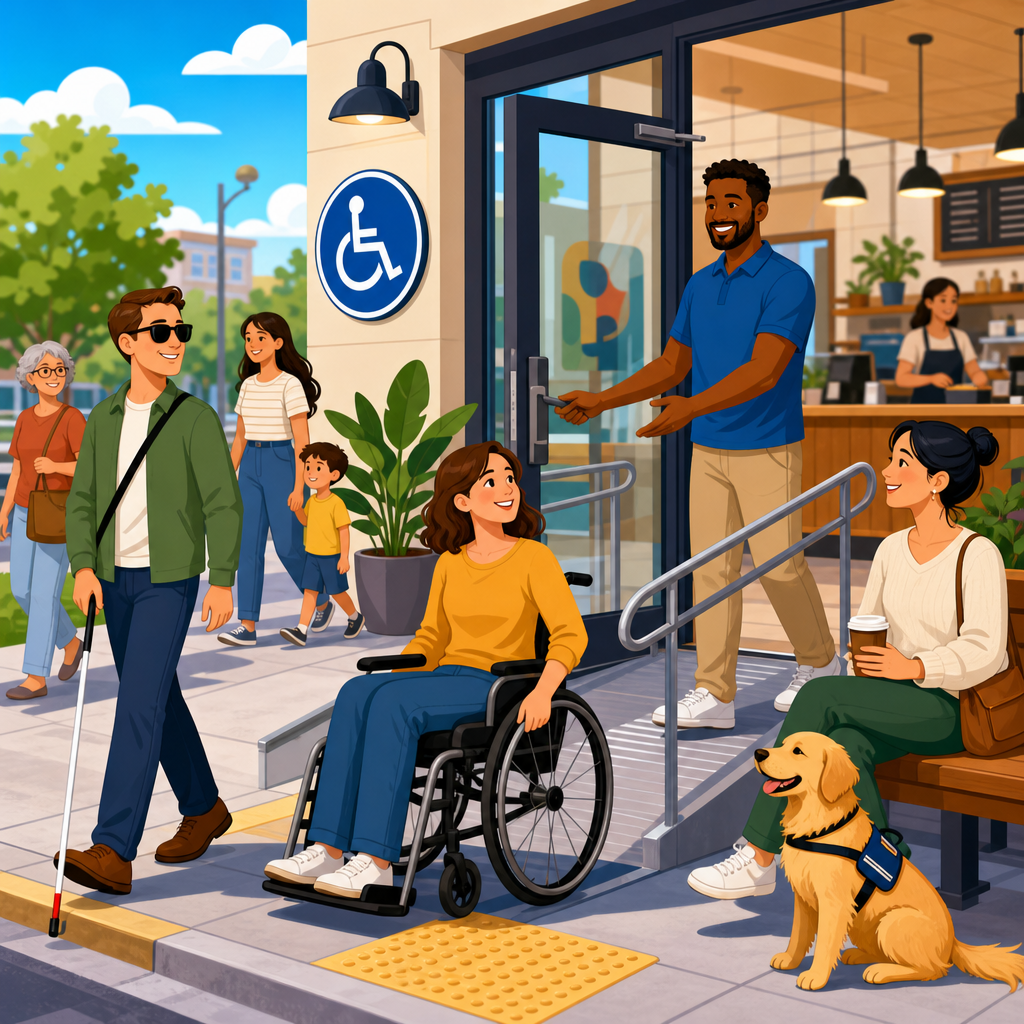
Understanding the newest ADA requirements for public accommodations starts with a practical fact: compliance is no longer limited to ramps, parking spaces, and restroom clearances. Public accommodations now operate in a mixed physical and digital environment, and recent ADA updates and developments increasingly focus on how people with disabilities access websites, mobile apps, self-service technology, transportation interfaces, lodging, retail spaces, healthcare settings, and government-facing services delivered by private entities. In my work reviewing accessibility programs for multi-site businesses, the biggest shift has been the move from reactive fixes after complaints to proactive policies tied to design standards, procurement rules, and regular testing.
Under Title III of the Americans with Disabilities Act, public accommodations include private businesses open to the public, such as hotels, restaurants, theaters, doctors’ offices, pharmacies, retail stores, museums, parks, private schools, gyms, and service establishments. The ADA prohibits discrimination and requires equal access to goods, services, facilities, privileges, advantages, and accommodations. “Newest requirements” does not mean Congress rewrote the statute. More often, change arrives through U.S. Department of Justice rulemaking, technical guidance, settlement trends, court decisions, harmonization with recognized standards such as the 2010 ADA Standards for Accessible Design and the Web Content Accessibility Guidelines, and stronger expectations around maintenance, communication access, and digital usability.
Why this matters is straightforward. More than seventy million adults in the United States report living with a disability, and accessibility failures block basic tasks: booking a room, ordering food, scheduling medical visits, applying for membership, reading receipts, using kiosks, or entering a store safely. Accessibility also affects litigation risk, brand trust, conversion rates, search visibility, and procurement eligibility. For businesses, the current ADA landscape demands a broader view of compliance. Leaders need to understand not only architectural access, but also effective communication, auxiliary aids and services, service animal policies, digital accessibility, and how recent enforcement activity is changing what regulators and courts expect from public-facing organizations.
What Has Changed Most in Recent ADA Updates and Developments
The most important recent change is the growing certainty that digital access is an ADA issue, not a separate courtesy project. The Department of Justice has repeatedly stated that the ADA applies to websites and mobile applications of public accommodations. In 2024, the DOJ issued a final rule addressing web and mobile app accessibility for state and local governments under Title II, adopting WCAG 2.1 Level AA as the technical benchmark. Although that rule directly governs public entities rather than private public accommodations, it strongly signals the federal government’s view of what accessible digital service looks like. In practice, many Title III organizations are using the same benchmark because it is recognized, testable, and regularly cited in settlements and consent decrees.
Another major development is the expectation that accessibility be maintained, not installed once and forgotten. Businesses often assume that if a building passed inspection or a website was remediated last year, the issue is closed. Recent enforcement patterns say otherwise. Accessible parking must remain correctly striped and signed. Accessible routes cannot be blocked by merchandise or delivery carts. Captions on videos must continue when new content is uploaded. Alternative text, form labels, heading structure, color contrast, keyboard navigation, and screen-reader compatibility must be preserved through every redesign and software update. Accessibility is now treated as an operational discipline.
Recent updates also reinforce that accessibility includes communication and transaction independence. That means a disabled customer should not have to rely on a companion, staff member, or phone workaround when others can act directly. A blind user should be able to complete checkout on a website with a screen reader. A deaf patient should receive effective communication in a healthcare setting, which may require qualified interpreters, real-time captioning, or accessible digital instructions depending on context. A mobility-impaired hotel guest should be able to reserve an accessible room with accurate feature descriptions. Equal access means comparable privacy, timeliness, and convenience.
Physical Accessibility Requirements Still Drive Core Compliance
Despite the attention on digital access, physical accessibility remains the foundation of ADA compliance for public accommodations. The 2010 ADA Standards for Accessible Design still govern new construction and alterations, while barrier removal remains an ongoing duty in existing facilities when removal is readily achievable. “Readily achievable” means easily accomplishable without much difficulty or expense, and the analysis depends on the business’s size, resources, and structure. In real audits, common problems include noncompliant parking slopes, missing van access aisles, heavy entrance doors, counters that are too high, inaccessible fitting rooms, restroom grab bar misplacement, and protruding objects that create hazards for blind visitors.
The newest practical expectation is better documentation and prioritization. Businesses should not wait for a complaint to identify barriers. They should survey each location, rank issues by life safety and usability impact, estimate remediation cost, and create a schedule. For example, repainting accessible parking and replacing signage may be inexpensive and immediate; reconfiguring a toilet room or installing a lift may require capital planning. Courts and regulators look favorably on organizations that can show an active barrier-removal plan supported by inspections, maintenance logs, and defined responsibilities.
Public accommodations should also pay attention to temporary conditions. Seasonal displays that narrow aisles, outdoor dining setups that block accessible routes, snow piled into curb ramps, and broken door openers are all common failures. Accessibility is judged by the customer’s actual experience on the day of use, not by an architectural drawing. That is why facilities teams, store managers, and front-line supervisors need training alongside architects and legal counsel.
Digital Accessibility Is Now Central to Public Accommodation Obligations
For many businesses, the most urgent ADA work now sits online. Websites and mobile apps often serve as the front door to the business, and if that front door is inaccessible, customers may be shut out before they ever reach a physical location. The clearest current standard used across the market is WCAG 2.1 Level AA. It addresses perceivability, operability, understandability, and robustness through measurable success criteria. Examples include text alternatives for images, captions for prerecorded video, sufficient color contrast, visible keyboard focus, descriptive form error identification, semantic heading structure, and compatibility with assistive technologies.
I have seen companies make the same mistake repeatedly: they buy an overlay widget and assume the problem is solved. It is not. Overlays do not repair missing labels in code, inaccessible modals, broken focus order, unlabeled buttons, or dynamic content that fails screen readers. Sustainable compliance comes from accessible design systems, trained developers, content governance, manual testing, and procurement controls for third-party platforms.
| Area | Common Barrier | Current Best-Practice Fix |
|---|---|---|
| Images | Missing alternative text | Write concise alt text that conveys function or content |
| Forms | Inputs without programmatic labels | Use explicit labels, instructions, and error messaging |
| Navigation | Keyboard traps or missing focus indicators | Support full keyboard access with visible focus states |
| Video | No captions or transcripts | Add synchronized captions and transcripts where appropriate |
| Color | Low contrast text and icons | Meet WCAG contrast ratios for text and interface elements |
| Apps | Screen-reader incompatibility | Test with VoiceOver, TalkBack, and native accessibility APIs |
Public accommodations should also remember that accessibility extends beyond the main website. Reservation engines, online menus, patient portals, event ticketing systems, loyalty apps, PDF documents, chat interfaces, and self-service account tools all affect ADA exposure. If a third-party vendor runs a critical customer path, the business still carries risk. Strong contracts should require conformance testing, remediation timelines, indemnity language where appropriate, and evidence of accessibility support.
Communication Access, Policies, and Customer Service Expectations
Recent ADA developments also highlight that compliance depends on policy choices, not just design specifications. Effective communication remains a core requirement. Public accommodations must provide auxiliary aids and services when necessary to ensure communication with people with disabilities is as effective as communication with others, unless doing so would fundamentally alter the nature of the goods or services or create an undue burden. The right aid depends on context. In a retail setting, exchanging notes may work for a short interaction. In a hospital or legal-service environment, a qualified sign language interpreter may be necessary because accuracy, complexity, and privacy matter.
Policies around service animals, accessible seating, companions, and modification of rules still generate frequent disputes. A business generally may ask only two questions about a service animal when the need is not obvious: whether the dog is required because of a disability and what work or task the dog has been trained to perform. Emotional support alone does not make an animal a service animal under the ADA. Staff should know this distinction, but they also need training on tone and escalation. Many lawsuits begin with a poor interaction at the front desk rather than an underlying technical issue.
Reservation systems deserve special attention. Hotels and lodging providers must identify accessible features with enough detail for guests to assess whether a room meets their needs, and accessible rooms must be held for people who need them until other rooms of that type are reserved. Vague descriptions such as “ADA room” are not enough. Guests need specifics: roll-in shower or tub with grab bars, bed height, door clearances, visual alarms, communication features, and accessible route information from parking or lobby areas.
Enforcement Trends, Litigation Risk, and How Businesses Should Respond
The enforcement environment around public accommodations has become more structured and more data-driven. Website accessibility suits remain common, particularly in retail, hospitality, food service, healthcare, and financial services. Plaintiffs typically cite barriers such as unlabeled buttons, inaccessible dropdown menus, coupon features that cannot be used by keyboard, or checkout flows that fail with screen readers. Serial litigation remains a reality, but dismissing claims as opportunistic is a mistake. In many cases, the alleged barriers are real and remediable, and courts increasingly expect businesses to address them with specificity rather than broad promises.
DOJ settlements and private agreements often require more than fixes. They may include appointing an accessibility coordinator, adopting a written policy, training staff, running automated and manual audits, using issue-tracking systems, involving disabled testers, and reporting progress for multiple years. That model reflects what effective compliance actually looks like. Accessibility improves when ownership is assigned and processes are repeatable.
For businesses asking what to do now, the answer is practical. Start with an enterprise-wide accessibility assessment covering facilities, websites, apps, documents, kiosks, and customer-service policies. Map customer journeys, especially high-value tasks such as booking, purchasing, scheduling, registration, and support. Use recognized tools such as axe, WAVE, and Lighthouse for automated testing, but pair them with manual keyboard testing and screen-reader testing using NVDA, JAWS, and VoiceOver. For facilities, use ADA surveys tied to the 2010 Standards and document barrier-removal priorities. Then create a governance program that includes executive sponsorship, budgets, training, procurement standards, and recurring audits.
The newest ADA requirements for public accommodations can be summed up clearly: equal access must work in real life, across physical spaces, digital channels, and everyday interactions. Recent ADA updates and developments have not replaced the core law, but they have sharpened expectations. Businesses are now expected to maintain accessible facilities, build and update websites and apps to recognized standards, provide effective communication, train staff on lawful policies, and document how accessibility is managed over time. The organizations that perform best treat accessibility as part of operations, not as a one-time legal clean-up.
As a hub topic, this area deserves ongoing attention because the details continue to evolve through rulemaking, guidance, settlements, and case law. The practical takeaway is that public accommodations should align around three priorities: remove physical barriers that remain in everyday customer paths, remediate digital barriers in all public-facing systems, and establish policies that support independent, dignified access. When those pieces work together, businesses reduce risk and serve more people effectively.
If you manage compliance, facilities, digital products, or customer experience, now is the time to review your current accessibility program. Audit what customers actually use, compare it against recognized standards, fix the highest-impact barriers first, and build an ongoing process for monitoring changes. That approach is the most reliable way to meet today’s ADA expectations and stay prepared for the next round of developments.
Frequently Asked Questions
What do the newest ADA requirements for public accommodations actually cover?
The newest ADA requirements for public accommodations go well beyond traditional building access features like ramps, doorway widths, parking, and restroom layouts. While those physical accessibility standards still matter, current compliance expectations increasingly address how people with disabilities interact with businesses and organizations across both in-person and digital environments. That includes websites, mobile apps, online reservation systems, self-service kiosks, payment terminals, transportation interfaces, customer service tools, and other technology used to access goods and services.
In practical terms, public accommodations are expected to provide equal access to the full customer experience. For a hotel, that may include accessible guest rooms, compliant booking platforms, and usable check-in systems. For a retailer, it may involve accessible entrances, fitting rooms, point-of-sale devices, and an e-commerce website that works with screen readers and keyboard navigation. For healthcare providers, the focus can extend to accessible exam rooms, communication supports, patient portals, and intake forms. The broader trend is clear: if a service is part of how the public accesses your business, accessibility expectations likely apply.
Another important point is that ADA obligations are shaped not only by the text of the statute, but also by regulations, agency guidance, court decisions, and enforcement trends. That is why many organizations are paying closer attention to digital accessibility, effective communication, and inclusive service design. The modern compliance question is no longer just whether a person can enter the building. It is whether that person can independently and meaningfully use the services offered there, online, through an app, or at a self-service device.
Do websites and mobile apps count as public accommodations under the ADA?
Websites and mobile apps are now a central part of ADA compliance discussions because they often function as the front door to a business. Customers use them to browse products, schedule appointments, fill out forms, place orders, request services, manage accounts, and communicate with staff. When those digital tools are not accessible, individuals with disabilities may be excluded from participating in the same way as other users. That is why accessibility for websites and apps has become one of the most significant areas of ADA enforcement and litigation.
Although the exact legal framework can vary by jurisdiction and business type, the practical answer for most organizations is yes: digital platforms should be treated as subject to ADA accessibility expectations. Courts and regulators have increasingly recognized that if a website or app is closely tied to the goods, services, privileges, or advantages of a public accommodation, barriers in that technology may create legal risk. Businesses should not assume that ADA compliance stops at the physical premises, especially when so much of the customer experience now happens online.
For implementation, many organizations use the Web Content Accessibility Guidelines, commonly known as WCAG, as the leading technical benchmark for digital accessibility. That generally means designing and maintaining websites and apps so they support keyboard navigation, text alternatives for images, readable color contrast, captions for multimedia, clear headings and labels, compatibility with assistive technologies, and predictable interactive behavior. Even if a specific business has not been directly told to follow a particular version of WCAG, aligning with recognized accessibility standards is one of the strongest ways to reduce barriers and demonstrate good-faith compliance.
How do the newest ADA developments affect self-service kiosks, payment systems, and other customer-facing technology?
Recent ADA developments increasingly highlight the importance of accessible self-service technology because many businesses now rely on kiosks and automated systems to deliver core services. These technologies appear in airports, hotels, restaurants, hospitals, pharmacies, retail stores, transit systems, and entertainment venues. If a person with a disability cannot use a kiosk to check in, order food, buy a ticket, verify insurance information, or complete a transaction, then the business may be limiting equal access to its services.
Accessibility in this area usually involves both physical and functional design. A kiosk may need to be placed at a reachable height, allow clear floor space for wheelchair users, and provide usable controls for people with limited dexterity. It may also need features such as audio output, headphone jacks, tactile controls, screen-reader compatibility, visual clarity, and enough time to complete tasks without unnecessary pressure. Payment interfaces should be usable by people with vision, hearing, mobility, and cognitive disabilities, not just the average customer standing at a counter.
Businesses should also remember that offering staff assistance is helpful but does not always cure an inaccessible design. The ADA generally favors integrated and independent access where feasible. If one group of customers can complete a task privately and efficiently through technology, while another group must wait for an employee, disclose sensitive information aloud, or use a separate process, that may raise accessibility concerns. A smart compliance strategy includes evaluating kiosks, tablets, digital menus, ticketing devices, and payment systems before deployment, not after complaints begin.
What should hotels, retailers, healthcare providers, and other public-facing businesses do now to stay compliant?
The best first step is to stop thinking of ADA compliance as a one-time construction checklist and start treating it as an ongoing accessibility program. Public-facing businesses should assess every major point where customers interact with their services, including entrances, routes, counters, restrooms, seating, websites, apps, forms, kiosks, customer support channels, and policies. This type of review helps identify barriers across the full customer journey rather than in isolated pieces.
From there, organizations should prioritize an accessibility audit that covers both physical and digital operations. Physical audits may examine parking, signage, service counters, restrooms, paths of travel, guest rooms, and communication features. Digital audits may evaluate website templates, PDFs, online booking tools, patient portals, e-commerce functions, and mobile applications against recognized accessibility standards. It is also important to review communication practices, such as whether customers can request auxiliary aids, whether videos are captioned, whether important information is available in accessible formats, and whether staff know how to respond appropriately to disability-related needs.
Training is another major compliance tool. Even a well-designed environment can create problems if employees do not understand service animals, effective communication, reasonable modifications, or how to assist customers using accessible features. Businesses should also work with qualified accessibility professionals, legal counsel when needed, and technology vendors who understand ADA obligations. Perhaps most importantly, accessibility should be built into procurement, design, renovation, and software development processes from the start. That proactive approach is usually less expensive, less disruptive, and more effective than trying to fix barriers after a demand letter, lawsuit, or government investigation.
What are the risks of ignoring newer ADA accessibility expectations?
Ignoring newer ADA accessibility expectations can create legal, financial, operational, and reputational consequences. On the legal side, businesses may face private lawsuits, demand letters, administrative complaints, or enforcement actions. These matters can involve allegations related to inaccessible websites, reservation systems, customer service practices, physical barriers, communication failures, or inaccessible technology. Even when a claim settles quickly, the costs of legal response, remediation, monitoring, and internal disruption can be significant.
There is also a strong business case for compliance. Millions of people live with disabilities, and inaccessible design can drive away customers, patients, guests, and users who are fully prepared to engage with a business if they can do so independently. Accessibility problems can reduce conversions, increase abandoned transactions, damage loyalty, and generate negative reviews or public criticism. In sectors like healthcare, lodging, transportation, and retail, poor accessibility can affect trust and brand reputation just as much as it affects legal exposure.
By contrast, organizations that treat accessibility seriously are often better positioned to serve a wider audience, improve usability for everyone, and adapt to evolving standards. Many accessibility improvements, such as clearer navigation, better signage, captioned content, easier check-in systems, and more intuitive digital design, benefit all users, not only people with disabilities. The newest ADA developments send a consistent message: accessibility is not a side issue. It is a core part of modern public accommodation compliance, customer service, and risk management.


