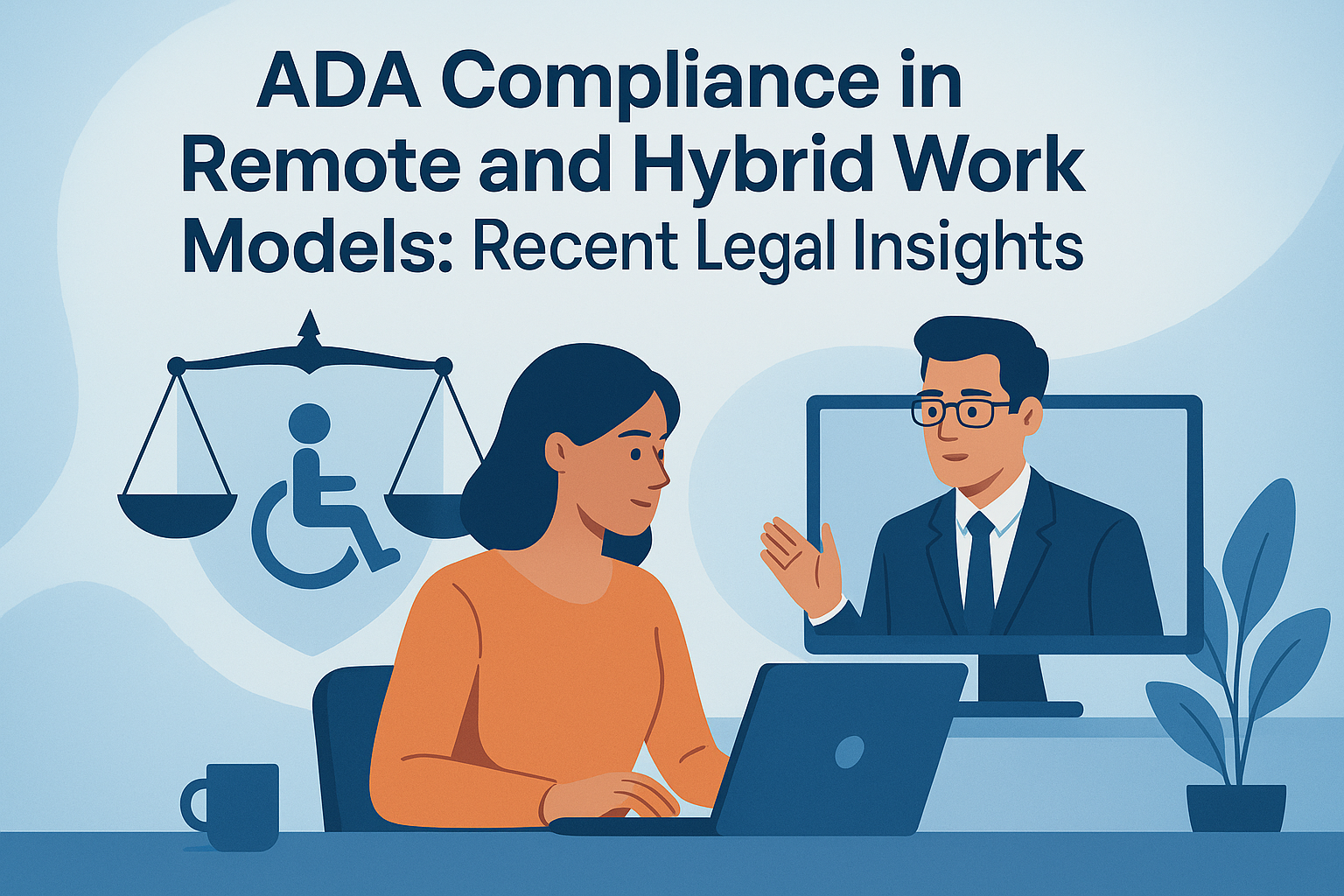
The modern workplace is undergoing a significant transformation, with remote and hybrid work models becoming increasingly prevalent. As companies adapt to these new ways of working, ensuring compliance with the Americans with Disabilities Act (ADA) has never been more critical. The ADA is a federal civil rights law that prohibits discrimination against individuals with disabilities in all areas of public life, including jobs. It is now essential to examine how these changes are impacting ADA compliance, particularly in remote and hybrid work environments.
ADA compliance in the era of remote work involves ensuring that employees with disabilities have equal access to job opportunities, remote work technologies, and workplace accommodations. With the rise of these flexible work models, understanding and implementing ADA requirements have taken on new dimensions. Failure to comply with the ADA not only exposes companies to legal risks but also undermines efforts to create inclusive workplaces.
In this article, we will explore the recent legal insights surrounding ADA compliance in remote and hybrid work models, offering a comprehensive guide for employers to navigate this complex landscape effectively.
Understanding ADA Compliance in Remote Work Models
Remote work models present unique challenges and opportunities for ADA compliance. In a traditional office setting, ADA compliance typically involves physical accommodations, such as wheelchair access and ergonomic furniture. However, with a shift to remote work, the focus has shifted to digital accessibility and ensuring that employees with disabilities have equal access to remote work technologies.
Consider the experience of a large software company that transitioned to a fully remote model during the COVID-19 pandemic. The company faced challenges in ensuring that its virtual meeting platforms were accessible to all employees, especially those with visual and hearing impairments. By partnering with technology vendors specializing in assistive technology, the company successfully implemented screen reader compatibility and closed captioning features. This case highlights the importance of proactively addressing digital accessibility in remote work settings to ensure ADA compliance.
Navigating Hybrid Work Models and ADA Compliance
Hybrid work models combine remote and in-office work, creating additional complexities in ADA compliance. Employers must consider accommodations for employees with disabilities who may prefer or require remote work, as well as those who need specific support when they are in the office.
A financial services firm recently adopted a hybrid work model, allowing employees to work from home part of the week and from the office for the remainder. One employee, who uses a wheelchair, required modifications to her home office setup, including a height-adjustable desk and accessible workstation. The company collaborated with the employee to provide the necessary accommodations both at home and in the office, ensuring seamless transitions between work environments.
This example illustrates the importance of flexibility and open communication in hybrid work models to meet the diverse needs of employees with disabilities. Employers should engage in an interactive process with employees to determine effective accommodations and ensure compliance with ADA requirements.
Legal Obligations for Employers Under the ADA
Under the ADA, employers are required to provide reasonable accommodations to employees with disabilities, unless doing so would cause undue hardship. Reasonable accommodations may include modifications to work schedules, physical workspaces, or the provision of assistive technologies. The ADA also mandates that job opportunities be equally accessible to all qualified individuals, regardless of their disabilities.
However, the application of these legal obligations in remote and hybrid work models can be complex. As seen in a recent legal case where an employee working remotely from another state experienced connectivity issues that affected his productivity, the employer faced challenges in providing appropriate accommodations. By investing in upgraded technological solutions and ensuring the employee had reliable internet access, the company not only met its legal obligations but also improved performance outcomes.
This case underscores the need for employers to understand the specific accommodations required for remote and hybrid work settings and to take proactive steps to fulfill their legal duties under the ADA.
The Critical Role of Technology in ADA Compliance
In the digital age, technology plays a crucial role in ensuring ADA compliance for remote and hybrid work models. Employers must evaluate the accessibility features of their communication and collaboration platforms and make necessary adjustments to accommodate employees with disabilities.
For example, a marketing agency successfully enhanced ADA compliance by utilizing assistive software tools, such as speech-to-text applications and screen magnification software, to support employees with visual impairments. The following tools are commonly used to support ADA compliance:
- Screen Readers: Software that translates text and digital content into synthesized speech for visually impaired users.
- Closed Captioning: Provides text overlays of spoken content in virtual meetings for users with hearing impairments.
- Speech Recognition: Applications that convert spoken language into text input, aiding individuals with motor disabilities.
- Adaptive Keyboards: Hardware designed to accommodate users with physical or motor challenges.
Employers must stay informed about advancements in assistive technologies and continue to incorporate them into their remote and hybrid work strategies, ensuring equal access for all employees.
Real-Life Case Studies Highlighting Challenges and Solutions
Examining real-life cases provides valuable insights into the practical challenges and solutions associated with ADA compliance in remote and hybrid work models.
Consider a legal firm that faced a lawsuit from an employee with a hearing impairment, alleging discrimination due to inaccessible virtual meetings. To settle the case, the firm invested in accessible meeting software with robust captioning features and conducted training for all staff on inclusive communication practices. This situation highlights how addressing accessibility proactively can mitigate legal risks and foster an inclusive work environment.
Another case involves a multinational corporation that successfully created a disability-inclusive remote work program. By establishing a dedicated task force comprising employees with disabilities, HR professionals, and IT experts, the company developed a comprehensive accessibility plan. The task force collaborated to identify and implement necessary technology enhancements, leading to improved employee satisfaction and productivity.
These examples demonstrate the benefits of a proactive and collaborative approach to ADA compliance, where employers work closely with employees to create tailored solutions that promote accessibility and inclusion.
Implementing Effective ADA Policies for Remote and Hybrid Work
Developing and implementing effective ADA policies is essential for ensuring compliance in remote and hybrid work models. Employers should review and update their policies regularly to align with evolving ADA requirements and industry best practices.
| Policy Component | Description |
|---|---|
| Accessibility Assessment | Regular evaluations of technology platforms and physical workspaces to ensure accessibility for all employees. |
| Interactive Process | Ongoing dialogue with employees to identify and implement reasonable accommodations tailored to individual needs. |
| Training Programs | Comprehensive training for all employees on ADA compliance, inclusivity, and accessibility best practices. |
| Resource Allocation | Prioritization of resources and budget for necessary accommodations and assistive technologies. |
By implementing strong ADA policies, employers can foster a culture of inclusivity, ensuring that all employees have the support they need to thrive in remote and hybrid work environments.
Future Directions and Opportunities for ADA Compliance
As remote and hybrid work models continue to evolve, so too must employers’ approaches to ADA compliance. Embracing innovations in accessibility technology, such as virtual reality training for employees with disabilities, presents new opportunities for inclusivity.
Moreover, businesses can expand their talent pools by adopting inclusive hiring practices and actively seeking candidates with disabilities, thereby enriching diversity within the workplace. By positioning themselves at the forefront of ADA compliance, companies can gain a competitive advantage while contributing to social equity.
Conclusion: Embracing ADA Compliance in Evolving Work Models
As we navigate the transition to remote and hybrid work settings, ADA compliance remains a critical priority for ensuring equity and inclusivity in the workplace. By understanding the unique challenges presented by these work models and proactively implementing accommodations and policies, employers can create inclusive environments that empower employees with disabilities.
The benefits of ADA compliance extend beyond legal obligations; they enhance organizational culture, drive productivity, and contribute to a diverse workforce. Employers must prioritize ADA compliance as part of their broader inclusivity initiatives to build the workplace of the future.
Take the next step by conducting an ADA compliance audit of your remote and hybrid work policies and practices. Engage your teams in open discussions to identify potential barriers and innovative solutions. Together, let’s pave the way for accessible and inclusive work models that benefit everyone.
Frequently Asked Questions
1. What are the key considerations for ADA compliance in remote and hybrid work models?
ADA compliance in remote and hybrid work models involves ensuring that individuals with disabilities have equal access and opportunities in the workplace. It requires employers to provide reasonable accommodations, just as they would in a traditional office setting. Key considerations include accessible technology, communication tools, and adapting physical resources for home use if necessary. Employers should also consider job descriptions and requirements to ensure they do not unintentionally exclude individuals with disabilities. Additionally, training personnel to recognize and effectively manage requests for accommodations is crucial. Understanding both physical and non-physical barriers that may affect employees working from home, such as internet connectivity or access to assistive devices, is an essential aspect of achieving compliance.
2. How can employers determine what constitutes a reasonable accommodation in a remote work environment?
Determining what constitutes a reasonable accommodation in a remote work environment starts with open communication between employers and employees. Employers must engage in an interactive process, which involves discussing the employee’s specific needs and the limitations they experience in performing their job functions. This process may reveal a range of potential accommodations, from specialized software and adaptive equipment to flexible scheduling and modified duties. Employers should also assess the feasibility of providing such accommodations while considering the company’s resources. Reviewing past accommodations and consulting with experts or relevant resources can offer additional insights. Ultimately, a reasonable accommodation is one that enables the employee to perform their essential job functions without causing undue hardship to the employer.
3. What recent legal insights have emerged regarding ADA compliance in hybrid work models?
Recent legal insights emphasize the importance of reinforcing ADA compliance as work environments evolve. Courts are increasingly considering how traditional ADA principles apply in non-traditional settings, underscoring the necessity for employers to adapt their approach. Notably, rulings have clarified that remote work can be a reasonable accommodation and that the rationale for denying such requests must be well-documented and grounded in tangible job requirements. Additionally, the Equal Employment Opportunity Commission (EEOC) has provided guidance on how COVID-19 and resulting work model changes intersect with ADA considerations, reinforcing that employers must remain vigilant in their compliance efforts. These insights remind employers to consistently review and update their policies to align with emerging legal standards and best practices for inclusivity in varied work models.
4. How should employers address potential challenges to ADA compliance in hybrid work models?
Employers should proactively address potential challenges to ADA compliance by establishing a robust framework for monitoring and responding to accommodation requests. This includes regularly reviewing policy guidelines, ensuring that all technology and communication platforms are accessible, and providing training for managers and HR personnel on recognizing and accommodating different types of disabilities. Additionally, companies should foster an inclusive culture where employees feel comfortable disclosing their needs. Implementing feedback mechanisms, such as surveys or check-ins, can also help identify and resolve any issues early. Collaboration with legal professionals and disability advocates can enhance understanding and ensure policies align with both legal requirements and best practices. By doing so, employers can mitigate risks and promote a supportive work environment for all employees.
5. What impact does technology play in maintaining ADA compliance within remote and hybrid work environments?
Technology is a central component in maintaining ADA compliance within remote and hybrid work environments. Ensuring that digital platforms and tools are accessible to individuals with disabilities is essential. This includes providing screen readers, voice recognition software, and ensuring compatibility with assistive technology. Employers must evaluate whether their platforms support accessibility and offer training to employees on using these tools effectively. The rapid advancement of tech solutions means that staying current with the latest accessibility standards is vital. For example, the Web Content Accessibility Guidelines (WCAG) provide criteria for making web content more accessible to people with disabilities. Companies must also consider the security and privacy implications of assistive technologies and ensure compliance with relevant laws. By investing in accessible technology and infrastructure, employers can better support a diverse workforce and meet ADA obligations.


