
The Americans with Disabilities Act (ADA), enacted in 1990, is a crucial piece of legislation that has profoundly shaped the landscape of accessibility in the United States. Its far-reaching implications ensure that individuals with disabilities are given equal opportunities and access, a fundamental right that is particularly vital in the realm of transportation. The evolution of technology, changes in societal perspectives, and the ongoing advocacy of disability rights groups have prompted significant updates and developments to the ADA, especially concerning transportation accessibility.
Over the past few decades, we have seen a transformation in public transportation systems, making them more accessible to people with disabilities. Buses equipped with lifts, accessible subway stations, and paratransit services have been among the many improvements. Still, the journey is far from over. Recent years have brought forward several new developments aimed at closing the remaining gaps and advancing the goals of the ADA in innovative and comprehensive ways, especially with the introduction of new technologies like autonomous vehicles and smart public transportation systems.
As we dive deeper into understanding these recent enhancements, it’s essential to appreciate the crossroad at which we stand. We are witnessing an era where legislative progress, technological innovation, and societal commitment are collectively driving enhancements in transportation accessibility for individuals with disabilities. This article will guide you through significant recent developments, the challenges that persist, and the future landscape of ADA compliance in transportation.
Enhancing Public Transportation Infrastructure
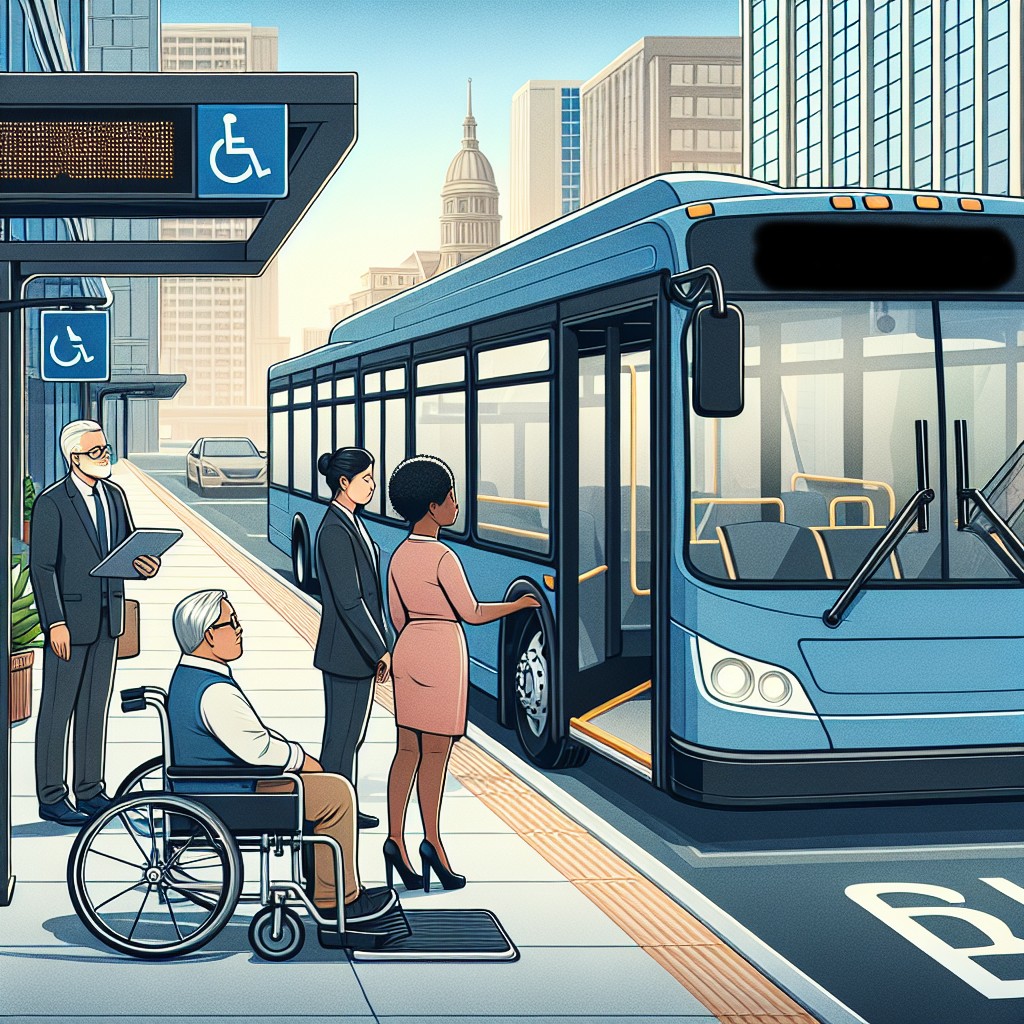
Recently, there has been a concerted push towards improving the infrastructure of public transportation to better serve individuals with disabilities. Transit agencies, fueled by both federal support and community advocacy, have been upgrading their facilities to meet or exceed ADA standards. This includes the installation of elevators and escalators in subway stations, tactile paving for the visually impaired, and improved signage and auditory announcements.
Funding for these projects often comes from federal grants provided by the Department of Transportation, aimed at incentivizing local governments to enhance their public transportation facilities. Local transit authorities have stepped up, leveraging these funds to conduct thorough audits and upgrade their infrastructures accordingly. This movement not only aims at better compliance with ADA requirements but also seeks to integrate cutting-edge technology into everyday public transport, making the transit experience smoother and more inclusive.
An exciting development is the integration of real-time service information accessible via mobile apps or on-site digital displays across many cities. These systems provide crucial information about service interruptions, delays, and accessibility options, allowing individuals with disabilities to plan their journeys with confidence. Such innovations reduce anxiety and empower users, granting them greater independence when navigating public transport systems.
The Role of Technology in Accessibility
Technology has played a pivotal role in advancing ADA compliance in transportation accessibility. Innovations in robotics, artificial intelligence, and mobile applications have opened new avenues for making transport more accessible. Autonomous vehicles, once a futuristic concept, are now on the verge of becoming mainstream. These vehicles promise unprecedented accessibility improvements for individuals with disabilities, providing them with greater autonomy and route flexibility.
Additionally, there’s been a rise in app-based services designed to assist those with disabilities. Apps that can track accessible routes, provide information on the level of crowding on public transport, or connect users with ride-sharing services equipped with accessible vehicles are becoming increasingly common. These digital solutions not only enhance the travel experience but foster a sense of community by connecting users with similar needs.
Artificial intelligence has also found its place in this realm through features like voice-activated services that guide visually impaired users or personalized travel assistants that manage everything from planning trips to reporting barriers. As technology continues to evolve, its role in ensuring ADA compliance becomes more central and indispensable.
Advancements in Autonomous Vehicles
The advent of autonomous vehicles (AVs) marks a promising frontier in ADA transportation accessibility. Though still in the early stages, AV technology offers the potential to dramatically alter transportation dynamics for people with disabilities, traditionally reliant on paratransit or other assisted travel services. The primary benefit of AVs is their potential to operate independently, overcoming the need for human drivers, which could lead to more flexible, spontaneous travel opportunities.
Many automakers and tech companies have begun piloting AV projects with a focus on accessibility. For example, Waymo, Google’s self-driving vehicle project, has been testing AVs equipped with special features, such as voice assistance, accessible entry mechanisms, and automated communication with passengers to ensure a smooth and seamless experience.
Furthermore, policymakers are now considering regulations to ensure that AV deployment complies with ADA stipulations. The engagement of disability rights organizations in these discussions ensures that the perspectives of people who rely on these technologies are factored into the development and deployment phases, safeguarding accessibility priorities.
Amendments and Legislative Changes
Legislative amendments and policy changes are integral to the continuous evolution of ADA transportation accessibility. Recent years have seen a number of enacted and proposed adjustments, aimed at modernizing the act in alignment with new technologies and societal shifts.
A significant amendment is the expansion of accessibility coverage criteria, ensuring new transportation technologies and innovations are ADA-compliant from the outset. This proactive measure prevents exclusionary practices that could arise if accessibility is overlooked in the innovation process. Notably, the USDOT has been advocating for policies that encourage the inclusion of accessibility features in the initial design phases of transportation technology projects.
Of particular interest is the growing emphasis on ensuring that transportation services—ranging from buses and trains to ride-sharing apps—increasingly cater to a broader spectrum of disabilities, including cognitive and sensory disabilities, which historically received less attention than mobility impairments. This holistic approach is more reflective of the diversity within disability communities and their varied needs.
The Challenges that Remain
Despite these positive developments, challenges persist in the realm of ADA transportation accessibility. One prominent issue is the inconsistency in the enforcement of ADA regulations across different states and localities. This inconsistency can result in varied experiences for individuals with disabilities, creating confusion and potential access barriers.
Furthermore, public transportation entities continue to face financial constraints, often limiting the extent and speed of infrastructure upgrades. Budget challenges can lead to deferred maintenance and the slow implementation of accessibility improvements, undermining the overall effectiveness of the ADA.
Another significant challenge is ensuring that technology advancements remain inclusive of all disabilities. While mobility and visual aids are becoming more common, features addressing sensory and cognitive disabilities lag behind. Advocacy must therefore continue to press for comprehensive solutions that leave no one behind.
The Future of ADA Transportation Accessibility
The future of ADA transportation accessibility is hopeful, characterized by continuous improvement and innovation. A key trend moving forward is the incorporation of universal design principles into new transportation projects. These principles advocate designing products and environments accessible to the broadest possible audience, eliminating the need for extensive retrofitting or specialized adaptations.
Emerging technologies, such as virtual reality simulations, are being used to test and improve the accessibility of transportation systems before they are constructed, allowing designers to identify potential barriers and implement solutions proactively.
Looking ahead, ongoing collaboration between technology developers, policymakers, and disability advocates will remain crucial. It is through these partnerships that transportation can become a field where accessibility is baked into the very fabric of innovation and service provision, not merely an afterthought.
Conclusion
Recent developments in ADA transportation accessibility represent a promising shift towards inclusivity and equality. The combined efforts of legislative enhancements, technological innovations, and dedicated advocacy have significantly progressed making transportation systems more accommodating for individuals with disabilities. While challenges persist, they serve as a reminder of the ongoing commitment necessary to achieve true accessibility.
As we move forward, it is imperative to maintain momentum in these efforts, fostering an environment where transportation can facilitate, rather than impede, the freedom and autonomy of those with disabilities. Continued advocacy and sustainable investment in accessible infrastructure will not only uphold the spirit of the ADA but will also reflect the values of a society that prioritizes equality and inclusion.
The path ahead is both challenging and exciting, filled with opportunities to leverage emerging technologies and innovative designs. By keeping accessibility at the forefront of transportation developments, we can ensure a future where everyone, irrespective of ability, can enjoy the basic right to accessible transportation.
Frequently Asked Questions
1. What are the recent technologies developed for ADA transportation accessibility in 2025?
In 2025, technological advancements have greatly enhanced ADA transportation accessibility, building on the foundation of the Americans with Disabilities Act. One of the most significant developments is the widespread implementation of AI-driven transportation assistance systems. These systems employ machine learning algorithms to offer real-time navigation support and personalized travel solutions to individuals with disabilities. By integrating with personal devices, these systems can guide users through transit routes while considering their specific accessibility needs.
Additionally, autonomous vehicles are becoming more inclusive, featuring adaptable interiors that accommodate various disabilities, from mobility aids to sensory impairments. Public transportation has also seen improvements, with smart stations that automatically adjust environments like lighting and sound to aid vision and hearing-challenged commuters. Overall, these technologies contribute to creating a seamless and inclusive transport experience for everyone.
2. How have societal perspectives shifted towards ADA transportation accessibility in recent years?
In 2025, societal perspectives on ADA transportation accessibility are marked by a heightened awareness and appreciation for inclusivity. Over the years, continuous advocacy by disability rights groups and increased visibility of disability challenges have spurred a cultural shift. There is now a broader understanding that accessibility is not a niche concern but a universal right.
Organizations and communities are more proactive in valuing the input of individuals with disabilities when designing transportation systems. These perspectives encourage collaboration with technologists and policymakers to develop more innovative and accessible solutions. Public attitudes are increasingly demanding that ADA standards are not just met, but exceeded, fostering an environment where accessibility is seen as a community-wide benefit rather than a standalone requirement.
3. What legislative changes have been made recently to improve ADA compliance in transportation?
Legislative advancements in 2025 reflect a commitment to reinforcing and broadening ADA compliance in transportation. There are newly introduced federal regulations requiring transit agencies to incorporate more advanced accessibility technologies and encourage designing infrastructure with universal design principles. These principles ensure that public spaces are usable by all people, regardless of age, disability, or any other limiting factor.
In addition, updated mandates demand that new transportation projects, from buses to subways, integrate inclusive features from the outset, instead of relying on retrofitting older models. Continuous monitoring and tighter enforcement measures have been established, ensuring ongoing compliance and accountability. Together, these changes represent a more robust legal framework for ensuring equal transportation access to everyone.
4. How can individuals with disabilities navigate the updated transportation systems efficiently?
Individuals with disabilities can navigate 2025’s updated transportation systems more effectively by leveraging the latest technology and resources available. One of the key resources is personalized transportation apps that offer real-time updates, route customization, and accessibility feature notifications, such as elevator and ramp availability. By inputting accessibility preferences, users can receive tailored directions that streamline their travel experience.
Additionally, many cities have implemented mobility management centers that provide on-demand support for travelers with disabilities. These centers offer personalized travel training, helping users understand how to utilize the features of public transport specific to their needs. Participation in local community workshops or advocacy groups also provides a platform to exchange tips and strategies, making navigating these complex systems even more manageable.
5. What role do disability rights groups play in shaping the future of ADA transportation accessibility?
Disability rights groups are pivotal in shaping the future of ADA transportation accessibility, particularly in the ever-evolving landscape of 2025. These groups act as the voice and advocates for individuals with disabilities, ensuring their needs and rights are considered at every stage of transportation development. They collaborate extensively with policymakers and industry leaders, advising on best practices and pushing for progressive legislation that keeps pace with technological and societal changes.
Moreover, these groups are instrumental in raising public awareness about transportation accessibility challenges and potential solutions. Through campaigns, educational programs, and direct engagement with communities, they foster a culture of inclusivity and drive the adoption of more innovative and holistic measures to enhance transportation systems. This active participation ensures transportation systems evolve in a manner that is not only compliant with ADA standards but also genuinely supportive of universal access.


