
The Americans with Disabilities Act (ADA), enacted in 1990, represents a watershed moment in the history of disability rights legislation. As a comprehensive civil rights law, the ADA prohibits discrimination against individuals with disabilities in all areas of public life, including jobs, schools, transportation, and all places that are open to the general public. Its overarching aim is to afford people living with disabilities the same rights and opportunities as those without disabilities. In the realm of education, the ADA plays a crucial role in ensuring that students with disabilities are provided with the necessary accommodations to access and benefit from educational programs.
Over the years, there have been numerous updates and developments in legislation, practices, and awareness, aimed at refining and improving the implementation of ADA in educational settings. These changes reflect a growing understanding of the diverse needs of students with disabilities and an evolving commitment to fostering inclusive educational environments. As schools, colleges, and universities continue to navigate these changes, educators and administrators are finding innovative ways to embrace and implement these new standards in their institutions.
Enhancements in Digital Accessibility
One of the significant spheres of development under the ADA in educational settings is digital accessibility. As technology advances, educational institutions increasingly incorporate digital content into their curricula. This shift necessitates a parallel advancement in accessibility standards to ensure that all students, including those with disabilities, have equal access to educational resources. Recent ADA guidelines emphasize the importance of adopting web accessibility standards such as the Web Content Accessibility Guidelines (WCAG), which provide a global benchmark for creating accessible online content.
Institutions are now more than ever required to address issues such as online class accessibility, digital textbook readability, and the availability of assistive technologies. This involves ensuring that websites, learning management systems (LMS), and online resources are equipped with features like screen readers, alternative text for images, captioned videos, and keyboard navigability. These enhancements not only cater to students with visual impairments or physical disabilities but also support students with cognitive challenges, thereby expanding the range of learners who can participate fully in digital learning environments.
Progressive Implementation of Universal Design
Universal Design for Learning (UDL) is an educational framework that accommodates the needs and preferences of all learners by providing multiple means of engagement, representation, and expression. The ADA’s influence on UDL focuses on eliminating barriers to learning and optimizing each student’s potential.
Recent developments in ADA regulations encourage educational settings to adopt UDL principles. This means developing flexible teaching methods and materials tailored to the diverse needs of students. For instance, instructors are increasingly using multimedia presentations that include text, audio, and visuals to cater to different learning preferences. Assignments are designed to be submitted in various formats—written, oral, or visual—which allow students to demonstrate their understanding in the way that suits them best.
By embracing UDL, educational institutions not only comply with ADA regulations but also create a more inclusive learning environment that respects and uplifts all students. This leads to an enriched educational experience that prepares students for diverse societal roles.
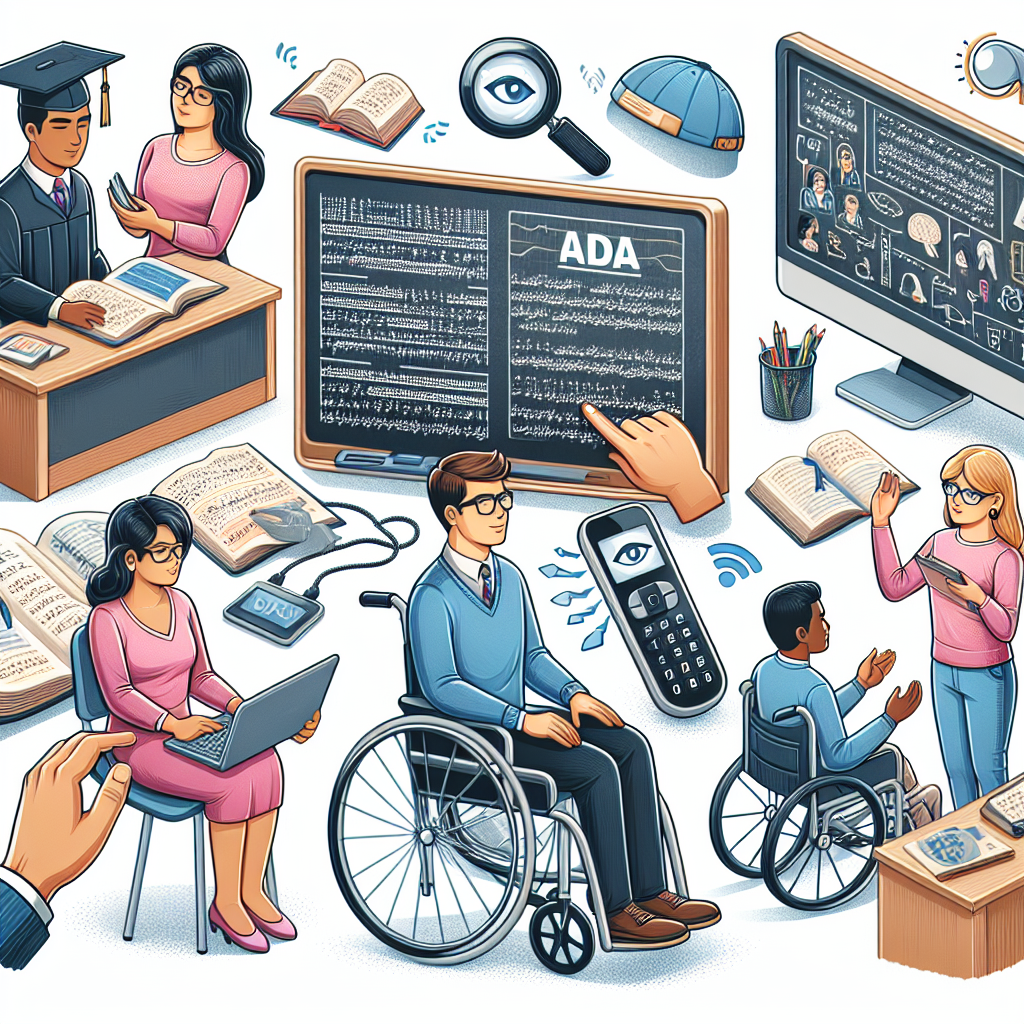
Legal and Policy Enhancements
Legal revisions and policy updates play a critical role in the implementation of the ADA within educational spheres. Recent legal cases have highlighted the necessity for educational institutions to remain vigilant about their obligations under ADA, sparking renewed discussions on disability rights in education.
Developments in policy include clearer definitions of what constitutes reasonable accommodations in schools and universities. Institutions are mandated to provide qualified personnel who can assess the unique needs of students with disabilities and develop personalized accommodation plans. These plans may include adjustments like extended time for tests, modified seating arrangements, and the provision of note-takers during lectures.
Moreover, ADA updates reiterate the obligation of institutions to train faculty and staff in identifying and implementing appropriate accommodations. This is essential to promote awareness and sensitivity towards students’ needs and rights, reducing unintentional discrimination and fostering a supportive educational atmosphere.
Innovations in Physical Accessibility
Physical accessibility in educational settings remains a cornerstone of ADA compliance. Schools and universities are investing in infrastructure to ensure their campuses are navigable for students with physical disabilities. Recent advancements suggest a growing trend towards the integration of innovative design solutions to overcome architectural barriers.
These changes are evident in the construction of new buildings with features like elevators, ramps, widened doorways, and designated parking spaces that cater specifically to wheelchair users. Existing structures are also being retrofitted to include accessible bathrooms and classrooms with adjustable seating arrangements.
The ADA’s guidelines continue to evolve, making it essential for educational institutions to stay abreast of these developments to ensure that they provide a welcoming and inclusive environment for all students. By doing so, they not only comply with legal requirements but also demonstrate a commitment to diversity and inclusion within their educational communities.
Collaboration and Community Engagement
Building an inclusive educational setting in light of ADA requirements extends beyond the confines of the campus. Recent trends emphasize the importance of collaborative efforts between educational institutions, families, and the broader community to support students with disabilities.
Educational institutions are increasingly participating in and organizing workshops, seminars, and forums that bring together various stakeholders to share insights and strategies on implementing ADA accommodations effectively. These collaborative efforts foster a shared understanding of disability issues and help build a supportive network for students.
Furthermore, partnerships with local disability advocacy groups and organizations provide additional resources and expertise that can bolster the efforts of educational institutions. These collaborations ensure that students receive comprehensive support both within and outside the classroom, empowering them to succeed academically and personally.
Conclusion: A Continual Journey Toward Inclusion
The Americans with Disabilities Act has been instrumental in shaping the educational landscape for students with disabilities. Recent developments within ADA regulations and practices reflect a deeper commitment to fostering inclusivity and accessibility across educational settings. These changes are multifaceted, encompassing everything from digital accessibility enhancements and the implementation of universal design to legal updates, physical infrastructure improvements, and community collaboration.
As the educational sphere continues to adapt and evolve, these ongoing developments highlight the importance of maintaining a proactive approach in addressing the needs of students with disabilities. It emphasizes the need for educational institutions to remain informed and adaptable, ensuring they meet the ADA’s standards and foster an environment where all students can thrive.
In embracing these changes, educational settings not only fulfill their legal obligations but also adopt a mindset of inclusivity that enriches the learning experiences for all students. It is an ongoing journey towards full inclusion, and with each step forward, educational institutions move closer to a future where every learner is empowered to achieve their fullest potential.
Frequently Asked Questions
1. What is the importance of the ADA in educational settings?
The Americans with Disabilities Act (ADA) plays a pivotal role in educational environments by mandating that students with disabilities receive the same opportunities and rights as their peers without disabilities. This comprehensive civil rights law, enacted in 1990, seeks to eliminate barriers that could prevent students with disabilities from receiving an equitable education. The ADA stipulates that schools must provide necessary accommodations, such as accessible classrooms, special equipment, or modified teaching methods, to ensure that all students can access the curriculum fully. By doing so, the ADA promotes an inclusive educational setting where diversity is celebrated, and all students are empowered to succeed based on their abilities, creativity, and effort, rather than being limited by physical or systemic barriers.
2. How have recent ADA developments impacted accessibility in education?
Recent ADA developments have significantly enhanced accessibility in education by expanding and refining the obligations schools have to accommodate students with disabilities. There has been increased emphasis on integrating assistive technology and accessibility tools in both physical and virtual classrooms. Schools are now more accountable for ensuring that digital resources, like websites and online learning platforms, are fully accessible through measures such as closed captioning for videos, screen reader compatibility, and alternative formats for text-based materials. Additionally, recent updates underline the necessity for schools to engage with students and their families to better understand their unique needs and preferences, ensuring that educational adjustments are not just compliant with the law, but also truly supportive of each student’s learning journey.
3. What new ADA compliance obligations do schools face in response to recent developments?
In light of recent ADA developments, schools now face heightened obligations to ensure all aspects of their services are accessible to students with disabilities. This includes the physical accessibility of school facilities, such as ramps, elevators, and appropriately equipped restrooms, as well as ensuring classroom layouts allow for ease of movement. Furthermore, ADA compliance now extends robustly into the digital realm, necessitating that educational materials, websites, and online learning platforms are designed to be accessible. This means utilizing universal design principles to support text-to-speech software, providing alternative text for images, ensuring video content is captioned, and that resources can be navigated using a keyboard. School staff must also receive training to understand and implement these requirements effectively, fostering a deeper culture of inclusion within educational environments.
4. How does the ADA support students with disabilities in higher education?
In higher education, the ADA ensures that students with disabilities are provided with fair access to educational opportunities. Universities and colleges are required under the ADA to accommodate students’ disabilities by making necessary adjustments in their programs and on their campuses. This might include providing sign language interpreters for deaf students, ensuring campus layouts are fully accessible, offering alternative exam formats, and granting extensions on assignments if needed. Furthermore, these institutions must proactively support students with disabilities through services like disability resource centers, where students can receive support, advocacy, and guidance tailored to their individual needs. By enforcing these requirements, the ADA affirms the rights of students with disabilities to pursue their academic and career aspirations without encountering undue obstacles.
5. What role do parents and guardians play within recent ADA developments affecting education?
Parents and guardians are crucial allies in enforcing and advocating for ADA compliance in schools. Recent developments highlight the importance of collaboration between families and educational institutions in creating an environment that is supportive of students with disabilities. Schools are encouraged to engage parents as partners, involving them in the discussion when developing Individualized Education Programs (IEP) or 504 plans, and ensuring they are informed about any updates or changes to their child’s educational accommodations. Parents and guardians can also provide essential insights into the specific needs and preferences of their children, helping schools tailor their approach to support learning effectively. Moreover, they serve as advocates for their children’s rights, ensuring that their child’s educational experience is not hindered by accessibility issues or discriminatory practices. Consequently, active parental involvement and communication with educators is vital in fostering a truly inclusive and ADA-compliant school environment.


