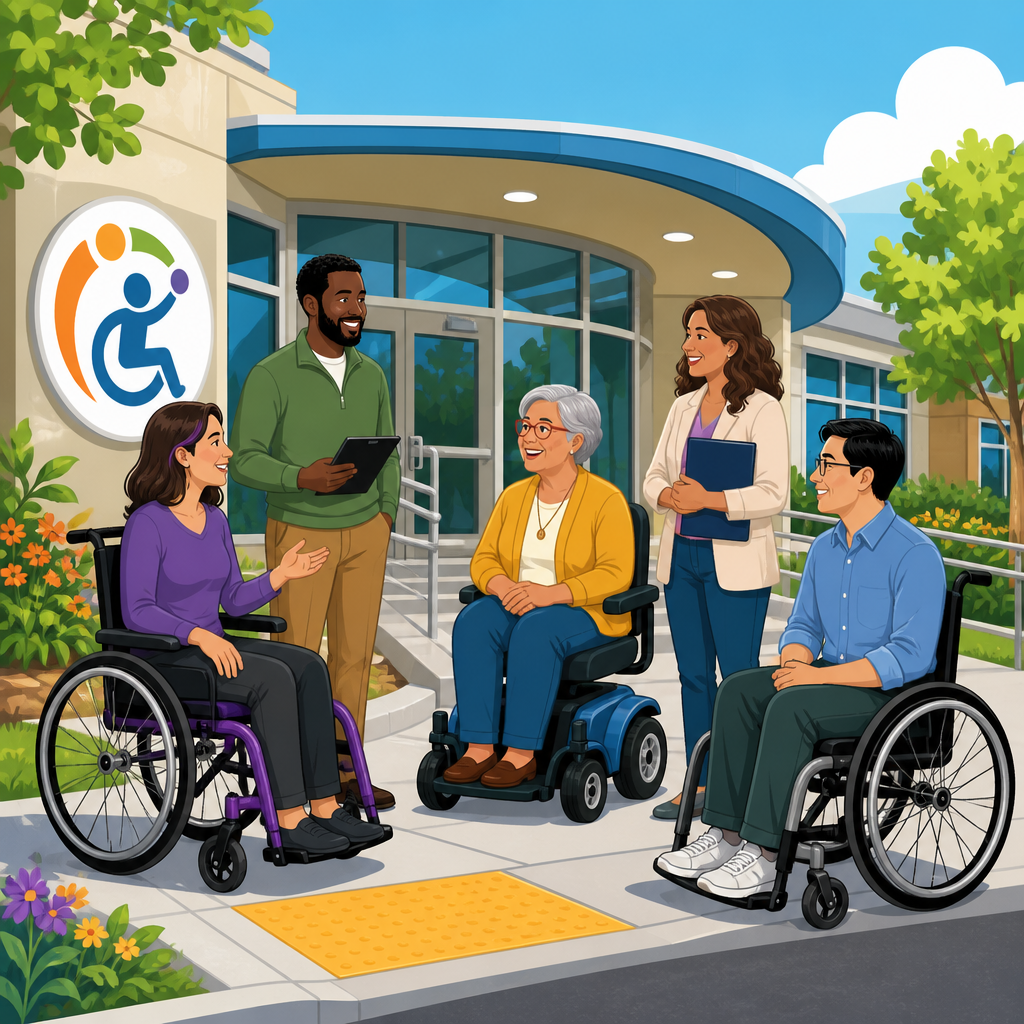
Working with Centers for Independent Living on access issues can turn a confusing ADA problem into a practical action plan with local allies, technical guidance, and long-term support. Centers for Independent Living, often called CILs, are community-based, cross-disability organizations run by and for people with disabilities. Their core services typically include information and referral, peer support, independent living skills training, individual and systems advocacy, and help with transitions from institutions, school, or unstable housing into community life. When people search for advanced ADA support and networking, they usually need more than a basic explanation of disability rights. They need to know who can review a barrier, help document it, identify the right legal standard, connect them to state agencies or attorneys, and support them through months of follow-up. That is where CILs matter most. In my experience helping people navigate access disputes, the fastest progress happens when disability rights are paired with local knowledge, relationships, and organized records. A strong CIL often provides all three.
Access issues can involve physical barriers, communication barriers, digital inaccessibility, transportation failures, housing complications, workplace coordination, or denial of equal participation in public programs. The Americans with Disabilities Act, Section 504 of the Rehabilitation Act, the Fair Housing Act, and state accessibility codes may all be relevant, depending on the setting. Because the rules overlap, many people lose time by contacting only one office or filing a complaint before they have gathered enough evidence. Working with Centers for Independent Living on access issues helps avoid that mistake. A CIL can help clarify whether the problem belongs under Title II, Title III, Section 504, a reasonable accommodation process, or a state or local enforcement pathway. It can also help a person decide whether negotiation, mediation, administrative complaint, public pressure, or legal escalation is the best next step. For a hub page focused on resources and support, this topic is essential because advanced ADA work is rarely a solo effort. Durable solutions come from coordinated advocacy networks.
What Centers for Independent Living do in advanced ADA support
Centers for Independent Living are not all identical, but the strongest ones function as practical disability rights hubs. They usually start by listening to the person’s goal rather than jumping straight to a statute. That distinction matters. If a wheelchair user cannot enter a clinic, the goal may be immediate medical access, not only a future building modification. If a Deaf employee is missing staff meetings, the goal may be effective communication this week, not just a general policy promise. CIL staff and peer advocates are trained to translate goals into steps: document the barrier, identify the covered entity, request a remedy in writing, note deadlines, and build a referral chain if the issue stalls.
In advanced ADA support, CILs often provide what many agencies do not: continuity. A state complaint office may receive a filing, assign a case number, and communicate through formal letters. A CIL can help before that point and after it. Staff may review photos, compare measurements against ADA Standards for Accessible Design, explain program accessibility under Title II, or help draft a concise accommodation letter. They also know local patterns. In one community, transit paratransit denials may be the recurring issue; in another, medical exam tables or inaccessible polling places may dominate. That local intelligence saves time and shapes strategy.
CILs are also central to networking. They know protection and advocacy agencies, disability rights legal nonprofits, fair housing groups, vocational rehabilitation counselors, ombuds programs, aging and disability resource centers, municipal ADA coordinators, and transportation planners. When a case needs specialized expertise, the CIL can often make a warm referral instead of leaving the person to search alone. For complex access issues, that handoff is not a small benefit. It is often the difference between a stalled complaint and a coordinated case.
How to approach a CIL with a specific access problem
The most productive first contact is specific, organized, and tied to a clear outcome. Before calling or emailing a CIL, gather the basic facts: who denied access, what happened, when it happened, where it happened, who witnessed it, what accommodation was requested, and how the denial affected your participation. Include any documents already exchanged, plus photographs, screenshots, receipts, policies, or medical appointment notices if they help show urgency. If transportation, websites, or communication access are involved, note the exact platform, route, location, device, or service used. Broad frustration is understandable, but detailed evidence is what allows advocates to move quickly.
It also helps to state the remedy you want. Many access disputes become harder because the requesting person never clearly names the fix. A good opening statement sounds like this: “I need the city recreation center to provide a pool lift that is operational during posted swim hours,” or “I need the hospital to provide a qualified sign language interpreter for pre-op and discharge communication.” Specific requests frame the issue around equal access, not around general dissatisfaction. CIL advocates can then determine whether the request is reasonable, whether an alternative equally effective method exists, and whether there is a stronger legal route through another law or agency.
When I have worked with people preparing for CIL intake, the cases that advanced fastest had a timeline. A one-page chronology prevents the facts from getting lost across multiple calls. Start with the first barrier encountered, list each contact with the business or agency, include every response, and mark any approaching deadlines such as a surgery date, lease renewal, court appearance, or school start. That timeline becomes the backbone for letters, complaints, and referrals.
What evidence matters most in an ADA access case
Strong advocacy depends on evidence that is factual, dated, and easy for another person to verify. Photographs should show the whole area and close details. For built environment issues, include doors, routes, slopes, parking, restrooms, service counters, and any posted signs. If measurements matter, record them carefully and note the method used. The 2010 ADA Standards for Accessible Design provide technical criteria for many features, but do not assume every problem requires exact measurements before a CIL can help. Sometimes the immediate issue is program access, policy modification, or communication access, where the facts of exclusion matter more than dimensions.
Written communication is especially valuable. Save emails, text messages, online chat transcripts, intake forms, denial letters, and service policies. If a staff member makes a verbal statement such as “we do not allow service animals” or “interpreters are the patient’s responsibility,” write down the date, time, name, and exact wording as soon as possible. Contemporaneous notes are more persuasive than reconstructed memory months later. For digital access, save screenshots, browser information, device type, and the exact task that failed, such as submitting a payment, completing an application, or reading lab results.
A CIL can then help sort the evidence into useful categories: barrier proof, impact proof, and remedy proof. Barrier proof shows the access problem exists. Impact proof shows that the person was excluded, delayed, or burdened. Remedy proof shows a practical fix is available, such as an accessible entrance, captioning vendor, policy exception, schedule change, or accessible document format. This structure is effective because it answers the three questions decision-makers usually ask: What is wrong, why does it matter, and what should we do now?
Key partners a CIL can connect you with
Advanced ADA support works best as a network, not a single phone call. Below is a practical view of the partners CILs commonly involve and when each one becomes important.
| Partner | Best use case | What they may provide |
|---|---|---|
| Protection and Advocacy agency | Rights violations, abuse, systemic barriers | Legal advocacy, investigations, formal representation in select cases |
| Municipal or state ADA coordinator | Public services, programs, facilities, events | Internal resolution, policy review, transition plan information |
| Fair housing organization | Accessible units, modifications, parking, assistance animals | Testing, complaint support, housing law guidance |
| Vocational rehabilitation | Employment access tied to retaining or getting work | Assistive technology, job supports, service coordination |
| Disability rights legal nonprofit | Complex cases needing litigation leverage | Demand letters, negotiation, strategic lawsuits |
| State protection programs or ombuds offices | Facilities, long-term services, institutional transitions | Rights education, complaint escalation, systems advocacy |
This network matters because access issues rarely stay in one lane. A tenant with mobility impairments may need both a reasonable accommodation and local code enforcement. A rider denied paratransit may also need an appeal strategy, medical documentation support, and route training alternatives. CILs help sequence those contacts so the person is not forced to start over with each new organization.
Common access issues where CIL involvement changes outcomes
Healthcare access is one of the clearest examples. Hospitals and clinics may assume compliance means a ramp and an accessible restroom, while overlooking transfer assistance policies, height-adjustable exam tables, accessible weight scales, interpreter coordination, and patient portal accessibility. A CIL can help distinguish between a one-time service failure and a broader program access problem. It can support a targeted request that asks for policy correction, staff training, equipment, and a response deadline. Those details matter because vague complaints often get vague answers.
Transportation is another area where local knowledge is critical. Fixed-route systems, paratransit eligibility decisions, no-show policies, stop announcements, securement procedures, and sidewalk connections all involve overlapping rules and operational realities. In practice, CILs often know whether the issue is a training problem, a contractor problem, or a policy problem. That knowledge helps shape whether the next step should be a rider complaint, an ADA appeal, testimony at a board meeting, or a referral to the Federal Transit Administration complaint process.
Housing access also benefits from CIL involvement. People frequently mix up ADA, Section 504, and Fair Housing Act obligations. A privately owned apartment complex may not be governed the same way as public housing or subsidized housing. A CIL can help frame requests for reserved accessible parking, grab bar installation, policy exceptions, communication access, or transfer to an accessible unit. It can also connect tenants with fair housing agencies that conduct testing and know local enforcement trends.
Digital access is increasingly important. Many public entities and businesses now route essential services through websites, portals, kiosks, and mobile apps. A CIL may not perform a full WCAG audit, but it can help document the user impact, identify whether the inaccessible feature blocks equal access to a government program or public accommodation, and connect the person with technical specialists or legal advocates. In several cases I have seen, a clean record of failed tasks, browser details, screenshots, and written notices to the provider did more to prompt change than a general statement that a website was “not accessible.”
How to build a long-term advocacy relationship with a CIL
The best results come when people treat the CIL as a strategic partner rather than a one-time complaint desk. That means being responsive, organized, and realistic about roles. Most CILs do not replace attorneys, inspectors, or government investigators, but they are often the connective tissue between those systems. If staff ask for documents by a certain date, send them in a single labeled file set. If the situation changes, update your advocate quickly. If you receive a proposed solution, test whether it actually works and report back with specifics.
It is also wise to ask early about scope and capacity. Some CILs can attend meetings, draft letters, or join site visits. Others focus more heavily on coaching and referral. Neither model is wrong, but knowing the limits helps you plan. Ask who will be your point of contact, what timeline is realistic, whether there are consent forms for releasing information, and what community partners should be included from the start. Good coordination prevents duplicated effort and conflicting advice.
Finally, remember that access advocacy strengthens when individual cases inform broader systems work. If a CIL notices repeated complaints about inaccessible medical offices, courthouse entrances, or transit stops, it can elevate those patterns into training requests, policy campaigns, advisory committees, or public testimony. By staying engaged, sharing outcomes, and participating in community feedback opportunities, you help build a stronger access network for others facing the same barriers.
Working with Centers for Independent Living on access issues is one of the most effective ways to move from frustration to informed action. CILs bring disability-led perspective, practical case support, and deep local networks that many people cannot assemble on their own. They help define the problem, gather the right evidence, identify the governing law, and connect individuals to the agencies, nonprofits, and legal resources best suited to the case. That is why they are central to advanced ADA support and networking within any serious resources and support strategy.
The key takeaway is simple: access problems are easier to solve when you approach them systematically. Document the barrier, describe the impact, name the remedy, and bring that package to a CIL early. Whether the issue involves healthcare, transportation, housing, public services, or digital access, a strong Center for Independent Living can shorten the path to resolution and improve the quality of the outcome. If you are dealing with a persistent barrier now, contact your local CIL, organize your records, and start building your advocacy team today.
Frequently Asked Questions
What is a Center for Independent Living, and how can it help with access issues?
A Center for Independent Living, or CIL, is a community-based organization designed to support people with disabilities in living independently and participating fully in community life. What makes CILs especially valuable is that they are typically cross-disability and consumer-directed, meaning they serve people with many different disabilities and are led in significant part by people with disabilities themselves. That lived experience often makes their guidance practical, realistic, and closely connected to day-to-day access barriers.
When you are dealing with an access issue, a CIL can help in several ways. Staff may listen to the problem, help you clarify whether it involves physical access, communication access, transportation, program participation, housing, employment, or another barrier, and then identify possible next steps. They can often provide information about disability rights, local resources, and the kinds of solutions that may work in your situation. In many cases, they also offer peer support, advocacy assistance, independent living skills training, and referrals to agencies, legal resources, or technical experts.
For someone facing an ADA-related concern, a CIL can be a strong starting point because it helps turn a broad problem into a workable plan. Instead of trying to sort out regulations, documentation, and local systems alone, you may gain an ally that understands both disability culture and community systems. Even when a CIL does not directly resolve the issue, it can often help you organize your concerns, communicate effectively, and connect with the right people to move the matter forward.
When should I contact a Center for Independent Living about an ADA or accessibility problem?
You should consider contacting a CIL as soon as an access problem begins affecting your ability to use a service, enter a building, participate in a program, communicate effectively, or live independently. Many people wait until a problem becomes severe, but early contact can be helpful because it gives you time to document what is happening, understand your options, and approach the issue strategically. A CIL may be useful whether the barrier involves a business, landlord, public program, school, employer, transit provider, health care office, or community organization.
Examples of situations where a CIL may help include entrances that are not wheelchair accessible, meetings without interpreters or captions, forms or websites that are not accessible, transportation barriers, denial of reasonable accommodations, or difficulty getting clear information from agencies about disability-related rights and services. CILs can also be helpful if you are unsure whether the issue falls under the ADA or another law. You do not need to have all the legal answers before reaching out.
Another good time to contact a CIL is when informal conversations have stalled. If you have already raised a concern and have been ignored, redirected repeatedly, or told that nothing can be done, a CIL may help you strengthen your request and identify a more effective path. In addition, if the issue is part of a bigger pattern affecting multiple people, the CIL may be able to support systems advocacy rather than just a one-time fix. Reaching out early can make the process less overwhelming and improve the chances of finding a practical, sustainable solution.
What services do Centers for Independent Living typically provide during an access dispute?
Although services vary by location, most CILs are built around core functions that can be very useful during an access dispute. These commonly include information and referral, peer support, independent living skills training, individual advocacy, systems advocacy, and transition-related services. In practice, that means a CIL may help you understand the issue, identify goals, gather facts, communicate with decision-makers, and connect with outside resources when needed.
Information and referral services can help you figure out which laws, agencies, or local contacts may be relevant. Peer support can be just as important, especially when the process is stressful or isolating, because speaking with someone who has navigated a similar barrier can provide perspective and confidence. Independent living skills support may also come into play if the access issue affects housing, transportation, communication, or daily routines. Advocacy services can range from helping you draft a complaint or accommodation request to participating in meetings, making calls, or explaining common accessibility standards and best practices.
In some cases, a CIL may also identify larger patterns and pursue systems advocacy. For example, if a transportation route, municipal program, or local facility is creating repeated barriers for many residents, the CIL may work toward broader policy or operational change. It is important to understand that CILs are not always legal service providers, but they often know when a problem needs to be escalated and where to refer it. Their role is often to help you build a strong foundation: clear facts, clear goals, clear communication, and support that continues beyond a single complaint.
How should I prepare before meeting with a Center for Independent Living about an access issue?
Preparing in advance can make your meeting with a CIL more productive. Start by writing down exactly what happened, where it happened, when it happened, and how the barrier affected you. Be specific. If the issue involved a building, note the entrance, restroom, parking, seating, or route problem. If it involved communication, record what accommodation was needed, when it was requested, and what response you received. If it involved a program or service, describe what you were trying to access and what prevented equal participation.
It also helps to gather any supporting materials you already have. This may include emails, letters, screenshots, photographs, medical or service-related documentation if relevant, copies of policies, names of staff you spoke with, timelines of events, and records of previous requests or complaints. You do not need a perfect file before contacting a CIL, but organized information can help staff understand the problem more quickly and offer more targeted guidance. If deadlines are involved, such as a hearing, move-in date, job start date, or program application, make those clear right away.
Finally, think about your goal. Do you want a physical barrier removed, an accommodation approved, a communication aid provided, a policy changed, or simply a clearer explanation of your rights and options? Being honest about what outcome matters most can help the CIL tailor its support. It is also useful to mention any concerns you have about retaliation, urgency, safety, or confidentiality. The more complete the picture, the easier it is to turn a frustrating access problem into a realistic action plan with defined next steps.
Can a Center for Independent Living help with long-term advocacy, not just a one-time access complaint?
Yes. One of the most important strengths of many CILs is that they are not limited to one-time problem solving. While they often help individuals address immediate barriers, they also support longer-term independent living goals and broader community change. If your access issue is tied to ongoing challenges with housing, transportation, employment, public benefits, communication access, or community participation, a CIL may be able to stay involved as a continuing resource rather than just answering a single question.
Long-term support can take many forms. A CIL may help you build self-advocacy skills, prepare for future accommodation requests, understand how to navigate local systems, and connect with peer networks that reduce isolation and strengthen community involvement. If the issue affects repeated access to essential services, the CIL can sometimes help you create a strategy that looks beyond the immediate dispute to address patterns, prevention, and stronger documentation going forward. This can be especially valuable when a barrier reflects an ongoing policy or structural problem rather than a simple misunderstanding.
CILs are also well positioned to connect individual experiences to systems advocacy. When multiple people report the same access barrier, the organization may use that information to push for policy reform, better training, improved procedures, or more inclusive community planning. That means your experience may contribute to changes that benefit others as well. In this way, working with a CIL can provide both immediate support and a path toward durable, community-based solutions that improve access over time.


