Introduction to the ADA and Its Importance
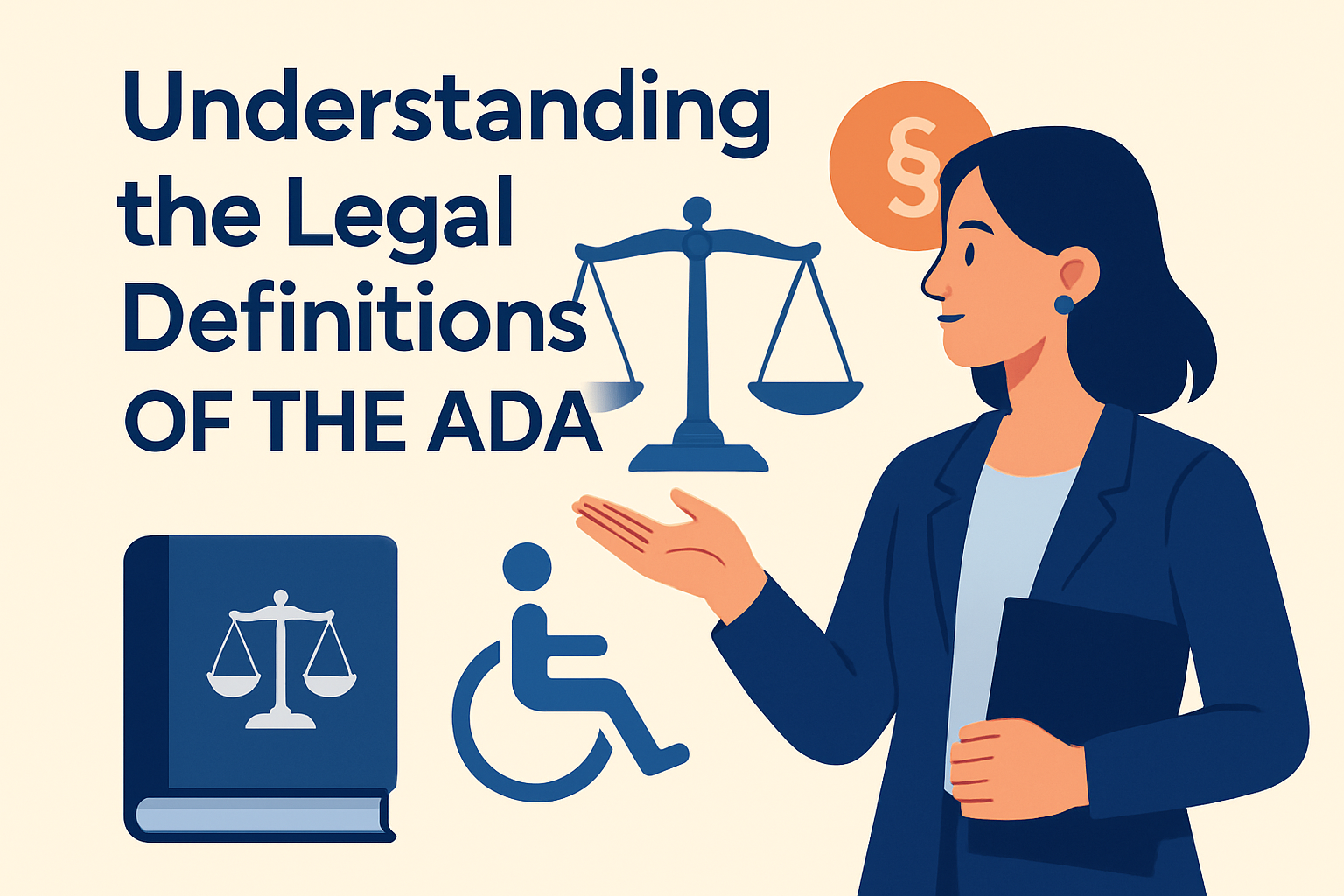
The Americans with Disabilities Act (ADA) is a critical piece of civil rights legislation enacted in 1990. Its primary aim is to prohibit discrimination and ensure that people with disabilities have the same rights and opportunities as everyone else. Understanding the legal definitions within the ADA is essential because it affects various aspects of life and work, from employment to public access. Knowing these definitions helps both employers and employees navigate compliance, ensuring respect and legal adherence across different areas.
Key terms within the ADA include ‘disability,’ ‘reasonable accommodation,’ and ‘undue hardship.’ A ‘disability’ is legally defined as a physical or mental impairment that substantially limits one or more major life activities. ‘Reasonable accommodation’ refers to adjustments or modifications provided to a disabled individual to enable them to perform essential job functions. Meanwhile, ‘undue hardship’ describes situations where providing certain accommodations would result in significant difficulty or expense for the employer.
The relevance of understanding these terms and their applications can’t be understated. Misinterpretations of these definitions can lead to inadvertent discrimination and potential legal repercussions. Such knowledge is essential not only for compliance purposes but also for fostering inclusive and accessible environments. This article will dive deeper into these key areas, offering clear explanations and practical examples to illuminate how the ADA shapes accessibility across different facets of society.
Legal Definition of Disability Under the ADA
The term ‘disability’ under the ADA encompasses a range of conditions that impact major life activities, such as walking, seeing, hearing, and learning. The ADA recognizes physical and mental impairments that substantially limit these activities. For instance, conditions like blindness, cancer, diabetes, epilepsy, HIV infection, and severe depression qualify as disabilities.
To illustrate, consider a software engineer with a vision impairment. This limitation significantly affects their ability to engage in activities like reading a computer screen, which is crucial for their profession. As per the ADA, this is a recognized disability, entitling the engineer to request reasonable accommodations from their employer.
Understanding this legal definition is crucial as it determines who is protected under the ADA. Misjudging what constitutes a disability could lead employers to fall short in providing necessary accommodations, thereby violating the law. Thus, employers must remain informed to appropriately address and support personnel with disabilities in their workforce.
Reasonable Accommodation: What Employers Need to Know
Reasonable accommodation is a central tenet of the ADA, ensuring that individuals with disabilities can perform essential job functions. This could involve modifications to the work environment or adjustments to how tasks are executed. Examples include implementing flexible working hours, altering job tasks, or providing necessary technology aids like screen readers.
For instance, consider a retail worker with a mobility impairment who struggles to stand for extended periods. A suitable accommodation would be providing a stool or periodic sitting breaks. Such measures enable the employee to execute their duties effectively while accommodating their disability.
However, these accommodations are not limitless. The ADA mandates accommodations that are reasonable, i.e., those that do not impose an undue hardship on the employer. This aspect helps balance the rights of the employee against the legitimate needs and capacity of the employer.
Undue Hardship: Balancing Business Needs and Accessibility
The concept of ‘undue hardship’ under the ADA refers to an accommodation that causes significant difficulty or expense relative to the employer’s resources. Factors considered include the nature and cost of the accommodation, overall financial resources, and the type of business operations involved.
An example could involve a small business with limited financial resources. If an employee requests exceedingly expensive or logistically challenging modifications, such as elaborate structural changes to the office, this might constitute an undue hardship. Each situation is assessed on a case-by-case basis, ensuring fairness and practicality are maintained.
It’s vital for employers to understand this concept to avoid potential conflicts and ensure feasible accommodations are explored first. Engaging in open dialogues with employees about their needs and practical solutions can preemptively address these challenges.
Practical Application and Real-World Examples
Understanding the ADA’s legal definitions is important, but recognizing how they function in real-world settings underscores their practical value. Across various industries, businesses employ creative solutions to comply with ADA standards effectively.
Consider the example of a multinational corporation that employs a deaf project manager. The company provides sign language interpreters for meetings and video calls, ensuring effective communication. Additionally, they utilize technologies like instant messaging for quick communication and captioning services for video content.
Such implementations not only ensure legal compliance but also create a work culture that values inclusivity and diversity. Employers who embrace ADA concepts in these practical ways often experience enhanced team morale and a broader talent pool.
| Subtopic | Definition | Real-World Example |
|---|---|---|
| Disability | Impairment limiting major life activities | Blindness in a software engineer |
| Reasonable Accommodation | Job modifications enabling duty performance | Stools for a retail worker with mobility impairment |
| Undue Hardship | Significant difficulty or expense | Costly structural changes for a small business |
Summarizing the Key Takeaways
This deep dive into the legal definitions of the ADA highlights the intricate balancing act between ensuring accessibility and accommodating business practicalities. Understanding terms like ‘disability’ and ‘reasonable accommodation’ elucidates whom the ADA protects and how these protections manifest in the workplace.
The discussed examples demonstrate that compliance is not just a legal obligation but an opportunity to cultivate a diverse and adaptable workforce. By proactively implementing ADA guidelines, businesses can avoid legal pitfalls while unlocking the potential of all employees. The key takeaway is that knowledge of the ADA provides a foundation for policies that are inclusive and equitable.
As a final call to action, consider assessing your workplace’s current ADA compliance measures. Engage with employees to understand their needs and explore practical accommodations while ensuring you stay within reasonable boundaries. Such steps signal a commitment to not just legal compliance but also to fostering an inclusive environment where every employee can thrive.
Frequently Asked Questions
1. What is the Americans with Disabilities Act (ADA) and why is it important?
The Americans with Disabilities Act (ADA), enacted in 1990, is a landmark piece of legislation that aims to eliminate discrimination against individuals with disabilities. Its importance cannot be overstated, as it seeks to ensure that people with disabilities have the same rights and opportunities as everyone else. This means that in various facets of life—including employment, public access, transportation, and telecommunication—people with disabilities are entitled to equal treatment and accommodations. The ADA is crucial because it promotes inclusivity and equal opportunity, striving to make society more accessible and fair for all. By understanding and adhering to the ADA, employers and public entities can foster environments that respect and uphold the rights of individuals with disabilities.
2. What constitutes a disability under the ADA?
Under the ADA, a disability is defined broadly to include various physical and mental impairments that substantially limit one or more major life activities. Major life activities can include, but are not limited to, walking, talking, seeing, hearing, or learning. Moreover, the ADA also recognizes that the activities of the major bodily functions, such as the immune system or normal cell growth, are major life activities. An individual is considered to have a disability if they have a record of such impairment or if they are regarded as having such impairment. This comprehensive definition ensures that the ADA covers a wide range of physical and mental conditions, providing protection to many individuals. Understanding this definition is vital for both employers and individuals to foster compliance and accessibility.
3. How does the ADA affect employment practices?
The ADA has significant implications for employment practices. It prohibits discrimination against qualified individuals with disabilities in various aspects of employment, including hiring, promotions, job assignments, training, and other employment-related activities. Importantly, the ADA requires employers to provide reasonable accommodations to employees or job applicants with disabilities, unless it would cause undue hardship (meaning significant difficulty or expense) on the operation of the business. Reasonable accommodations could include modifying work schedules, providing assistive technologies, or altering certain job requirements. Employers must ensure that their hiring processes and workplaces do not unfairly disadvantage individuals with disabilities, ensuring equal access to employment opportunities and a supportive work environment for all employees.
4. What are reasonable accommodations according to the ADA?
Reasonable accommodations under the ADA are changes or adjustments to a job or work environment that allow a person with a disability to perform their job duties effectively. These accommodations are evaluated on a case-by-case basis and can vary significantly depending on the individual’s specific needs and the nature of their work. Examples of reasonable accommodations include: – Modifying the work environment or equipment – Adjusting work schedules – Reassignment to a vacant position – Providing readers or interpreters – Making facilities readily accessible and usable by individuals with disabilities The accommodation should not impose an undue hardship on the employer, which means it should not require significant difficulty or expense relative to the employer’s size and financial resources. An open dialogue between employers and employees is essential to determine the best solutions to accommodate employees’ needs, fostering an inclusive and productive workplace.
5. How does the ADA influence public access and facilities?
The ADA plays a crucial role in ensuring public access and the accessibility of facilities for individuals with disabilities. Title II of the ADA requires that state and local government entities make their programs, services, and activities accessible to individuals with disabilities. This means that government facilities, from courthouses to public transportation agencies, must be navigable and usable without encountering barriers. Similarly, Title III of the ADA mandates that public accommodations—such as restaurants, hotels, theaters, and retail stores—must be accessible to individuals with disabilities. This includes ensuring physical access and, where necessary, providing communication aids for those with hearing or visual impairments. By enforcing these standards, the ADA ensures that individuals with disabilities can participate fully and equally in society, accessing the same opportunities and services as other citizens. Understanding these provisions is essential for businesses and public entities to adhere to ADA guidelines and promote inclusivity.