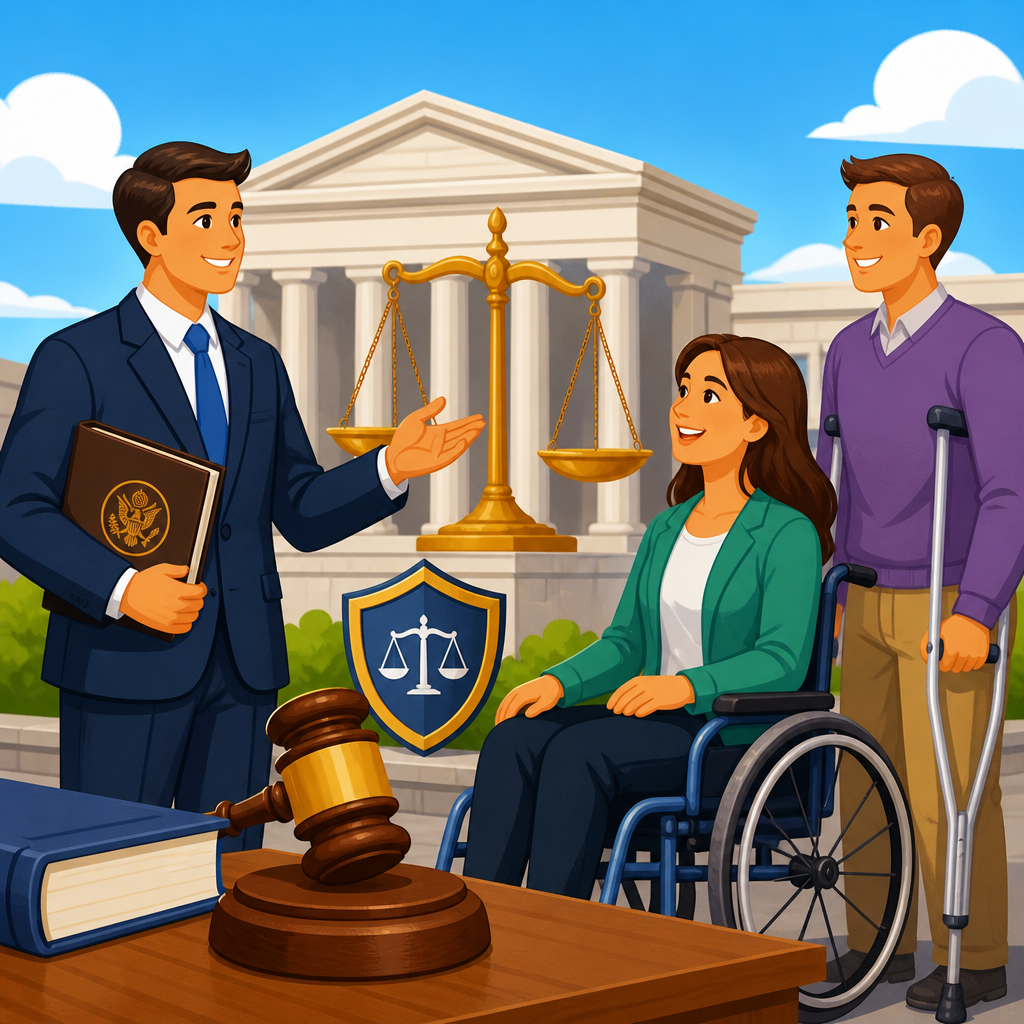
Title III enforcement shapes how the Americans with Disabilities Act works in daily commercial life, because rights on paper matter only when businesses, landlords, operators, and service providers can be compelled to remove barriers. Title III of the ADA governs public accommodations, commercial facilities, and certain private entities that affect access to goods and services. In practice, that means hotels, restaurants, retailers, medical offices, theaters, gyms, schools that are privately operated, and digital experiences tied to those businesses. I have worked with owners, facilities teams, and counsel responding to accessibility complaints, and the same question always appears first: who can enforce Title III, and what can they actually make a business do?
The short answer is that enforcement comes from two main directions. The U.S. Department of Justice can investigate, negotiate settlements, and file lawsuits in federal court. Private plaintiffs can also sue businesses directly, usually seeking court orders that require accessibility fixes. The central remedy under Title III is injunctive relief, meaning a judge orders the defendant to correct barriers, modify policies, or provide auxiliary aids and services. Unlike some civil rights statutes, Title III generally does not allow private plaintiffs to recover compensatory damages in federal court, although state laws may add damages, penalties, or attorney fee exposure.
That distinction matters strategically. A DOJ case can carry civil penalties and a broad compliance mandate affecting multiple locations, written policies, staff training, and reporting obligations. A private action often focuses on one plaintiff, one property, one website, or one policy, but it can still trigger expensive remediation and legal fees. Understanding this structure helps businesses assess risk, prioritize compliance work, and respond intelligently when a demand letter or complaint arrives. It also helps advocates and disabled customers understand what relief is realistically available.
This hub article explains Title III enforcement comprehensively: who can bring a claim, the legal standards courts apply, how DOJ lawsuits differ from private actions, what injunctive relief covers, and where common disputes arise. It also serves as a foundation for deeper articles on ADA website accessibility, service animals, effective communication, architectural barriers, and defenses in accessibility litigation. If you need a working map of Title III public accommodations enforcement, this is the place to start.
What Title III Covers and Why Enforcement Centers on Access
Title III prohibits disability discrimination by places of public accommodation and requires equal access to goods, services, facilities, privileges, advantages, and accommodations. The statute identifies twelve categories of public accommodations, including lodging, food service, entertainment, public gathering places, sales establishments, service establishments, public transportation terminals, places of recreation, schools, social service centers, and places of exercise or recreation. It also regulates commercial facilities through design and construction standards, even when those facilities are not open to the public in the same way.
Enforcement disputes usually turn on four recurring duties. First, newly constructed and altered facilities must comply with the 2010 ADA Standards for Accessible Design. Second, existing facilities must remove architectural barriers when removal is readily achievable, meaning easily accomplishable without much difficulty or expense. Third, businesses must make reasonable modifications to policies, practices, and procedures when necessary to serve people with disabilities, unless doing so would fundamentally alter the nature of the goods or services. Fourth, they must furnish auxiliary aids and services when necessary to ensure effective communication, unless doing so would create an undue burden or fundamental alteration.
Those obligations explain why Title III litigation is so fact specific. A hotel reservation system may violate the rules if accessible room features are not identified clearly enough for independent booking. A restaurant may face a policy claim for excluding a trained service animal. A medical office may face an effective communication claim for failing to provide a qualified sign language interpreter during a complex consultation. A shopping center may face a barrier removal claim over inaccessible parking, curb ramps, door hardware, restrooms, or sales counters. The statute is broad, but the proof usually comes down to concrete obstacles and operational choices.
DOJ Enforcement: Investigations, Settlements, and Federal Lawsuits
The Department of Justice is the primary federal enforcer of Title III. DOJ can open investigations from complaints, compliance reviews, referrals, or patterns it identifies across industries. In my experience, a DOJ inquiry is usually wider than a private demand letter. Investigators may ask for policies, floor plans, reservation practices, interpreter procedures, prior complaints, capital improvement schedules, and digital accessibility information. They are not just evaluating one moment of noncompliance; they are assessing whether the business has a systemic accessibility problem.
DOJ often resolves matters through settlement agreements or consent decrees. These documents are detailed compliance roadmaps. They may require surveys by a Certified Access Specialist or architect, barrier removal deadlines, web accessibility auditing, staff training, centralized complaint handling, periodic reporting, and executive oversight. For lodging, DOJ has scrutinized reservations systems under 28 C.F.R. Part 36. For healthcare, it has focused on interpreters, captioning, accessible medical equipment, and policies on companion communication. For retail and food service, common issues include parking, routes, counters, service animal access, and maintenance of accessible features.
When DOJ files suit, the stakes increase. The government can seek injunctive relief, monetary damages for aggrieved persons, and civil penalties. For businesses, that means a federal action can involve not only remediation costs but also exposure that private plaintiffs usually cannot obtain under Title III alone. DOJ also tends to frame cases broadly. If a chain operator has recurring deficiencies at multiple sites, the requested relief may extend across the portfolio, not just the location named in the original complaint.
| Enforcement path | Who brings it | Typical remedies | Common scope |
|---|---|---|---|
| DOJ investigation or lawsuit | U.S. Department of Justice | Injunctions, civil penalties, damages for aggrieved persons, reporting obligations | Single site, multiple locations, or companywide practices |
| Private federal action | Individual plaintiff or advocacy group with standing | Injunctions and attorney fees; usually no compensatory damages under Title III itself | Specific barriers, policies, or digital access issues |
| State law accessibility claim | Private plaintiff under state statute | May include statutory damages, actual damages, or penalties depending on the state | Often paired with ADA allegations |
A practical point businesses often miss is that cooperation matters, but incomplete promises do not end a DOJ matter. The agency expects dates, responsible personnel, and verifiable completion. If a company says it intends to improve accessibility but cannot show a plan tied to the 2010 Standards, effective communication protocols, and policy changes, the investigation usually continues.
Private Actions: Standing, Serial Litigation, and Common Claim Patterns
Private enforcement drives much of Title III litigation. A plaintiff must generally show standing under Article III, which means an injury connected to the alleged barrier and a real likelihood of future harm or deterrence. Courts often accept deterrence as injury: if a wheelchair user avoids returning to a store because inaccessible parking and entry routes remain in place, that may support standing. Website cases often analyze whether the plaintiff tried to use the site, encountered digital barriers, and intends to return once access is fixed.
Serial litigation is common because accessibility barriers recur across properties and industries. Businesses sometimes characterize repeat plaintiffs as abusive, but the legal reality is more nuanced. Repeated suits can reflect repeated noncompliance. Courts focus less on the number of cases a plaintiff has filed than on whether the plaintiff encountered a genuine barrier and seeks forward-looking relief. That said, weak pleadings, implausible intent to return allegations, and lawyer-driven cases with little factual support do get challenged successfully in some jurisdictions.
Typical private Title III claims fall into identifiable categories. Physical access suits target parking, slopes, routes, restroom dimensions, maneuvering clearances, signage, service counters, and seating. Policy suits challenge no-pets rules applied to service animals, refusal to make reasonable modifications, or inaccessible reservation practices. Communication suits involve interpreters, captioning, assistive listening systems, Braille or accessible documents, and methods for communicating with blind or deaf customers. Digital access suits focus on websites, mobile apps, online booking, payment systems, and documents that screen readers cannot interpret properly.
For operators, the lesson is straightforward: most lawsuits are predictable. Plaintiffs usually sue over barriers that can be found in a competent access audit, tested by disabled users, and corrected through ordinary facility management or product development. Litigation feels sudden, but the underlying defects are rarely surprising.
Injunctive Relief: The Core Remedy Under Title III
Injunctive relief is the engine of Title III enforcement. An injunction is a court order requiring a defendant to stop violating the law and take specific corrective action. Under Title III, that can mean removing architectural barriers, revising policies, providing accessible features, training employees, improving communication methods, or changing digital systems. Because the remedy is forward looking, the case usually turns on present conditions and whether the defendant can show that noncompliance has been fully remedied.
Well-drafted injunctions are operational, not abstract. A court order might require compliant accessible parking with proper access aisles and signage, repair of curb ramps to match slope requirements, installation of compliant door hardware, revision of a service animal policy, procurement procedures for qualified interpreters, periodic ADA training for front-line staff, and retention of an accessibility consultant to verify completion. In digital matters, orders may require conformance work against WCAG criteria, manual testing with assistive technology, bug tracking, and governance over future updates.
Mootness is a frequent defense, but it succeeds only when remediation is complete and unlikely to recur. I have seen owners assume that a contractor proposal or partial fix ends the case. It does not. Courts usually require evidence that barriers no longer exist and that durable changes have been implemented. Temporary measures, future intentions, or disputed repairs rarely moot a claim. On the other hand, prompt remediation can narrow issues, reduce fees, and improve settlement posture.
Attorney fees are another reason injunction cases carry financial weight. Prevailing plaintiffs can recover reasonable fees, which means a small restroom or parking dispute can become expensive if defended poorly. For that reason, the best litigation strategy often begins before litigation: audit, prioritize, document, and fix.
Defenses, Limits, and Compliance Strategy for Public Accommodations
Title III is demanding, but it is not absolute. Businesses may assert that barrier removal is not readily achievable in existing facilities, that a requested modification would fundamentally alter the nature of the service, or that a requested auxiliary aid would impose an undue burden. Those defenses are real, yet they require evidence. Cost, structural constraints, staffing realities, and safety concerns must be documented carefully. A bare statement that compliance is too difficult is not persuasive.
There are also threshold questions. Is the defendant a place of public accommodation under the statute? Is the plaintiff seeking relief connected to actual access? Has the facility already been remediated? Are there landlord-tenant allocation issues in a leased property? For websites, courts still vary on whether a standalone site must be connected to a physical location, although the trend in risk management is clear: if the site is part of customer access, treat it as an accessibility priority regardless of circuit-level differences.
The most effective compliance strategy combines legal review with operational discipline. Start with an ADA survey using the 2010 Standards, then rank findings by user impact, ease of remediation, and litigation risk. Review policies on service animals, reservations, companions, mobility devices, and effective communication. Test websites and apps with automated tools such as axe, WAVE, and Lighthouse, but do not stop there; manual keyboard testing and screen reader testing are essential. Keep records of completed fixes, work orders, budgets, training logs, and complaint resolution. That documentation is invaluable if DOJ asks questions or a private complaint arrives.
Title III enforcement is ultimately about making access real. DOJ actions, private lawsuits, and negotiated settlements all push toward the same endpoint: equal participation in everyday commerce and community life. For businesses, the legal exposure is serious, but the compliance path is usually practical when approached systematically. Know what Title III covers, understand that injunctive relief is the primary remedy, and recognize the different risks presented by DOJ investigations, private actions, and state law claims. The organizations that manage this well do not wait for a lawsuit. They audit facilities and digital properties, correct barriers, train staff, and build accessibility into purchasing, design, and operations.
As the hub page for Title III public accommodations, this article provides the enforcement framework behind every related topic, from architectural barriers and service animals to websites and effective communication. Use it as your starting point, then move into the deeper subtopics that apply to your property, platform, or policy set. If you operate a public-facing business, now is the right time to review your accessibility program and close the gaps before enforcement does it for you.
Frequently Asked Questions
What does Title III of the ADA cover, and who can be sued under it?
Title III of the Americans with Disabilities Act prohibits disability-based discrimination in places of public accommodation and in commercial facilities, and it also reaches certain private entities that control access to goods, services, programs, or spaces used by the public. In practical terms, this includes a wide range of businesses and operators, such as hotels, restaurants, retail stores, movie theaters, medical and dental offices, gyms, museums, private schools, day care centers, professional offices, and many service providers that invite or serve the public. The law focuses on equal access, which means people with disabilities must be able to enter, use, and benefit from the goods and services being offered.
Potential defendants are not limited to the business name on the front door. Enforcement may be directed at owners, tenants, lessors, lessees, operators, management companies, and in some cases other entities with control over the property or the policies at issue. That matters because accessibility problems can arise from both physical barriers and operational decisions. A steep entry, inaccessible restroom, or lack of accessible seating may stem from building design or maintenance, while failures involving service animals, effective communication, reservation systems, or discriminatory eligibility criteria may come from policies and staff practices. Title III enforcement is therefore aimed at whoever has the authority to fix the problem, whether that is the property owner, the business operator, or both.
How does the Department of Justice enforce Title III?
The U.S. Department of Justice is the primary federal agency responsible for enforcing Title III. It can investigate complaints, conduct compliance reviews, negotiate voluntary resolutions, enter into settlement agreements, and file lawsuits in federal court. DOJ enforcement is especially important because it allows the federal government to address patterns of noncompliance that affect large numbers of people, challenge widespread barriers across multiple locations, and push for systemic changes rather than one-off fixes. DOJ investigations may begin with an individual complaint, but they can expand into a broader examination of company practices, architectural conditions, web or communication barriers, and staff training failures.
When DOJ brings a case, it can seek injunctive relief requiring the defendant to remove barriers, modify policies, provide auxiliary aids and services, retrain employees, adopt accessibility procedures, and implement ongoing compliance measures. In appropriate cases, DOJ may also seek civil penalties and damages for aggrieved individuals. This makes government enforcement more powerful than many private lawsuits, which often focus primarily on court orders to fix access barriers. A DOJ action can also carry significant reputational and operational consequences, because settlement agreements often require reporting, timelines for remediation, outside consultants, and future monitoring. For businesses, that means Title III compliance is not just a theoretical legal issue; it can become a detailed and enforceable federal mandate.
Can private individuals file Title III lawsuits, and what can they recover?
Yes. Private individuals who encounter barriers or discrimination prohibited by Title III can file lawsuits in federal court. These cases are a major part of how Title III operates in everyday commercial life, because they allow people directly affected by inaccessibility to seek judicial intervention. A private plaintiff generally alleges that a business, property owner, or operator denied full and equal enjoyment of a place of public accommodation through inaccessible design, failure to remove readily achievable barriers, discriminatory policies, or the refusal to provide necessary aids or reasonable modifications. These suits are often brought by individuals who personally experienced the barrier, and they may also be filed with the support of disability rights organizations.
In most private Title III actions, the primary remedy is injunctive relief, meaning a court order requiring the defendant to correct the violation. Plaintiffs can also typically recover attorneys’ fees if they prevail, which is one reason these cases are taken seriously even when direct money damages are not available under federal law. It is important to understand that Title III itself generally does not allow private plaintiffs to recover compensatory damages in a standard federal private action. However, state or local laws may provide additional remedies, including statutory damages in some jurisdictions. As a result, a single accessibility dispute may involve both federal Title III claims and related state-law claims, increasing the stakes for defendants and expanding the potential consequences of noncompliance.
What is injunctive relief in a Title III case, and why is it so important?
Injunctive relief is a court-ordered requirement that a defendant stop violating the law and take specific steps to correct the problem. In the Title III context, this is the central remedy because the ADA is designed to improve access going forward. A court may order a business to remove architectural barriers where removal is readily achievable, install accessible features, revise policies, provide effective communication tools, alter reservation or intake procedures, permit service animals, train employees, or otherwise bring operations into compliance. The exact terms depend on the nature of the violation, but the purpose is always practical: to make the goods and services genuinely accessible to people with disabilities.
This remedy is especially important because accessibility problems often cannot be solved by money alone. If a customer cannot enter a restaurant, use a restroom, book an accessible room, understand a medical consultation because no interpreter is provided, or navigate key parts of a business’s services, the real issue is the barrier itself. Injunctive relief targets that barrier. It also gives courts flexibility to require detailed compliance measures, deadlines, inspections, and follow-up obligations. For businesses, that means even a seemingly narrow complaint can lead to broader operational changes. For plaintiffs and the public, it means enforcement can create lasting access improvements that extend beyond one person’s experience and benefit future customers, patients, students, guests, and visitors.
What defenses or compliance issues commonly arise in Title III enforcement actions?
Several recurring issues shape how Title III cases are defended and resolved. One of the most common questions is whether a particular entity qualifies as a place of public accommodation or otherwise falls within Title III’s scope. Another frequent issue is control: the defendant may argue that a landlord, tenant, property owner, franchisee, or management company is actually responsible for the challenged condition. In architectural barrier cases, defendants often focus on whether barrier removal is “readily achievable,” which generally means easily accomplishable and able to be carried out without much difficulty or expense. That inquiry can depend on cost, feasibility, the nature of the business, available resources, and the effect of the proposed modification on operations.
Other common disputes involve whether a requested policy modification is reasonable, whether providing a particular auxiliary aid would fundamentally alter the service being offered, or whether it would create an undue burden. Businesses also sometimes argue that the case is moot because they fixed the problem after the lawsuit was filed. While post-lawsuit remediation can be important, mootness is not automatic; courts often examine whether the violation has truly been fully corrected and whether it is likely to recur. From a compliance perspective, the strongest position is usually proactive rather than reactive. Regular accessibility audits, documented remediation plans, policy reviews, staff training, accessible communication practices, and clear responsibility between owners and operators can significantly reduce risk. Title III enforcement tends to expose not just isolated physical barriers, but also gaps in governance, maintenance, and everyday operational decision-making.


