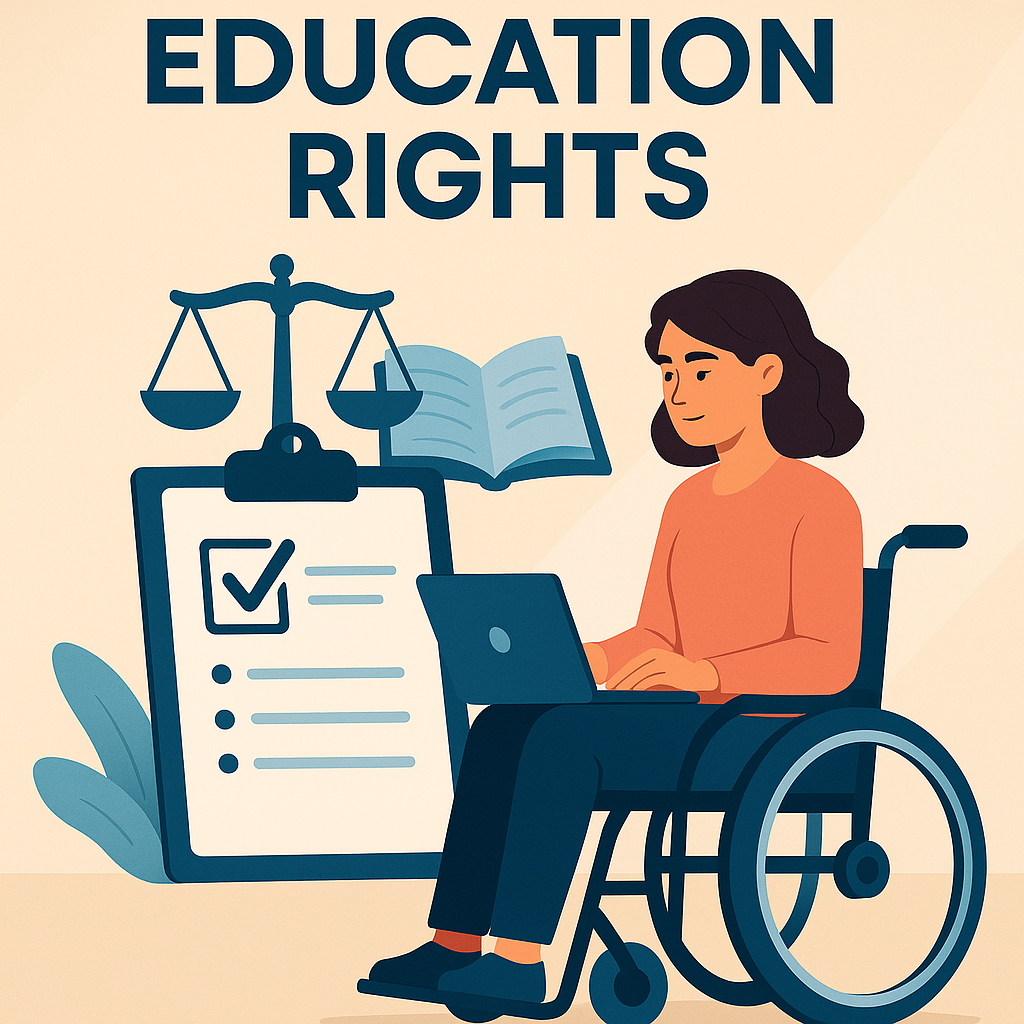
The landmark Supreme Court case, Endrew F. v. Douglas County School District, revolutionized how the Individuals with Disabilities Education Act (IDEA) is interpreted, substantially influencing the education rights of students with disabilities. This pivotal case, decided in 2017, expanded the expectations for educational benefits under IDEA, forming a crucial reference point for parents, educators, and policymakers alike. Understanding how Endrew F. reshaped IDEA and its alignment with the Americans with Disabilities Act (ADA) is essential for everyone invested in equitable education. Why does this matter? Simply put, it guarantees that all students, regardless of abilities, receive a meaningful education benefit, thus optimizing their potential in society. To dive deeper into this, we will explore the case’s background, the implications of the ruling, and real-world repercussions, equipping you with comprehensive insights into its significant impact.
Background of Endrew F. v. Douglas County School District
In order to fully grasp the implications of the Endrew F. ruling, one must first understand the fundamental aspects of the case itself. Endrew F., a student diagnosed with autism, attended a public school in Douglas County, Colorado. Dissatisfied with the school’s proposed Individualized Education Program (IEP), which failed to show substantial progress, his parents enrolled him in a private school where he experienced remarkable improvement. The parents then sought tuition reimbursement under IDEA, sparking a legal battle that reached the Supreme Court. The pivotal legal question centered on what constitutes a “free appropriate public education” (FAPE) under IDEA. Prior to this decision, lower courts often applied an ambiguous, minimal “some educational benefit” standard. In 2017, the Supreme Court raised the bar by stating that schools must offer an individualized education that is “reasonably calculated to enable a child to make progress appropriate in light of the child’s circumstances,” thereby setting a more rigorous benchmark for educational benefits.
Implications of the Supreme Court Ruling
The Supreme Court’s decision in Endrew F. had wide-ranging implications for how educational standards for students with disabilities are conceived. The ruling challenged educational institutions to enhance their role in facilitating meaningful, objective-driven progress in students. Where previously, vague compliance could suffice, schools now had to ensure measurable advancement aligned with the child’s unique learning situation. For instance, if a student has certain achievements in math but struggles with reading, their IEP must specifically address methods to improve reading skills, fostering holistic development rather than isolated achievements.
- Increased accountability for schools to provide tailored education plans.
- Enhanced focus on measurable progress over time.
- More robust dispute mechanisms for parents seeking educational improvements.
These implications underscore a connective thread to the ADA, which similarly aspires to maximize individual potential by ensuring equal access to education while acknowledging diverse needs.
ADA and IDEA: Complementary Forces
The relationship between the Americans with Disabilities Act (ADA) and the Individuals with Disabilities Education Act (IDEA) lies at the heart of supporting students with disabilities. Though both aim to empower these individuals, their approaches differ yet complement each other. IDEA provides the benchmark for educational standards with a focus on how schools should accommodate and foster the potential of students within the educational setting. The ADA, however, sets a groundwork for providing equal opportunity, ensuring no discrimination occurs that could block access to such educational resources.
Through the ruling in Endrew F., the IDEA was pushed closer towards fulfilling the broader ambitions of the ADA by insisting education must be adequately substantive. It prompted a cultural shift in educational institutions, encouraging the design of curricula that naturally embed inclusivity, rather than merely adapting standard curricula to fit non-standard needs.
Real-World Impact and Case Studies
Observing the practical effects of the Endrew F. ruling can provide valuable insight into its transformative nature. Consider the case of a school district in Illinois, which reevaluated their IEP processes post-Endrew F. The district implemented a new protocol for regularly assessing student progress against their IEP goals, supported by comprehensive training for educators on crafting IEPs that underscore measurable success and clearly defined objectives. Consequently, they documented significant academic improvements in students who previously stagnated under less stringent goals.
This case exemplifies how the principles established by Endrew F. can drive meaningful educational reform. It demonstrates the need for continuous review and adaptation of educational strategies, ensuring they remain aligned with the evolving standards set by judicial review. Ultimately, this yields a more capable, confident generation of learners who are better equipped to transition into post-educational environments, contributing positively within their communities.
Challenges and Criticisms
However, the path forged by Endrew F. is not without its challenges and criticisms. For many school districts, implementing the heightened standards established by the Supreme Court decision requires considerable resources, time, and effort. Schools face the logistical challenge of retraining staff, revising educational frameworks, and ensuring compliance amidst limited budgets. Critics argue that the ruling, while aspirationally beneficial, places undue strain on schools, some of which may struggle to adapt without additional support or funding.
Moreover, disparities in educational access continue to persist, often exacerbated in underfunded, rural, or urban districts, which may not fully realize the potential benefits unleashed by Endrew F. Despite policy advancements, these disparities pose a formidable barrier to the equitable distribution of educational improvements. Addressing these challenges necessitates not only changes at a school district level but also broader policy reforms to ensure that all institutions are equally supported in the pursuit of meaningful educational progress for students with disabilities.
Summarizing the Key Takeaways
Endrew F. v. Douglas County School District stands as a transformative moment in the realm of special education, marking a definitive shift towards ensuring all students receive substantive, individualized educational benefits that address their unique circumstances. By establishing a more rigorous standard for IDEA compliance, it has catalyzed improvements in educational practice and policy, aligning more closely with the broader aim of ADA to provide equitable learning opportunities.
For parents, educators, and policymakers, the case highlights the importance of active engagement in educational planning and the necessity of ongoing evaluation to meet the updated benchmarks of success. The educational landscape is thus required to evolve, shifting from mere procedural compliance to an approach that genuinely values and fosters individual student growth.
Take action by getting involved with your local school boards or advocacy groups. By doing so, you can help ensure that the principles of Endrew F. are fully realized, guaranteeing every child the opportunity to achieve their highest potential. By advocating and supporting informed educational improvements, we collectively ensure that no student is left on the margins, creating an inclusive and empowered future for all learners.
Frequently Asked Questions
1. What is the significance of the Supreme Court case Endrew F. v. Douglas County School District?
The Supreme Court case Endrew F. v. Douglas County School District, decided in 2017, is highly significant because it fundamentally reshaped the interpretation and implementation of the Individuals with Disabilities Education Act (IDEA). Prior to this case, the standard for what constituted a “free appropriate public education” (FAPE) for students with disabilities was not clearly defined, often resulting in minimal progress being acceptable for many students. The case arose when Endrew, a child with autism, was not making substantive progress under his individualized education program (IEP) in public school. His parents argued that he should be entitled to more than minimal educational benefit.
The Supreme Court ultimately ruled that schools must provide a program that is “reasonably calculated to enable a child to make progress appropriate in light of the child’s circumstances.” This decision set a new, more rigorous standard requiring educational programs to be “ambitiously appropriate” instead of just producing minimal advancement. This ruling means that schools must ensure students with disabilities receive substantial educational benefits that are aligned with their potential, influencing both individual student planning and broader educational policy significantly.
2. How did Endrew F. v. Douglas County School District influence IDEA and education rights for students with disabilities?
Endrew F. v. Douglas County School District had a profound impact on the interpretation and application of the Individuals with Disabilities Education Act (IDEA). Before Endrew F., the standard for what schools needed to provide to meet a “free appropriate public education” often resulted in low expectations and minimal educational benefit. The Supreme Court’s decision in Endrew F. elevated these expectations by clarifying that IDEA requires schools to provide more than de minimis, or trivial, educational progress. Instead, it prompted a shift toward educational plans that enable meaningful advancement based on the student’s potential and specific circumstances.
This ruling effectively requires school districts to offer programs that are tailored to each student’s unique needs, promoting educational growth that enables the student to achieve significant learning and progress toward academic and functional advancement. Consequently, it reinforced the rights of students with disabilities by mandating a higher standard of educational benefit. Endrew F. fortified the legal framework supporting individualized educational plans (IEPs), ensuring that they are robust, ambitious, and provide clear pathways for measurable progress.
3. In what ways did the decision in Endrew F. affect school districts and educators?
The decision in Endrew F. v. Douglas County School District placed increased responsibility on school districts and educators to enhance the quality and effectiveness of educational programs provided to students with disabilities. This case established that an educational program must be geared towards enabling students to make progress in line with their potential and circumstances, rather than merely offering a baseline of minimal improvement. For educators and school districts, this meant they needed to develop and implement individualized educational plans (IEPs) that are genuinely personalized and tailored to the specific needs and abilities of students.
School administrators and educators are now tasked with the duty to conduct thorough assessments, ensure continuous monitoring and reporting of progress, and adjust educational programs as needed to align with the new higher standard set by the Supreme Court. This often involves increased collaboration among teachers, specialists, and parents to create dynamic, supportive learning environments that genuinely support student achievement. Additionally, districts are expected to use evidence-based educational practices and provide necessary resources to meet these enhanced objectives, leading to shifts in both teaching practice and resource allocation.
4. How does Endrew F. v. Douglas County School District impact the rights of parents in advocating for their children’s education?
The Supreme Court ruling in Endrew F. greatly empowered parents by affirming their right to advocate for a high-quality, individualized education that meets their child’s potential under IDEA. This decision supports parents in insisting that the individualized education program (IEP) must be ambitious and designed to produce significant progress, not just minimal educational achievement. It strengthened their position in IEP meetings and in any legal proceedings related to educational disputes, solidifying their role as integral participants in the IEP process.
Parents are now better positioned to collaborate with educators in the development and review of their child’s educational goals. This involvement ensures IEPs accurately reflect the child’s unique abilities and environment. They have legal grounds to challenge inadequate IEPs and advocate for necessary changes. The ruling also influences the way educational plans are communicated, requiring clear explanations and evidence from school districts about how the proposed IEP will lead to reasonable progress.
Additionally, it obliges schools to consider and respect parental insights about their child’s learning and development, making parental advocacy a crucial element in the decision-making process related to their child’s educational trajectory.
5. Does the Endrew F. decision have implications for the Americans with Disabilities Act (ADA)?
While the Endrew F. decision primarily impacts the interpretation of the Individuals with Disabilities Education Act (IDEA), it indirectly supports the broader goals of the Americans with Disabilities Act (ADA) in terms of ensuring access to equitable and meaningful education. The ADA is designed to protect the rights of individuals with disabilities, ensuring non-discrimination and equal opportunities across various aspects of public life, including education. By reinforcing the requirement under IDEA that students with disabilities must receive an educational program that is designed for substantial progress, Endrew F. complements the ADA’s mission by promoting higher educational standards and better inclusion for students with disabilities.
The decision highlights the need for educational environments to be equipped to support all students in a manner that is fair and conducive to their overall growth and achievement, mirroring the ADA’s emphasis on accessibility and equality. Thus, while Endrew F. directly pertains to IDEA, its implications resonate with broader discussions and actions aimed at enhancing the educational rights and experiences of individuals with disabilities, aligning with the ADA’s overarching objectives of equality and accessibility in education and beyond.