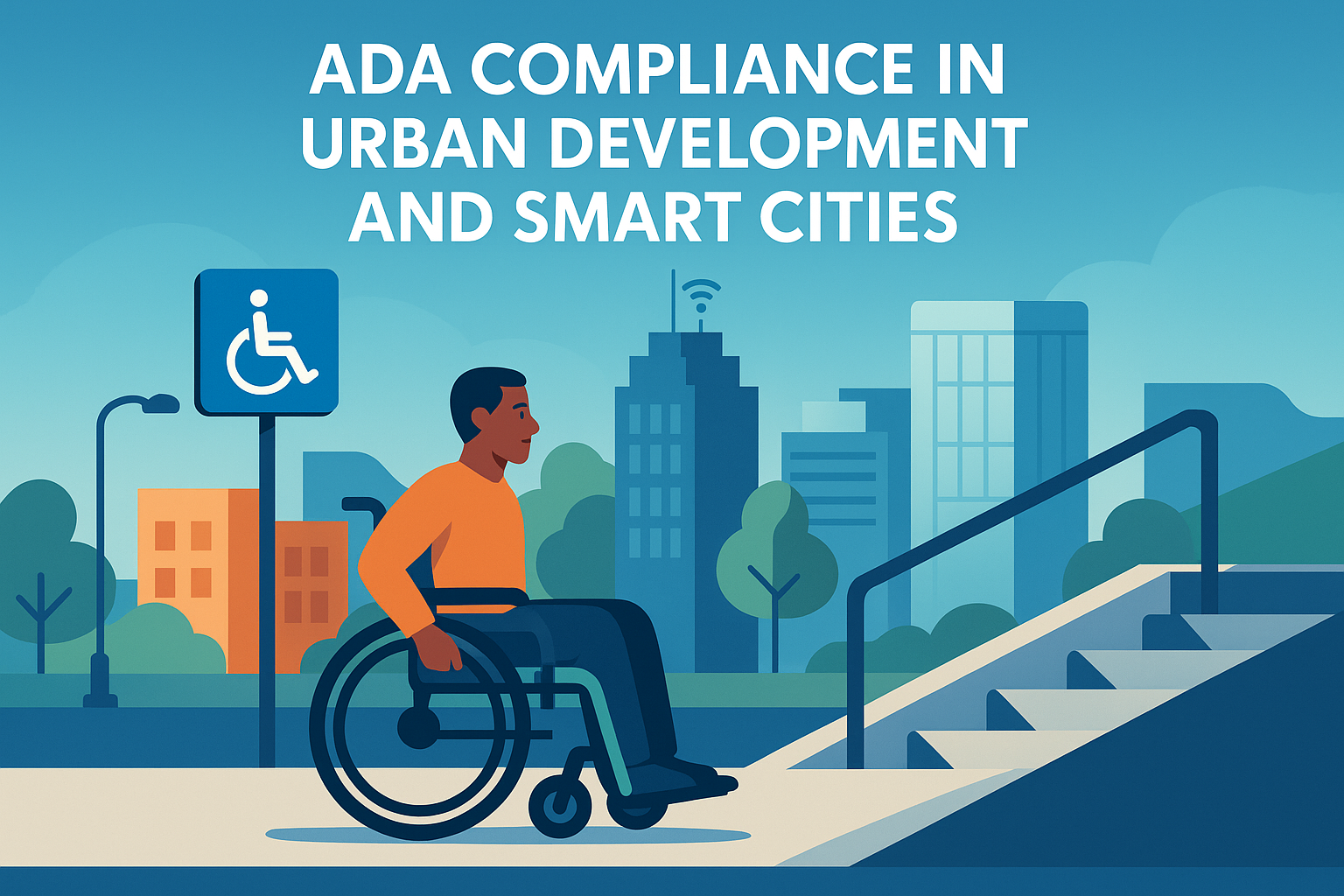
In recent years, urban development and the evolution of smart cities have gained significant momentum, driven by technological advances and the increasing need for sustainable living environments. At the heart of this transformation lies a critical consideration: ensuring compliance with the Americans with Disabilities Act (ADA). ADA compliance plays a vital role in urban development, as it mandates accessible environments that cater to all individuals, regardless of their physical abilities. Adhering to these standards is not just a legal obligation but a moral imperative, ensuring inclusivity and equal access for everyone, including those with disabilities. Doing so creates communities that are equitable, inviting, and future-proofed by design. In the fast-evolving realm of smart cities, incorporating ADA principles can drive innovation and lead to more robust, user-centered developments.
The Significance of ADA Compliance in Urban Development
ADA compliance in urban development is significant because it ensures that cities and communities are accessible and inclusive. The regulations set forth in the Americans with Disabilities Act require that public spaces, transportation systems, and facilities are usable by individuals with disabilities. This directive influences how cities are designed and built, emphasizing accessibility features such as ramps, elevators, visual and tactile guides, and auditory signals.
Take, for example, the redesign of public transportation systems in major cities like New York and San Francisco. These cities have invested in accessible subway and bus systems, incorporating elements such as audio announcements, Braille signage, and elevators at subway stations, thus allowing individuals with physical or sensory limitations to navigate the city independently. By prioritizing ADA compliance, urban planners and developers create spaces where everyone can participate fully in public life, regardless of their abilities.
Implementing Technology to Enhance Accessibility
In an age where technology is rapidly advancing, urban areas have the unique opportunity to leverage innovation to boost accessibility. Smart city technology can play an integral role in enhancing ADA compliance by offering adaptive solutions that address specific needs. For instance, IoT (Internet of Things) applications can be used to create smart buildings with automatic doors, lighting controls, and voice-activated systems that cater to individuals with mobility or sensory impairments.
An inspiring example of technology-driven accessibility is the city of Singapore, which has implemented a range of smart solutions, such as smart traffic signals that adjust crossing time based on pedestrian speed, thus ensuring safer passage for individuals with disabilities. With a commitment to integrating technology into urban infrastructure, developers can design environments where technological assistance directly supports ADA compliance, enriching the quality of life for people with diverse abilities.
Real-World Applications: Retrofitting Existing Infrastructure
A critical aspect of addressing ADA compliance involves retrofitting existing infrastructure, as not all urban environments are developed anew. This process is crucial for older cities with historical buildings and legacy structures. Retrofitting involves updating facilities to meet current accessibility standards without compromising historical or architectural integrity.
Consider the city of Boston, where historical preservation and modern accessibility needs coexist. Boston has undertaken significant investments to retrofit its public buildings, incorporating features like wheelchair-accessible ramps and elevators while maintaining the character of its historic architecture. Through thoughtful design and planning, urban areas can achieve ADA compliance in existing structures, making them comfortable and accessible for all city residents and visitors.
Smart City Planning: Balancing Accessibility and Innovation
Planning a smart city requires a balanced approach that considers both cutting-edge technologies and the practical needs of all inhabitants, including individuals with disabilities. Effective smart city planning involves designing digital and physical infrastructures that are accessible from the onset, rather than as afterthoughts.
Stockholm, Sweden, sets an exemplary model in smart city planning, where accessibility is seamlessly integrated with technological progress. The city’s commitment to sustainability and inclusivity is embodied in its eco-districts, which offer a range of accessible public transport options and smart solutions, such as connected public service displays that provide real-time information in multiple formats. By embedding ADA compliance within the core of urban planning, cities can ensure sustainable growth that benefits everyone.
The Role of Policy and Collaboration in Enhancing Accessibility
Policy makers, urban planners, and developers must work collaboratively to create policies that enforce and encourage ADA compliance. Legislation is pivotal in setting the standards and expectations for accessibility in urban development, providing clear guidelines on how to implement these changes effectively.
| Entity | Role in ADA Compliance | Example Initiative |
|---|---|---|
| City Councils | Enact local regulations and provide funding for accessibility projects. | Boston’s Accessibility Retrofit Program |
| Urban Planners | Design inclusive city layouts and enforce ADA standards in new developments. | San Francisco’s Accessible Streets Plan |
| Developers | Implement ADA features in construction and renovation projects. | New York’s Subway Accessibility Projects |
Successful initiatives require the engagement of multiple stakeholders, from government bodies to private sector developers, to create a shared vision for inclusive urban environments. These partnerships enable the pooling of resources and expertise, leading to innovative solutions that address the diverse needs of urban dwellers with disabilities.
Addressing the Future: Continuous Improvement in Accessibility
Ensuring ADA compliance in urban development is an ongoing process that requires continuous attention and adaptation to evolving technological and societal trends. Cities must remain proactive in assessing the accessibility of their infrastructure and services, seeking feedback from individuals with disabilities and advocacy groups to refine and enhance their approach.
Copenhagen, Denmark, illustrates an excellent model of future-focused accessibility planning, where the city regularly evaluates its public spaces and services to make necessary improvements. Through public consultations and feedback mechanisms, the city adapts its offerings to meet the changing needs of its inhabitants, ensuring that accessibility is not just a one-time achievement but a sustained commitment.
Concluding Thoughts: Embracing Accessibility for a Better Future
In conclusion, addressing ADA compliance in urban development and smart cities is more than a legal requirement—it is a crucial step toward creating inclusive, equitable environments that cater to all residents. The integration of accessibility principles into urban planning ensures that everyone, regardless of physical ability, can participate fully in public life. This approach is not only beneficial to individuals with disabilities but enriches the entire community by fostering a culture of inclusivity.
As urban areas continue to grow and evolve, stakeholders must prioritize ADA compliance, leveraging technology and innovative design to build cities that are truly accessible. By committing to these principles, cities can pave the way for a future where accessibility and innovation go hand in hand, creating environments that are welcoming and equitable for all. We must each play our part—whether as policymakers, developers, or citizens—to champion accessibility and move decisively towards this shared vision. Begin by advocating for inclusive policies in your own community, supporting initiatives that promote ADA compliance, and collaborating with others to build cities that are accessible and welcoming to everyone.
Let us embrace this challenge and work together to shape the future of urban development, ensuring that it is inclusive, sustainable, and empowering for all.
Frequently Asked Questions
1. What is ADA compliance, and why is it important in urban development and smart cities?
ADA compliance refers to the adherence to the Americans with Disabilities Act, which mandates that public spaces, facilities, and services are accessible to individuals with disabilities. The significance of ADA compliance in urban development and smart cities cannot be overstated. As we witness the rapid evolution of urban areas into smart cities, it’s imperative that these environments cater to all individuals, including those with disabilities. This inclusivity not only enhances the quality of life for people with disabilities but also enriches the community as a whole.
Ensuring ADA compliance is important because it promotes equality and accessibility in urban environments. This means providing features like ramps, wider doorways, elevators, tactile pathways, and audible signals at crosswalks, which help individuals with various disabilities navigate public spaces more safely and efficiently. Such considerations make smart cities truly smart by integrating technology and design to cater to the diverse needs of their inhabitants. Ultimately, ADA compliance in urban development is about creating inclusive spaces where everyone can thrive, contributing to a more equitable and vibrant community.
2. How does technology aid in ensuring ADA compliance in smart city planning?
Technology plays a transformative role in ensuring ADA compliance within smart city planning. One of the key ways technology aids in this is through the integration of smart, assistive technologies that enhance accessibility. For example, smart sensors and Internet of Things (IoT) devices can be used to monitor traffic patterns and pedestrian movement, adjusting traffic signals and pedestrian crossings in real-time to accommodate people with varying mobility needs.
Moreover, technology like smart mapping and navigation applications can be tailored to provide personalized routes for individuals with disabilities, guiding them through the most accessible paths in a city. These applications can highlight features such as wheelchair-accessible entrances, nearby elevators, or audio-assisted street crossings. Additionally, advances in artificial intelligence and machine learning can be employed to continually improve these systems, learning from user data to better predict and address accessibility challenges.
In essence, technology not only facilitates ADA compliance but also paves the way for a more inclusive and responsive urban infrastructure. By actively incorporating these advanced technological solutions, smart cities can ensure that ADA principles are at the forefront of their design and operation.
3. What are some challenges faced by cities in achieving ADA compliance, particularly in older urban areas?
Achieving ADA compliance in older urban areas presents several distinct challenges. One significant hurdle is the existing infrastructure, which may not have been designed with accessibility in mind. Many older buildings and public spaces were constructed before ADA regulations were established, meaning substantial modifications are necessary to make them accessible, often at a considerable financial cost.
Another challenge lies in the physical constraints of historic architecture. Buildings with narrow doorways, steep staircases, or limited space can be difficult to retrofit without compromising historical integrity or functionality. Additionally, complex bureaucratic processes and funding shortages can pose obstacles, delaying necessary upgrades or creating inconsistencies in the application of ADA standards.
Moreover, there is often a lack of awareness or understanding of the specific requirements of ADA compliance among stakeholders involved in urban development projects. This can lead to incomplete or inadequate implementation of necessary features. To address these challenges, cities must engage in strategic planning, ensuring that ADA compliance is integrated from the outset of development projects and that adequate funding and resources are allocated to retrofit older areas. Collaboration with disability advocates and accessibility experts can also provide valuable insights and guidance to overcome these obstacles effectively.
4. How do smart cities integrate universal design principles to promote ADA compliance?
Smart cities leverage universal design principles to advance ADA compliance by ensuring that urban environments are accessible and usable by all people, regardless of their abilities or disabilities. The concept of universal design goes beyond ADA compliance by promoting inclusivity as a core element of planning, offering solutions beneficial to everyone, not just those with disabilities.
In practice, this means incorporating features like curb ramps, tactile paving, accessible public transit systems, and multi-sensory navigation aids into city infrastructure. Smart cities often utilize technology to enhance these features; for example, deploying digital wayfinding kiosks with voice activation and braille displays to assist those with visual impairments.
Furthermore, smart urban spaces may implement flexible design concepts allowing for easy adaptation to technological advancements and changing needs. These range from adjustable seating in public areas to intelligent traffic systems that adapt to pedestrian needs. Through these efforts, smart cities prioritize inclusivity and accessibility as part of their broader goal to create environments that are not just technologically advanced but also equitable and user-friendly for all residents.
5. How can municipalities ensure they are effectively addressing ADA compliance in their urban development plans?
Municipalities can ensure effective ADA compliance in urban development plans by committing to a proactive and comprehensive approach. First, in the planning stages, it’s essential to involve a diverse group of stakeholders, including persons with disabilities, accessibility experts, urban planners, architects, and policymakers. This ensures that diverse perspectives are considered, and accessibility needs are comprehensively addressed.
Municipalities should adopt and enforce stringent but practical accessibility guidelines that adhere to ADA standards while promoting innovation and best practices. Regular training and workshops can be instrumental in keeping urban development teams informed about the latest ADA requirements and technologies that support compliance.
Additionally, municipalities should implement accessibility audits and assessments to identify potential shortcomings in existing infrastructure. This allows them to prioritize renovations and upgrades that enhance accessibility. Allocating dedicated funding for accessibility projects and establishing accessible design and technological advancement metrics will also aid in long-term planning.
Finally, fostering a culture of inclusion and commitment to ADA compliance across all departments will reinforce the importance of accessibility in every aspect of urban development. By making ADA compliance a priority, municipalities not only meet legal obligations but also create dynamic, inclusive communities that serve as models for equitable urban living.


