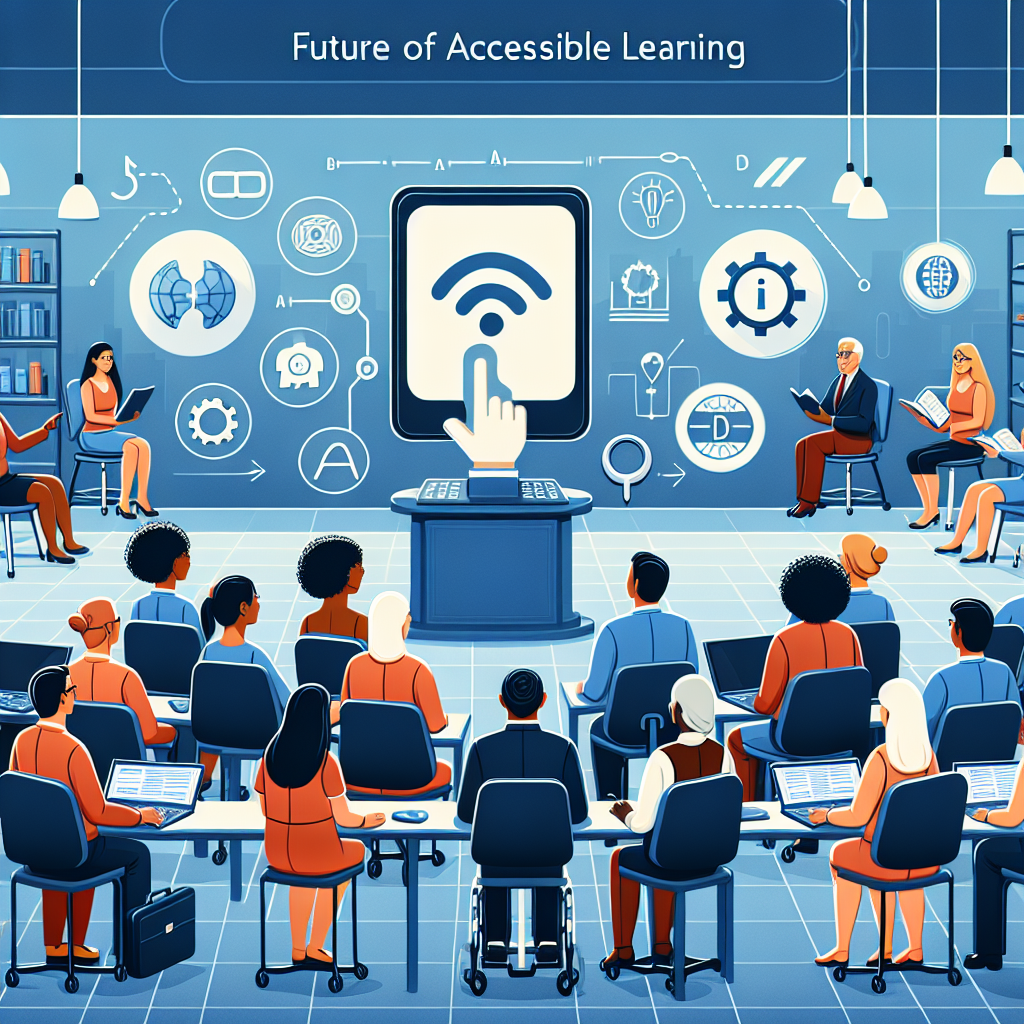
The Americans with Disabilities Act (ADA), enacted in 1990, symbolizes a pivotal commitment to ensuring equal access and opportunities for all individuals, including the realm of education. In today’s rapidly evolving educational landscape, the ADA’s role grows ever more crucial, intersecting with technology, pedagogy, and policy in novel ways. As educators, policymakers, and technologists navigate these changes, the future of ADA in education becomes a topic of intense interest and speculation. Will technological advances enhance or complicate accessibility efforts? How will educational institutions adapt to increasingly diverse needs? This comprehensive exploration aims to unpack the trends shaping ADA’s future in education and offer informed predictions about what lies ahead. By understanding the interplay between existing regulations and emerging innovations, stakeholders can better equip themselves to create more inclusive educational environments.
The notion of accessibility has broadened significantly since the ADA’s inception. Originally concentrated on physical access, today’s interpretation includes digital spaces—an expansion driven by the rapid digitization of education. Online learning environments, digital textbooks, and virtual classrooms exhibit both potential and challenges for ADA compliance. Furthermore, demographic shifts, including increased neurodiversity awareness and the recognition of mental health needs, are reshaping educational accessibility paradigms. This context necessitates a forward-looking examination of ADA in education: a landscape defined by technological transformation, inclusivity-driven pedagogy, and evolving student demographics.
As we delve into this subject, our approach will be multifaceted. First, we’ll assess current accessibility trends, illustrating how technological advancements coexist with ADA principles. We will then examine how progressive policies are responding to diversity pressures within educational settings. This analysis will not only cover physical campuses but also extend to digital platforms that are redefining how students interact with educational content. Finally, predictions about the ADA’s future trajectory in education will be grounded in today’s trends, underscoring the need for proactive and adaptive strategies. Through this lens, we aim to articulate a clear vision for the ADA’s future role, emphasizing its continued relevance as education systems strive for inclusivity and equity.
Trends in ADA and Technology Integration in Education
One of the most influential trends impacting the ADA’s role in education is the integration of technology. Innovations in digital tools are redefining how educational content is delivered and received, creating expansive opportunities for accessibility. For instance, closed captioning and transcripts have become standard practices on educational video materials, which benefit not only students who are deaf or hard of hearing but also those who use English as a second language or prefer reading to listening. These tools exemplify how technology can simultaneously achieve ADA compliance and enhance broader user experiences.
Moreover, assistive technologies are continuously evolving, with applications such as text-to-speech software, screen readers, and voice recognition tools becoming increasingly sophisticated. These technologies have greatly enhanced learning experiences for students with disabilities, allowing them to engage with content more independently and interactively. The convergence of artificial intelligence (AI) into these tools holds even more promise. AI can personalize learning experiences, adapting educational content to suit individual needs and learning styles, thereby dynamically supporting ADA objectives.
However, as educational technologies evolve, so do their complexities. Some digital platforms may inadvertently introduce new accessibility challenges, such as visual content that isn’t compatible with screen readers or interactive applications that rely on precise motor skills. This paradox underscores the necessity of developing digital solutions in tandem with comprehensive ADA guidelines. Educational institutions and technology providers must work collaboratively to ensure that innovations remain inclusive and accessible from their inception.
Furthermore, as remote and hybrid learning models become more prevalent, ensuring ADA compliance in these environments poses additional challenges. The shift towards online learning, accelerated by circumstances such as the COVID-19 pandemic, calls for robust digital accessibility standards. Virtual classrooms must include capabilities for real-time accommodations, such as live captioning and alternative communication methods, to meet the diverse needs of learners across different settings.
Policy Responses and Institutional Strategies
Policy evolution is responding to the increasing calls for educational inclusivity. The ADA itself serves as a critical legal framework that enforces accessibility, but educational institutions also need nuanced policies tailored to specific environments. Policies are increasingly recognizing the importance of Universal Design for Learning (UDL), a principle of curriculum development that provides all individuals equal opportunities to learn. UDL emphasizes flexibility in teaching methods and accessibility, encouraging the use of multiple means of engagement, representation, and expression in education.
Many educational institutions are adopting these UDL principles, facilitating broader accessibility in curriculum design and delivery. Such strategies not only meet ADA requirements but also enhance the overall educational experience for all students, regardless of their abilities. For example, by incorporating various teaching methods and resources, educators can better cater to different learning preferences and cognitive abilities present in the classroom.
Moreover, the allocation of resources towards professional development for educators is gaining traction. Training educators on how to effectively employ accessibility tools, understand diverse learning needs, and implement inclusive teaching practices is becoming recognized as a priority. This proactive approach ensures that educational staff are equipped to recognize and address accessibility needs effectively, creating more supportive learning environments.
In addition, policy developments are encouraging partnerships between educational institutions and technology providers. Collaboration is crucial to creating inclusive digital learning platforms and resources. Through joint ventures, stakeholders can ensure technology solutions are accessible, scalable, and sustainable. By pooling resources and expertise, these partnerships can pave the way for innovations that uphold ADA standards while fostering educational excellence.
Educational Demographics and Neurodiversity
Another compelling trend influencing ADA’s future in education is evolving student demographics and the increasing recognition of neurodiversity. Today, education systems are confronting the reality that traditional teaching methodologies might not address the diverse spectrum of learners adequately. Neurodiversity, which reflects the natural variations in the human brain related to sociability, learning, attention, mood, and other mental functions, is fundamentally altering how educational accessibility is perceived.
Educational institutions are starting to acknowledge conditions such as autism, dyslexia, ADHD, and other cognitive differences as part of the neurodiverse spectrum. This understanding prompts a reevaluation of teaching strategies and accessibility measures, aligning them more closely with ADA’s principles. Schools and universities are increasingly integrating supports and accommodations specifically tailored to neurodiverse learners, such as alternative testing environments and personalized learning paths.
With growing awareness and advocacy, more educational facilities are embracing inclusive education models that incorporate neurodiversity into their teaching. These models strive for environments where students’ unique needs are not only accommodated but leveraged as strengths. This approach fosters a culture of acceptance and inclusivity, aligning with broader societal shifts toward diversity.
Additionally, peer programs that foster understanding and collaboration between neurotypical and neurodiverse students are gaining popularity. These programs encourage empathy and mutual learning, breaking down barriers and promoting inclusivity at a grassroots level. As these demographics continue to influence educational landscapes, ADA’s application will increasingly encompass neurodiversity considerations, broadening its scope and efficacy.
Predictions for the Future of ADA in Education
Based on current trends, several predictions can be made regarding the future role of ADA in education. First, the influence of technology will likely intensify, with AI and machine learning providing unprecedented personalization in learning environments. These technologies could dynamically adjust content to accommodate various disabilities, providing real-time assistance tailored to individual needs. While promising, such advancements will require rigorous oversight to ensure they are implemented in ways that align with ADA standards.
The importance of cross-sector collaboration will also grow. Educational institutions will increasingly partner with technology companies, advocacy groups, and policymakers to create holistic solutions that address accessibility comprehensively. This collaboration will be essential in maintaining high compliance standards and promoting innovation that prioritizes accessibility from the ground up.
Educational policy will continue evolving, with a greater emphasis on inclusive practices and flexibility. The integration of UDL principles across broader educational contexts will likely become the standard, encouraging a shift from disparate accommodations to cohesive inclusivity strategies. This shift represents a proactive approach, ensuring that the needs of students with disabilities are considered throughout the educational design process.
Additionally, an emphasis on training will become crucial. Institutions will need to invest in ongoing professional development to keep educators and support staff informed about the latest tools, strategies, and compliance requirements. Such training programs will empower educators to implement ADA-compliant practices effectively, benefiting all learners.
Lastly, as society continues to recognize and advocate for neurodiversity, educational systems will adapt by embracing more inclusive teaching models and supportive environments. These adaptations will likely accelerate, driven by increased societal awareness and evolving educational values that find strength in diversity.
Conclusion
The future of ADA in education is rich with possibilities and challenges. As this comprehensive exploration highlights, technology, policy, and societal shifts are intertwining to redefine educational accessibility. In the coming years, navigating the complexities of digital hallways, diverse student needs, and evolving teaching practices will require innovative thinking, collaboration, and unwavering commitment to ADA’s foundational principles.
Embracing these evolving trends necessitates an inclusive mindset, viewing ADA not just as a compliance obligation but as an opportunity to enrich educational experiences for all students. The role of educators, policymakers, and technologists will be pivotal in shaping ADA’s future, ensuring that every learner has the resources and opportunities to succeed. By prioritizing accessibility in both physical and digital spaces, educational institutions can spearhead an inclusive movement that’s firmly rooted in equity and opportunity.
Ultimately, the ADA’s evolving role in education is a testament to broadening inclusivity, underscored by technological innovation and policy evolution. The emphasis on collaboration across sectors will be crucial as stakeholders strive to craft accessible environments that uphold the principles of equity embedded in the ADA. Through these joint efforts, the future of education promises to become a more inclusive, accepting, and equitable space for all.
Frequently Asked Questions
1. What is the ADA and how does it apply to education?
The Americans with Disabilities Act (ADA) is a landmark civil rights law enacted in 1990. Its primary goal is to ensure that individuals with disabilities have equal access to opportunities and participate fully in all aspects of life – including education. In the educational realm, the ADA mandates that schools, colleges, and universities receive federal funding need to provide reasonable accommodations to access educational programs and activities. This might include wheelchair ramps, accessible software, or aids and services such as sign language interpreters.
Over the years, as educational environments have rapidly evolved, especially with the advent of digital learning materials and remote education tools, the application of ADA in education has become significantly important. The ADA ensures that as these new educational technologies and platforms emerge, they need to be accessible to all students, regardless of their physical abilities.
It’s not just about physical accessibility anymore; it extends into the digital realm and challenges institutions to innovate and create inclusive policies and curricula that meet the diverse needs of all students. The ADA in education is increasingly becoming about ensuring comprehensive accessibility – from physical spaces to digital content and learning environments.
2. How is technology influencing the future of ADA compliance in education?
Technology is a double-edged sword when it comes to ADA compliance in education. On one hand, it has provided incredible opportunities to enhance accessibility. For instance, assistive technologies like screen readers for students with visual impairments, voice-to-text tools for students with hearing impairments, and the growing adoption of virtual reality to create immersive learning experiences have opened new avenues for inclusive education.
On the other hand, the rapid pace of technological advancement often outstrips the ability of educational institutions to ensure these tools and online platforms remain accessible. Challenges arise when new systems are implemented without considering the accessibility needs of all students. Institutions must be proactive in their approach to integrating technology, ensuring that new tools are ADA-compliant right from the development stage.
Looking to the future, the continued collaboration between educators, technologists, and policymakers is essential. By sharing knowledge and experiences, stakeholders can influence the creation of technologies that prioritize accessibility, ensuring that no student is left behind in this digital age.
3. What role do educators play in implementing ADA in today’s changing educational landscape?
Educators are at the forefront of implementing ADA requirements, as they interact with students and understand their individual needs firsthand. In today’s educational landscape, educators must go beyond just complying with existing regulations; they need to advocate for and adopt inclusive practices that anticipate and address accessibility barriers proactively.
This means educators need to be well-versed in the principles of universal design for learning (UDL), which encourages the creation of teaching materials and systems that meet the needs of a diverse set of learners. Educators should also receive ongoing training on new technologies that can aid students with disabilities, understanding how to incorporate them into their teaching practices effectively.
As influencers in the educational system, educators can push for necessary resources and accommodations, ensuring that the learning environment remains equitable. By fostering a classroom atmosphere that values diversity and inclusion, educators help lay the groundwork for an educational experience that complies with ADA while also enriching the lives of all their students.
4. What future trends are expected in ADA policy affecting education?
As society becomes more aware of the diverse needs of students, ADA policies in education are expected to evolve towards greater inclusivity and broader definitions of accessibility. One major expected trend is the increased specificity in policies regarding digital accessibility. As more educational institutions adopt online learning platforms and digital resources, the importance of ensuring these tools are designed with accessibility in mind is paramount.
Moreover, there’s a growing trend toward personalized learning experiences driven by big data and analytics. These technologies can help educators identify specific needs and tailor learning experiences to accommodate individual disabilities, thereby aligning with ADA compliance through a more data-driven approach.
Another expected trend is stronger enforcement measures and incentives for compliance. We anticipate that policymakers will implement stricter regulations and potential funding opportunities to motivate institutions to prioritize accessibility, encouraging them to go above the minimum requirements set by ADA.
5. How do policymakers contribute to shaping the future of ADA in education?
Policymakers play a crucial role in defining and enforcing ADA compliance in the educational sector. Their contributions involve crafting legislation that reflects the evolving needs of students with disabilities, ensuring that educational environments are equitable and inclusive.
One of the vital aspects of the policymakers’ role is to stay informed about the latest technological advancements and pedagogical strategies that can impact accessibility. By understanding these developments, they can create adaptive regulations that anticipate future challenges rather than just responding to existing issues.
Additionally, policymakers can drive change by allocating resources and funding towards innovative solutions that promote accessibility. By championing initiatives that foster collaboration between educational institutions and tech developers, policymakers can help pave the way for cutting-edge, ADA-compliant educational environments. Overall, their foresight and willingness to enact progressive policies are fundamental in shaping an inclusive future for all students.