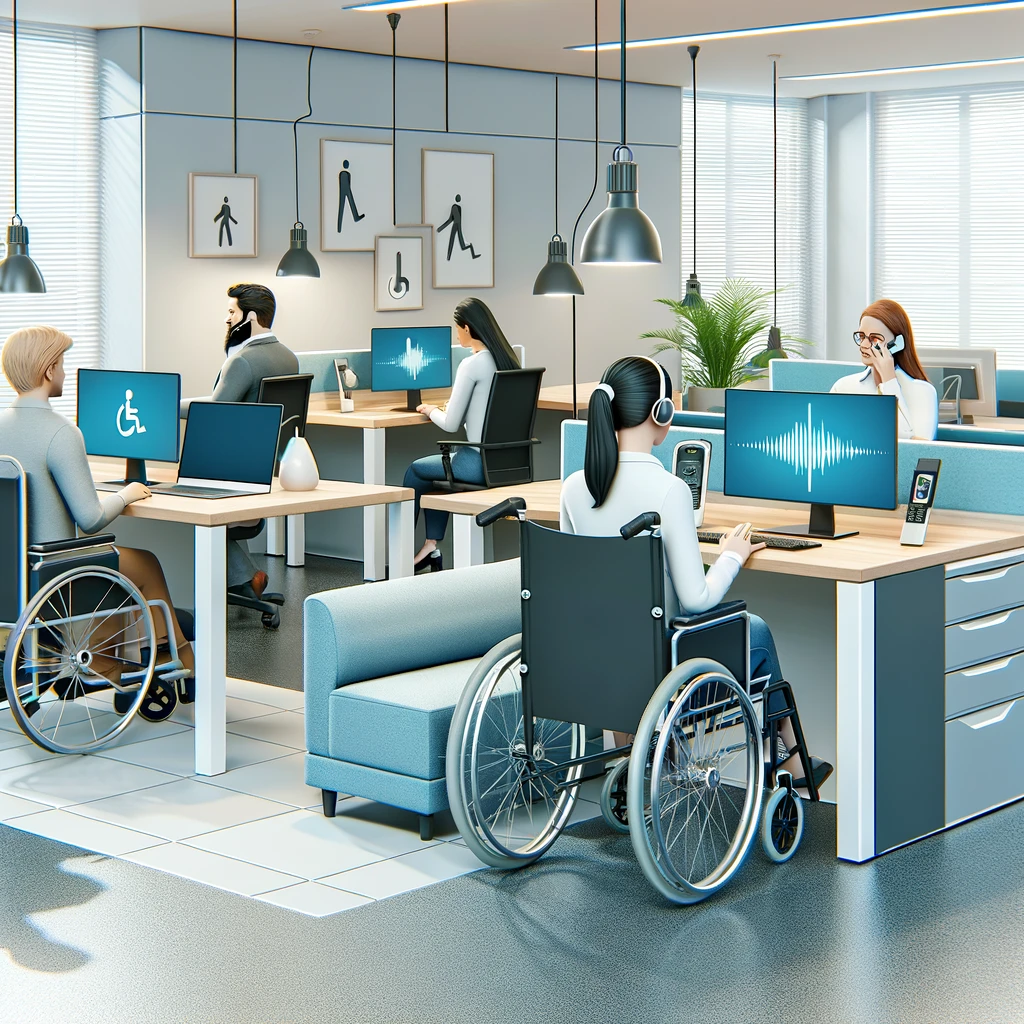
The Americans with Disabilities Act (ADA), enacted in 1990, represents a landmark in advancing civil rights for individuals with disabilities. Its fundamental goal is to ensure that people with disabilities receive the same opportunities as everyone else, catalyzing an inclusive society where accessibility is not a mere afterthought but woven into the very fabric of daily life. Early milestones of the ADA brought immediate improvements, especially in areas such as employment, public transportation, and public accommodations. The ADA has since become a crucial tool in dismantling physical barriers and offering necessary accommodations. However, as society and technology continue to evolve, the ways we think about and implement accessibility must also adapt. In this article, we will explore the future of accessibility through the lens of the ADA, examining the advancements and innovations that promise to make the world even more inclusive.
Technology-Driven Innovations
As we move further into the 21st century, technology plays an increasingly pivotal role in our lives. This change is particularly significant for people with disabilities, as new technologies can greatly enhance their ability to interact with the world. Innovations like voice recognition software, screen readers, and assistive devices equipped with artificial intelligence have already transformed countless lives.
For instance, screen reader technologies have evolved from simple text-to-speech programs to highly sophisticated systems capable of interpreting complex web content, including images and interactive elements. Additionally, AI-driven personal assistants like Siri, Alexa, and Google Assistant provide hands-free control over smart home environments, making everyday tasks more accessible to individuals with physical impairments. As these technologies continue to advance, they hold immense potential to bridge existing accessibility gaps. Augmented Reality (AR) and Virtual Reality (VR), for example, are not just the future of entertainment but also potent tools for creating immersive learning environments tailored to individuals with various disabilities. By facilitating interactions in simulated environments, these technologies can provide equal educational opportunities and employee training irrespective of physical limitations.
Employment Accessibility
One of the most significant arenas where the ADA has made strides is employment. Nevertheless, gaps remain, particularly in how organizations understand and facilitate digital accessibility. The experience of applying for jobs, completing training modules, and accessing internal company platforms can still be complicated for people with disabilities. Future advancements will likely see heightened integration of accessibility features from the ground up in digital platforms.
Companies like Microsoft and Google have started setting benchmarks by embedding such features into their products, ensuring that functionalities such as voice commands, alternative text for images, and customizable user interfaces are standard across all devices. Beyond software, advancements in prosthetics and wearable technologies are offering unprecedented levels of independence to people with disabilities. From robotic exoskeletons that aid in mobility to wearable devices that translate sign language into text, the future of accessibility in the workplace looks promising. For businesses, this means not only a moral but also a competitive edge; by investing in these evolving technologies, companies can harness a broader pool of talent and foster an inclusive work culture.
Legal Developments and Revisions
As impactful as the ADA has been, laws and guidelines must adapt to keep pace with technological and societal changes. While the foundation of the ADA remains strong, revisions and updates can ensure it remains relevant. For example, there has been rising debate over how digital accessibility should be regulated. As more interactions move online, from shopping to learning, ensuring that these platforms are accessible is crucial.
Recent developments have seen the U.S. Department of Justice reaffirm the ADA’s application to websites, requiring that they be just as accessible as physical locations. However, the complexities of digital accessibility are far different from those of physical spaces. Therefore, more specific legislation and guidelines are necessary to address these unique challenges comprehensively.
Education and Training
Education is another critical area where the future of accessibility is bound to have a significant impact. The transition from purely physical classrooms to more digital and hybrid learning environments presents both challenges and opportunities. For instance, online education platforms must ensure they are accessible to all students, irrespective of their disabilities. Innovative learning tools like adaptive software can create personalized learning experiences that adapt to the user’s needs. These tools are instrumental in breaking down barriers in subjects that require visual or auditory learning, such as math and language subjects.
The ongoing development in this area aims not only to comply with ADA regulations but to reimagine the entire learning experience to be inherently inclusive. Future educational environments will likely see widespread use of technology like 3D printing for tactile learning aids, automated transcription services for real-time captioning, and more interactive, accessible AR/VR educational tools. Furthermore, teacher training will need to evolve, incorporating these new technologies and accessibility considerations as standard practice.
The Built Environment
The physical world still presents significant challenges for individuals with disabilities, and thus, continued innovation in this area is paramount. Universal design principles, which advocate for designing products and environments to be usable by all people to the greatest extent possible without the need for adaptation, provide a solid foundation. The future is likely to see even more intelligent and adaptive physical environments.
Smart buildings, which use a range of technologies to manage internal building systems automatically, can contribute significantly to accessibility. Sensors that detect a person’s presence and adjust lighting, heating, or even elevator settings accordingly can make navigating public and private spaces easier for everyone. Moreover, urban planning and public transportation systems will continue to evolve with accessibility in mind. Future infrastructure projects will likely incorporate more advanced planning tools that simulate the experiences of individuals with disabilities, identifying potential issues before they arise.
Conclusion
The ADA has undeniably revolutionized the landscape of accessibility in the United States, setting a global benchmark for inclusion and equality. As we look to the future, the challenge lies not only in maintaining these standards but elevating them through continuous innovation and advocacy. Emerging technologies offer unprecedented opportunities to bridge existing accessibility gaps, providing more equitable access to all facets of life – from education and employment to digital platforms and public spaces.
However, it is crucial to remember that technology alone cannot drive this change. Comprehensive updates to legal frameworks, organizational practices, and public awareness are equally vital. The future of accessibility will be forged through a collective effort. Individuals, businesses, lawmakers, and technologists must work in unison to ensure that inclusion is a fundamental consideration, not an afterthought. By embracing this collaborative spirit, we can look forward to a world where accessibility is inherent and universal, embodying the true essence of the ADA.
Frequently Asked Questions
1. What are some recent innovations in accessibility technology and how do they align with the ADA?
The realm of accessibility technology has witnessed tremendous innovation, bringing a new era of inclusivity. Innovations like speech-to-text applications, advanced screen readers, and sophisticated mobility aids have emerged, all aiming to provide individuals with disabilities greater autonomy. For instance, Apple and Google’s voice-activated assistants have paved the way for hands-free technology, which is incredibly beneficial for people with physical impairments. These technologies align with the ADA’s mission by ensuring the inclusion of disabled individuals in the digital and physical worlds, breaking down the barriers that once limited their opportunities. The ADA has been a driving force in encouraging companies to pursue accessibility in their products and services, pushing innovation forward to create equal opportunities for everyone.
2. How has the ADA influenced digital accessibility in recent years?
In recent years, the ADA has significantly influenced how digital platforms consider and implement accessibility features. Although the ADA was enacted before the rise of the internet, its principles have been applied to ensure digital accessibility. This has led to improvements in website design, such as keyboard navigation for those who cannot use a mouse or the integration of alternative text for images to aid screen readers. The ADA’s impact is also evident in the legal arena, where several cases have set precedents for requiring businesses to make their websites accessible. As a result, companies are increasingly integrating accessibility into their digital presence from the ground up, recognizing that an inclusive digital experience is not just a legal obligation but also a moral imperative.
3. In what ways might future innovations continue to enhance accessibility and inclusion under the ADA framework?
Future innovations promise to further enhance accessibility in ways we are only beginning to envision. Technologies such as artificial intelligence, machine learning, and the Internet of Things (IoT) hold potential for groundbreaking improvements. For instance, AI-powered vision assistance can describe environments in real-time for visually impaired individuals, while IoT-connected devices can automate home accessibility features such as lighting and temperature control. These emergent technologies support the ADA’s goal by enhancing independence and inclusivity, allowing for tailoring of experiences to individual needs. As technology evolves, it’s essential these innovations consider all aspects of accessibility, keeping in perspective not only the parameters set by the ADA but also the lived experiences and feedback from the disability community itself.
4. What are the challenges in implementing accessibility innovations while remaining compliant with ADA guidelines?
Despite the vast potential of accessibility innovations, several challenges exist in implementing these while ensuring compliance with ADA guidelines. One major hurdle is the pace of technological advancement, which sometimes outstrips the legal and regulatory frameworks that are intended to guide and govern them. This can create a lag where the ADA may not immediately cover new technologies, leading to uncertainty or inconsistent applications of the law. Moreover, understanding and interpreting what constitutes reasonable accommodation can vary, and businesses may struggle to keep up with these demands. It’s crucial to foster collaboration between tech developers, legal experts, and the disability community to establish best practices and maintain compliance as innovation progresses.
5. How do the principles of universal design play a role in accessibility innovations related to the ADA?
Universal design principles are at the heart of many accessibility innovations and align closely with the goals of the ADA. Universal design involves creating products and environments that are inherently accessible to all individuals, regardless of their abilities or disabilities. This approach not only benefits individuals with disabilities but also enhances the user experience for everyone. For example, features like automatic doors or voice-controlled devices, originally designed to aid those with mobility or other impairments, have broad utility that includes convenience for all users. By prioritizing universal design, developers and businesses can ensure that accessibility is central to product development and infrastructure planning, dismantling the notion that accessibility must be an afterthought. The ADA reinforces these efforts by advocating for an inclusive society that values diversity and equal opportunity at all levels.