The legal battles we face often serve as markers for societal values and the evolution of civil rights. One such pivotal case is Craig v. Masterpiece Cakeshop, which underscores the intricate balance between the Americans with Disabilities Act (ADA) and other civil rights laws. This case gained national attention as it touched upon the intersection of religious freedom and civil rights protections, specifically regarding anti-discrimination laws. Moreover, its significance expanded into discussions about how businesses should navigate these complex legal frameworks. Understanding this case is crucial not only for legal professionals and business owners but also for any citizen intrigued by the dynamic interplay of legislation and individual rights. This article aims to unravel the complexities of this case by delving into the legal arguments presented, the societal implications, and the broader question of how ADA and civil rights can be harmonized in real-world scenarios.
The Core Issue: A Clash of Rights
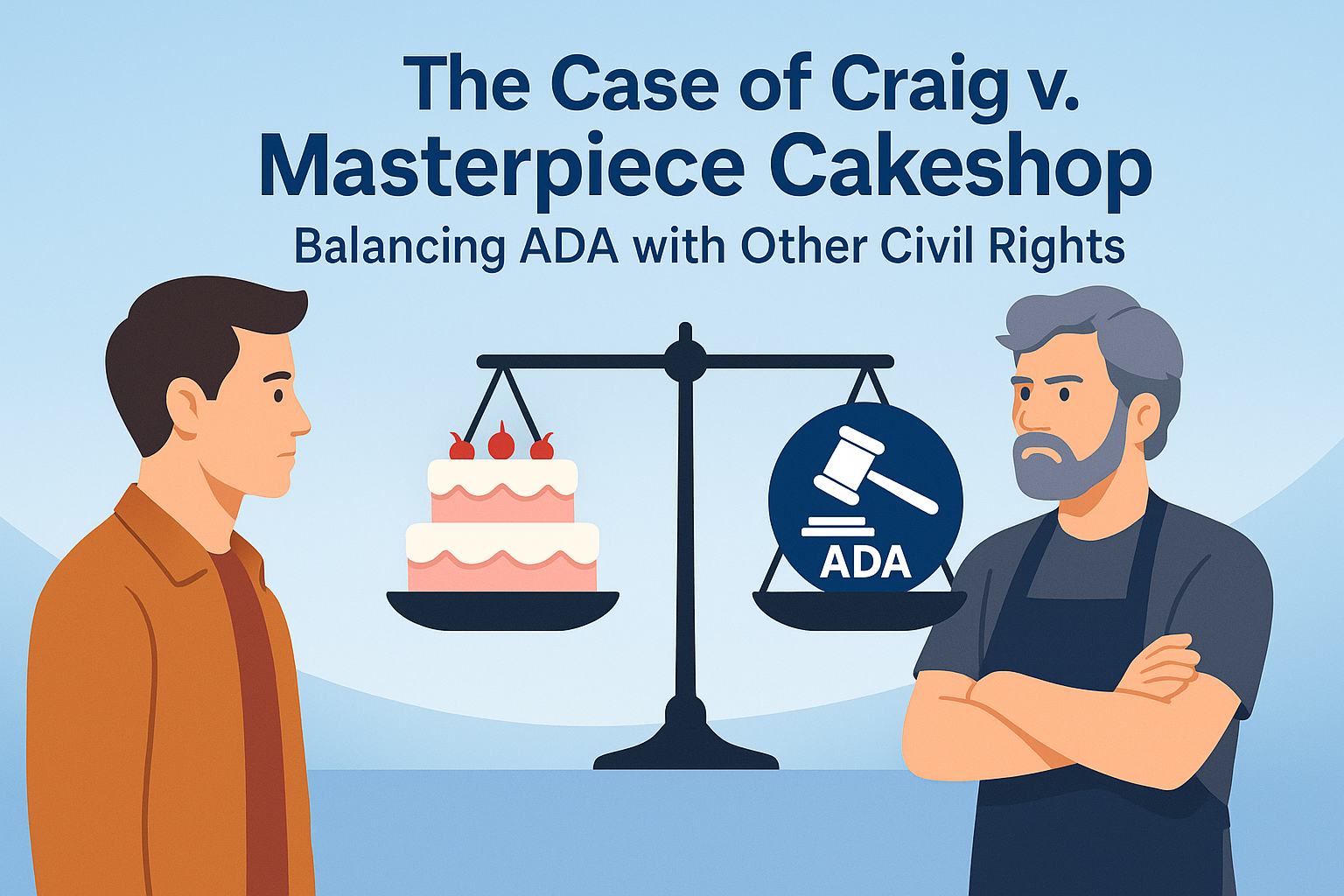
The conflict at the heart of Craig v. Masterpiece Cakeshop revolves around the rights of business owners versus the rights of customers who wish to be served equally, irrespective of their identity. In this case, a Colorado baker refused to create a wedding cake for a same-sex couple citing religious beliefs, thereby setting off a legal battle that sought to reconcile constitutional rights to free speech and religious expression with state anti-discrimination laws. The baker’s stance was that designing a cake is a form of artistic expression that should be protected under the First Amendment. On the other hand, the couple argued that denying them service was a violation of the Colorado Anti-Discrimination Act, which mandates equal service to all customers regardless of race, gender, or sexual orientation. This case raised the question: How do we balance religious freedoms with the rights of individuals to access services equally?
Legislation at Play: ADA and Anti-Discrimination Laws
The Americans with Disabilities Act (ADA) and various anti-discrimination laws share the goal of promoting equality and prohibiting discrimination. While the ADA specifically addresses individuals with disabilities, anti-discrimination laws cover a broader spectrum of characteristics including race, gender, and sexual orientation. The Masterpiece Cakeshop case required courts to weigh these laws against the bakers’ First Amendment claims. In applying the state’s anti-discrimination laws, the courts had to determine whether the act of baking a cake constituted speech, and if it did, whether requiring the baker to create a cake for a same-sex wedding would compel speech contrary to his beliefs. The outcome of this case could potentially impact how ADA arguments are presented in future cases where service refusals are based on claims of religious freedom or personal belief.
Real-World Impact: Businesses and ADA Compliance
For business owners, understanding the implications of Craig v. Masterpiece Cakeshop extends beyond religious freedom debates; it highlights the critical importance of ADA compliance and broader anti-discrimination practices. Many businesses strive to serve diverse communities, but they must also honor their personal and religious beliefs. This case illustrates the legal and reputational risks businesses face when they choose to deny service based on those beliefs. It serves as a reminder that upholding ADA and anti-discrimination laws ensures all customers receive equal treatment. To illustrate this, consider the numerous businesses that have been sued for ADA non-compliance, leading to costly settlements and damaged reputations. This case was not just about a cake; it was an educational moment for all businesses operating in a society where diverse civil rights conventions must be respected simultaneously. In navigating these complex legal landscapes, businesses can either risk litigation or proactively adopt inclusive practices.
| Aspect | Religious Freedom | Civil Rights Compliance | Business Impact |
|---|---|---|---|
| Legal Risk | Lower if claims of expression are upheld | Higher if proven to discriminate | Potential litigation and settlements |
| Reputational Risk | Higher among socially progressive clients | Lower when inclusive policies are embraced | Brand perception affects customer loyalty |
| Operational Strategy | Customized service offerings | Standardized non-discriminatory policies | Balanced approach to avoid alienation |
Court Decisions: Precedents and Implications
The decisions in Craig v. Masterpiece Cakeshop came with a range of opinions from lower courts up to the U.S. Supreme Court. Initially, the Colorado Civil Rights Commission ruled in favor of the same-sex couple, stating that the baker’s refusal violated the state’s public accommodations law. However, when the case reached the Supreme Court, it was noted that the commission had shown hostility towards religion in its judgment process. Ultimately, the Supreme Court ruled narrowly in favor of the baker but did not set a precedent for future cases dealing with similar issues. This ruling emphasized the need for governments to apply civil rights laws in a fair and neutral manner concerning religious beliefs. Importantly, this case underscored how future litigation might aim to address conflicts between religious freedoms and non-discrimination principles by respecting both constitutional and statutory protections.
Looking Beyond: ADA and Emerging Civil Rights Issues
As society progresses, new issues emerge that challenge existing legal frameworks such as the ADA. These developments are not limited to issues of sexual orientation and religion but extend to immigration, workplace diversity, and digital accessibility—a field that the ADA only tangentially covers. How courts interpret existing laws against new societal norms will dictate how businesses adapt their strategies to remain compliant and socially responsible. For instance, digital platforms must ensure ADA compliance by making web content accessible to those with disabilities. These evolving interpretations of the ADA, alongside broader civil rights laws, suggest that future cases like Craig v. Masterpiece Cakeshop will continue to shape the landscape of American business and civil rights.
The Broader Societal Debate
Craig v. Masterpiece Cakeshop opens up a broader societal debate about the role of businesses in upholding civil rights alongside their own expressive freedoms. The case illustrates how legal bounds are often tested when personal beliefs intersect with public services. One argument from civil rights advocates is that public businesses should not have the right to refuse service based on personal belief because they are not intrinsically religious organizations. Conversely, there is concern from religious freedom advocates about governmental overreach in dictating private business operations. Both sides agree on one thing: the necessity of clear legal guidance that protects individuals’ civil rights while respecting religious and personal freedoms. Balancing these considerations in future legislations and court rulings will remain a Herculean task.
Conclusion: Key Takeaways on Balancing Rights
The Craig v. Masterpiece Cakeshop case is a profound illustration of the contemporary clashes between ADA regulations, anti-discrimination laws, and constitutional rights. It underscores the essential nature of respecting both individual freedoms and societal protections. As individuals and businesses continue navigating these turbulent waters, the case serves as a pivotal reference guide on the stakes involved when civil rights are on the line. For business owners, it underlines the importance of understanding and applying inclusive practices not only to avoid litigation but also to foster a business culture that values diversity and equality. As citizens, the case encourages greater engagement with how laws are interpreted and challenged in the quest to balance individual freedoms with the collective good. As a next step, staying informed and participating in dialogue about civil rights issues is vital. By doing so, we contribute to a society that deeply respects its diverse populace while upholding the liberties that make the nation unique.
Frequently Asked Questions
1. What is the case of Craig v. Masterpiece Cakeshop about?
The case of Craig v. Masterpiece Cakeshop revolves around the balance between religious freedom and anti-discrimination laws, set against the backdrop of the Americans with Disabilities Act (ADA) and other civil rights legislations. The case began when a Colorado baker, Jack Phillips, refused to make a wedding cake for a same-sex couple, Charlie Craig and David Mullins, citing his religious beliefs. This refusal was claimed to have violated Colorado’s public accommodations law, which prohibits discrimination based on sexual orientation. The case’s significance goes beyond this incident, bringing into question how civil rights laws, especially those related to disability and religion, interact and potentially conflict. It’s important to note that while the ADA focuses on providing equal opportunities and eliminating discrimination against people with disabilities, this case highlights the need to consider how these protections sometimes intersect with other civil rights and freedom of expression, posing challenges for harmonious coexistence. Ultimately, the case called into debate whether a business owner’s religious beliefs can override civil rights protections against discrimination, making it a landmark moment in assessing the reach and limitations of civil rights legislation.
2. How does the Americans with Disabilities Act (ADA) tie into the Craig v. Masterpiece Cakeshop case?
While the Craig v. Masterpiece Cakeshop case did not directly involve a dispute under the Americans with Disabilities Act (ADA), the discussions it incited about balancing civil rights extend to those covered by the ADA. This landmark legislation, enacted in 1990, prohibits discrimination against individuals with disabilities in numerous sectors, including employment, public accommodations, transportation, and communication. The core principle of the ADA is to ensure that individuals with disabilities have the same rights and opportunities as everyone else. The case of Masterpiece Cakeshop reflects on how a range of civil rights protections, such as those for racial, gender, religious, and sexual orientation minorities, might coexist or clash with each other or with religious freedoms. The implications are that just as businesses cannot refuse service to someone based on race, gender, or disability, similarly, debates arise about whether religious beliefs provide sufficient grounds for exemptions from these protections. This intersectionality forces a broader reflection on how we as a society balance different aspects of civil rights, ensuring that one group’s rights do not infringe upon another’s, particularly for groups protected under the ADA.
3. What was the Supreme Court’s decision in this case, and how did it impact civil rights laws?
The Supreme Court’s decision in Craig v. Masterpiece Cakeshop was announced in June 2018, with a narrow ruling decidedly in favor of the cakeshop owner, Jack Phillips. The Court’s decision did not, however, resolve the broader issue of whether business owners can refuse service based on religious beliefs. Instead, the ruling focused on procedural aspects, finding that the Colorado Civil Rights Commission, which originally ruled against Phillips, showed apparent bias against his religious beliefs during the proceedings. As a result, the Supreme Court avoided setting a far-reaching precedent directly related to the outcomes of such freedom of expression versus anti-discrimination cases. While it was a setback for the couple involved, the decision did not alter the fundamentals of civil rights laws or the protections they offer. The case’s outcome stressed the importance of neutrality and respect in administrative proceedings, particularly when religious liberties are involved, nudging future courts to engage these issues with heightened fairness and impartiality. This decision underscored the evolving legal landscape in balancing civil rights and religious freedoms while leaving unresolved questions for future cases to address.
4. How does this case exemplify the challenges of balancing religious freedom with other civil rights?
Craig v. Masterpiece Cakeshop is a quintessential example of the challenges faced when balancing religious freedoms with other civil rights protections because it touches on critical questions about the scope and limits of religious expression in public commerce. The contention arose when Jack Phillips, the owner, refused service for a same-sex wedding, citing his sincere religious beliefs. However, this refusal was seen as a violation of Colorado’s anti-discrimination laws, which protect against discrimination based on sexual orientation in public accommodations. This conflict highlights the broader issue: how can society reconcile an individual’s right to religious expression with the broader societal commitment to anti-discrimination? The case illustrates the tension between granting businesses autonomy over the services they offer according to their owners’ beliefs, and ensuring that these practices do not infringe on the civil rights of others, including those protected under the ADA and other statutes. The challenge lies in formulating laws and judicial guidelines that uphold both the freedom of expression and the imperative to combat discrimination in public life, ensuring no one’s civil rights are unjustly compromised.
5. What lessons can be learned from this case regarding the future of civil rights and discrimination laws?
The Craig v. Masterpiece Cakeshop case offers several substantial lessons for the future of civil rights and discrimination laws. First and foremost, it underlines the necessity for clarity and precision in crafting legislation that potentially involves clashes between fundamental rights. It demonstrates the complexity inherent in cases that pit the right to free religious expression against the right to access public services free from discrimination. This case highlights the importance of understanding and appreciating the nuances in civil rights law—recognizing that these laws must be able to adapt to diverse situations without unintended infringements on equally significant rights. It also stresses the vital role of fair adjudication processes in ensuring justice is not only done but seen to be done, particularly regarding sensitive issues of personal belief and public rights. Looking forward, the case encourages legislators, courts, and society to take thoughtful, inclusive approaches to lawmaking and policy that respect all parties’ fundamental rights. It is a call to future proof civil rights protections to meet emerging social values and circumstances, acknowledging that society’s collective ethos continues to evolve.