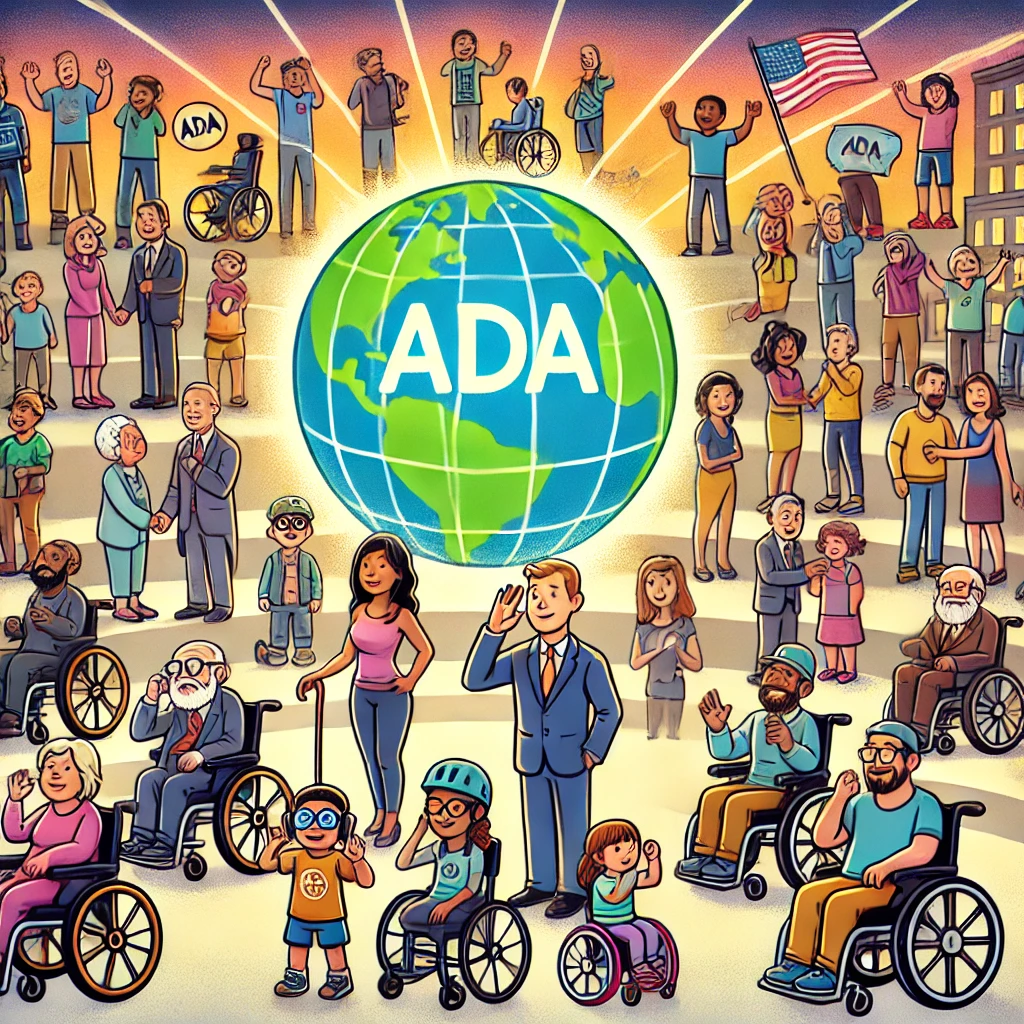
The Americans with Disabilities Act (ADA) has enacted a powerful revolution in DC, creating a seismic shift in the lives of countless individuals with disabilities in the United States. Its sweeping reforms have broken barriers, encouraging inclusivity and accessibility like never before, and its ripple effects have reached every corner of the globe. This article delves into an in-depth exploration of the ADA’s emergence, its focus areas, and its influence on global disability rights.
Introduction: The Genesis of the ADA
The signing of the ADA in July 1990 by President George H.W. Bush marked a historic moment that ended years of discrimination against persons with disabilities. This pivotal legislation aimed to ensure that people with disabilities receive equal opportunities in many facets of life, eliminating barriers that restrict their participation in society. The Act covers a broad spectrum of issues, including employment, public accommodations, transportation, and telecommunications. It sets out to provide an inclusive environment where discrimination based on disability is unacceptable, building a foundation for equality and respect.
Driven by generations of advocacy and the tireless efforts of civil rights movements, the ADA emerged as a beacon of hope and progress. The Act is built on five crucial titles that cover diverse sectors of daily life, with each title implementing frameworks to protect the rights of individuals with disabilities. This legislative landmark’s extensive coverage and far-reaching impacts reverberate way beyond the U.S., setting a precedent for global disability rights.
Title I: Employment Protections
Title I of the ADA is focused on employment and prohibits discrimination against qualified individuals with disabilities. It mandates that employers, with at least 15 employees, provide reasonable accommodations to employees with disabilities, ensuring they can perform their job duties. Employers are required to adjust work environments or job functions based on the needs of employees, including modifications to workstations, flexible work schedules, and provision of assistive technologies.
The significance of Title I is considerable, as it opens doors to employment opportunities for individuals who were previously marginalized. It promotes an inclusive workplace culture, driving companies to recognize the skills and capabilities of disabled individuals while eliminating stereotypes and biases. This paradigm shift not only empowers disabled employees but also strengthens organizations by diversifying their workforce.
Globally, many countries have taken inspiration from Title I, introducing their legislative measures to ensure workplace inclusion. Countries like the United Kingdom, Canada, and Australia have developed their equality acts paralleling the ADA, spurring international movements towards inclusive employment practices.
Title II: Public Services and Government Access
Title II addresses the functions and responsibilities of public entities such as state and local governments. It ensures that individuals with disabilities have equal access to public services, programs, and activities. Public agencies are required to make reasonable modifications to policies, practices, and procedures to avoid discrimination and to promote accessibility.
Examples of the implementation of Title II provisions include modifications to public transportation systems, ensuring that bus services and transit stations are accessible to wheelchair users. State and local governments must also provide effective communication, which may involve offering sign language interpreters, adaptive equipment, or written materials in accessible formats for individuals with sensory impairments.
The broader impact of Title II has resonated in countries where public accessibility became a critical focus. Governments worldwide have begun to mirror these principles, working to create infrastructures that do not restrict access or mobility for individuals with disabilities. The global adoption and adaptation of Title II demonstrate the ADA’s role in fostering universal inclusiveness and accessibility of public services.
Title III: Public Accommodations and Services Operated by Private Entities
Title III of the ADA ensures that private entities that operate public accommodations — such as hotels, restaurants, theaters, museums, recreational facilities, and retail stores — provide equal access to goods and services. This section mandates that venues remove existing physical barriers and improve architectural standards to comply with ADA specifications, ensuring physical access for individuals with disabilities.
Title III’s requirement for accessible design standards has transformed urban landscapes and public buildings, promoting a more inclusive and welcoming environment. Buildings are now designed or retrofitted to include ramps, wider doorways, accessible bathrooms, and elevators. Additionally, the service industry is becoming more aware of the needs of the disabled community, offering services that are responsive and accommodating.
Countries inspired by Title III’s mandates have adopted similar standards, advocating for universal design principles that enhance access to private and public spaces. International conventions, such as the United Nations Convention on the Rights of Persons with Disabilities (CRPD), further cement the ADA’s influence on shaping inclusive societies.
Title IV: Telecommunications
Title IV of the ADA pertains to telecommunications and mandates that telephone and Internet companies provide services that permit individuals with hearing impairments and speech impairments to communicate over telephone networks. This encompasses the provision of relay services, captioning, and other forms of assistive technologies that bridge the communication gap.
The stipulations of Title IV have revolutionized the telecommunications landscape, greatly enhancing the independence and social connectivity of individuals with hearing and speech disabilities. Relay services, such as Text Telephone (TTY) and Telecommunications Relay Services (TRS), have played vital roles in enabling seamless communication. The proliferation of modern technology has further boosted the accessibility of digital communication through video relay services and real-time text chat options.
Globally, many nations resonated with Title IV’s objective, endorsing accessible telecommunication regulations. As technology continues to evolve, countries are actively developing innovative solutions to ensure that communication barriers are dismantled, offering equal opportunities in personal and professional domains.
Title V: Miscellaneous Provisions
Title V includes various provisions that provide additional context, clarity, and guidance on the implementation of the ADA. It consists of specific regulations related to the Act’s enforcement, procedures, and compatibility with other laws and protections. Title V ensures that entities cannot retaliate against individuals for asserting their rights under the ADA.
Furthermore, Title V addresses concerns such as insurance, prohibiting discrimination in insurance offered by public accommodations. It establishes the legal framework for the ADA’s implementation and enforcement, providing individuals and entities with the mechanisms for reporting and resolving non-compliance.
Title V has also paved the way for greater legal protections and awareness campaigns worldwide, ensuring that the rights of individuals with disabilities are upheld through comprehensive and enforceable legal frameworks. Its implementation underscores the importance of accountability, fostering a culture that prioritizes respect and equality for all.
Conclusion: The Global Legacy of the ADA
The Americans with Disabilities Act has stood as a powerful testament to human rights advocacy and legislative progress. Its influence transcends national borders, impacting the lives of millions worldwide by championing accessibility and inclusivity. The ADA’s holistic approach, intertwined with its five titles, forms a robust scaffolding that supports and protects the rights of individuals with disabilities.
The ADA has not only enhanced the quality of life for disabled individuals in the U.S. but has also served as an exemplar for global legislative endeavors. Its principles have been adopted and adapted in numerous countries, reflecting a shared commitment to fostering inclusive societies. From employment protections and accessible public services to inclusive design standards and effective communication technologies, the ADA’s reach is extensive and profound.
As we move forward, the ADA remains a dynamic framework that evolves with societal advancements and technological innovations. Its continued relevance and adaptation are vital to breaking new ground in global disability rights, ensuring that every individual, regardless of ability, can participate fully in societal life.
Frequently Asked Questions
1. What is the Americans with Disabilities Act (ADA), and how did it come into existence?
The Americans with Disabilities Act (ADA) is pivotal legislation in the United States, enacted in 1990. It was a groundbreaking law aimed at preventing discrimination against individuals with disabilities. Crafted under the guidance of Representative Tony Coelho and Senator Tom Harkin, it was signed into law by President George H. W. Bush. The ADA was born out of decades of work by disability rights activists, who sought to secure equal rights and opportunities for people with disabilities. The law covers several focus areas, including employment, public services, public accommodations, and telecommunications, ensuring that individuals with disabilities enjoy the same rights and opportunities as everyone else. Its establishment marked a pivotal point in American history, demonstrating a commitment to inclusivity and equal opportunities for all citizens, regardless of their physical or mental capabilities.
2. How has the ADA impacted disability rights on a global scale?
The influence of the ADA on global disability rights cannot be overstated. When the ADA was enacted, it set a new standard for nations around the world, establishing a powerful precedent for legislation that promotes accessibility and inclusivity. Its principles have inspired similar laws in numerous countries, and its impact has been reinforced by international organizations such as the United Nations. Particularly, the United Nations Convention on the Rights of Persons with Disabilities (CRPD) echoes many of the ADA’s principles, further promoting the global movement towards disability rights. The ADA’s framework has provided a blueprint for countries seeking to expand rights and opportunities for people with disabilities, encouraging governments worldwide to reevaluate and strengthen their own legal protections for this demographic.
3. What are some of the key areas that the ADA focuses on in terms of inclusivity and accessibility?
The ADA is comprehensive in its scope, meticulously covering several critical areas to ensure accessibility and inclusivity. One of its primary focuses is employment, mandating that employers provide reasonable accommodations for qualified individuals with disabilities. This provision empowers many people to participate in the workforce without unnecessary barriers. Additionally, the ADA emphasizes the importance of public services, mandating that state and local governments accommodate individuals with disabilities so they can access public programs, activities, and facilities. Public accommodations, including businesses and nonprofit organizations, are also required to ensure accessibility in terms of physical infrastructure and service delivery. The ADA extends to telecommunications, requiring service providers to offer auxiliary aids and services to individuals with hearing or speech disabilities. These focus areas collectively transform societal perceptions and practices regarding disability rights and inclusivity.
4. Can you provide examples of how the ADA has inspired changes in other countries?
The ADA has left its mark globally by influencing the disability rights legislation of many countries. For instance, the United Kingdom passed the Disability Discrimination Act in 1995, which drew several parallels with the ADA in terms of prohibiting discrimination against people with disabilities in various sectors. Similarly, Australia introduced the Disability Discrimination Act in 1992, echoing the ADA’s commitment to eliminating discrimination and fostering equal opportunity. Countries such as Canada, Japan, and South Africa, among others, have also enacted laws that reflect the spirit and intent of the ADA. Through its innovative approach, the ADA has served as an inspiration and reference point for nations worldwide that aspire to foster a more inclusive society for individuals with disabilities.
5. What challenges remain in the global implementation of disability rights despite the ADA’s influence?
Although the ADA has notably inspired global improvements, challenges still persist in the global implementation of disability rights. Key obstacles include societal attitudes that may still harbor prejudice or stigma towards individuals with disabilities. Many countries, particularly in developing regions, face resource constraints that hinder the full implementation of robust disability rights legislation. Moreover, enforcement of existing laws to protect disability rights can be inconsistent, and accessibility remains a significant issue in various parts of the world. Additionally, the intersection of disability rights with other social justice issues, such as race, gender, and economic status, requires further exploration and action. While the ADA has been a catalyst for change, continued advocacy, education, and international cooperation are essential to overcome these challenges and realize complete inclusivity for people with disabilities globally.