The Americans with Disabilities Act (ADA), enacted in 1990, is a pivotal piece of civil rights legislation designed to protect individuals with disabilities from discrimination. Spanning across various segments of public life, the ADA ensures that individuals with disabilities receive equal opportunities and are not marginalized. Among the critical areas the ADA influences is the realm of voting rights. The power to vote is a fundamental aspect of any democratic society, and individuals with disabilities should have the same opportunities to participate in the electoral process as others. However, there have historically been significant barriers that have hindered this full participation.
Voting can be a daunting task for individuals with disabilities due to physical, sensory, cognitive, or other limitations. Issues such as inaccessible polling stations, voting machines that are difficult to use, and inadequate assistance can make it challenging or even impossible for some to cast their vote. The ADA addresses these barriers by mandating that public entities, including polling places, must be accessible to all individuals. This broad-reaching law aims to ensure that the electoral system is inclusive and accommodates the needs of voters with disabilities, ultimately fostering a more equitable society.
ADA’s Mandates on Physical Accessibility
One of the primary concerns regarding the voting process for individuals with disabilities is the physical accessibility of polling locations. According to the ADA, all polling places must be accessible to individuals with disabilities. This includes ensuring that parking, pathways, and entrances are free from obstructions and easily navigable for individuals who use wheelchairs or have other mobility impairments. Ramps, wide doorways, and elevators are among the common modifications that might be necessary to meet ADA standards.
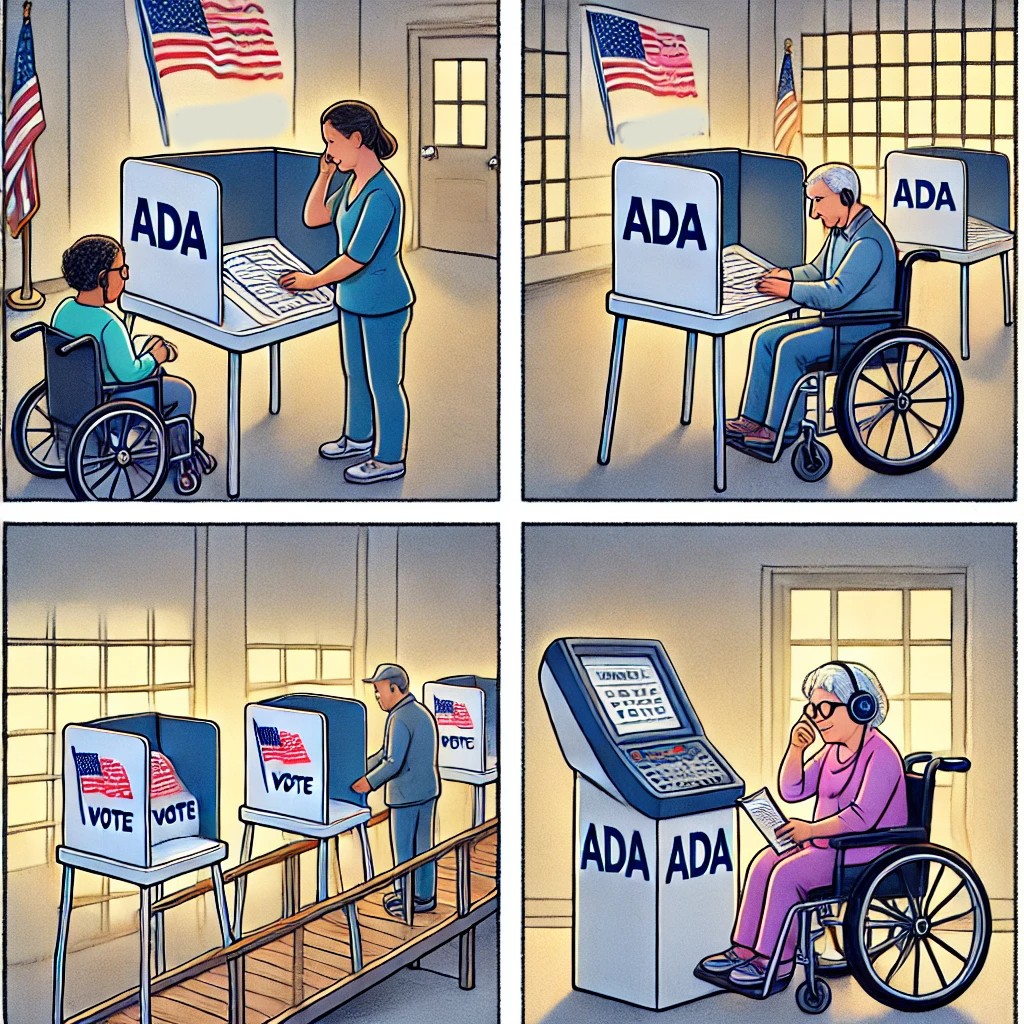
Beyond the entryway, interior aspects of polling places must also be accessible. Polling booths should be designed to accommodate various needs, including adjustable-height tables and sufficient space for maneuvering wheelchairs. Clear signage pointing to accessible routes and elements is crucial to guide voters with different disabilities efficiently. Election officials are also trained to recognize and address physical barriers proactively, ensuring a smooth and inclusive voting experience for all individuals eligible to vote.
Furthermore, temporary solutions may be employed if a polling place is not permanently accessible. For example, portable ramps and temporary signage can be used to ensure compliance during the election period. The overarching goal is to remove any physical barriers that could prevent individuals with disabilities from exercising their right to vote.
Accessible Voting Systems and Technologies
As technology has evolved, so too have the mechanisms by which individuals vote. The ADA places significant emphasis on the development and implementation of voting systems that are accessible to all. This includes ensuring that voting machines are usable by individuals with a range of disabilities, including visual, hearing, and dexterity impairments. Assistive technologies, such as tactile buttons, audio ballots, and visual display enhancements, are integral components of an accessible voting system.
For visually impaired voters, ballot-marking devices with audio interfaces enable a private and independent voting experience. These devices often include headphones and a tactile interface, allowing voters to navigate the ballot and make selections without assistance. Similarly, for individuals with dexterity impairments, adaptive equipment like sip-and-puff devices or specialized input switches can be incorporated into voting machines to facilitate ease of use.
Additionally, many jurisdictions have adopted electronic and online voting options, which can be tailored to meet various accessibility needs. Screen readers, magnifiers, and software that translates text into braille are examples of tools that can be integrated into these systems. The ADA’s guidelines ensure that as new voting technologies emerge, they are designed to be inclusive from the outset, minimizing the need for retrofitting and fostering broader participation.
Training and Assistance at Polling Places
Ensuring voting accessibility extends beyond physical and technological adaptations; it also involves proper training for election officials and volunteers. Under the ADA, these individuals must be knowledgeable about the rights and needs of voters with disabilities. Training programs typically cover a wide range of topics, from the correct operation of accessible voting equipment to the appropriate ways to offer assistance without infringing on voters’ independence and privacy.
Volunteers at polling places are trained to provide assistance in a respectful and supportive manner. For example, they might help a voter with a cognitive disability understand the voting process or assist a voter with a visual impairment in navigating the space. The goal is to provide any necessary support while maintaining the individual’s dignity and autonomy.
Additionally, polling places often have resources available to assist voters who require help. These might include written instructions in large print, braille materials, or the availability of sign language interpreters. The presence of well-trained staff ready to offer appropriate assistance ensures that all voters can exercise their rights confidently and independently.
Legal Protections and Voter Rights
The ADA enshrines legal protections for individuals with disabilities, safeguarding their voting rights and ensuring that they are not discriminated against in the electoral process. If a voter believes their rights under the ADA have been violated, they have several avenues for recourse. Filing a complaint with the Department of Justice (DOJ) or seeking assistance from civil rights organizations are common steps that can be taken.
Legal actions can result in significant changes to how voting processes are managed, often leading to improved accessibility and inclusion. Court rulings in favor of the ADA have historically led to the implementation of more accessible voting practices and infrastructure changes, ensuring compliance with the law and promoting equal participation.
Furthermore, public awareness campaigns and advocacy efforts play a crucial role in safeguarding these rights. By raising awareness among voters with disabilities about their rights and the protections guaranteed by the ADA, these efforts empower individuals to take action and seek remedies when necessary. These collective actions contribute to an ever-evolving electoral system that strives to be inclusive and equitable for all.
Voting by Mail and Accessibility Concerns
Voting by mail presents both opportunities and challenges concerning accessibility for individuals with disabilities. The ADA’s provisions extend to this method of voting, ensuring that the process is accessible and free from barriers. This includes making ballot request applications and submission processes user-friendly for individuals with various disabilities.
For voters with visual impairments, efforts are made to provide ballots in accessible formats, such as large print or braille. Some jurisdictions also offer electronic vote-by-mail systems, enabling voters to complete and submit their ballots using assistive technologies like screen readers. This can significantly enhance the voting experience for individuals who might otherwise find traditional paper ballots difficult to navigate.
However, challenges remain. Ensuring the confidentiality and security of mail-in ballots while making them accessible can be complex. Innovations and best practices continue to evolve, driven by feedback from the disability community and ongoing advancements in technology. It is crucial for election officials to stay informed about these developments and implement solutions that uphold the integrity and accessibility of the voting process.
Conclusion
The Americans with Disabilities Act has had a profound impact on ensuring voting rights for individuals with disabilities in the United States. By mandating physical accessibility, promoting the use of accessible voting technologies, providing necessary training for polling staff, and offering robust legal protections, the ADA plays a critical role in creating an inclusive electoral system. The ongoing efforts to improve mail-in voting accessibility further demonstrate the law’s comprehensive approach to addressing the varied needs of voters with disabilities.
While significant progress has been made, challenges remain. The continual evolution of technology and voting methods necessitates ongoing vigilance and adaptation to ensure full compliance with the ADA’s standards. Voter education and advocacy remain essential components in this endeavor, empowering individuals with disabilities to assert their rights and participate fully in the democratic process. As society continues to advance, the principles of the ADA will remain a cornerstone in the fight for equal voting rights, striving toward an inclusive future where every voter, regardless of ability, can make their voice heard.
Frequently Asked Questions
What is the ADA and how does it affect voting rights for people with disabilities?
The Americans with Disabilities Act (ADA) is a landmark civil rights law enacted in 1990 to prevent discrimination against people with disabilities. It covers many facets of public life, including employment, public accommodations, transportation, and communications. When it comes to voting, the ADA plays a crucial role in ensuring that individuals with disabilities are granted equal access to the voting process. The law mandates that polling places and voting equipment must accommodate the needs of voters with disabilities. This means accessible voting locations, provisions for assistive technologies, and staffing that can help navigate the voting process without compromising privacy. The ultimate goal is to remove any barriers that might prevent people with disabilities from exercising their right to vote, thus upholding the integrity and inclusivity of democratic participation.
How does the ADA ensure polling places are accessible during elections?
The ADA requires that polling places be accessible to individuals with disabilities. This encompasses several aspects, including parking, entrances, routes to the voting area, and the voting area itself. Accessible parking spaces closer to the entrance, ramps or elevators for those who use wheelchairs or have mobility issues, and wide doorways are some of the core architectural features that may be necessary to comply with ADA standards. However, accessibility isn’t only about physical modifications. It also covers other needs such as clear signage, well-lit areas, and even staff or volunteers who can provide assistance. Moreover, temporary solutions like portable ramps or ballot marking devices can be employed on election days when permanent installations are not feasible. The goal is for every voter, regardless of their physical capabilities, to reach their polling place and cast their vote with dignity and independence.
Are there any provisions under the ADA for absentee voting for people with disabilities?
Yes, the ADA acknowledges that not all individuals with disabilities may be able to access physical polling stations, even with accommodations in place. In these cases, alternative voting methods, such as absentee voting (also known as mail-in voting), are crucial. The ADA, along with other federal regulations like the Voting Rights Act and the Help America Vote Act (HAVA), encourages states to provide accessible absentee voting options. This includes ensuring that ballots are available in formats accessible to people with visual impairments or other specific needs that make traditional paper ballots difficult to use. Some states have also moved towards electronic absentee voting systems that can be accessed from home, allowing voters to fill out and submit their ballots online. These methods ensure that staying away from the polling station does not disenfranchise individuals with disabilities.
What role does technology play in enhancing voting access under the ADA?
Technology is a vital component of improving voting access for individuals with disabilities under the ADA. Advancements in assistive technologies, such as electronic voting machines with audio interfaces for the visually impaired or touchscreens that can be navigated by individuals with limited dexterity, help facilitate a more inclusive voting experience. Additionally, there are mobile apps and online platforms designed to educate and aid voters with disabilities in understanding the voting process. Election authorities are increasingly adopting these technologies, ensuring they comply with ADA standards and meet the diverse needs of their constituents. Furthermore, websites providing voter information must be ADA-compliant, allowing those with hearing, vision, or cognitive disabilities to navigate and gather necessary information to participate in elections confidently.
What challenges remain in ensuring voting rights under the ADA, and how can they be addressed?
While the ADA has led to significant strides in making voting more accessible, challenges remain. Some polling places still fail to meet ADA standards due to outdated infrastructure or lack of resources, which can make it difficult for individuals with disabilities to cast their vote. Additionally, there may be inconsistencies in how states implement absentee and accessible voting technologies. To address these issues, continuous advocacy and monitoring are essential. Stakeholders, including government entities, disability rights organizations, and the public, must work together to ensure compliance, provide funding for necessary modifications, and educate both election officials and voters. Legislative efforts may also be needed to close gaps and create uniform standards across the country. Ultimately, the goal remains to uphold the spirit of the ADA, providing equal voting opportunities and ensuring that all citizens can participate fully in the democratic process.