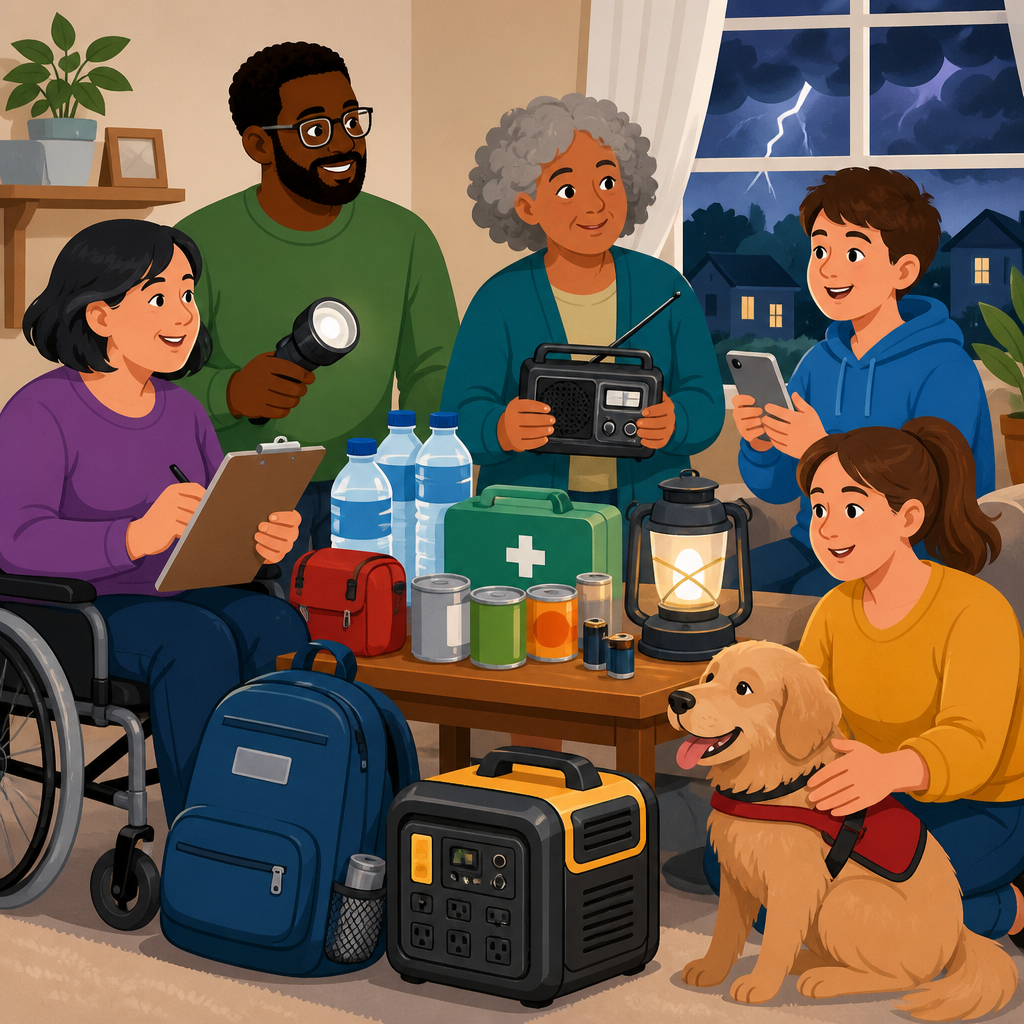
Accessible emergency preparedness and power outage planning are essential parts of disability inclusion because emergencies magnify every barrier that already exists in daily life. When I have helped organizations review readiness plans, the biggest gap has rarely been intent; it has been the absence of disability-specific procedures, communication formats, backup power options, and trusted support networks. A resource hub on accessible emergency preparedness and power outages should therefore do more than list agencies. It should explain what people need before, during, and after an outage, and it should connect those needs to practical ADA resources and support.
In this context, accessible emergency preparedness means planning that people with disabilities can actually use, including evacuation procedures, shelter information, medication access, transportation contingencies, durable medical equipment support, and communication in formats such as plain language, captioning, ASL, Braille, large print, and screen-reader-friendly digital content. Power outage preparedness is a related but distinct issue. It focuses on resilience when electricity loss affects oxygen concentrators, ventilators, power wheelchairs, refrigeration for medication, home access systems, communication devices, and internet-based support services. The Americans with Disabilities Act shapes expectations for equal access in public services, emergency communications, transportation, shelters, and recovery programs, although it works alongside other laws and guidance rather than replacing them.
This topic matters because outages and disasters are no longer edge cases. Severe weather, wildfire risk, grid stress, flooding, and heat events now create repeated interruptions across many regions. According to federal emergency management and public health guidance, disabled people face higher risks during disasters because support systems can fail all at once: transportation may stop, attendants may be delayed, pharmacies may close, and communication can become inaccessible precisely when speed matters most. A strong hub article helps readers identify reliable disability emergency resources, understand their rights, and build layered plans that reduce dependence on a single person, device, or utility. That is the purpose of this guide: to map the specialized ADA resources and support ecosystem clearly enough that individuals, families, caregivers, advocates, and service providers can act on it.
Core accessible emergency preparedness resources
The most useful accessible emergency preparedness resources combine legal rights, operational guidance, and local contacts. Start with FEMA’s disability integration materials, Ready.gov planning guidance, the Department of Justice ADA requirements for emergency management, the HHS Administration for Community Living, and state or local offices of emergency management. These sources address accessible alerts, evacuation, shelter accessibility, service animal access, effective communication, and continuity of support services. In practice, I advise people to save both national and local resources because federal guidance tells you what should exist, while county and city agencies tell you what actually exists where you live.
Centers for Independent Living are often the most practical support point. They regularly help people create preparedness plans, connect with paratransit or accessible transportation, identify backup attendant options, and troubleshoot device charging or shelter access. Protection and Advocacy agencies are another critical resource when access breaks down. They can address discrimination in sheltering, communication failures, denial of reasonable modifications, or inaccessible recovery systems. Disability-specific nonprofits also matter. For example, organizations focused on deaf access, blindness, spinal cord injury, autism, or respiratory conditions often publish checklists tailored to real functional needs rather than generic household advice.
Health care infrastructure belongs in the same resource map. Utility medical baseline programs, hospital social work departments, home health agencies, dialysis centers, oxygen suppliers, and pharmacies all play roles in continuity planning. The strongest plans document account numbers, after-hours contacts, equipment serial numbers, battery duration, charging requirements, prescription lists, and replacement pathways. That level of detail is not excessive. During outages, the difference between a stressful day and a medical crisis is often whether critical information is available in one place, in accessible formats, and understood by more than one trusted person.
What to prepare before a power outage
Preparation for an accessible power outage starts with a personal risk assessment. Identify every task in your home that depends on electricity: breathing support, mobility, transferring, communication, temperature control, feeding equipment, medication refrigeration, door openers, stair lifts, pressure relief equipment, and internet-connected monitoring devices. Then rank each item by urgency. If losing power to one device creates an immediate health or safety threat, it needs a backup plan with timelines measured in minutes or hours, not days. This is where many generic checklists fall short; they treat all outages as inconvenience, when for some households they are life threatening.
Build a written outage plan that covers supplies, people, and decisions. Supplies include batteries, power banks, flashlights, surge protection, coolers for medication, printed contact lists, backup chargers, extension cords rated for medical use where appropriate, and food or water matched to disability-related needs. People include family, attendants, neighbors, landlords, case managers, and clinicians who know what help may be required. Decisions include when to shelter in place, when to relocate, which location has accessible entry and power, and how transportation will be arranged. Keep the plan in print and digital formats, and make sure it can be read by a screen reader.
| Need | What to document | Best supporting resource |
|---|---|---|
| Life-sustaining equipment | Device type, battery life, vendor, backup power, emergency clinician contact | Durable medical equipment supplier, utility medical program, physician |
| Medication access | Prescription list, refill schedule, refrigeration needs, alternate pharmacy | Pharmacy, prescriber, health plan case manager |
| Accessible communication | Preferred alert format, relay options, captioning, interpreters, plain-language contacts | Local emergency management, disability organizations |
| Transportation and evacuation | Paratransit numbers, wheelchair-accessible vehicle options, pickup assistance needs | Transit agency, Center for Independent Living |
| Shelter or relocation | Accessible entrances, bathroom setup, cot alternatives, service animal supplies | Red Cross, local emergency management, ADA coordinator |
Test the plan under realistic conditions. I recommend running a two-hour or four-hour outage drill at home to discover hidden dependencies. Can you charge your phone and communication device at the same time? Will your power wheelchair fit through the backup location entrance? How long does refrigerated medication stay within safe range in your cooler setup? Does your support network answer after business hours? Drills reveal practical issues that no brochure captures, and they make future decisions faster because the household has already rehearsed them.
ADA support, rights, and public responsibility during emergencies
The ADA does not guarantee perfect outcomes in disasters, but it does require public entities and many service providers to avoid excluding people with disabilities from emergency programs, services, and activities. That means emergency alerts must be effective for people with hearing, vision, cognitive, and speech disabilities; shelters must provide equal access and reasonable modifications; service animals must generally be allowed; and evacuation or recovery systems cannot be designed around nondisabled assumptions. The Department of Justice has repeatedly emphasized that emergency management is covered by civil rights obligations, not exempt from them.
For readers looking for specialized ADA resources and support, the local ADA coordinator is often overlooked. Cities, counties, universities, and transit systems may each have one. This office can be a point of escalation when plans, facilities, or communications are inaccessible. State Protection and Advocacy agencies are stronger escalation channels when the problem is systemic or urgent. If a shelter refuses a reasonable modification, if emergency information is issued only visually or only audibly, or if a recovery center is physically inaccessible, documentation matters. Save screenshots, photos, dates, names, and descriptions of the barrier. Effective advocacy depends on evidence.
There are limits and tradeoffs worth stating plainly. The ADA does not substitute for personal preparedness, and emergency responders cannot always provide individualized support immediately during large-scale events. At the same time, agencies cannot shift all responsibility onto disabled residents. The sound standard is shared responsibility: individuals prepare, service systems coordinate, and public entities remove barriers. The most resilient communities formalize this through disability advisory groups, inclusive alert systems, accessible shelter agreements, and vendor contracts that account for interpreters, accessible transportation, and durable medical equipment support.
Communication, medical needs, and community support systems
Accessible communication is the backbone of emergency readiness. A warning that arrives in an unusable format is not a warning. Strong systems provide redundancy across Wireless Emergency Alerts, text, email, TTY or relay pathways, captioned broadcasts, ASL interpretation for live briefings, multilingual plain-language updates, and web pages that follow WCAG accessibility practices. From experience, the most common failure is assuming one channel reaches everyone. It does not. People need layered communications because internet service may fail, phone batteries may die, and live briefings may be inaccessible without planning.
Medical planning requires equal specificity. People who use oxygen, ventilators, feeding pumps, CPAP devices, suction equipment, dialysis, refrigerated biologics, or electric beds should speak with clinicians and suppliers before an emergency season begins. Ask direct questions: How long will the battery last? What are the safe operating limits in heat? What replacement process applies if equipment fails? Can the supplier prioritize delivery during outages? Is there a written emergency protocol? These questions produce actionable answers, and the answers belong in the household plan. Generic advice to “have extra supplies” is incomplete unless it names the quantity, storage conditions, and replacement pathway.
Community support systems fill gaps that formal services cannot cover quickly. Build a small network with defined roles rather than a vague list of names. One person may check in by text, another may provide transportation, another may store backup medication, and another may know how to operate essential equipment. Mutual aid groups, faith communities, neighborhood associations, and disability-led networks can all help if expectations are clear. The best support agreements are simple, written, and practiced. They include addresses, access codes if appropriate, pet or service animal details, and instructions for what to do if the first contact cannot respond.
How this hub connects readers to specialized ADA resources and support
As a sub-pillar under Resources and Support, this page should function as the central map for every article related to disability emergency planning, outages, and accessibility rights. Readers typically arrive with one urgent question: How do I stay safe if power fails and standard emergency systems do not meet my needs? A useful hub answers that question at a high level, then directs readers to focused topics such as backup power for medical devices, accessible shelter rights, emergency kits for blind or deaf users, evacuation planning for wheelchair users, paratransit disruption strategies, medication refrigeration during outages, and complaint pathways when agencies fail accessibility obligations.
To serve that role well, the hub should consistently point readers toward evergreen resources that remain credible as local details change. Those include FEMA disability integration guidance, Ready.gov emergency plan templates, the Department of Justice ADA emergency preparedness materials, the Administration for Community Living, the American Red Cross accessibility information, Centers for Independent Living, state Protection and Advocacy programs, utility medical baseline enrollment pages, and local emergency management alert registration systems. When internal articles are built around those source categories, readers can move from overview to action without losing trust or context.
This structure also supports caregivers, providers, and advocates. Families need checklists they can implement tonight. Service coordinators need referral pathways. Housing providers need to understand communication obligations and evacuation roles. Advocates need rights-based frameworks and complaint channels. By organizing content around these use cases, the hub becomes more than a directory. It becomes a decision tool that helps different readers find the exact specialized ADA resources and support they need before the next outage or emergency exposes preventable barriers.
Conclusion
Accessible emergency preparedness and power outage planning work best when they are specific, documented, and connected to real support systems. The essential steps are clear: identify disability-related power dependencies, create a written backup plan, verify accessible communication channels, register with relevant utility and emergency programs, know your ADA-related rights, and build a support network that can act when conditions change quickly. National guidance is important, but local contacts, disability-led organizations, and Centers for Independent Living often provide the most practical help.
The main benefit of treating this topic as a specialized resource hub is that it turns scattered information into a usable pathway. Instead of searching separately for shelter rights, backup batteries, transportation, interpreters, or medical equipment guidance, readers can begin in one place and move outward to the exact support they need. That is especially valuable during emergencies, when confusion wastes time and inaccessible information increases risk.
Use this hub as your starting point, then build and test your own plan this week. Save key numbers, review your equipment needs, enroll in alerts and utility assistance programs, and identify the next article you need for your situation. Preparation is most effective before the lights go out.
Frequently Asked Questions
What should accessible emergency preparedness resources include for people with disabilities and chronic health conditions?
Accessible emergency preparedness resources should go far beyond a generic checklist. The most useful resources explain how to prepare for disasters, evacuations, and extended power outages in ways that reflect real disability-related needs. That includes planning for mobility devices, refrigeration for medications, backup power for durable medical equipment, accessible transportation, service animals, communication access, personal care support, and continuity of daily routines that are essential to health and safety. A strong resource hub should provide practical tools such as customizable emergency plan templates, medication and equipment inventories, contact lists, evacuation worksheets, and guidance for sheltering in place.
It is also important that the information itself be accessible. Resources should be available in plain language, large print, screen-reader-friendly digital formats, captions, transcripts, ASL-supported video when possible, and translations for multilingual communities. Many people need information in more than one format, especially during fast-moving emergencies when stress can make communication harder. The best materials also explain how to register access and functional needs with local emergency management agencies, utility companies, paratransit providers, and community support organizations before an emergency happens.
Most importantly, accessible preparedness resources should treat disabled people as planners, not afterthoughts. They should address how to build a support network, how to communicate needs clearly to responders, and how to prepare for disruptions in caregiving, electricity, internet, transportation, and pharmacy access. When a resource hub includes these elements, it becomes genuinely useful rather than simply informational.
How can someone prepare for a power outage if they rely on electricity for medical or accessibility needs?
Preparation starts with identifying every device, medication, or routine in the home that depends on electricity. This may include oxygen equipment, ventilators, CPAP machines, power wheelchairs, communication devices, feeding pumps, adjustable beds, refrigeration for insulin or other medications, stair lifts, and even internet-based assistive technology. Once those needs are listed, the next step is to document how long each item can function without power, whether batteries are available, how batteries are charged, and what backup options exist. That written record is extremely valuable during a stressful outage.
People who depend on power should contact their utility company and ask whether a medical baseline, priority restoration, or life-support equipment notification program is available. These programs do not guarantee immediate restoration, but they may improve communication and help utilities understand the urgency of an outage. It is equally important to talk with healthcare providers, equipment vendors, and pharmacists about backup plans. Ask specific questions: How many extra batteries should be kept on hand? Is a generator safe for this device? What should happen if refrigeration fails? Are there alternative charging locations or replacement supplies nearby?
A solid outage plan also includes practical logistics. Keep phones, power banks, and backup batteries charged. Store printed emergency contacts in case devices fail. Know where to go if home power is out for an extended period, such as a relative’s accessible home, an inclusive hotel, or a designated community site. If transportation is needed, plan that in advance. The goal is not only to survive a blackout, but to preserve health, independence, and communication throughout it.
Why are disability-specific procedures so important in emergency and outage planning?
Disability-specific procedures matter because emergencies intensify barriers that already exist. A plan that works for the general public may fail completely for someone who needs step-free evacuation, captioned alerts, medication refrigeration, hands-on assistance, or predictable communication. Without disability-specific planning, organizations often assume that people will simply “call for help” during a crisis, but that approach breaks down quickly when phone lines are overloaded, transportation is disrupted, or responders do not have the right information or equipment.
Effective procedures spell out what needs to happen before, during, and after an emergency. For example, a workplace may need a protocol for evacuating employees who use wheelchairs when elevators are unavailable. A housing provider may need a process for checking on residents who use power-dependent medical equipment. A school or community organization may need accessible alert systems, backup communication methods, and staff training on disability etiquette and support. These are not minor adjustments; they are core operational requirements for safety.
Disability-specific planning also reduces confusion and improves response speed. When roles, contacts, backup power options, and communication methods are decided in advance, people are less likely to be left behind or forced to improvise under dangerous conditions. In short, inclusive emergency planning is not special treatment. It is the difference between a plan that exists on paper and a plan that actually protects everyone.
How can organizations make emergency communication accessible during disasters and power outages?
Accessible emergency communication requires redundancy, clarity, and format flexibility. Organizations should never rely on a single channel, such as email or a spoken announcement. During an emergency, messages should be available through text alerts, phone calls, email, websites, social media, printed notices when relevant, and in-person communication when necessary. Messages should be written in plain language and provide clear action steps, not vague warnings. People need to know what happened, what it means for them, what to do next, and where to get help.
Accessibility means making sure alerts can be received and understood by people with different communication needs. That includes captions for video, transcripts for audio, screen-reader-compatible web updates, high-contrast text, ASL interpretation when possible, and language access for non-English speakers. Organizations should also think about people who may lose internet access during an outage. Backup communication strategies might include battery-powered radios, designated phone trees, door-to-door wellness checks, or prearranged contacts who can relay information in accessible ways.
Just as important, organizations should test their communication systems with disabled users before an emergency occurs. A system may appear compliant but still fail in real-world conditions if alerts are too long, inaccessible on mobile devices, dependent on visual cues alone, or incompatible with assistive technology. The strongest communication plans are built with direct input from disabled people and revised after drills, outages, and community feedback. Accessibility is not just about sending information; it is about making sure people can receive it, trust it, and act on it.
What role do support networks and community partnerships play in accessible emergency preparedness?
Support networks are one of the most important parts of any accessible preparedness plan because no one should have to manage an emergency alone. A trusted network can include family members, friends, neighbors, personal care attendants, case managers, coworkers, disability organizations, faith communities, and local service providers. These relationships help fill gaps when formal systems are delayed or overstretched. For example, a neighbor may be able to help recharge a device, a caregiver may step in if regular staff cannot travel, or a local disability group may know which shelters and cooling centers are truly accessible.
Community partnerships are equally valuable at the organizational level. Emergency managers, healthcare systems, utilities, housing providers, independent living centers, and disability advocacy organizations should coordinate before a disaster happens. That coordination can improve outreach, clarify referral pathways, identify accessible transportation options, and make sure outage response plans account for people who depend on electricity, medication access, or communication supports. It also helps prevent duplication and confusion when multiple agencies are involved.
The strongest preparedness plans define specific roles within a support network. People should know who will check in during an outage, who has a key if entry is needed, who can help with evacuation, who understands medical and communication needs, and where backup supplies are stored. These details matter because emergencies move quickly. A well-prepared support network turns good intentions into practical, timely assistance and makes accessible emergency planning far more resilient.


