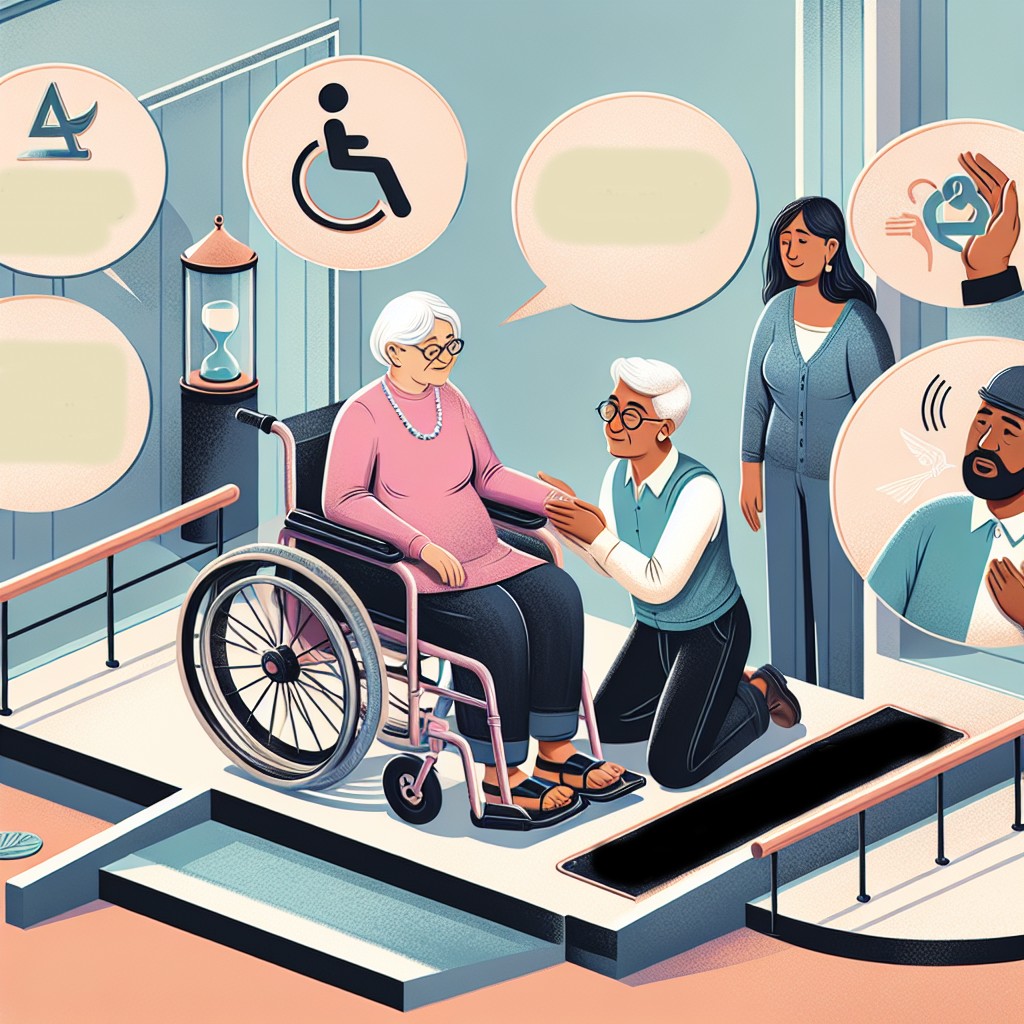
The Americans with Disabilities Act (ADA) is a transformative law that ensures individuals with disabilities are granted equal opportunities in all areas of public life. One of the most significant areas of impact is employment, where the ADA mandates that employers provide reasonable accommodations and prevents discrimination against qualified individuals with disabilities. In this article, we will explore the real-world impact of the ADA in the field of employment through a series of case studies. These stories will highlight both the challenges faced and the victories achieved by individuals with disabilities as they enforce their rights under the ADA. While much progress has been made since the enactment of the ADA, these case studies illustrate that there is still work to be done to ensure that all individuals have equal access to employment opportunities.
The journey of understanding real-world applications of the ADA in employment starts with recognizing the barriers that individuals with disabilities often encounter. These barriers can range from inaccessible workplaces to discriminatory hiring practices. However, through advocacy, legal action, and increased awareness, many of these obstacles have been overcome, paving the way for a more inclusive workforce. This article will delve into specific instances where individuals have successfully leveraged the ADA to secure their rights in the workplace, providing inspiration and insights for others who may face similar challenges.
Whether you are an employer seeking to understand your responsibilities under the ADA or an individual navigating the complexities of workplace accommodations, these case studies will provide valuable lessons and practical guidance. Join us as we explore the real-world impact of ADA rights in employment, and learn how these landmark cases have shaped the landscape of disability rights in the workplace.
Case Study 1: Breaking Barriers at the University Level
In our first case study, we examine the groundbreaking case of a university professor with cerebral palsy who challenged her institution’s failure to provide reasonable accommodations. Dr. Emily Harper, a dedicated educator, requested simple modifications such as voice recognition software and accessible parking to better perform her teaching duties. Unfortunately, her initial requests were met with resistance and inadequate responses from the university administration.
Dr. Harper decided to take legal action, utilizing the ADA as a framework to support her case. The case highlighted the ADA’s critical role in holding educational institutions accountable for providing equal access to employment through reasonable accommodations. Ultimately, Dr. Harper’s perseverance paid off as the court ruled in her favor, not only ensuring her workplace needs were met but also setting a precedent for future cases involving academic institutions.
This landmark ruling emphasized the importance of communication and collaboration between employers and employees in identifying and implementing accommodations that are not only reasonable but also effective. It showcased how individuals could advocate for their rights while fostering a more inclusive and supportive academic environment.
Case Study 2: Revolutionizing Remote Work in Tech
The technological sector, known for its rapid innovation, became the battleground for another significant ADA employment case. Josh Carter, a software engineer with a mobility impairment, faced difficulties when his company’s office lacked necessary accessibility features. While his disability did not impede his ability to code, the office layout posed daily challenges.
Instead of compromising on accessibility, Carter and his legal team emphasized the possibility and practicality of remote work as a reasonable accommodation. The case resonated deeply within the tech industry, especially as it unfolded amidst the global shift towards remote working environments.
The resolution of the case led to a policy change within Carter’s company, permitting remote work as an operative and viable employment framework. This adaptation illustrated the flexibility of ADA provisions in accommodating the evolving nature of workspaces. Notably, this case spearheaded a broader change, prompting many tech firms to reevaluate and adopt more inclusive remote work policies.
This example underscores the potential of ADA rights to drive innovation in workplace practices, proving that the marriage of technology and accessibility can lead to heightened efficiency and greater employee satisfaction.
Case Study 3: Advocacy in Retail Environments
Retail giant Horizon Goods was at the center of an ADA dispute when Lisa Martinez, a customer service representative with a hearing impairment, sought necessary workplace adjustments such as a text-based communication system to facilitate daily interactions with customers and team members.
Despite clear legal obligations under the ADA, Martinez’s requests went unheeded for months. Supported by disability rights organizations, she filed a complaint that not only highlighted her personal struggle but also shone a spotlight on systemic issues within the retail sector regarding accessibility.
Martinez’s case resulted in a class-action outcome where Horizon Goods not only provided her with the needed accommodations but also overhauled its entire communication framework to include enhanced training for all employees on disabilities and workplace inclusivity.
This significant win stressed the necessity for retail environments to consider diverse employee needs proactively. More importantly, it exhibited the power of collective advocacy and legal recourse in effecting broad institutional changes, creating more equitable workplaces for all employees.
Case Study 4: Overcoming Discrimination in Healthcare
The healthcare field presented another critical ADA case where Olivia Bennett, an experienced nurse who developed a chronic autoimmune disorder, faced workplace discrimination at a renowned hospital. The hospital administration questioned her ability to perform her duties safely, despite clear medical advice affirming her capability with certain accommodations.
Bennett’s fight for her employment rights underscored the pervasive issue of discrimination based on misconceptions around disability and productivity. With legal intervention, the court reinforced the ADA’s stance that qualified individuals should not be sidelined due to their disability when accommodations make it feasible for them to fulfill their roles.
The court’s decision in Bennett’s favor compelled the healthcare institution to not only make the required accommodations but also engage in extensive staff sensitivity training, aiming to dismantle ingrained biases against disabled healthcare professionals.
This pivotal case demonstrated that upholding ADA rights in employment is not merely a legal requirement but a necessary step towards harnessing the full potential of a skilled, diverse workforce in critical sectors like healthcare.
Lessons Learned and Looking Forward
From academia to technology, retail, and healthcare, the case studies covered in this article have shown how the ADA can be a powerful tool for challenging and changing discriminatory practices in the workplace. Each story underscores important lessons about the intricacy and necessity of reasonable accommodations and the vigilance required to achieve compliance with the ADA.
One of the key takeaways is the significance of communication between employers and employees. Creating an open dialogue can often prevent misunderstandings and lead to more effective solutions that benefit both parties. Employers are encouraged to adopt proactive strategies, such as regular training and accessibility audits, to ensure a truly inclusive workplace culture.
Moreover, these case studies highlight the need for ongoing advocacy and vigilance to protect ADA rights. As societal awareness and understanding of disabilities evolve, so too must the policies and practices that govern workplaces. Individuals with disabilities, along with their allies, must continue to advocate for their rights, ensuring that advancements in equality are not only maintained but broadened to cover more inclusive practices.
Conclusion
The stories shared in this article are potent reminders of the transformative power of the ADA in employment. They illustrate the real-world impact that this groundbreaking piece of legislation has on people’s lives and livelihoods. By understanding and applying the principles of the ADA, we can continue to move towards a more equitable and inclusive society where every individual, regardless of ability, has the opportunity to contribute and succeed in the workplace.
While progress has been made, there is still much work to be done. Employers, employees, advocates, and policymakers must work collaboratively to ensure that the promise of equal opportunity is fulfilled. By leveraging the lessons learned from these real-world applications, we can continue to break down barriers and create workplaces where diversity is not only welcomed but celebrated.
In conclusion, each case study serves as both a cautionary tale and a beacon of hope, reminding us all of the potential for positive change. By championing ADA rights and fostering a culture of inclusion, we can ensure that all individuals have the chance to reach their full potential, enriching not only their own lives but the fabric of our society as a whole.
Frequently Asked Questions
1. What is the Americans with Disabilities Act (ADA) and how does it affect employment?
The Americans with Disabilities Act (ADA) is a pivotal piece of civil rights legislation enacted in 1990. It is designed to protect individuals with disabilities from discrimination and ensure they have the same opportunities as everyone else across various public life sectors, including employment. In the context of employment, the ADA requires that employers offer reasonable accommodations to qualified individuals with disabilities unless doing so would cause undue hardship. This means making adjustments to the work environment or the way duties are typically performed, ensuring that workers with disabilities can participate fully and effectively in their job roles.
The impact of the ADA in employment is substantial as it lays a framework for recognizing the potential of individuals with disabilities and dismantling barriers that might limit their career opportunities. Through compliance with this law, the workplace becomes more inclusive, helping to foster diversity, promote equality, and provide all employees with the chance to thrive.
2. What are “reasonable accommodations” under the ADA, and can you give examples from case studies?
“Reasonable accommodations” under the ADA are changes or adjustments to a job or work environment that enable a person with a disability to have equal employment opportunities. It is important that such accommodations do not cause undue hardship—defined as significant difficulty or expense given the size, resources, nature, or structure of the employer’s business.
Examples of reasonable accommodations derived from case studies include modifying work schedules or allowing for telecommuting options, which can benefit someone with a mobility impairment or chronic illness. In one case, an employee with a visual impairment was provided with screen-reading software and other assistive technology to perform computer-based tasks. In another instance, an employee with a hearing impairment successfully advocated for the installation of visual alert systems and captioned telephones. Each case highlights the customization and creativity often involved in developing accommodations that respect the employee’s needs while aligning with business operations.
3. How does the ADA define “disability,” and how can employees determine their eligibility for protections under the ADA?
Under the ADA, a “disability” is defined as a physical or mental impairment that substantially limits one or more major life activities. Major life activities cover a broad range, from walking and speaking to seeing, hearing, and learning. The ADA also protects individuals who have a history of such an impairment or who are perceived by others to have such an impairment.
To determine eligibility for ADA protections, employees can start by reviewing their medical conditions and their impact on daily activities. A detailed medical assessment can be instrumental in this evaluation. Eligibility might also depend on whether the person can perform the essential functions of the job, with or without accommodations. Information from case studies indicates that collaboration with HR professionals or legal experts can guide employees better in understanding the interplay of their conditions with ADA mandates.
4. How do employers ensure compliance with the ADA while fostering an inclusive environment?
Employers can ensure ADA compliance by actively seeking to understand the legislation’s guidelines and being proactive in their implementation. This includes conducting regular training sessions to educate management and staff about the rights and responsibilities entailed under the ADA. Familiarizing themselves with best practices from ADA employment case studies can provide practical insights and approaches.
Open communication channels are crucial; employers are encouraged to engage in an interactive process with employees seeking accommodations, working collaboratively to identify suitable solutions. Creating comprehensive policies that clearly outline the accommodation process and developing a diversity and inclusion strategy underscore an organization’s commitment to inclusivity. Successful companies are those that not only comply with the ADA but embrace the spirit of the law as a vital element of their corporate culture, as seen in numerous case study outcomes.
5. What challenges might employers face in implementing ADA accommodations, and how can these be addressed?
Employers often face several challenges when implementing ADA accommodations, such as assessing the feasibility of requests, balancing costs, and integrating changes without disrupting overall operations. There is also the potential difficulty in situations where the extent of a disability is not visible, leading to misunderstandings about the necessity of certain accommodations.
Addressing these challenges typically involves fostering a culture of openness and flexibility. Employers can start by thoroughly evaluating the operational impacts of proposed accommodations and engaging in constructive dialogue with employees to understand their needs better. Consulting ADA case studies reveals that the use of external resources like disability advocacy organizations or ADA specialists can provide additional guidance. By adopting these proactive strategies, employers can minimize misunderstandings and pave the way for more successful integration of ADA accommodations into everyday business practices.