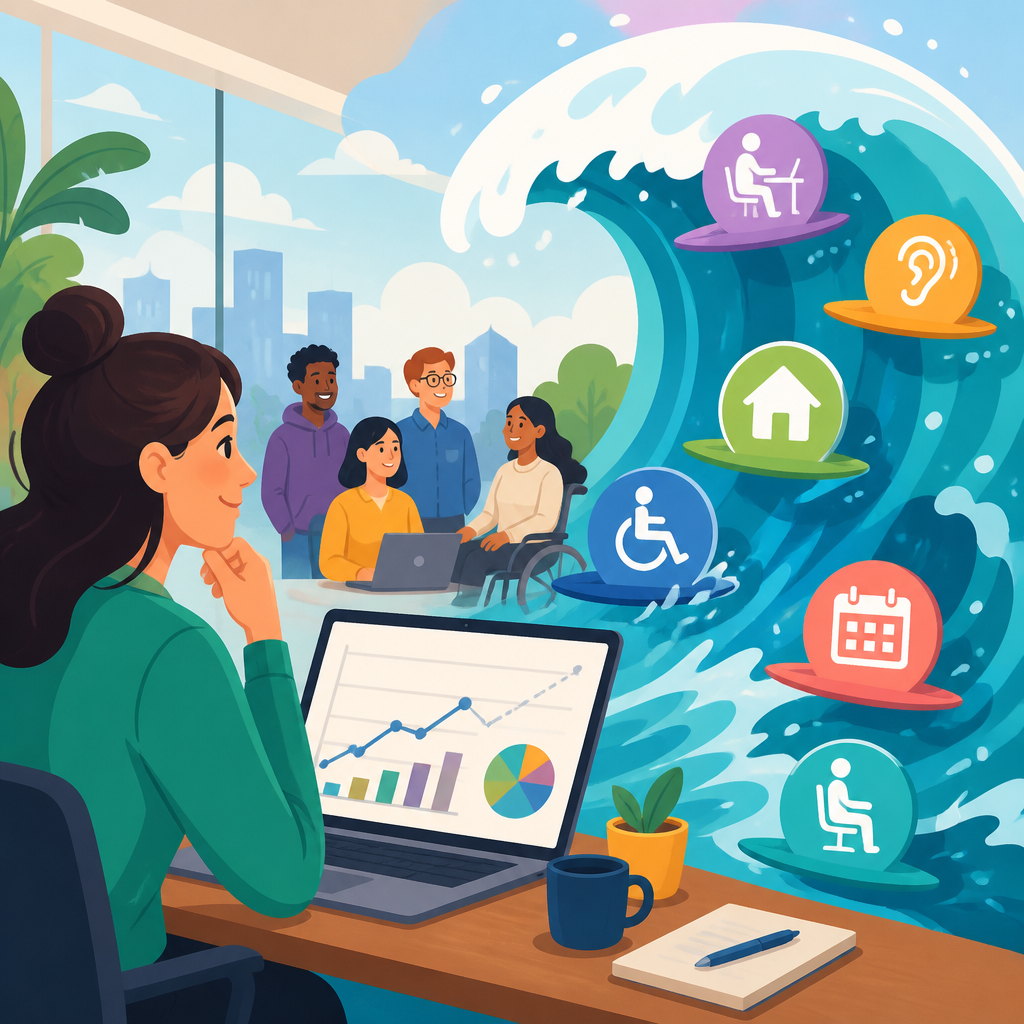
Predicting the next wave of accommodation requests at work requires more than watching legal headlines. It means understanding how disability law, workplace technology, labor expectations, and public health are changing at the same time. In practice, accommodation requests are the formal or informal changes employees seek so they can perform essential job functions, access benefits, or participate equally in the workplace. Under the Americans with Disabilities Act, employers covered by the law must provide reasonable accommodations unless doing so creates an undue hardship. That basic rule is familiar. What is changing is the profile of the employee making the request, the condition involved, the tool being requested, and the setting where work happens.
I have seen this shift accelerate over the last several years as employers moved from handling a relatively narrow set of requests, such as ergonomic chairs or modified schedules, to managing more complex situations involving remote work, neurodiversity, long COVID, mental health, reproductive conditions, sensory needs, and AI-enabled assistive technology. The next wave of accommodation requests at work will not arrive as one dramatic event. It is already forming through incremental decisions by courts, enforcement agencies, state legislatures, and employers trying to retain talent in a tighter skills market. For HR leaders, employment counsel, managers, and compliance teams, predicting these developments matters because the cost of reacting late is high: delayed engagement, inconsistent approvals, avoidable claims, and lost trust.
This article serves as a hub for future trends and predictions in ADA developments. It explains where accommodation requests are heading, why certain categories are expanding, how employers should prepare their processes, and which legal and operational signals deserve close attention. The goal is simple: help organizations anticipate requests before they become disputes, and help practitioners build systems that are both compliant and workable.
The accommodation landscape is widening beyond traditional categories
The clearest prediction is that accommodation requests will become broader in subject matter and more individualized in form. Historically, many employers built accommodation workflows around visible physical impairments and fixed-location work. That model is no longer sufficient. The Equal Employment Opportunity Commission has repeatedly emphasized individualized assessment, and modern requests increasingly involve conditions that fluctuate, overlap, or are not immediately apparent. Mental health conditions, migraines, autoimmune disorders, diabetes management, pregnancy-related limitations, menopause symptoms, and trauma-related impairments are all producing more frequent workplace requests.
Long COVID remains one of the strongest examples. The EEOC has explained that long COVID can be a disability when it substantially limits a major life activity, and employers have had to evaluate fatigue, brain fog, breathing limitations, and intermittent symptom flare-ups. In real workplaces, these requests rarely arrive as a single clean issue. An employee may ask for a later start time because of fatigue, speech-to-text software because of cognitive strain, and remote work on high-symptom days. The lesson for employers is that future accommodation requests will often be layered rather than singular.
Another growth area is neurodiversity. Employees with autism, ADHD, dyslexia, auditory processing differences, and related conditions are increasingly seeking changes that improve concentration, communication, and predictability. These may include noise-reducing tools, written follow-up after meetings, modified training formats, structured feedback cycles, or adjusted interview and testing methods. Employers that still treat accommodations as mostly physical modifications are missing a major shift in demand.
Remote, hybrid, and location-flexible work will keep reshaping requests
Remote work changed accommodation analysis permanently. During the early pandemic period, many employers proved that a large share of knowledge work could be done outside the traditional office. Since then, return-to-office policies have forced a harder question: when is on-site attendance truly an essential function, and when is it a preference, culture goal, or managerial habit? Future accommodation disputes will continue to focus on that distinction.
Employees will keep requesting remote work, hybrid schedules, relocation flexibility, reduced commuting burdens, and asynchronous collaboration as accommodations. Some of these requests will be reasonable in one role and unworkable in another. A software engineer may perform essential functions remotely with secure access and scheduled team meetings, while a laboratory technician, hospital nurse, or warehouse supervisor may need regular physical presence. The important trend is not that every remote work request must be granted. It is that employers need stronger job-function analysis, better documentation, and role-specific reasoning.
In my experience, organizations run into trouble when they use blanket statements such as “collaboration requires presence” without showing why. Future-ready employers define essential functions using actual workflow evidence: customer-facing obligations, equipment access, safety requirements, supervision needs, response times, confidentiality controls, and measurable performance outcomes. They also document what happened when remote work was previously used. Past practice matters. If a role was successfully performed remotely for months or years, that history will shape the credibility of any later denial.
Hybrid work also creates secondary accommodation issues. Employees may need accessible home-office equipment, captioning support across video platforms, schedule adjustments for treatment during commute days, or transportation-related flexibility when public transit is unreliable. The next wave of requests will often concern the interaction between workplace design and distributed work rather than a simple yes-or-no question about remote status.
Mental health, cognitive load, and sensory regulation will move to the center
Accommodation programs are shifting from a narrow medical model to a functional one. Employers increasingly evaluate what interferes with concentration, social processing, stress regulation, or endurance at work. Anxiety disorders, depression, PTSD, obsessive-compulsive disorder, and burnout-adjacent impairments are leading more employees to request quieter workspaces, modified break structures, reduced exposure to triggering situations, changes in supervision style, or temporary reprioritization of nonessential tasks.
These requests can be challenging because they may affect team norms. A request for camera-off participation during video meetings, for example, can conflict with a manager’s preference for visible engagement. A request for written instructions rather than rapid verbal direction may require supervisory coaching. A request to avoid crowded open-plan areas may require space planning. None of these issues is inherently unreasonable, but each demands careful analysis of effectiveness, operational burden, and alternatives.
Employers should expect more requests tied to sensory regulation as offices adopt hoteling, open seating, digital collaboration walls, and high-density layouts. What improves flexibility for one employee can create overstimulation for another. The most effective response is not ad hoc exception-making. It is designing a menu of options in advance, such as reservable quiet rooms, lighting adjustments, noise controls, flexible seating zones, written agenda practices, and meeting accessibility defaults like live captions.
Technology will expand both the types of accommodations requested and the speed of expectation
Assistive technology is evolving quickly, and employees are more aware of available tools than many employers realize. Requests are moving beyond screen readers and basic dictation toward AI-enhanced transcription, real-time captioning, reading assistance, cognitive support apps, scheduling automation, translation layers, and smart ergonomic devices. Microsoft Accessibility features, Otter, Zoom captioning, JAWS, NVDA, Dragon NaturallySpeaking, Read&Write, and built-in Apple and Google accessibility tools are now common reference points in accommodation discussions.
The next wave of accommodation requests will include more employee-proposed solutions. That is a positive development, but it raises governance questions about security, procurement, privacy, and compatibility. A tool that effectively supports an employee may still create data retention or confidentiality risks if it records meetings or transfers sensitive information to a third party. Employers will need tighter coordination among HR, IT, legal, information security, and procurement.
| Trend area | Likely employee requests | Employer preparation priority |
|---|---|---|
| Hybrid work | Remote days, flexible start times, home-office equipment | Review essential functions and past remote performance |
| Neurodiversity | Written instructions, quiet workspace, modified training | Create standardized sensory and communication options |
| Long COVID | Reduced hours, rest breaks, task restructuring, remote work | Train managers on fluctuating limitations and reassessment |
| AI assistive tools | Live transcription, reading support, voice input, summarization | Set security, privacy, and procurement rules |
| Mental health | Break flexibility, adjusted supervision, leave, lower-stimulus space | Improve manager training and interactive process consistency |
Speed is another major change. Employees increasingly expect near-immediate evaluation because many digital accommodations can be deployed quickly. A months-long process for software that can be tested in a day will look unreasonable. Employers should build fast-track pathways for low-cost, low-risk adjustments while preserving full review for complex or high-impact requests.
State laws, related federal protections, and litigation trends will influence ADA practice
The future of workplace accommodations will not be shaped by the ADA alone. State and local disability laws often define disability more broadly or impose additional obligations. The Pregnant Workers Fairness Act has already expanded the accommodation conversation by requiring reasonable accommodations for known limitations related to pregnancy, childbirth, or related medical conditions, absent undue hardship. The Family and Medical Leave Act, workers’ compensation laws, and Title VII may also overlap with disability issues in ways that complicate decision-making.
That overlap matters because employees do not experience their situations in legal silos. A worker recovering from childbirth may need leave, lifting restrictions, a modified schedule, lactation support, and temporary remote work. An employee with a workplace injury may transition from workers’ compensation restrictions to an ADA accommodation analysis. A worker with anxiety exacerbated by harassment may raise both accommodation and discrimination issues. Employers that route these matters through separate, disconnected systems create delay and inconsistency.
Litigation and agency enforcement are likely to keep focusing on process failures as much as outcome failures. Courts often examine whether the employer engaged in a good-faith interactive process, assessed essential functions accurately, considered effective alternatives, and documented undue hardship with evidence rather than assumptions. Future disputes will continue to test return-to-office mandates, productivity standards, attendance policies, and automated screening tools that may disadvantage disabled applicants or employees.
What forward-looking employers should do now
Preparation starts with job architecture. Employers should update job descriptions so essential functions reflect real work, not outdated templates. They should audit accommodation response times, approval patterns, and denial reasons to identify friction points. They should train managers to recognize requests even when employees do not use legal terms, because many accommodation conversations begin as ordinary statements such as “I’m struggling with the noise” or “I need flexibility for treatment.”
Centralization helps. Organizations with a consistent accommodation team usually make better decisions than those leaving every issue to local managers. Standard forms can support consistency, but they should not become barriers. Medical documentation requests must be limited to information needed to establish the disability and need for accommodation. Overreaching requests frustrate employees and create legal exposure.
Forward-looking employers also test accommodations as pilots where appropriate. A 30-day trial of modified scheduling, software support, or adjusted meeting practices can produce evidence about effectiveness. Reassessment is especially important for fluctuating conditions such as long COVID, migraine disorders, multiple sclerosis, and certain mental health conditions. The best programs treat accommodation as a managed process, not a one-time transaction.
Finally, employers should build accessibility into workplace systems before requests arise. Universal design principles reduce the number of one-off fixes by making environments more usable for everyone. Captions on meetings, accessible documents, ergonomic options, flexible communication channels, and quieter work zones benefit a broad workforce. That is the most reliable prediction of all: the organizations that will handle the next wave of accommodation requests best are the ones that stop treating accessibility as an exception.
The next wave of accommodation requests at work will be defined by complexity, not novelty alone. Remote and hybrid work, neurodiversity, long COVID, mental health, pregnancy-related limitations, and AI-enabled assistive tools are reshaping what employees ask for and how quickly they expect action. The legal standard of reasonable accommodation remains stable, but the factual scenarios surrounding it are becoming more varied, more technology-driven, and more intertwined with other employment laws.
For employers, the practical answer is preparation. Strong essential-function analysis, faster review pathways, cross-functional coordination, manager training, and better documentation will matter more than polished policy language. For practitioners following future trends and predictions in ADA developments, this hub should be the starting point: watch where work is changing, where state and federal protections overlap, and where accessibility can be built into systems rather than negotiated case by case.
If you are updating your compliance strategy, begin with an audit of your current accommodation process, your return-to-office assumptions, and your technology approval workflow. The next requests are already on the way, and organizations that prepare now will respond with clarity instead of scrambling later.
Frequently Asked Questions
1. Why are accommodation requests changing so quickly in today’s workplace?
Accommodation requests are evolving because several forces are moving at once rather than one issue changing in isolation. Employers are seeing the effects of disability law developments, rapid workplace technology adoption, shifting employee expectations, hybrid and remote work structures, and broader attention to mental health and public health risks. As a result, the next wave of requests is not limited to traditional physical workplace modifications. It increasingly includes schedule flexibility, remote or hybrid arrangements, communication adjustments, assistive technology, leave-related support, sensory considerations, and changes tied to chronic conditions, neurodiversity, and mental health needs.
Another reason requests are changing quickly is that employees are more aware of their rights and more willing to ask for support informally before making a formal request. Managers may hear concerns framed as productivity issues, burnout, difficulty attending meetings, trouble with commute-related barriers, or challenges using new software systems. Those conversations can trigger an employer’s responsibility to recognize a possible accommodation issue and begin an appropriate response. In other words, the next wave of accommodation requests may not arrive as legal language or official forms. It may begin with everyday workplace conversations that signal a need for adjustment.
Employers that want to predict future requests should watch how work is actually being performed, where friction is increasing, and which groups of employees are being disproportionately affected by workplace design choices. If a company is rolling out AI tools, increasing return-to-office requirements, restructuring job duties, or tightening attendance expectations, it should expect related accommodation requests to rise. The most effective organizations do not simply react to legal headlines. They anticipate where barriers are likely to emerge and prepare managers, HR, and operations teams to respond consistently and lawfully.
2. What kinds of accommodation requests are most likely to increase in the near future?
Several categories are especially likely to grow. First, employers should expect more requests related to flexible work arrangements. That does not mean every employee is entitled to work remotely, but it does mean remote work, hybrid work, modified start and end times, reduced commute burdens, and alternative scheduling will remain central topics in accommodation discussions. Once many employers proved that certain jobs could be performed outside the traditional office, employees gained a practical reference point for asking whether physical presence is truly essential in every role all the time.
Second, requests involving mental health conditions, anxiety, depression, trauma-related conditions, and stress-sensitive limitations are likely to continue increasing. These requests may involve private workspaces, modified supervision methods, deadline structuring, additional breaks, reduced exposure to overstimulating environments, or time off for treatment. Neurodiversity-related accommodations are also receiving more attention, including changes to communication style, meeting formats, training delivery, sensory environments, and performance-management practices.
Third, technology-based accommodations are becoming more important. As workplaces rely more heavily on digital systems, employers should anticipate requests for screen readers, captioning, voice-recognition tools, alternative input devices, accessible collaboration platforms, and adjustments to automated workflows. Inaccessible software can create barriers just as real as inaccessible buildings. Fourth, employers may see more accommodation requests tied to chronic illness, long-term effects of viral infections, fatigue-related conditions, mobility limitations, and intermittent impairments that do not fit outdated assumptions about disability. Many of these requests will involve combinations of scheduling flexibility, ergonomic changes, leave coordination, and workload management rather than a single one-time fix.
Finally, pregnancy-related and caregiving-adjacent issues may overlap with disability accommodation processes in complex ways, even when different laws apply. Smart employers look at the full landscape of workplace support obligations instead of trying to force every issue into a narrow category. The practical trend is clear: future requests are likely to be more individualized, more technology-centered, and more connected to how, when, and where work gets done.
3. How should employers prepare for informal accommodation requests before they become legal problems?
Preparation starts with recognizing that many accommodation issues first surface informally. An employee may say, “I’m having trouble concentrating in the open office,” “My medical treatment makes mornings difficult,” or “I’m struggling with the new software because of my vision.” Those statements may not use the word accommodation, but they can still require attention. Employers should train managers to identify these signals, respond supportively, avoid making medical judgments, and promptly route the matter into the organization’s accommodation process.
Clear procedures are essential. Employees should know where to go with concerns, what documentation may be needed, how confidentiality will be handled, and what the interactive process looks like. Supervisors should understand that they are not free to ignore a request simply because it was casual, inconvenient, or raised in conversation rather than writing. At the same time, HR and legal teams should avoid overcomplicating the process. If the system is too rigid or intimidating, employees may delay raising issues until performance problems, attendance issues, or conflict have already escalated.
Preparation also means auditing current workplace practices. Employers should review job descriptions to confirm that essential functions are accurate, evaluate whether attendance rules and productivity metrics are being applied sensibly, and assess whether workplace technologies are accessible. Documentation matters too. When a request is raised, employers should document the discussion, the limitations at issue, the accommodations considered, operational concerns, and the reasons for any decision. Good documentation shows that the employer engaged in a thoughtful, individualized process rather than relying on assumptions or blanket rules.
Most importantly, employers should build a culture in which requesting support is not treated as a credibility problem or a sign of weak commitment. Retaliation concerns often arise when employees believe they were penalized for speaking up. A respectful, consistent process reduces legal risk and improves retention. In practical terms, the best way to prevent informal concerns from becoming legal disputes is to respond early, communicate clearly, and treat accommodation as a workplace access issue rather than a disruption to be resisted.
4. How do remote work, AI, and workplace technology affect accommodation requests?
Remote work, AI, and workplace technology are reshaping accommodation analysis in significant ways. Remote and hybrid arrangements have changed the conversation about essential job functions, workplace presence, supervision, collaboration, and productivity measurement. If an employer previously allowed a role to be performed remotely or with substantial flexibility, that history may influence how future accommodation requests are evaluated. Employers still may decide that in-person attendance is essential for some roles, but they should be prepared to explain why with evidence grounded in actual job requirements rather than preference alone.
AI and other digital tools create both opportunities and risks. On the positive side, technology can support accessibility through captioning, transcription, predictive text, voice tools, scheduling assistance, language support, and adaptive interfaces. On the risk side, employers may unintentionally adopt systems that disadvantage workers with disabilities. Automated assessments, productivity tracking tools, chatbot-based HR systems, facial recognition, speech-based interfaces, and rigid workflow software can create barriers if they are not tested for accessibility and bias. When that happens, accommodation requests may arise not because the employee cannot do the job, but because the employer’s technology environment was not designed inclusively.
Employers should therefore treat accessibility as part of procurement, implementation, and policy design rather than waiting for complaints after rollout. Before adopting a new platform, organizations should ask whether it works with assistive technology, whether instructions are usable by people with different cognitive and sensory needs, and whether there are alternative ways to complete core tasks. They should also think carefully about whether monitoring tools, camera-on expectations, timed assessments, or communication norms unintentionally exclude some employees.
In the coming years, many accommodation disputes will center less on physical workspace changes and more on digital access, data-driven management, and whether employers were too quick to assume that one standardized technology experience works for everyone. The employers best positioned for this shift are the ones that integrate disability access into tech strategy from the beginning, not as an afterthought during a complaint.
5. What is the best way to predict and manage the next wave of accommodation requests strategically?
The best approach is to combine legal compliance with operational forecasting. Employers should track accommodation trends internally, not just externally. That means looking at what types of requests are increasing, where they are coming from, how long they take to resolve, which departments see recurring issues, and whether certain policies repeatedly create barriers. Patterns can reveal where future requests are likely to emerge. For example, a spike in requests after a return-to-office policy, software migration, scheduling change, or productivity overhaul is a signal that the work environment has shifted in a way that affects access.
Strategic management also requires cross-functional planning. Accommodation issues should not sit only with HR or legal. Facilities, IT, operations, benefits teams, frontline managers, and leadership all influence whether employees can perform essential job functions effectively. If IT adopts inaccessible tools, if facilities ignore sensory or mobility concerns, or if managers apply attendance expectations mechanically, the accommodation process becomes slower and more conflict-driven. A coordinated system allows employers to solve problems earlier and more consistently.
Employers should also update training, templates, and policies to reflect modern realities. That includes reviewing job descriptions, remote work criteria, leave coordination processes, medical documentation practices, and manager guidance on recognizing requests. Policies should leave room for individualized assessment rather than relying on blanket exclusions. A rigid rule such as “all employees must be on-site five days a week” or “all meetings must be on camera


