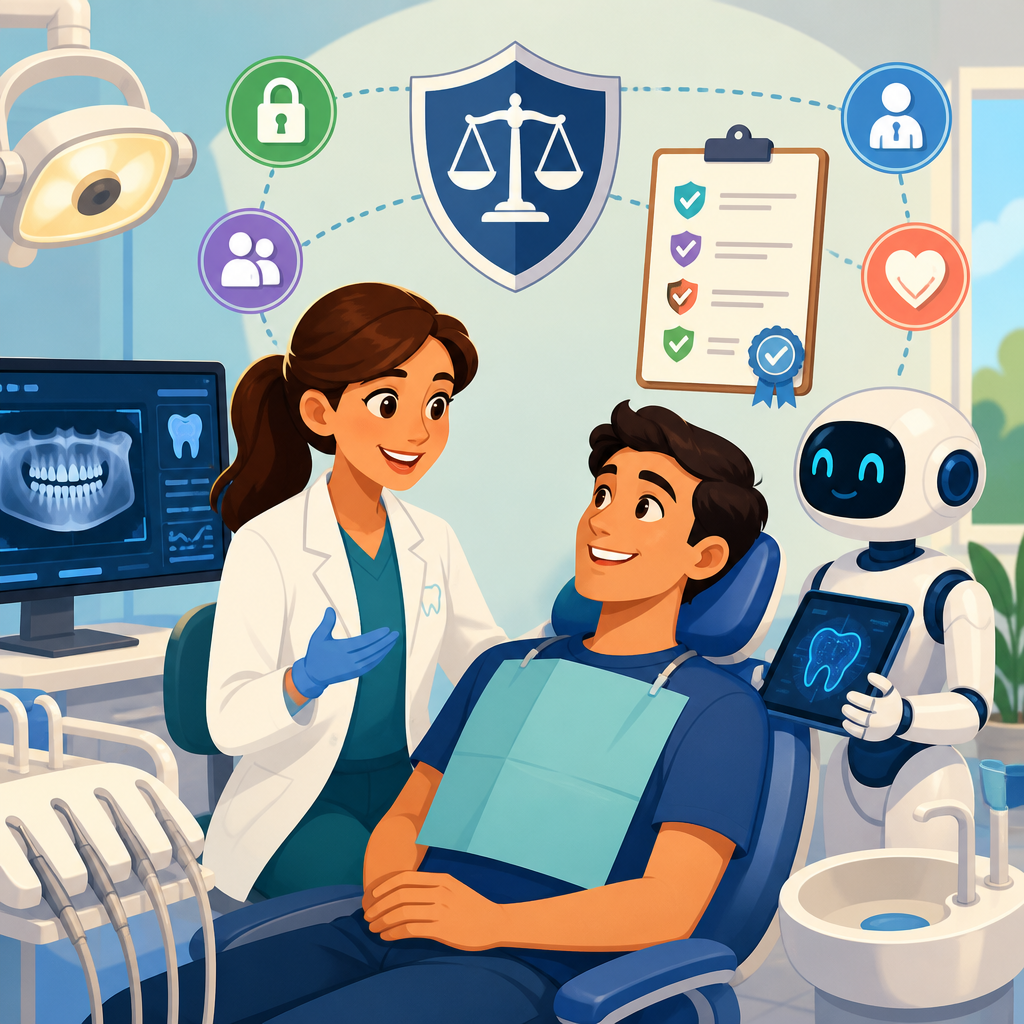
Artificial intelligence regulation is moving from abstract policy debate to practical business reality, and ADA practice will be shaped by that shift in ways attorneys, compliance leaders, employers, schools, health systems, and public entities cannot ignore. In this context, ADA practice means the day-to-day interpretation and application of the Americans with Disabilities Act across employment, public accommodations, state and local government services, transportation, digital access, and communications. AI regulation refers to laws, agency rules, procurement standards, technical frameworks, and enforcement guidance that govern how automated systems are designed, tested, deployed, explained, and audited. When these two fields intersect, the central question becomes simple: if an AI system affects a disabled person’s access to work, services, housing-related screening, education, health care, or online content, what duties of fairness, accessibility, accommodation, and non-discrimination apply?
I have seen this issue evolve from a narrow conversation about hiring software into a much broader compliance challenge. Employers now use resume screening tools, interview scoring systems, productivity analytics, and scheduling engines. Retailers and banks use chatbots and identity verification tools. Hospitals rely on triage software and patient portals. Universities deploy proctoring systems and learning analytics. Government agencies are exploring automated eligibility review and fraud detection. Every one of these use cases can create barriers for people with visual, hearing, mobility, speech, cognitive, psychiatric, or neurodevelopmental disabilities if accessibility and accommodation are treated as afterthoughts.
This matters because ADA liability rarely turns on whether a tool is branded as innovative. It turns on outcomes, process, and access. If an AI-enabled assessment disadvantages an applicant with a speech impairment, if a kiosk fails to work with screen readers, or if a chatbot cannot support a user who needs plain-language interaction, the legal and operational risk is immediate. Future ADA developments will therefore be influenced not only by disability law itself, but also by emerging AI governance standards that require impact assessments, transparency, human oversight, recordkeeping, and documented risk controls.
For organizations tracking updates and developments, this is the hub topic to watch. The future of ADA practice will be shaped by converging forces: civil rights enforcement, digital accessibility doctrine, technical standards, state algorithmic accountability laws, federal agency guidance, procurement rules, and industry audit expectations. The practical takeaway is clear. AI regulation will not replace ADA duties. It will make those duties more measurable, more auditable, and harder to excuse.
Why AI regulation will reshape core ADA analysis
The first major influence is analytical. Traditional ADA analysis asks whether a policy, tool, or environment denies equal access, screens out disabled people, or fails to provide reasonable accommodation. AI regulation adds structured questions that make this analysis sharper: What data trained the system? Was disability-related impact tested before deployment? Can a human review or override the output? Are error rates known across user groups? Was accessibility built into the interface? Those questions create evidence, and evidence drives enforcement and litigation.
In practice, this means ADA disputes will become more documentation-heavy. A company that uses automated hiring software may need to show validation studies, adverse impact reviews, accommodation pathways, and notice procedures. A public entity procuring an AI-enabled benefits portal may need conformance testing against WCAG 2.2, vendor accessibility documentation, and escalation protocols for users who cannot complete an automated process. Where organizations once relied on general equal opportunity statements, they will increasingly need system-specific governance records.
Regulators are already moving in that direction. The EEOC has warned that algorithmic decision tools can violate disability discrimination rules if they screen out qualified individuals or fail to allow accommodations. The Department of Justice has repeatedly tied digital accessibility to ADA obligations. NIST’s AI Risk Management Framework, while not a disability statute, reinforces concepts that fit neatly into ADA practice: valid and reliable systems, documented governance, continuous monitoring, and attention to harmful bias. These frameworks do not answer every legal question, but they strongly influence what reasonable care looks like.
Employment will remain the leading edge of conflict
Employment is the most mature and visible area of overlap between AI regulation and ADA practice. Employers have rapidly adopted automated tools for sourcing, assessment, interviewing, onboarding, performance management, and workforce planning. Many of these systems are sold as neutral efficiency tools, yet I have repeatedly found that neutrality claims collapse when a vendor cannot explain how accommodations work or whether disabled applicants were considered during testing.
Consider common examples. A video interview platform may score facial expression, eye contact, speech cadence, or word choice. Those criteria can disadvantage applicants with autism, stutters, facial paralysis, anxiety disorders, or hearing impairments. A gamified cognitive assessment can penalize users with dyslexia, ADHD, limited dexterity, or traumatic brain injury if timing and interface demands are rigid. Productivity monitoring software may classify disability-related breaks or atypical keyboard patterns as performance issues. Under the ADA, the problem is not merely bias in a statistical sense. The problem is that the tool can function as an impermissible screen and can block individualized accommodation.
Future regulation will likely push employers toward four defensible practices: advance notice that AI is being used, an accessible way to request accommodation, alternative assessment paths, and human review of consequential decisions. New York City’s automated employment decision tool law, although narrower than the ADA and focused on bias audits, has already shown how local regulation can force employers to inventory tools and formalize review. Similar state and municipal rules, combined with EEOC enforcement, will make undocumented automation a weak position.
| ADA practice area | Common AI use case | Likely regulatory pressure point | Practical compliance response |
|---|---|---|---|
| Hiring | Resume screening, assessments, video interviews | Bias testing, accommodation access, notice | Alternative formats, human review, validation records |
| Workplace management | Productivity monitoring, scheduling, performance scoring | Disability-related disparate impact, inflexible metrics | Exception protocols, supervisor training, override authority |
| Customer access | Chatbots, kiosks, verification tools | Digital accessibility, communication barriers | WCAG testing, live support fallback, usability reviews |
| Public services | Eligibility review, fraud detection, case triage | Due process, access to benefits, language clarity | Appeal routes, plain-language notices, accessibility audits |
| Health and education | Triage tools, proctoring, learning analytics | Screening effects, privacy, reasonable modification | Manual alternatives, targeted testing, documented governance |
The broader trend is straightforward: hiring technology vendors will be expected to provide more than a marketing promise. Buyers will demand audit rights, accessibility conformance reports, accommodation workflows, and indemnity language. Employment counsel and ADA coordinators will increasingly work alongside procurement, HR technology, and data governance teams rather than reviewing issues after a complaint arrives.
Digital accessibility will expand from websites to AI interfaces
For years, many ADA digital cases centered on websites and mobile apps. That focus is now widening to AI-mediated interfaces such as conversational agents, voice assistants, recommendation engines, document summarizers, biometric verification, and self-service kiosks. The legal principle remains the same: if the digital channel is part of how a business or public entity offers goods, services, programs, or benefits, it must be accessible in practice, not just theoretically available.
This is where future trends become especially important. A chatbot that replaces a call center may fail a deaf user if it cannot integrate with relay-based communication support. A voice-only interface can exclude users with speech disabilities. An image-generation or document-analysis tool without reliable alt text support can limit blind users. AI summarization can also create cognitive accessibility issues if it omits critical details, uses jargon, or presents unstable outputs that are difficult to follow with assistive technology.
I expect courts and regulators to look closely at whether organizations offer equivalent access, not merely alternate contact information buried in a footer. Technical standards will matter. WCAG 2.2 remains the most important benchmark for web and app accessibility, and procurement teams should treat it as a minimum floor. Yet AI systems also create issues WCAG alone does not fully solve, including explainability, output consistency, and adaptive interaction design. That means accessibility testing must include real users with disabilities, not only automated scanners such as axe, WAVE, or Lighthouse.
Another likely development is stronger scrutiny of third-party tools embedded into otherwise accessible platforms. A university may have a compliant main site but still expose students to inaccessible AI proctoring. A bank may maintain an accessible app while outsourcing identity verification to a vendor that rejects users with facial differences or mobility limitations. In ADA practice, outsourcing functionality does not outsource responsibility. AI regulation will reinforce that point by making vendor governance more explicit.
Public sector and public accommodations enforcement will grow
State and local governments, courts, transit agencies, libraries, hospitals, retailers, hotels, and restaurants are all experimenting with automated tools. The risk profile is higher in these settings because access barriers can affect essential services and daily participation in civic life. When a disabled person cannot navigate an AI-assisted benefits portal, challenge an automated denial, or communicate through a digital intake system, the issue goes beyond convenience. It can affect housing stability, medical care, education, or income.
The Department of Justice’s updated rule on web and mobile accessibility for state and local governments signals a broader enforcement posture: accessibility is an operational duty, not a future aspiration. As agencies adopt AI, that posture will likely extend to procurement specifications, contract clauses, testing protocols, and complaint response procedures. Public entities that already maintain ADA transition planning and grievance mechanisms will be better positioned because they have governance structures that can be adapted to automated systems.
Public accommodations face similar pressure. Retail self-checkout, hotel booking assistants, restaurant ordering kiosks, and telehealth intake bots can all raise ADA questions. The most defensible organizations will map the customer journey, identify where automation is essential to completing a transaction, and ensure an accessible path exists at each step. In my experience, litigation risk drops significantly when businesses can show they tested the entire workflow, including authentication, payment, customer support, and post-transaction records.
Documentation, audits, and procurement will become central compliance tools
The biggest practical shift will be procedural. ADA compliance in an AI environment depends less on policy slogans and more on evidence of disciplined governance. Organizations should expect future standards to emphasize inventories of automated systems, risk classification, accessibility reviews before launch, accommodation procedures, incident logging, and periodic reassessment. This is already common in privacy and cybersecurity programs; AI will bring the same operating model to disability access.
Procurement is the leverage point. Before buying an AI tool, organizations should ask vendors for a VPAT, WCAG test results, model documentation, known limitations, retraining practices, and any bias or impact audit results. They should require contract language covering accessibility remediation timelines, notification of material model changes, retention of decision logs, cooperation in investigations, and termination rights if the tool creates unacceptable compliance risk. Without these provisions, ADA problems become harder to detect and even harder to fix.
Internal governance also matters. Cross-functional review teams should include legal, IT, security, HR, accessibility specialists, product owners, and frontline operators. Staff need training on when AI outputs can be unreliable, when to escalate accommodation requests, and how to override automated recommendations. A documented human-in-the-loop process is not a cosmetic feature. It is often the difference between a manageable compliance issue and a systemic discrimination claim.
Predictions for future ADA developments in the AI era
Several predictions are well grounded. First, more ADA claims will focus on automated decision pathways rather than static policies. Second, regulators will expect organizations to prove accessibility and accommodation readiness before deployment, not after complaints. Third, courts will increasingly treat inaccessible AI features as part of the covered service itself when no practical equivalent exists. Fourth, plaintiffs will use discovery to request training data descriptions, audit reports, vendor contracts, exception logs, and complaint histories.
Fifth, industry norms will harden around accessibility-by-design. Just as security moved toward secure development lifecycle practices, AI products will increasingly be expected to include accessible interface design, explainable outputs, and documented fallback channels from the start. Sixth, disability advocacy groups will become more active in procurement influence, standard setting, and strategic litigation. Their involvement will help move the conversation beyond narrow compliance checklists toward genuine usability.
There are limits and tradeoffs. Not every AI tool can provide perfect explainability, and small organizations may struggle with sophisticated audits. Some accessibility fixes will involve cost and vendor dependency. But those realities do not reduce ADA duties. They simply make early planning more valuable. The organizations that start now will spend less on remediation, face fewer complaints, and build systems that work better for everyone.
AI regulation could influence ADA practice by making accessibility, accommodation, and non-discrimination more concrete, testable, and enforceable across employment, digital services, public programs, and customer interactions. The headline lesson for future ADA developments is not that AI creates a brand-new legal universe. It is that AI exposes old access failures in new technical forms, while giving regulators better tools to measure them. Employers will need accommodation-ready hiring systems. Public entities will need accessible automated services. Businesses will need vendor controls, documented audits, and real human fallback options.
For teams following updates and developments, this hub topic should guide every related article and operational decision in the coming years. Watch employment enforcement, digital accessibility standards, state algorithmic accountability laws, federal procurement rules, and vendor documentation practices. Review every high-impact automated system through the lens of disability access before deployment. Test with disabled users, not only software scanners. Put contracts, governance, and escalation procedures in writing.
The main benefit of acting early is practical: fewer barriers for users, fewer disputes for organizations, and stronger legal defensibility when automated systems are challenged. AI regulation is not a distant policy issue for ADA practice. It is becoming part of everyday compliance architecture. Start by inventorying your AI tools, identifying where they affect access or opportunity, and closing the gaps before regulators, employees, customers, or plaintiffs force the timetable.
Frequently Asked Questions
How could AI regulation change day-to-day ADA compliance in workplaces, schools, health systems, and public services?
AI regulation is likely to make ADA compliance more operational, more documented, and more technology-specific than many organizations are used to today. In practice, that means employers, educational institutions, health systems, transit providers, and public entities may need to look beyond traditional nondiscrimination policies and examine how automated tools actually affect people with disabilities in real-world settings. If an AI system screens job applicants, prioritizes patient outreach, flags students for discipline, routes customer service requests, or determines eligibility for services, regulators and courts may increasingly expect organizations to understand whether those systems create barriers, screen out disabled individuals, or undermine reasonable modification and accommodation rights.
For ADA practice, this shift matters because the ADA is not limited to intentional discrimination. It also reaches policies, practices, and methods of administration that have the effect of excluding or disadvantaging people with disabilities. AI regulation could reinforce that principle by requiring impact assessments, transparency disclosures, human oversight, recordkeeping, accessibility review, and vendor accountability. Those obligations would make it harder for organizations to claim they did not know how an algorithm worked or whether it created disability-related risks.
On a day-to-day level, compliance teams may need to build new workflows: reviewing AI procurement contracts, auditing automated decision tools for disparate disability impact, confirming accessible interfaces for users of assistive technology, preserving channels for human review, and training frontline personnel to recognize when an automated process may interfere with accommodation rights. Attorneys handling ADA matters may also find that regulatory guidance, technical standards, and internal governance documents become central evidence in disputes. In short, AI regulation could move ADA compliance from a mostly reactive complaint-based model toward a more proactive governance model focused on design, testing, documentation, and correction.
Can the use of AI in hiring and employment create ADA liability even if an employer did not intend to discriminate?
Yes. One of the most important realities for employers is that ADA liability does not depend solely on discriminatory intent, and AI tools can create risk even when they are adopted for efficiency or consistency. If an employer uses AI to rank resumes, analyze video interviews, score assessments, monitor productivity, or recommend discipline, the system may disadvantage applicants or employees with disabilities in ways that trigger ADA concerns. For example, software that measures speech patterns, facial expressions, typing speed, eye movement, attendance regularity, or communication style may penalize individuals with mobility, neurological, psychiatric, sensory, or chronic health conditions.
AI regulation could sharpen this risk by creating more explicit expectations around testing, explainability, and accommodation pathways. If a hiring tool has not been evaluated for disability bias, if a candidate is not told how to request an alternative assessment, or if the employer cannot explain the basis for a machine-generated score, those facts may become highly relevant in an ADA investigation or lawsuit. The same is true when productivity-monitoring systems effectively punish workers whose disabilities affect pace, stamina, concentration, schedule variability, or interaction patterns. A tool that appears neutral may still operate as a qualification standard that screens out disabled individuals, or it may interfere with the employer’s duty to provide reasonable accommodations.
From a practical standpoint, employers should not treat AI vendors’ assurances as a complete defense. ADA-focused diligence should include reviewing what traits the system measures, whether the interface is accessible, whether alternative formats or processes are available, how accommodation requests are handled, and whether human decision-makers can override automated outcomes. Employers should also document why a tool is job-related and consistent with business necessity when that standard may apply. As AI regulation develops, the safest approach is to assume that employment technology will be scrutinized not just for efficiency, but for fairness, accessibility, and adaptability to disability-related needs.
What does AI regulation mean for digital accessibility and public accommodations under the ADA?
AI regulation could significantly expand how organizations think about accessibility in websites, apps, kiosks, chatbots, virtual assistants, and other customer-facing systems. Under the ADA, public accommodations and many other covered entities already face serious risk when digital tools are inaccessible to people with disabilities. The addition of AI introduces a new layer of complexity because these systems are often dynamic, personalized, and continuously updated. A traditional website accessibility review may not be enough if an AI-powered chatbot cannot interact effectively with screen readers, if voice-based systems do not work for people with speech disabilities, or if image-recognition and recommendation tools produce inaccessible or inaccurate outputs.
Regulation could push businesses to evaluate not only whether a digital platform meets baseline accessibility expectations, but also whether its AI-driven features preserve equal access over time. That is especially important where AI controls navigation, customer support, scheduling, product recommendations, eligibility screening, or identity verification. If a disabled user cannot independently complete a task because the automated interface is not compatible with assistive technology or lacks an equivalent accessible pathway, the organization may face arguments that it denied full and equal enjoyment of its goods or services.
For lawyers and compliance leaders, this means accessibility can no longer be treated as a one-time technical checklist. It must be integrated into AI procurement, design, testing, updates, and incident response. Organizations may need to require accessibility warranties from vendors, conduct usability testing with disabled users, maintain non-AI alternatives where appropriate, and monitor whether system updates introduce new barriers. In public-facing settings, AI regulation may also influence how enforcement agencies and courts evaluate whether accessibility failures were foreseeable and preventable. The broader point is that as AI becomes part of the customer or constituent experience, ADA exposure will increasingly turn on whether accessibility was built into that experience from the start rather than patched in after complaints arise.
Will AI regulation affect how reasonable accommodations and modifications are evaluated under the ADA?
Very likely. One of the most important ways AI regulation could influence ADA practice is by changing the factual context in which reasonable accommodation and reasonable modification issues are assessed. When AI systems are embedded in hiring, scheduling, education, healthcare, transportation, customer service, or eligibility decisions, organizations may need to consider not only accommodations for people, but also adjustments to automated processes themselves. A disabled person may need an alternative to an AI assessment, a human review of an automated denial, a different interface, an exemption from certain monitoring metrics, or a modified workflow when the standard automated system does not account for disability-related limitations.
This matters because the ADA generally requires individualized consideration. AI systems, by contrast, often operate by standardization, prediction, and pattern recognition. That creates tension. If an organization relies too heavily on automated rules, it may fail to engage in the interactive process or to make case-specific judgments the ADA expects. AI regulation could strengthen the expectation that entities preserve meaningful human involvement and establish procedures for escalation when disability-related issues arise. In employment, for example, an employee may need a productivity metric adjusted because disability affects speed but not essential performance. In education or public services, a person may need an alternative communication method if an AI-driven portal or chatbot does not work for them. In healthcare, algorithmic triage or intake systems may require exceptions so disabled patients can access care on equal terms.
As a result, ADA practitioners should expect more disputes over whether an organization offered a real alternative to an AI-mediated process and whether that alternative was timely, effective, and dignified. Regulation may not replace existing ADA standards, but it can make them more concrete by defining expectations for notice, appeal, human review, logging, and corrective action. The practical lesson is straightforward: if AI becomes part of the decision-making chain, accommodation and modification procedures must also extend to that chain. Otherwise, an organization risks automating noncompliance.
What should attorneys and compliance teams do now to prepare for the intersection of AI regulation and ADA enforcement?
The most effective response is to treat AI governance and ADA compliance as connected disciplines rather than separate projects. Organizations should begin by mapping where AI or automated decision-making already exists across employment, education, healthcare, customer service, digital platforms, public benefits, transportation, and internal operations. Many entities underestimate how broadly automation is used, especially when vendor products include embedded machine-learning features. Once those systems are identified, legal and compliance teams should evaluate where disability-related risks are most likely to arise: screening and selection tools, surveillance and productivity software, conversational interfaces, eligibility systems, triage tools, fraud detection, identity verification, and any technology that measures human behavior or functioning.
Next, teams should build a defensible review framework. That typically includes accessibility testing, disability impact assessment, documentation of intended use, analysis of job-relatedness or necessity where relevant, accommodation pathways, human review mechanisms, vendor contract protections, complaint escalation procedures, and periodic audits. Policies should clearly state that automated outputs are not final where ADA rights may be implicated. Training is also essential. Human resources staff, managers, admissions personnel, clinicians, faculty, customer service teams, and government program administrators need to know when an AI-generated result may require exception handling, individualized review, or referral for accommodation analysis.
Attorneys should also watch for developments from federal agencies, state regulators, standards-setting bodies, and courts, because AI compliance obligations may emerge from multiple directions at once. Even where a regulation is not written specifically for disability law, it may still influence ADA litigation by shaping expectations around fairness, transparency, validation, and oversight. In litigation or investigations, the organizations in the strongest position will be those that can show they asked the right questions before deployment, tested for accessibility and disability impact


