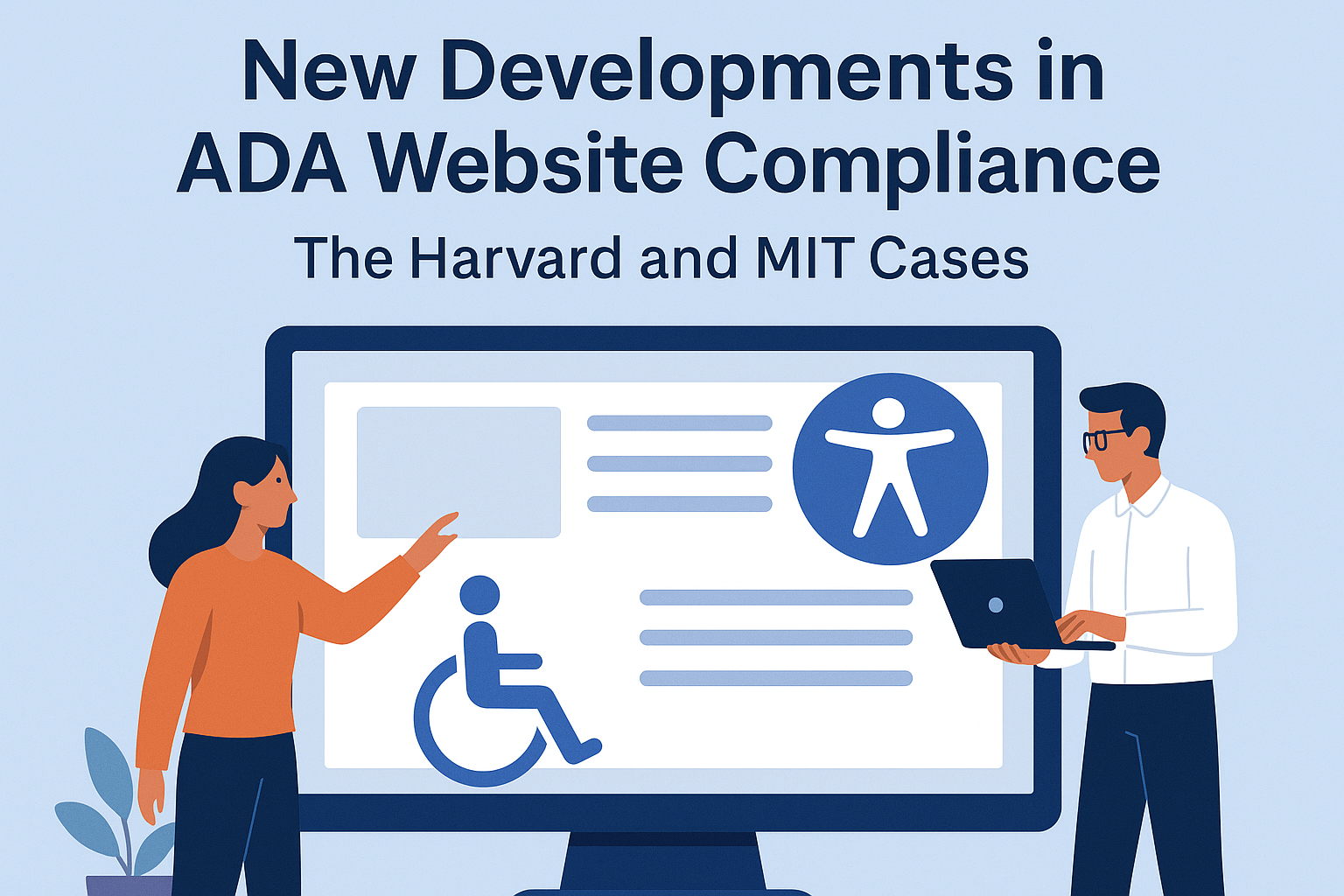
The digital age has revolutionized access to information, but it has also raised significant challenges regarding accessibility. One of the critical issues is ensuring that websites comply with the Americans with Disabilities Act (ADA). The ADA, enacted in 1990, prohibits discrimination based on disability and extends to digital platforms, necessitating that websites be accessible to all users, including those with disabilities. Recent legal cases involving prestigious institutions such as Harvard and MIT have highlighted the importance of ADA compliance on websites. These cases underscore the legal and ethical imperatives for organizations to make their digital content accessible to everyone, thereby fostering inclusivity and avoiding potential lawsuits.
Website accessibility is not only a legal obligation but also a moral one, aiming to ensure that people with disabilities have equal access to information and services online. Compliance with ADA standards involves various elements such as providing alternative text for images, enabling keyboard navigation, and ensuring that video content is accessible through captions or transcripts. Understanding these components is crucial for organizations to avoid potential lawsuits and hefty fines while enhancing user experience for everyone. In this article, we delve into the developments in ADA website compliance, focusing on recent legal actions against Harvard and MIT, and explore how these cases could impact the future of digital accessibility.
The Importance of ADA Website Compliance
The ADA was designed to provide equal opportunities and access to individuals with disabilities, and this extends to the digital realm. As websites become integral to accessing information and services, the need for ADA compliance has never been more critical. The Harvard and MIT cases have brought significant attention to the issue, as both institutions faced lawsuits for failing to provide accessible online content. These cases highlight the necessity for businesses and organizations to prioritize accessibility in their website design and content presentation.
ADA compliance ensures that websites are usable by people with a broad range of disabilities, including vision impairments, hearing impairments, and physical limitations that affect navigation. By adhering to web accessibility guidelines, organizations can not only comply with the law but also reach a wider audience, thereby enhancing their reputation and customer satisfaction. Moreover, accessible websites improve search engine optimization (SEO) and overall user engagement, offering an inclusive digital experience that benefits everyone.
Analyzing the Harvard Case
In 2015, the National Association of the Deaf (NAD) filed a lawsuit against Harvard University, claiming that its online content, including videos and audio materials, was inaccessible to individuals who are deaf or hard of hearing. The lawsuit insisted on the need for captions on video content as a standard for accessibility. This case served as a pivotal moment in the realm of ADA compliance, emphasizing the responsibilities of educational institutions to ensure equal access to educational materials.
Harvard’s defense initially argued that its website fell outside the remit of the ADA, as the internet was not explicitly mentioned in the statute. However, the courts dismissed this argument, reinforcing the notion that ADA principles extend to digital platforms. This decision underscored that any public-facing entity, including educational institutions, must break down barriers to access.
| Year | Institution | Legal Action | Outcome |
|---|---|---|---|
| 2015 | Harvard University | Lawsuit for Inaccessible Online Content | Settled with ADA Compliance Requirements |
| 2015 | Massachusetts Institute of Technology (MIT) | Lawsuit for Inaccessible Online Content | Settled with ADA Compliance Requirements |
Understanding the MIT Case
Similarly, in 2015, MIT faced a lawsuit from the NAD for failing to provide captions for its online course materials. Like Harvard, MIT had argued that the ADA did not specifically address digital content, but this claim was also refuted by the court. In response to the legal proceedings, MIT eventually settled the case by agreeing to enhance its digital accessibility measures.
The MIT case was particularly notable as it involved a massive array of online materials available through platforms like MIT OpenCourseWare and MITx. By mandating these enhancements, the settlement highlighted the importance of making all digital learning environments accessible, setting a precedent for other educational institutions worldwide. The settlement demanded systemic changes in how MIT produced, managed, and disseminated its digital content, emphasizing transparency, accountability, and ongoing improvement.
The Impacts of These Cases on Digital Accessibility
The legal actions against Harvard and MIT have had far-reaching consequences in the digital landscape. They have set legal precedents that stress the significance of ensuring all online content is accessible to people with disabilities. These cases have not only awakened educational and public institutions to their responsibilities but also influenced broader digital policies and practices.
Many organizations now recognize the legal risks and reputational damage associated with non-compliance. As a result, there is a growing trend towards the adoption of comprehensive accessibility strategies. Businesses, particularly those in the education sector, are investing in web accessibility training for their staff and deploying technology solutions that offer real-time accessibility audits. This focus on inclusivity is shaping a more equitable digital world, where all users can enjoy seamless access to information and opportunities.
Best Practices for Ensuring ADA Website Compliance
To avoid legal ramifications similar to those faced by Harvard and MIT, organizations must implement best practices for ADA website compliance. This involves conducting regular audits of digital content to identify and rectify accessibility issues. Organizations should adopt the Web Content Accessibility Guidelines (WCAG), which provide a robust framework for making web content more accessible to people with disabilities.
A crucial aspect of ADA compliance involves designing websites with keyboard navigation in mind, as many users rely on keyboards rather than mice due to mobility impairments. Additionally, providing alt text for images ensures that visually impaired users can understand visual content through screen readers. Implementing these measures will not only enhance website accessibility but also position the organization as a leader in inclusivity and societal responsibility.
- Provide text alternatives for non-text content.
- Ensure content is accessible through a keyboard interface.
- Create content that can be presented in different ways without losing meaning.
- Make text readable and understandable.
- Maximize compatibility with current and future user tools.
The Role of Technology in Facilitating Compliance
Technology plays a pivotal role in facilitating ADA compliance for websites. Numerous tools can assist in evaluating and enhancing web accessibility. Automated testing tools can quickly identify accessibility issues, while more granular checks can be conducted manually to ensure thorough compliance with guidelines. These technologies enable organizations to proactively tackle accessibility barriers and make necessary adjustments to their digital platforms.
Moreover, accessibility overlays and plug-ins can enhance user experience by providing customizable interfaces tailored to the needs of diverse users. These tools can adjust contrast settings, enlarge text, or offer alternative navigation paths without altering the core website architecture. By integrating such technology, organizations can effectively serve all users, demonstrating their commitment to accessibility and leading by example in their respective industries.
Conclusion and Call-to-Action
In conclusion, the Harvard and MIT cases serve as pivotal reminders of the importance of ADA compliance in the digital era. As accessibility becomes an increasingly critical component of website design, organizations must prioritize inclusivity to cater to the needs of all potential users. Adhering to accessibility guidelines not only aligns with legal mandates but also promotes ethical standards and enhances user experience.
Moving forward, it is incumbent upon all organizations to conduct comprehensive audits of their web content, implement best practices as outlined by the WCAG, and leverage technological solutions that address accessibility gaps. By taking these proactive steps, entities can not only mitigate legal risks but also contribute to building a more inclusive digital world. We urge businesses, educational institutions, and public organizations to make web accessibility a strategic priority. The path to inclusivity begins with a commitment today—a crucial step toward a future where everyone has equal access to the digital realm.
For further guidance on implementing ADA compliance strategies, consider enlisting the expertise of digital accessibility consultants or enrolling in specialized training programs. Taking these actions will empower your organization to lead in accessibility, ensuring that your digital content is equitable and accessible to all.
Frequently Asked Questions
1. What prompted the cases against Harvard and MIT regarding ADA website compliance?
The cases against Harvard and MIT emerged from complaints by disability rights organizations and individuals who felt that the universities’ online educational materials were not accessible to everyone, particularly individuals who are deaf or hard of hearing. In this digital era, accessibility isn’t just about physical spaces; it’s crucial for online content too. The lawsuits argued that the lack of proper accommodations, such as closed captions on videos, constituted a form of discrimination under the Americans with Disabilities Act (ADA). By failing to make their educational resources accessible, Harvard and MIT were perceived as excluding a significant portion of the population who require assistive technologies to access digital content, hence prompting legal action.
2. How do these cases impact ADA compliance requirements for websites in general?
The cases involving Harvard and MIT have far-reaching implications for ADA website compliance. They underscore that educational institutions, and by extension, other organizations, need to prioritize digital accessibility as an essential part of their service offerings. In a broader sense, these cases serve as a wake-up call that websites should include elements like alt-text for images, captions for videos, and navigable design for screen readers to meet ADA standards. Failure to comply can not only result in legal challenges but also deny a vast audience access to necessary information, hence limiting organizational reach and inclusivity. These cases emphasize an industry-wide necessity for websites across sectors to reevaluate their digital presence and prioritize inclusivity.
3. What changes did Harvard and MIT have to implement to settle their cases?
As part of their settlements, both Harvard and MIT committed to enhancing the accessibility of their online content. Harvard agreed to provide captions for all existing and newly uploaded video and audio content on platforms like YouTube and SoundCloud. MIT also pledged to make similar improvements, ensuring their digital media includes captions and that their websites and services meet WCAG 2.0, Level AA standards. Both institutions have committed to training staff on digital accessibility best practices, ensuring future content is designed with accessibility in mind from the ground up. These changes not only bring university resources into compliance with ADA standards but serve as a model for other organizations to follow in prioritizing accessibility.
4. Why is digital accessibility important beyond just complying with the ADA?
Digital accessibility goes beyond mere legal compliance—it is about inclusivity and equal opportunity. In an increasingly digital world, access to information, services, education, and employment is often mediated through websites and online platforms. For individuals with disabilities, a lack of accessibility can mean exclusion from the educational, economic, and societal benefits that many take for granted. Making digital content accessible ensures that all people, regardless of their disabilities, can participate actively and equally in today’s digital landscape. Moreover, accessibility can improve the user experience for everyone, not just those with disabilities, offering clearer navigation, better structure, and more intuitive design. Beyond avoiding legal consequences, digital accessibility reflects an organization’s commitment to diversity, equity, and inclusion, which can positively impact its reputation and reach.
5. What practical steps can other organizations take to improve their ADA website compliance following the example of Harvard and MIT?
Organizations looking to enhance their website’s ADA compliance can start by conducting a comprehensive audit to identify accessibility gaps. They should utilize tools and resources like the Web Content Accessibility Guidelines (WCAG) to guide improvements. Implementing features such as alt-text for images, keyboard navigation, appropriate form labeling, and captioning for audio-visual content are critical steps toward accessibility. Training staff regularly on accessibility best practices ensures that new content is created with inclusivity in mind from the outset. Engaging with accessibility experts or consultants can offer valuable insights and ensure compliance with legal standards. Additionally, involving users with disabilities in testing and feedback processes can provide real-world perspectives on accessibility and usability. These practical steps, inspired by the corrective actions of Harvard and MIT, help build an inclusive digital presence and reinforce an organization’s commitment to accessibility for all.