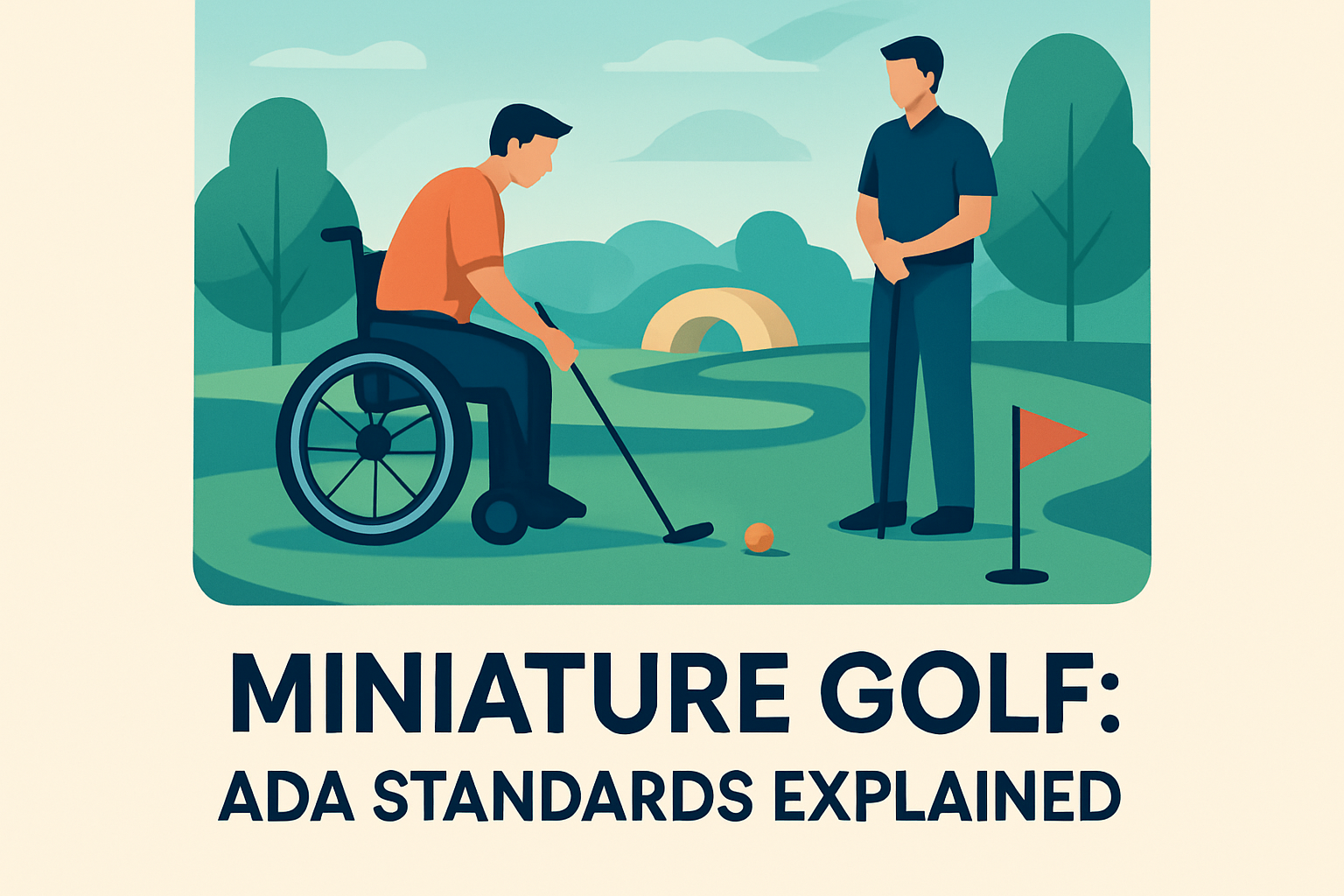
Miniature golf, fondly known as mini-golf or putt-putt, is a recreational sport enjoyed by millions across the globe. It’s a miniature version of the larger game of golf, designed to offer fun and accessible gameplay to individuals of all ages and abilities. As leisure activities evolve, it’s essential to ensure they are inclusive, allowing everyone to partake equally. This is where the Americans with Disabilities Act (ADA) standards come into play. The ADA, enacted in 1990, aims to eliminate discrimination against individuals with disabilities, ensuring they have the same opportunities to enjoy various amenities. When it comes to miniature golf, the ADA standards set guidelines that operators must follow to design their courses in an accessible manner. This article dives deep into understanding these standards and their significance in promoting inclusivity within the sport.
Ensuring accessible miniature golf courses matters because it allows individuals with disabilities to enjoy the game without facing unnecessary barriers. Unfortunately, many facilities were designed without considering these important aspects, potentially excluding a significant portion of the population from participating in this enjoyable activity. Understanding and implementing ADA standards in miniature golf not only fosters inclusivity but also aligns with legal requirements, potentially broadening the customer base. So, let’s explore what these standards involve.
Understanding ADA Pathways and Clearances
When it comes to physical accessibility, one of the primary focuses of the ADA standards is the pathways and clearances around the miniature golf course. The pathways refer to the routes that players use to navigate from one hole to the next, or from the entrance to any part of the facility. It’s vital that these pathways are wide enough and free of obstacles to allow easy traversing for individuals using mobility aids like wheelchairs, scooters, or walkers.
The ADA mandates that the pathways must be a minimum of 36 inches wide to accommodate these aids without difficulty. Furthermore, there must be areas where the path width expands to accommodate passing or turning. Clear paths ensure that individuals do not encounter frustrations or blockages as they engage in the activity.
An example can be seen at the Myrtle Beach Family Golf Center in South Carolina. The center redesigned its pathways to ensure they are compliant with ADA standards. They incorporated wider, smooth concrete paths with gradual slopes, eliminating gravel or cumbersome steps that could hinder movement.
Hole Accessibility: Reach Ranges and Course Design
Another critical aspect of ADA compliance in miniature golf involves the actual putting greens and the design of each hole. The ADA stipulates that at least 50% of the holes on a course must be accessible. “Accessible” in this context means that players should be able to navigate to and from these holes with the same ease as they would on the rest of the course.
The holes also need to be designed so that those using wheelchairs or other mobility aids can play them. This includes reachable cups and a surface that allows for ease of play. The accessible holes should be evenly distributed throughout the course to provide a holistic experience.
The Wye Valley Miniature Golf in England exemplifies this by having strategically placed accessible holes throughout its course, thus allowing players with physical disabilities to join in the fun with minimal limitations. They implemented features like accessible borders around greens and ensured reachable hole locations.
Signage and Information Accessibility
ADA standards also emphasize the need for accessible signage and information around miniature golf courses. The signs should provide clear guidance on the course layout, rules, and any safety notices. More importantly, these signs need to be readable by everyone, which often means including Braille and large print or high contrasting colors for those with visual impairments.
Good signage extends beyond the course rules to encompass directions, pricing information, and any instructions pertinent to course safety. Ensuring this information is accessible helps players feel informed and part of the experience.
Golf Paradise in New Jersey showcases exemplary practices by having tactile maps available for players with visual impairments. Their signs use contrasting colors and large fonts and include Braille descriptions at main checkpoints throughout the facility.
Accessibility Features: Bathrooms and Facilities
Going beyond the golf course itself, ADA standards also require accessible facilities within the miniature golf venue. This includes restrooms, snack bars, and ticket counters. The design must accommodate individuals with various disabilities, ensuring they can move around freely and effectively use the amenities.
Restrooms must have features such as wider stalls, grab bars, and accessible sinks to cater to the needs of those using wheelchairs. Counters where payments are made or food and beverages are served should have lowered sections or alternate arrangements available to accommodate all patrons.
| Facility Feature | ADA Requirement |
|---|---|
| Restroom Stalls | At least 60 inches wide, with grab bars |
| Counter Heights | No higher than 36 inches at accessible areas |
| Doorways | At least 32 inches wide when door is open at 90 degrees |
The Fiesta Village Family Fun Park in California addresses these needs by offering fully accessible facilities that encompass ADA-compliant restrooms and service counters designed to be reachable from a seated position.
Slopes and Terrain Modifications
While miniature golf courses are often characterized by their tricky terrains and obstacles, ADA compliance dictates that such features should be accessible to everyone. For instance, slopes and inclines that form part of the course should be designed to be manageable by those in wheelchairs or using walking aids.
The recommendation is to avoid any slopes exceeding a 1:20 gradient unless there are handrails or additional assists available. This ensures all players can partake in the thrills of the game without safety concerns.
Adventure Golf & Sports in Michigan showcases adaptations where terrain challenges are balanced with accessibility, including ramps and alternate routes for some of their more challenging holes.
Conclusion
Understanding the ADA standards for miniature golf not only fosters a more inclusive environment but also aligns with broader societal goals of accessibility and equality. The standards encompass various elements of course and facility design — from ensuring adequately wide pathways and accessible holes to providing readable signs and appropriate bathroom modifications. By adopting these guidelines, miniature golf operators can create conditions that allow all individuals, regardless of disabilities, to enjoy miniature golf.
Implementing these changes can initially seem overwhelming; however, the benefits extend beyond meeting legal requirements — they offer a competitive edge by broadening the potential customer base. If you manage or operate a miniature golf course and haven’t yet considered these ADA standards, it’s time to take action. Start with a comprehensive assessment of your facility to identify areas for improvement. Together, let’s make miniature golf an inclusive joy for everyone.
Frequently Asked Questions
1. What are ADA standards in the context of miniature golf?
The Americans with Disabilities Act (ADA) standards ensure that people with disabilities have the same access to public places and activities as everyone else. When it comes to miniature golf, this means that the courses must be designed or modified to be accessible to all. The ADA provides guidelines on various aspects, such as the width of pathways, the slope of rampways, and available amenities, to make sure everyone, regardless of ability, can enjoy the game. This includes elements like adjustable height features, removal of obstacles, and ensuring surfaces are navigable for those using mobility devices. Overall, ADA standards aim to create an inclusive environment where all players can focus on enjoying the fun and challenge of miniature golf without accessibility barriers.
2. What specific requirements must a miniature golf course meet under ADA standards?
There are several specific requirements that a miniature golf course must meet to comply with ADA standards. Firstly, at least 50% of the holes on a course must be accessible, which includes ensuring that holes are on an accessible path without any barriers blocking entrance or exit. Paths should be a minimum of 36 inches wide to accommodate wheelchairs or other mobility aids, and they should be free of obstacles to ease maneuvering. Additionally, accessible holes should be as evenly dispersed throughout the course as possible to provide a full experience of play. These requirements ensure that people with disabilities can have an equitable and enjoyable experience playing miniature golf.
3. How do ADA standards impact the design of miniature golf courses?
The design of miniature golf courses under ADA standards involves thoughtful planning to promote inclusivity. Designers need to consider creating wide, smooth pathways that connect all essential elements of the course, like entrances, holes, and amenities like restrooms or concessions. The inclusion of ramps with a gentle slope is crucial for areas with elevation changes on the course. Furthermore, all reachable features, such as railings or instructions, must be at a height accessible to someone using a wheelchair. These design considerations help facilitate a fluid, barrier-free playing experience, letting anyone focus on sinking that perfect putt.
4. Are there resources available for miniature golf course owners to ensure ADA compliance?
Yes, several resources are available for miniature golf course owners looking to ensure ADA compliance. The U.S. Access Board is a pivotal resource, offering guidelines and technical assistance specifically related to recreational facilities like mini-golf courses. Consulting with ADA specialists or hiring architects familiar with inclusive design is another practical approach. Additionally, the ADA National Network provides free assistance and training, which can be invaluable for understanding best practices and for making informed decisions. Joining associations dedicated to recreational facilities or networking with other course owners who have successfully implemented ADA standards can also be a great way to share knowledge and refine implementation strategies.
5. What happens if a miniature golf course does not comply with ADA standards?
Non-compliance with ADA standards can have several consequences for a miniature golf course. Initially, it might receive a complaint from a patron, which can escalate to an investigation by the Department of Justice, which enforces the ADA. Failure to rectify identified issues can lead to fines, required modifications, or lawsuits. Besides legal ramifications, non-compliance can harm a business’s reputation, as inclusivity is increasingly important to consumers. By ensuring compliance, course owners demonstrate their commitment to accessibility, potentially leading to an expanded customer base and positive customer experiences. As such, meeting and exceeding ADA standards is not only about legality; it’s about fostering an environment welcoming to all players.