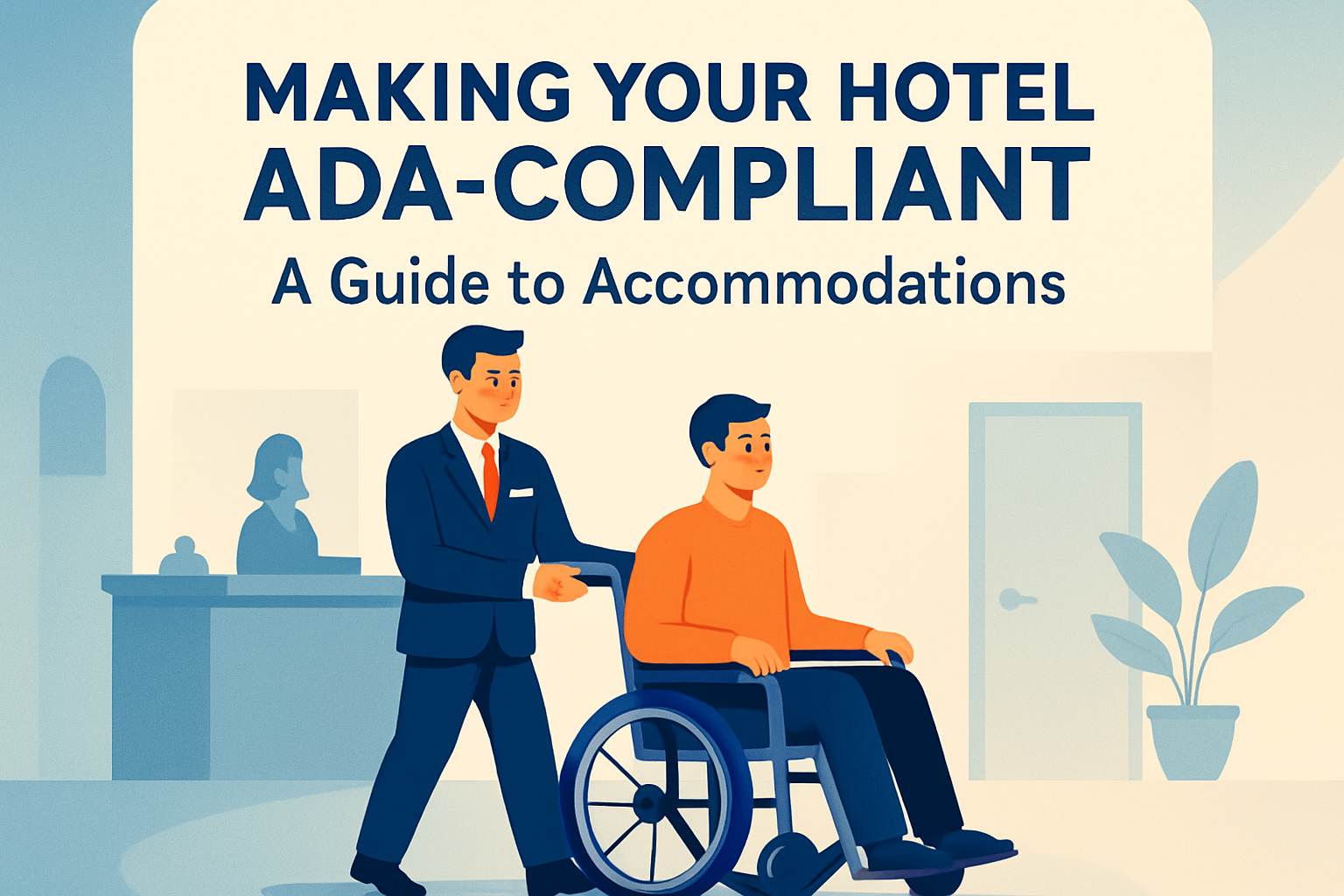
Making your hotel ADA-compliant is not just a legal requirement; it is a core part of running a property that welcomes every guest with dignity, safety, and equal access. In hotel operations, ADA compliance refers to meeting the standards of the Americans with Disabilities Act, the federal civil rights law that prohibits discrimination against people with disabilities in places of public accommodation. For hotels, that affects physical spaces, reservation systems, communication methods, service policies, and staff behavior. I have worked with hospitality teams updating older inns, select-service properties, and full-service hotels, and the same lesson repeats every time: accessibility is not a one-time renovation project. It is an operational standard that touches design, maintenance, guest communication, and revenue strategy.
Hotel owners often assume ADA compliance starts and ends with a few accessible guest rooms and a ramp at the entrance. In practice, the law is broader. Guests need accessible parking, routes from public entrances to check-in, compliant restroom features, clear signage, communication access for guests with hearing or vision disabilities, and reservation information that accurately describes accessible features. The 2010 ADA Standards for Accessible Design set technical requirements for many of these elements, while Department of Justice guidance and case law shape how hotels should apply them in daily operations. State and local building codes may also add obligations, so federal compliance is the floor, not always the ceiling.
This matters for three practical reasons. First, noncompliance creates legal and financial risk through complaints, demand letters, lawsuits, remediation costs, and reputational damage. Second, accessible travel is a significant market. Millions of Americans live with mobility, hearing, vision, cognitive, or other disabilities, and they travel for work, medical needs, family events, and leisure. Third, accessibility improves the guest experience for everyone. Lever handles help travelers carrying bags, captioning supports people in noisy rooms, and step-free routes benefit older guests and families with strollers. A hotel that gets accessibility right reduces friction, increases direct bookings, and builds trust that online reviews often reflect clearly.
Understand what ADA compliance means in a hotel setting
For hotels, ADA compliance means providing equal access to goods, services, facilities, privileges, advantages, and accommodations. The most visible part is the built environment, but operations matter just as much. A guest must be able to identify and reserve an accessible room during booking, arrive and enter the property, move through key public areas, use the room and bathroom features promised, and receive effective communication throughout the stay. If any link in that chain fails, the guest experience fails.
In my experience, the biggest gap is not always construction quality. It is inaccurate assumptions. For example, a property may label a room “ADA” online even though the bathroom lacks required clear floor space or the bed height makes transfers difficult. Another common issue is treating all disabilities as the same. Mobility access, hearing access, and vision access have different design and service implications. An accessible room with a roll-in shower addresses one need; visual alarms and notification devices address another. Precision matters because guests book based on specific functional needs, not generic labels.
The ADA also distinguishes between newly constructed properties, altered facilities, and existing buildings where barrier removal is required when it is readily achievable. That phrase has a specific meaning: changes that are easily accomplishable without much difficulty or expense, considering the property’s resources and circumstances. For older hotels, this creates a prioritization framework. Even when a full renovation is not immediate, many improvements such as signage corrections, furniture rearrangement, door hardware replacement, and policy updates can and should happen quickly.
Audit parking, routes, entrances, and public spaces first
The most effective starting point is a documented accessibility audit. Walk the property the way a guest does, from arrival to overnight stay. Begin with parking. Accessible parking spaces must include proper dimensions, access aisles, signage, and a route to an accessible entrance. Van-accessible spaces are frequently mislabeled or striped incorrectly, which becomes obvious in a site visit. Curb ramps, slope, surface condition, and route width should be checked, not guessed. A beautiful lobby does not help if the path from parking is cracked, steep, or blocked by planters.
Next, review entrances, check-in, elevators, restaurants, meeting rooms, pools, fitness centers, and public restrooms. The standard questions are direct: Can a wheelchair user reach and operate the front door? Is part of the check-in counter at an accessible height? Are elevators usable and clearly marked? Do restrooms provide compliant grab bars, turning space, and accessible lavatories? If a breakfast buffet is offered, can guests access it independently or receive prompt assistance under a clear service policy? These are practical tests, not abstract compliance theories.
Pool and spa access deserves special attention because it is often overlooked. Depending on pool size and configuration, the ADA may require a fixed pool lift or sloped entry and additional accessible means of entry. I have seen hotels invest heavily in guest room upgrades while ignoring an outdoor pool that remains inaccessible for years. That mismatch creates both legal exposure and a clear message to guests that access was treated selectively.
| Hotel Area | Common Compliance Issue | Practical Fix |
|---|---|---|
| Parking | Missing van-accessible signage or improper striping | Re-stripe spaces, add compliant signs, verify route to entrance |
| Entrance | Heavy doors or threshold barriers | Install automatic operators or adjust hardware and thresholds |
| Lobby | Check-in counter too high | Provide a lowered accessible portion or equivalent service point |
| Guest Room | Furniture blocking clear floor space | Reconfigure layout and standardize room setup after housekeeping |
| Bathroom | Incorrect grab bar placement | Reinstall to match technical standards and verify measurements |
| Website | Vague accessible room descriptions | List specific features such as roll-in shower, tub bench, visual alarms |
Make accessible guest rooms accurate, usable, and bookable
Accessible guest rooms are where compliance becomes most tangible. A compliant room is not just a room with extra space. It must have features tied to the designated room type, such as mobility-accessible bathrooms, communication features for guests who are deaf or hard of hearing, reachable controls, maneuvering clearance, and routes through the sleeping area. Beds, desks, thermostats, peepholes, drapery controls, and light switches all affect usability. Housekeeping and maintenance teams need room-specific setup standards because one misplaced bench or luggage rack can remove the clearance a guest depends on.
Reservation systems are equally important. The ADA requires hotels to identify accessible features in enough detail for a guest to assess whether a room meets their needs and to hold accessible rooms for individuals with disabilities until other rooms of that type are sold. This is a frequent source of complaints. If your booking engine says “accessible room” without specifying hearing-accessible, transfer shower, roll-in shower, tub with seat, door width, or visual notification devices, you are forcing the guest to call and guess. That is poor service and weak compliance.
Photos help, but precise language matters more. I recommend listing features in standardized bullets across the website, OTA descriptions where possible, and confirmation emails. Front desk staff should be trained to explain accessible inventory accurately and never substitute a noncompliant room because “it is larger.” Larger is not the same as accessible. If an accessible room goes out of order, the response should involve a documented service recovery plan, not improvisation at arrival.
Address digital accessibility and communication access
Modern hotel accessibility extends well beyond the building. Your website, booking engine, mobile check-in flow, digital menus, and pre-arrival communications should be accessible to guests using screen readers, keyboard navigation, captioning, or other assistive technology. While the ADA’s website rules have evolved through enforcement rather than a single detailed regulation for every scenario, the safest operational standard is to align with WCAG 2.1 AA. In practice, that means alt text for meaningful images, sufficient color contrast, labeled form fields, keyboard accessibility, logical heading structure, and accessible PDFs or avoiding PDFs where possible.
Communication access inside the hotel also requires process discipline. Effective communication may involve visual alarm systems, TTY or comparable communication options, closed captioning on televisions, written communication at the front desk, or qualified interpreters in limited situations depending on the complexity of the interaction. Service quality depends on staff knowing what tools are available and where they are stored. I have seen properties own portable hearing-access kits that no one at the desk could locate. Equipment that exists only on paper does not create access.
Service animals are another communication and policy issue. Staff should know the two permitted questions when the need for a service animal is not obvious: whether the dog is required because of a disability and what work or task the dog has been trained to perform. Staff should not request documentation, ask about the person’s diagnosis, or treat the guest as an exception. Clear, repeated training prevents front desk errors that quickly escalate into complaints and negative reviews.
Train staff and build accessibility into daily operations
Policies fail when training is shallow. ADA compliance works when every department understands its role. Front desk staff must know room feature distinctions, respectful language, service animal rules, and backup procedures when accessible inventory changes. Housekeeping must preserve accessible layouts and replace portable equipment correctly. Maintenance must treat accessibility items such as door closers, lifts, alarms, and grab bars as priority assets, not cosmetic details. Sales teams should understand meeting-room access, captioning options, and banquet layouts. Managers should know how to document requests, resolve barriers quickly, and escalate legitimate accommodation issues.
Operational checklists are the simplest high-impact tool. For example, an accessible room inspection should confirm maneuvering clearances, shower seat stability, handheld shower function, alarm operation, thermostat reach range, and peephole condition after every maintenance cycle. Public-area inspections should include parking signage visibility, entrance door force, restroom hardware, and elevator call button function. This kind of routine verification is more reliable than annual panic before an insurance visit or ownership review.
Accessibility should also be integrated into capital planning. When furniture is replaced, choose accessible configurations. When renovating bathrooms, use measured layouts reviewed against applicable standards before ordering tile and plumbing fixtures. When selecting technology vendors, require accessibility conformance information. Retrofitting after installation is almost always more expensive. The strongest properties I have worked with treat ADA review as part of procurement, design approval, and preventive maintenance rather than as a separate legal concern.
Reduce risk with documentation, experts, and continuous review
Hotels should document their accessibility program with the same seriousness used for fire life safety or food safety. Keep records of audits, remediation plans, staff training, room inventories, website fixes, and guest-facing accessibility descriptions. Documentation will not excuse a barrier, but it does show active management and helps ownership prioritize spending based on risk and impact. It also prevents knowledge loss when managers or vendors change.
Use qualified experts when needed. ADA consultants, accessibility-focused architects, and legal counsel familiar with hospitality can identify issues that general contractors miss. This is especially important for alterations, historic properties, resort amenities, and mixed-use sites where hotel, restaurant, retail, and event functions overlap. Historic hotels have additional complexity because preserving historic significance can affect how modifications are made, but historic status does not eliminate accessibility duties. It changes the path, not the obligation to act.
Finally, listen to guests. Guest complaints often reveal operational failures faster than formal audits do. If multiple travelers mention that the lift battery is dead, the accessible route is used for storage, or the booking site lacks detail, treat that as actionable compliance data. ADA compliance is not achieved by claiming good intentions. It is achieved by measurable access, honest room descriptions, trained staff, maintained equipment, and periodic review against current standards and actual guest experience.
Making your hotel ADA-compliant means building accessibility into the entire guest journey, from online booking to checkout. The essentials are clear: understand the ADA’s scope, audit the property thoroughly, fix barriers in parking and public areas, ensure accessible rooms are truly usable, improve website and communication access, train every department, and document ongoing compliance work. Hotels that do this well reduce legal exposure, serve a wider market, and create a smoother experience for all guests.
The main benefit is practical and immediate. Accessibility removes friction. Guests can book with confidence, arrive without uncertainty, move independently, and trust that the features promised online will be there in person. That trust drives stronger reviews, repeat stays, and better brand reputation. It also helps teams operate more consistently because standards are defined instead of improvised. In my experience, the properties that commit to accessibility as an operating principle, not a last-minute fix, see the strongest long-term results.
If you manage or own a hotel, start with an accessibility audit this month, update your room descriptions, and train staff on the policies they use every day. Then create a remediation plan with deadlines, budget, and accountability. ADA compliance is not a box to check. It is a service standard your guests will notice immediately.
Frequently Asked Questions
What does ADA compliance mean for a hotel?
ADA compliance in a hotel means the property must provide equal access to guests with disabilities across the full guest experience, not just in a few designated areas. Under the Americans with Disabilities Act, hotels are considered places of public accommodation, which means they must remove barriers where required, provide accessible features, and avoid policies or practices that unfairly exclude people with disabilities. In practical terms, that can include accessible parking, step-free entrances, guest rooms with mobility features, communication accommodations for guests with hearing or vision disabilities, accessible restrooms in public areas, and reservation systems that accurately describe accessible room features.
Compliance also extends beyond the building itself. Staff interactions, service practices, websites, booking engines, and communication methods all matter. For example, a hotel may need to provide auxiliary aids for effective communication, allow service animals in areas open to guests, and train employees on how to assist guests respectfully and lawfully. ADA compliance is best understood as an ongoing operational responsibility rather than a one-time checklist. Properties should regularly evaluate their facilities, policies, and guest touchpoints to make sure accessibility is built into daily operations.
Which areas of a hotel typically need to be ADA-compliant?
Most guest-facing and employee-managed areas of a hotel can be affected by ADA requirements. Common focus areas include parking lots, passenger drop-off zones, sidewalks, ramps, entrances, front desks, lobbies, elevators, hallways, public restrooms, dining spaces, meeting rooms, pools, fitness centers, business centers, and laundry facilities. Guest rooms are especially important, because hotels must provide a required number of accessible rooms based on total room count, and those rooms may need mobility-accessible features, communication features, or both.
Accessibility expectations also apply to how guests move through and use these spaces. Door widths, turning space, bed clearance, counter heights, bathroom layouts, grab bars, roll-in showers or accessible tubs, visual alarms, and accessible controls can all be relevant. In addition, digital accessibility is increasingly important. Your website and online reservation platform should allow guests to identify and reserve accessible rooms and understand their features clearly enough to make an informed booking decision. Because ADA obligations can vary depending on whether a hotel is newly constructed, altered, or an older property removing barriers where readily achievable, a professional accessibility review is often one of the smartest first steps.
How many accessible hotel rooms are required under the ADA?
The number of accessible guest rooms a hotel must provide depends largely on the total number of rooms at the property, along with the type of accessibility features required. ADA Standards establish scoping requirements that determine how many rooms must be accessible for mobility needs and how many must include communication features for guests who are deaf or hard of hearing. In many properties, some rooms will need mobility features such as wider clearances, accessible bathrooms, lowered elements, and route accessibility, while others may need visual notification devices, visible alarms, and communication equipment. Certain suites and specialty room types may also need to be represented in the accessible inventory.
It is important not to guess on these requirements. Room counts, room types, and whether a property has undergone renovations can all affect what is required. Hotels also must ensure that accessible rooms are held and booked in compliance with ADA reservation rules, meaning they cannot be treated as generic inventory without proper controls. The best approach is to compare your current room inventory against ADA scoping tables and work with qualified legal, architectural, or accessibility professionals if there is any uncertainty. Accurate classification and honest descriptions are essential, because an accessible room that is mislabeled or missing key features can create serious problems for guests and expose the hotel to complaints or legal risk.
Does ADA compliance include hotel websites and reservation systems?
Yes, ADA compliance can extend to digital guest experiences, especially your website and online booking system. For hotels, the reservation process is a major accessibility concern because guests with disabilities must be able to learn about accessible room options and reserve them with the same independence and convenience as other guests. The ADA requires hotels to identify and describe accessible features in enough detail to permit individuals with disabilities to assess whether a room or facility meets their needs. That means vague labels like “ADA room” are usually not enough. Guests should be able to understand whether a room has a roll-in shower, tub with grab bars, hearing-accessible features, accessible route access, and other meaningful details.
Website accessibility more broadly is also a smart compliance and customer-service priority. Features such as keyboard navigation, alt text for images, readable color contrast, logical heading structure, form labels, and screen-reader compatibility help make hotel websites usable for more people. If a third-party booking engine is involved, that platform should also be reviewed for accessibility. Digital barriers can be just as frustrating as physical ones, and they may prevent a guest from booking altogether. For that reason, hotels should treat web accessibility as part of their ADA strategy, not as a separate technical issue left only to marketing or IT teams.
What are the best ways for a hotel to improve and maintain ADA compliance over time?
The most effective approach is to treat ADA compliance as an ongoing program rather than a one-time renovation project. Start with a comprehensive accessibility assessment of the property, including guest rooms, public spaces, routes of travel, amenities, signage, parking, restrooms, and digital systems. From there, create a prioritized action plan that addresses high-risk barriers first, especially those that directly affect safe entry, room access, restroom use, and emergency communication. If structural changes are needed, work with professionals who understand ADA standards and hospitality operations so improvements are both compliant and practical for guests.
Operations matter just as much as design. Train front desk staff, housekeeping teams, maintenance personnel, managers, and reservations staff on accessible service procedures, service animal rules, effective communication, and how to handle accommodation requests properly. Make sure accessible rooms are not blocked or repurposed improperly, and verify that maintenance issues involving accessibility features are repaired promptly. Review your website and booking flow regularly, update room descriptions when features change, and document your efforts. Consistent inspections, staff education, and policy reviews help prevent small issues from becoming major accessibility failures. Hotels that take accessibility seriously do more than reduce legal exposure; they build trust, improve guest satisfaction, and create a more welcoming experience for everyone.