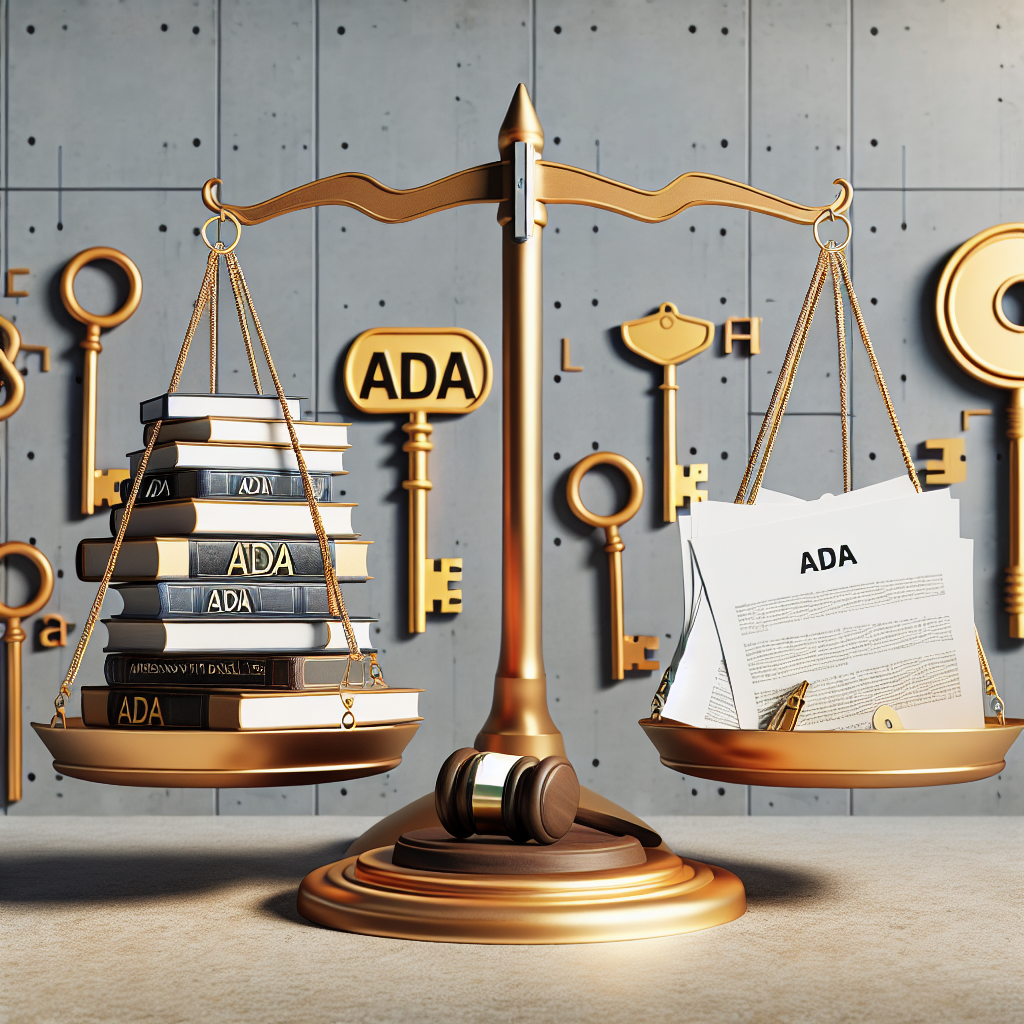
The Americans with Disabilities Act (ADA), enacted in 1990, marked a watershed moment for the rights of individuals with disabilities, establishing comprehensive protections against discrimination and advocating for equal opportunities. Since its inception, the ADA has undergone various evolutions — through litigation, amendments, and societal shifts — to better address the changing landscape of disability rights and inclusivity. As ADA compliance continues to be both a legislative and societal focus, recent developments in litigation offer crucial insights for businesses, institutions, and individuals alike. This article seeks to explore those recent shifts, understanding the precedents set by recent court decisions, emerging challenges, and the broader implications these developments hold for the future.
The ADA’s central goal has always been to dismantle barriers that impede equal access and participation in various facets of public life, including employment, public services, and more. However, the practical application of the ADA’s provisions often involves complex legal battles, as businesses and organizations grapple with nuanced requirements and evolving interpretations of these mandates. As such, staying informed about the recent trends and outcomes in ADA litigation is not only a compliance requirement but a step toward fostering a truly inclusive environment.
The necessity for businesses to understand their obligations under the ADA cannot be overstated; failure to comply can lead to significant legal consequences, costly penalties, and reputational damage. Therefore, this article will delve into recent judicial decisions, key takeaways, and practical recommendations to help organizations navigate the intricacies of ADA compliance and litigation. Highlighting these points will not only prepare businesses for potential legal encounters but also enhance their commitment to inclusivity and respect for the rights of individuals with disabilities.
Recent Judicial Outcomes and Precedents
Recent years have been transformative in terms of ADA litigation, with several landmark cases shaping how the law is interpreted and enforced. Courts across the United States have been tasked with addressing an array of issues, from technology accessibility to service animal accommodations, each setting critical precedents that impact ADA compliance.
One significant trend is the increasing number of lawsuits focusing on website accessibility under Title III, which prohibits discrimination in public accommodations. The surge in such cases has led to varying judicial interpretations, adding layers of complexity for businesses striving to ensure their digital platforms are accessible to users with disabilities. In 2019, the Supreme Court’s refusal to hear the case of Robles v. Domino’s Pizza LLC effectively upheld a lower court’s decision that websites must be accessible, underscoring the judiciary’s stance on digital inclusion.
This refusal has encouraged plaintiffs to pursue further actions, pushing businesses to preemptively address accessibility concerns. Beyond digital access, courts have also been instrumental in defining reasonable accommodations in employment settings. Recent decisions have clarified what constitutes undue hardship and the extent to which employers must modify work environments to accommodate employees with disabilities.
As these cases illustrate, understanding the outcomes and ramifications of ADA-related lawsuits is essential for anticipating legal trends and adapting compliance strategies accordingly. Organizations are advised to closely monitor these developments to ensure their practices align with judicial expectations and proactively mitigate the risks of litigation.
The Role of Technology and Digital Inclusion
The digital revolution has transformed the way we interact with the world, and the realm of ADA compliance has not been untouched by this change. The question of digital accessibility is increasingly at the forefront of ADA litigation. As websites and mobile apps become integral components of business operations, ensuring their accessibility to individuals with disabilities is not merely a legal obligation but a moral one.
The Web Content Accessibility Guidelines (WCAG) published by the World Wide Web Consortium (W3C) have emerged as the de facto standard for accessibility. Businesses are encouraged to follow these guidelines to avoid litigation and make their digital content available to all users. Failure to adhere to these guidelines can result in costly lawsuits, as plaintiffs argue that inaccessible websites constitute a barrier to public accommodation.
Several high-profile cases have underscored the importance of digital accessibility. For instance, in the aforementioned Robles v. Domino’s Pizza LLC case, the central issue revolved around whether Domino’s online services were considered places of public accommodation under the ADA. This case, among others, has propelled businesses to prioritize digital inclusivity as part of their broader accessibility strategy.
Ultimately, embracing technology that is accessible not only aligns with ADA compliance but also enhances user experience for a diverse audience. Organizations are urged to integrate accessibility checks into their digital product development process and engage in regular audits to identify and rectify potential accessibility issues. Such proactive measures not only reduce the likelihood of legal challenges but also demonstrate a commitment to catering to all consumers.
Addressing Emerging Challenges and Opportunities
As the scope of the ADA continues to evolve, new challenges and opportunities for growth and inclusivity present themselves. One of the primary challenges is keeping up with rapidly changing technology and the corresponding accessibility requirements. With the advent of artificial intelligence, virtual reality, and other technological advancements, ensuring accessibility in an increasingly digital landscape is both complex and imperative.
Additionally, the COVID-19 pandemic has prompted a shift in workplace dynamics, leading to increased flexibility and remote work options. This new-normal offers opportunities for businesses to reconsider traditional approaches to workplace accommodations, enhancing the ability of employees with disabilities to contribute effectively from diverse settings. Remote work arrangements, coupled with appropriate technological tools, offer a new avenue for inclusive employment practices.
However, with these opportunities comes the challenge of equipping devices, platforms, and processes such that they are inclusive and accessible to all employees, regardless of their location or the nature of their work. Developing comprehensive remote work policies that reflect ADA requirements and accommodate a broad spectrum of disabilities can empower organizations to create equitable work environments.
To navigate these challenges, it is essential for businesses to invest in continuous education about emerging technologies, potential accessibility implications, and developing inclusive policies that are robust yet adaptable to changing circumstances. Engaging with experts in digital accessibility, employing regular staff training, and integrating accessibility review processes into technology implementation plans can position organizations effectively within this evolving landscape.
Practical Recommendations for Businesses
Navigating the complexities of ADA compliance requires a blend of awareness, strategic planning, and proactive adaptation. For businesses keen on fostering an inclusive environment while mitigating risks of litigation, there are several practical steps to consider:
- Invest in Accessibility Audits: Conduct regular accessibility audits of both physical spaces and digital assets. This step is crucial for identifying potential barriers and addressing them promptly before they lead to legal challenges.
- Implement Training Programs: Consistently train employees, especially those in customer-facing roles, on ADA requirements, accommodations, and inclusive communication. This can facilitate a more informed and empathetic engagement with customers and colleagues with disabilities.
- Integrate Accessibility into Digital Strategy: Ensure that web developers and IT teams are well-versed in accessibility standards such as WCAG. This will help integrate these criteria into the foundational stages of digital product development rather than as an afterthought.
- Consult Legal and Accessibility Experts: Engaging with professionals who specialize in ADA law and digital accessibility can guide businesses in implementing best practices that mitigate legal risks.
- Promote a Culture of Inclusion: Beyond compliance, fostering a culture that actively promotes diversity, equity, and inclusion can inspire innovative accommodations and attract a broader talent pool.
Furthermore, businesses can derive unexpected benefits from these efforts, such as enhanced brand reputation, customer loyalty, and employee satisfaction. Inclusive practices demonstrate a commitment to social responsibility and can differentiate a business in a competitive market landscape.
Legal and Social Implications
The implications of recent ADA litigation extend beyond the courtroom, influencing both legal frameworks and societal norms. From a legal perspective, the outcomes of ADA litigation serve as a continuous refinement of legal principles, interpreting how the ADA applies to modern and evolving contexts. These interpretations can lead to legislative changes or clarifications that further define the scope and execution of ADA mandates.
On the societal front, ADA litigation contributes to the discussion on disability rights, raising awareness about the challenges individuals with disabilities face and the broader imperative of accessibility. Each court decision serves as a reminder of the ongoing struggle for equality and the role each sector of society must play in advancing these rights.
Moreover, ADA litigation can drive innovation in accessibility solutions, prompting businesses and technologies to devise creative approaches for inclusion. For instance, the heightened emphasis on website accessibility has accelerated advancements in assistive technologies, benefiting not only individuals with disabilities but also creating user-friendly interfaces for all users.
In conclusion, the trajectory of ADA litigation underscores the importance of viewing accessibility as an integral aspect of operation rather than a compliance checkbox. By reformating pertinent legal outcomes into actionable strategies, businesses can embody the true spirit of the ADA — a commitment to equality, dignity, and opportunity for all.
Conclusion
Reflecting on the new developments in ADA litigation, several key takeaways stand out. As we’ve explored, the ADA landscape is evolving, driven by technological advancements, demanding a proactive and informed approach from businesses to remain compliant and foster inclusivity.
The growing focus on digital accessibility is reshaping ADA enforcement, with courts increasingly holding organizations accountable for ensuring accessible digital platforms. This trend not only emphasizes the necessity of aligning with WCAG guidelines but also encourages innovation and inclusion in digital strategies.
Moreover, the challenges and opportunities brought by the current work environment underscore the potential for organizations to champion dynamic and inclusive operational models. By embracing flexible work practices and investing in accessible technologies, businesses can enhance productivity, morale, and the overall workplace experience for employees with disabilities.
Finally, the social implications of ADA litigation remind us of the critical role legal systems play in shaping societal perceptions of disability and accessibility. As legal precedents evolve, they pave the way for broader discussions and changes in public policy that can ultimately lead to a more inclusive society.
For businesses navigating this landscape, the path forward involves more than just avoiding litigation. It demands an active commitment to fostering environments where individuals of all abilities can thrive. As the ADA continues to evolve with society’s changing needs, embedded within its framework lies the opportunity to progress toward a truly inclusive future.
Frequently Asked Questions
1. What are the recent developments in ADA litigation?
The landscape of ADA litigation is continuously evolving, driven by both judicial decisions and changes in the socio-political climate. Recent developments have seen an increase in cases related to digital accessibility, addressing issues such as website and mobile app inclusivity. Courts are increasingly recognizing that digital spaces fall under public accommodations, thus must comply with ADA standards. Additionally, there has been a rise in litigation related to employment discrimination, where courts are often tasked with determining reasonable accommodations versus undue hardship for employers. These shifts indicate a growing recognition of the need for inclusivity beyond physical environments, underscoring the ADA’s adaptability to contemporary challenges.
2. How have societal changes impacted ADA litigation?
Societal changes have greatly influenced ADA litigation. As awareness and understanding of disability rights have increased, there has been more advocacy and support for comprehensive accessibility standards. Public and political pressure has led to more stringent enforcement of ADA compliance, prompting entities to proactively seek to resolve potential ADA issues. Moreover, the intersectionality of disability with other civil rights movements has highlighted new dimensions of discrimination, influencing how cases are argued and ruled on in court. These societal shifts have led to a surge in legislation and judicial interpretation that reflects a broader commitment to inclusivity.
3. What role does digital accessibility play in ADA litigation?
Digital accessibility has become a critical component of ADA litigation. As more services and interactions move online, ensuring that digital platforms are accessible to people with disabilities has become paramount. Courts have begun to interpret the ADA to include web and mobile application accessibility, which obligates businesses and public services to adhere to standards that make their digital content usable by individuals with disabilities. Lawsuits often focus on whether websites provide equivalent access to all users or if they inadvertently exclude those with disabilities. The push for digital accessibility in ADA litigation emphasizes the act’s adaptability to modern technology while propelling organizations to rethink and redesign their digital interfaces.
4. How has the concept of ‘reasonable accommodation’ evolved in recent ADA cases?
The notion of “reasonable accommodation” remains a cornerstone of ADA compliance, centered around facilitating equal opportunities for individuals with disabilities. Recent ADA cases have further nuanced this concept by examining the practical and financial burdens on businesses, especially within the context of employment. Courts now assess accommodations not just on feasibility, but also on their effectiveness in promoting equal participation. For example, accommodations might include job restructuring, offering remote work options, or improving workplace ergonomics. The evolution in case law suggests an ongoing balancing act between employee rights and employer capabilities, pushing towards more individualized and creative solutions.
5. What impact do amendments and new regulations have on ADA litigation?
Amendments and new regulations have a profound impact on ADA litigation by clarifying, expanding, or refining the scope of the law. The ADA Amendments Act of 2008 (ADAAA), for instance, broadened the definition of disability to include more conditions, which in turn has expanded the pool of potential plaintiffs in ADA cases. Additionally, new regulations often provide more detailed guidance on compliance, influencing the strategies of both plaintiffs and defendants in litigation. Emerging guidelines from authoritative bodies, such as the Department of Justice or the Equal Employment Opportunity Commission, enhance the understanding of ADA requirements, thereby shaping the arguments and decisions within ADA-related lawsuits. As regulations continue to evolve, they help ensure the ADA remains relevant and effective in protecting the rights of individuals with disabilities.