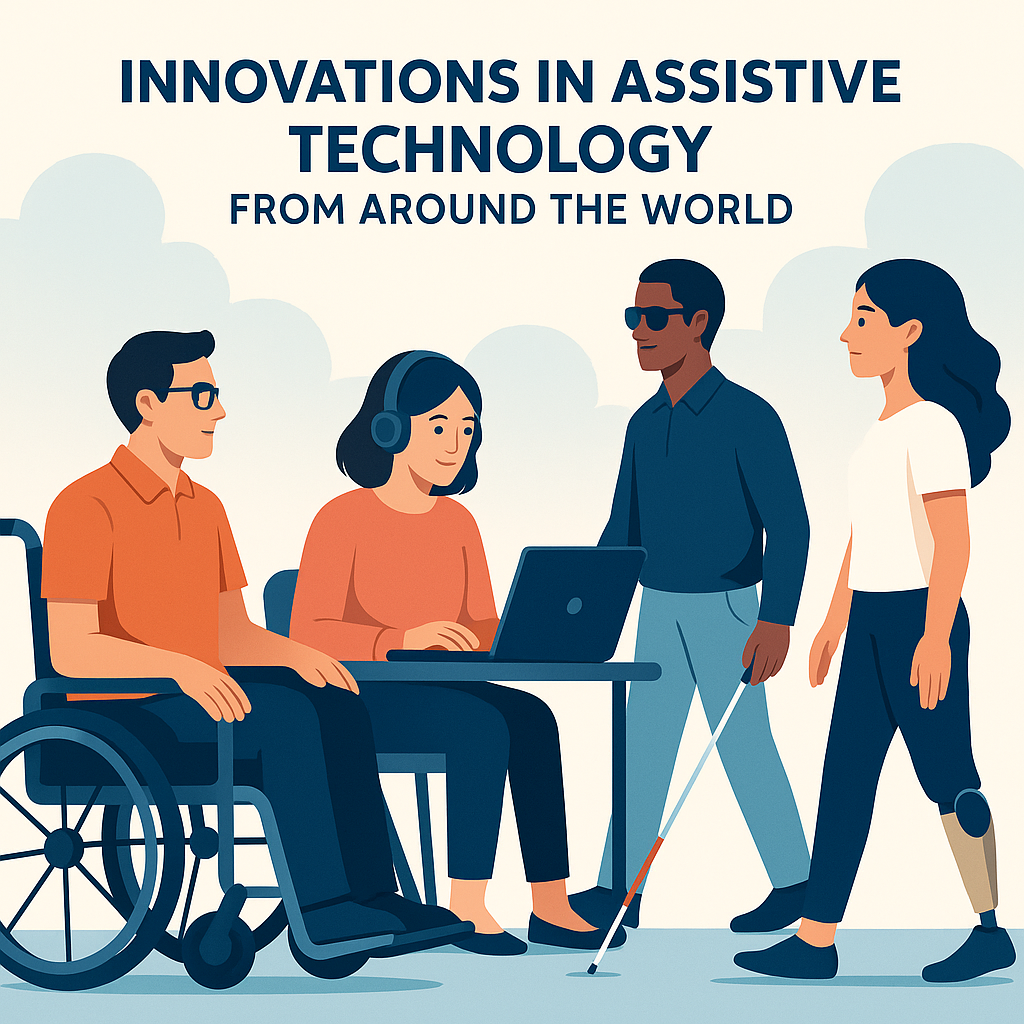
In recent years, assistive technology has emerged as a critical component in enhancing the quality of life for individuals with disabilities. Assistive technology refers to products, equipment, or systems that help people with disabilities perform tasks that might otherwise be difficult or impossible. This field has continually evolved to address a wide variety of needs, ranging from mobility and communication to sensory enhancements and cognitive support. The rising interest in this domain is not only due to the technological advancements but also the growing societal emphasis on inclusivity and accessibility. By harnessing the power of innovation, we can break down barriers and create environments where every individual has the opportunity to thrive.
The importance of assistive technology cannot be overstated as it plays a pivotal role in fostering independence and enhancing the social participation of individuals who might face physical limitations. Additionally, businesses and governments worldwide are beginning to recognize the potential of these technologies to improve productivity and reduce healthcare costs. With a global disability prevalence that continues to increase with an aging population, the demand for innovative assistive solutions is more urgent than ever.
Mobility Enhancement Technologies
The capacity to move freely is something many of us take for granted, yet it is a significant challenge for countless individuals with disabilities. One area of breakthrough is in robotic exoskeletons. These are becoming increasingly popular for individuals with spinal cord injuries. An excellent example is the ReWalk system, designed in Israel, which has given numerous wheelchair users the ability to stand, walk, and even climb stairs. The system consists of a lightweight brace support suit, equipped with motors at the joints and powered by a rechargeable battery. Controlled through a wrist-watch style device, users can signal the suit to move their legs, dramatically improving their independence and quality of life.
Mobility scooters and advanced prosthetics have also seen significant technological improvements. The development of smart prosthetics uses sensors and microprocessors to mimic the natural motion of limbs. These devices have already transformed the lives of many amputees, allowing for more fluid movement and interaction with their environments.
Assistive Communication Devices
Communication is a fundamental aspect of human interaction, yet for some, it requires assistive technology’s help. Across the globe, there have been striking innovations in this field. Augmentative and Alternative Communication (AAC) devices, for instance, provide a voice to those who cannot speak. A compelling example is the technology behind speech-generating devices such as the Tobii Dynavox, which utilizes eye-tracking technology to allow users to form sentences simply by looking at words on a screen. This opens up avenues not just for communication but also for education and social inclusion, granting users a greater degree of independence and connection with others.
Moreover, software applications designed for smartphones and tablets have been developed, offering various tools for speech and gesture recognition. Such apps are especially invaluable in areas where expensive hardware solutions are less viable, providing a cost-effective alternative that leverages the ubiquity of smart devices.
Sensory Enhancement Technologies
For individuals with sensory impairments, assistive technology offers a bridge to experience the world in fuller detail. Breakthroughs in visual and auditory aids have brought remarkable changes. One notable innovation is the OrCam MyEye, a portable device from Israel that attaches to eyeglass frames. It uses a sophisticated camera to capture visual information and then audibly conveys it to the user, including text from books or signs, facial recognition, and even product identification.
In the auditory field, cochlear implants have become increasingly advanced, allowing those with hearing impairments to perceive sound more naturally. As technology progresses, even more compact and efficient implant devices are being developed, along with wireless connectivity features that integrate with smartphones and other smart devices, enhancing both functionality and compatibility with modern lifestyles.
Intellectual and Cognitive Support
Individuals with intellectual or cognitive disabilities often require aids that help them manage daily tasks and improve their learning processes. Technological innovations have emerged to meet these needs, much to the benefit of individuals and educational establishments alike. One fascinating example is prompted technology, which guides users through tasks using audio-visual cues. These tools can aid those with Alzheimer’s or dementia, providing step-by-step guidance to assist with daily tasks such as cooking or dressing.
Similarly, advancements in virtual and augmented reality offer immersive environments where individuals can safely practice life skills. These technologies simulate real-world settings to teach everything from social interactions to vocational tasks, without the risks and pressures of real-world scenarios.
Global Collaboration and Innovation
Assistive technology is not constrained by borders, thanks to numerous international collaborations aimed at sharing research and innovations. Various global alliances and organizations routinely host conferences like the Assistive Technology Industry Association (ATIA) conferences, where knowledge and advancements are shared. Collaborative projects such as the European AT-sector innovation programs and the U.S.-based RESNA (Rehabilitation Engineering and Assistive Technology Society of North America) are working tirelessly to push the field of assistive technology forward.
The universality of challenges faced by those with disabilities ensures that innovations in one part of the world can find relevance elsewhere. This global network of research and development fosters a culture of innovation that transcends individual nations, ensuring that assistive technologies reach those who need them, regardless of geographical location.
- Mobility Enhancement – ReWalk System
- Communication Devices – Tobii Dynavox
- Sensory Aids – OrCam MyEye
- Cognitive Support – Prompted Technology
The Future of Assistive Technology
Technological advances often inspire excitement about what the future may hold. The assistive technology industry is no different, with ongoing developments hinting at even more normalized integration of assistive devices into everyday life. The emergence of AI and machine learning presents prospects of more personalized and adaptive solutions that cater to individual needs dynamically. With the continuous miniaturization of technology and advances in smart materials, future devices are likely to be more comfortable, intuitive, and efficient.
Furthermore, the push towards more inclusive design in mainstream consumer electronics may soon blur the lines between assistive technologies and regular products. This synthesis will not only broaden the market reach but also normalize the use of these technologies in everyday settings, fostering a more inclusive society.
Conclusion
In summary, innovations in assistive technology continue to profoundly impact individuals with disabilities by enhancing mobility, communication, sensory experiences, and cognitive support. From robotic exoskeletons to advanced prosthetics, speech-generating devices, and sensory aids, these breakthroughs highlight the transformative potential of technology. As we continue to embrace global collaboration and push the boundaries of what’s possible, the future holds exciting possibilities for creating a more inclusive and accessible world.
Recognizing the importance of assistive technology compels us to support ongoing research and advocacy efforts, ensuring that everyone, regardless of ability, has the tools necessary to realize their full potential. As an individual or organization, staying informed and involved in these advancements is the first step toward making a tangible difference. Whether through supporting policies that promote accessibility or collaborating to innovate new solutions, we all have a role to play in fostering an inclusive environment where everyone can thrive.
Take the next step by engaging with local or global organizations focused on assistive technology and contribute your time, resources, or expertise to this critical and continually evolving field. Together, we can ensure that individuals with disabilities are not limited by their circumstances but are empowered by the technology designed to support them.
Frequently Asked Questions
1. What are some of the most recent innovations in assistive technology for mobility?
One of the most exciting recent innovations in assistive technology for mobility includes the development of smart wheelchairs. These high-tech wheelchairs are equipped with sensors and software that allow users to navigate spaces more efficiently. They often have features such as obstacle detection, autonomous navigation, and the ability to be controlled through voice commands or a mobile app. Additionally, exoskeletons, once a science fiction concept, are now aiding those with mobility impairments. These devices offer support and augment the wearer’s mobility, enabling them to stand, walk, and even climb stairs. Such technologies are being developed in countries known for technological advancements, like Japan and the United States.
2. How has assistive technology improved communication for individuals with speech or hearing impairments?
The landscape of communication has been transformed by assistive technology innovations. For individuals with hearing impairments, advancements such as the integration of Bluetooth technology in hearing aids have significantly improved connectivity, allowing users to stream audio directly from various devices. meanwhile, smart visual translators are bridging the gap for those who rely on sign language by converting sign language into spoken words and vice versa. For individuals with speech impairments, augmentative and alternative communication (AAC) devices have come a long way. Leveraging artificial intelligence, these devices can now predict words and phrases based on context and past usage, making communication much faster and more intuitive for users. These developments have global origins, with notable contributions from Europe and the United States.
3. What are the advancements in assistive technology for sensory enhancements?
Sensory enhancements have seen groundbreaking strides thanks to assistive technology. One standout development is the creation of bionic eyes, or retinal implants, which have been pioneering in providing vision to those with certain types of blindness. Additionally, haptic feedback technology has advanced to provide more tactile interaction through devices, giving users the sensation of touch when interacting with virtual and augmented reality environments. Innovations in soundscape cities are enhancing auditory experiences for individuals with visual impairments by providing real-time acoustic information to navigate urban environments safely. Leading countries like the UK, Japan, and Israel are at the forefront of these sensory technology enhancements, integrating cutting-edge research into practical applications.
4. Can you explain how cognitive support technologies are assisting individuals with cognitive impairments?
Cognitive support technologies are creating significant opportunities for individuals with cognitive impairments. These technologies range from simple reminder systems to sophisticated AI-driven software. For instance, smart home devices are being increasingly used to assist individuals with memory challenges by sending reminders through voice-activated systems or mobile apps. Moreover, devices such as neurofeedback headsets that monitor brain activity are being used to help improve concentration and manage stress. There are also educational tools like apps and programs tailored to provide interactive learning experiences that cater to the varying cognitive needs of individuals, ensuring education is accessible to all. Countries such as Canada and the Scandinavian nations are making noteworthy contributions in this field, helping design and implement these cognitive technologies.
5. What role does global collaboration play in the development of assistive technology?
Global collaboration is pivotal in the field of assistive technology, making it possible to pool together diverse expertise, resources, and cultural perspectives that drive innovation. Initiatives like collaborative research projects and international symposiums allow experts from all over the world to share insights, challenges, and successes. Organizations such as the World Health Organization (WHO) are fostering partnerships that encourage the development and distribution of affordable assistive technologies to underserved populations. As companies and researchers worldwide continue to work together, the potential to overcome regional challenges and address global needs becomes increasingly possible, making assistive technology both more effective and more accessible across borders.