In today’s rapidly evolving commercial landscape, ensuring accessibility and inclusivity within workplace environments is not just a legal obligation but also a moral and business imperative. The Americans with Disabilities Act (ADA), passed in 1990, has laid the groundwork for creating accessible environments across the United States, ensuring that individuals with disabilities can navigate spaces with ease. Implementing ADA standards in commercial office spaces requires more than just compliance; it entails understanding the nuances of accessibility and actively working towards creating environments that accommodate all potential users. As we delve into the specifications and applications of ADA standards, this article aims to provide comprehensive guidance on effectively integrating these crucial frameworks into commercial settings.
ADA standards govern various aspects, including architectural design, technology, communication, and the overall workplace environment. These standards are critical, not only for ensuring legal compliance but also for fostering a culture of inclusivity and respect within organizational spaces. With an increasingly diverse workforce, acknowledging and implementing ADA standards can enhance employee morale, increase productivity, and improve the overall experience for employees and visitors alike. Moreover, creating accessible office spaces strengthens an organization’s reputation and can lead to significant business advantages by attracting and retaining a wider pool of talent and clientele.
Despite the widespread enactment and recognition of ADA standards, many businesses remain challenged by what compliance entails, particularly within the context of commercial office spaces. From design obstacles to financial considerations, the path to ADA compliance can seem daunting. However, the long-term benefits significantly outweigh the challenges. In this article, we will explore practical strategies and steps for implementing ADA standards in commercial office spaces, delve into the challenges and considerations businesses face, and highlight the importance of these standards in creating a more inclusive society. This discussion will serve as a vital resource for businesses seeking to understand and embrace ADA requirements fully, ensuring their office environments are accessible, welcoming, and empowering for everyone.
Understanding ADA Standards
The Americans with Disabilities Act (ADA) is a comprehensive piece of legislation that prohibits discrimination based on disability. ADA standards apply to all public and commercial facilities, setting the benchmark for accessibility in a variety of environments. For commercial office spaces, this means adhering to guidelines that ensure physical spaces, communication tools, and information are accessible to employees with disabilities. The ADA covers a broad range of disabilities, including mobility impairments, visual and hearing impairments, cognitive disabilities, and more, mandating that environments accommodate these varying needs.
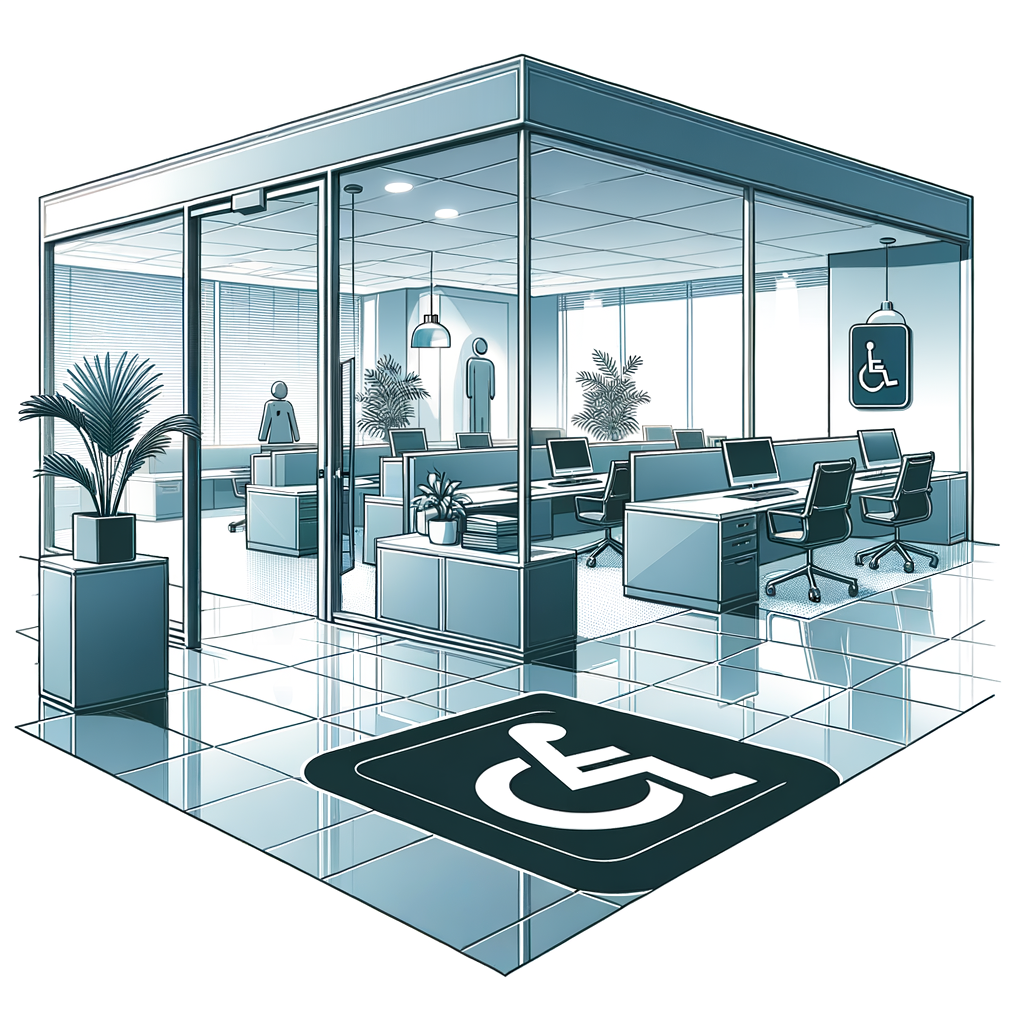
One of the primary components of ADA compliance in commercial office settings is architectural accessibility. This involves ensuring that the physical space is navigable and usable by individuals with disabilities. Essential considerations include the installation of ramps and elevators for wheelchair users, doorways wide enough to accommodate mobility aids, accessible restrooms, proper signage, and emergency exits that can be accessed by everyone. Designing workstations that can be adjusted to suit various needs is also a crucial aspect of creating an accessible workplace. Height-adjustable desks, for instance, cater to wheelchair users and accommodate employees who prefer sitting or standing.
Furthermore, ADA standards also address barriers within communication and technology. For instance, businesses must ensure that their websites and digital platforms are accessible to those with visual impairments, which may involve providing screen reader compatibility and offering captions for audio content. Telecommunication devices for employees with hearing impairments may also be required, as well as the provision of materials in formats accessible to those with cognitive disabilities, such as easy-to-read texts or alternative communication aids.
Strategies for Implementation
Realizing ADA compliance within commercial office spaces involves strategic planning and implementation. Companies should start by conducting a thorough ADA audit to identify areas needing improvements. This assessment should cover both the physical environment and the digital aspects of the workspace. Hiring an ADA specialist who understands the legal requirements and practical applications can prove invaluable during this stage, offering insights and guidance on necessary modifications.
The next step is to develop an action plan that prioritizes changes based on urgency and feasibility. While some modifications, such as installing ramps or ensuring accessible restrooms, might be immediate priorities, other changes may require phased approaches. It’s vital for businesses to allocate appropriate budgets for such projects, aware that investing in accessibility now mitigates the risk of legal action or the need for more costly updates in the future.
Employee training is another pivotal component. Staff should be educated about ADA standards, including sensitivity training to better understand challenges faced by colleagues with disabilities. This fosters an inclusive culture and ensures everyone is committed to maintaining accessibility within the organization. Additionally, involving employees with disabilities in the planning process can provide valuable perspectives and practical insights, ensuring the implemented solutions truly meet diverse needs.
Technology also plays a significant role in workplace accessibility. With advancements in assistive technology, organizations have numerous options to enhance their office spaces. Implementing software that provides voice-to-text translation, ensuring digital content is accessible, and integrating smart office systems that facilitate easier spatial navigation are just a few examples. Investing in reliable and updated technology will markedly improve accessibility and inclusivity within office environments.
Overcoming Challenges
Although the benefits of ADA compliance are clear, businesses may face several challenges during the implementation process. Financial constraints are often a primary concern, as modifications can require substantial investments. However, grants and tax incentives are frequently available to organizations that prioritize accessibility enhancements, helping to offset some of the upfront costs. Strategic planning, prioritization, and phased implementation can also alleviate financial pressures, allowing gradual adaptation over time.
Another challenge is the potential disruption of daily operations during the modification process. Businesses can minimize this by scheduling renovations outside of business hours or in phases to prevent significant disruption. Communication is crucial; keeping employees informed of changes and timelines can reduce anxiety and maintain productivity throughout renovations.
Balancing historical architecture with modern accessibility requirements can also pose unique challenges. In such instances, creative approaches are essential. For example, mobile ramps, temporary lifts, or innovative signage solutions can offer accessibility while preserving historical integrity. Consulting with architects and specialists experienced in integrating ADA standards into historical spaces is highly advisable to achieve compliance without compromising the aesthetic or structural integrity of older buildings.
Future Considerations
As workplace environments continue to evolve, it’s essential for businesses to view accessibility as an ongoing commitment rather than a one-time task. Staying informed about new technologies and ADA amendments is crucial, as these can offer innovative solutions and may impact compliance requirements. Engagaement with evolving accessibility trends can ensure that office spaces not only meet current standards but also anticipate future needs.
Regular reassessment of office spaces should be a standard practice, ensuring that any changes in personnel or business operations do not inadvertently compromise accessibility. Furthermore, maintaining an open dialogue with employees about their accessibility needs can identify areas for improvement and foster a continued culture of inclusion and respect within the workforce. Feedback mechanisms, such as regular surveys or accessibility committees, can provide valuable insights and suggest practical enhancements that keep your workplace accessible and responsive to all employees’ needs.
Moreover, organizations should adopt a forward-thinking approach, considering universal design principles that benefit all users, not just those with disabilities. Such an approach anticipates a variety of needs from the outset, minimizing the requirement for later retrofitting and ensuring spaces are inherently more inclusive and adaptable. By embracing universal design, companies not only adhere to ADA standards but also enhance their brand’s reputation and establish themselves as leaders in corporate social responsibility.
Conclusion
Implementing ADA standards within commercial office spaces is a pivotal step towards creating accessible and inclusive environments for all individuals. It’s a multifaceted process that requires strategic planning, investment, and commitment at all organizational levels. Yet, the benefits—ranging from legal compliance and enhanced employee morale to a broader talent pool and improved public perception—clearly justify these efforts.
By understanding the intricacies of ADA standards, laying out clear implementation strategies, and recognizing the inevitable challenges that come along, businesses can effectively transform their workspaces. While the initial transition towards a fully accessible office may seem daunting, proactive planning and commitment to inclusivity can facilitate smoother adaptations and eventually lead to a workplace that stands as a model of accessibility and diversity.
As businesses move towards ADA compliance, the goal should extend beyond mere adherence to legislation. It should encompass a broader vision that actively embodies inclusivity, equality, and respect, setting the stage for a work environment where all employees can thrive. Moreover, as societal norms and expectations evolve, the significance of maintaining accessible spaces becomes increasingly relevant, positioning ADA compliance not just as a necessity but as a driver for innovation and excellence in the modern commercial world.
In conclusion, the implementation of ADA standards in commercial office spaces is not merely about meeting legal requirements—it’s about aligning with ethical business practices and embracing the values of diversity and inclusivity. By integrating these principles into the core ethos of their operations, organizations can create dynamic, inclusive workspaces that empower individuals of all abilities while positioning themselves as leaders in the field of accessibility and inclusivity.


