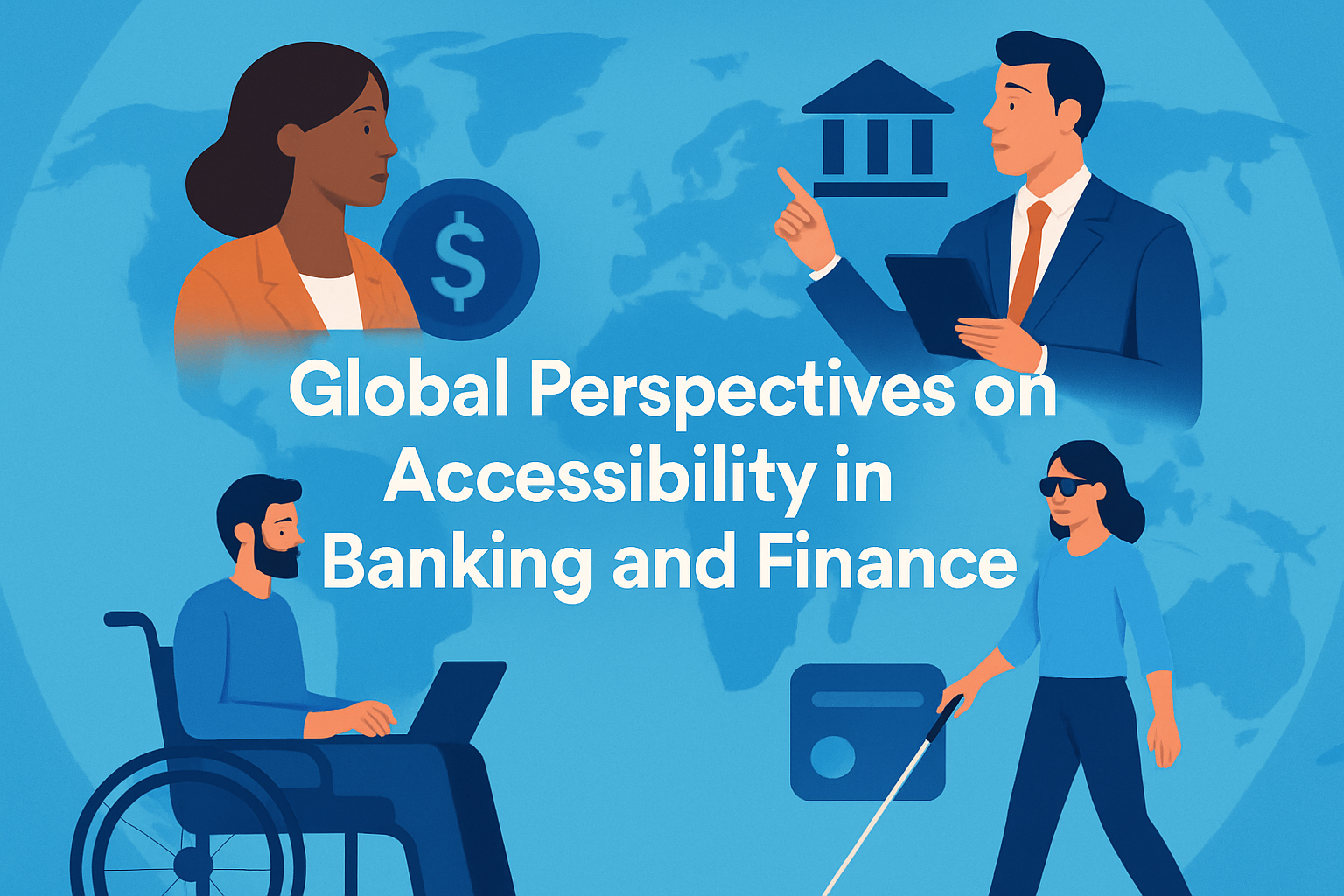
In today’s rapidly evolving global landscape, accessibility in banking and finance has emerged as a pivotal issue. But what exactly does accessibility mean in this context? Simply put, accessibility refers to the ease with which all individuals, regardless of their physical abilities, economic status, or geographical location, can access financial services and products. This includes everything from opening a bank account and applying for a loan to using online banking services and participating in investment markets.
Why does accessibility matter so much in banking and finance? There are several compelling reasons. Firstly, promoting accessibility ensures that all individuals have the opportunity to participate in the economy, which is crucial for personal prosperity and collective economic growth. Financial exclusion can lead to societal disparities and economic inefficiencies. Secondly, in our increasingly digital world, ensuring that all users, including those with disabilities, can access and effectively use financial services is essential for inclusivity and equality. Finally, as global markets become more intertwined, financial institutions that prioritize accessibility are better positioned to serve a broader clientele, leading to enhanced customer satisfaction and loyalty.
Technological Advancements and Their Impact on Accessibility
Technological advancements have revolutionized the banking and finance sector, offering innovative solutions that enhance accessibility. Mobile banking applications, online platforms, and digital wallets have made financial services more accessible to people worldwide, including those in remote or underserved areas. For instance, in Kenya, M-Pesa has transformed the way people conduct transactions by enabling users to send and receive money through mobile phones without needing a traditional bank account.
This technological shift has been particularly beneficial for individuals in developing countries where access to physical banking infrastructures is limited. By reducing the need for brick-and-mortar branches, digital financial services can reach a broader audience, breaking down geographical and economic barriers. However, while technology has improved accessibility, it has also introduced new challenges, such as the need for digital literacy and cybersecurity measures to protect users’ private information.
A Case for Financial Literacy as a Tool for Accessibility
Financial literacy is another critical factor in enhancing accessibility in the banking and finance sector. Without a basic understanding of financial concepts and services, individuals may struggle to make informed decisions about their financial futures. To address this, numerous financial institutions and governmental bodies worldwide are investing in financial education programs. For example, the Reserve Bank of India has launched initiatives to improve financial literacy among rural populations, helping them navigate banking services and make informed financial decisions.
Education programs often include workshops, online courses, and interactive tools designed to teach individuals about budgeting, investing, saving, and borrowing. By improving financial literacy, these programs empower individuals to take control of their finances, ultimately leading to better financial health and increased participation in the economy. Financial literacy breaks down barriers to accessibility by equipping people with the knowledge they need to use financial services confidently and effectively.
- Workshops and Seminars
- Online Courses and Interactive Tools
- Community Outreach Programs
Regulatory Frameworks and Policies Promoting Accessibility
Regulatory frameworks and policies play a crucial role in promoting and ensuring accessibility in the banking and finance sector. Many governments have implemented regulations aimed at protecting consumers and ensuring that financial services are accessible to all, regardless of their socio-economic status or disabilities. For example, in the United States, the Americans with Disabilities Act (ADA) mandates that financial institutions must ensure their services, including digital offerings, are accessible to individuals with disabilities.
Additionally, international organizations like the World Bank and the International Monetary Fund advocate for inclusive financial systems and provide guidance on best practices for increasing accessibility. These regulatory measures are designed to ensure fair treatment for all consumers and promote competition among financial institutions, ultimately leading to better services and products.
| Region | Key Regulation | Impact on Accessibility |
|---|---|---|
| United States | Americans with Disabilities Act (ADA) | Ensures physical and digital accessibility for disabled individuals |
| European Union | Payment Services Directive (PSD2) | Promotes competition and transparency in payment services |
| India | Reserve Bank of India’s Financial Inclusion Policy | Increases banking access in rural and underserved areas |
Overcoming Challenges and Barriers to Accessibility
Despite significant progress, several challenges and barriers still hinder full accessibility to banking and financial services worldwide. One such challenge is the digital divide, which refers to the gap between individuals who have access to modern information and communication technology and those who do not. In many parts of the world, particularly in rural and underserved regions, limited internet connectivity and technological infrastructure can restrict access to digital banking solutions.
Furthermore, language barriers and cultural differences can also impede accessibility. Financial institutions need to recognize the diverse needs of their clients and offer services in multiple languages and formats that cater to various cultural contexts. An example of addressing this is the multilingual online banking platforms launched by several banks in the European Union to ensure that language is not a barrier for migrants and expatriates.
Another significant issue is the persistent economic inequality that can limit individuals’ ability to access financial products and services. Addressing this requires comprehensive policy measures, such as microfinance initiatives, which provide small loans to individuals or small businesses in low-income areas. These initiatives have been successful in regions like South Asia, where microloan programs have empowered entrepreneurs and led to economic upliftment.
The Role of Innovative Fintech Solutions
Fintech, short for financial technology, has been a game-changer in enhancing accessibility in banking and finance. Fintech companies often focus on solving specific accessibility issues by leveraging technology in innovative ways. For instance, companies like PayPal and Stripe have streamlined online payments, making it easier for individuals and businesses to conduct transactions across borders.
Other fintech innovations include cryptocurrency and blockchain technology, which offer decentralized and secure financial transactions. By eliminating the need for traditional banking intermediaries, these technologies can provide financial services to unbanked populations. In Nigeria, for example, cryptocurrencies have become a popular alternative due to challenges with the local currency and access to traditional banking.
Fintech solutions also cater to underbanked communities by providing alternative credit scoring systems and peer-to-peer lending platforms, which expand access to credit for individuals who may not meet traditional banking criteria. By using non-traditional data sources to assess creditworthiness, these services open new avenues for financial inclusion.
Summarizing the State of Accessibility in Banking and Finance
In conclusion, accessibility in banking and finance is a multifaceted issue that necessitates a comprehensive approach involving technology, education, regulation, and innovation. As we’ve discussed, technological advancements have paved the way for greater accessibility, but challenges such as the digital divide and economic inequalities still need to be addressed. Financial literacy programs and regulatory frameworks are essential in ensuring that financial services are inclusive and equitable for all.
The global landscape of banking and finance is continually evolving, with fintech playing an increasingly significant role in shaping the future. By prioritizing accessibility, financial institutions can foster inclusivity, drive economic growth, and enhance customer satisfaction. However, achieving full accessibility requires a concerted effort across various sectors and stakeholders to overcome existing barriers and embrace innovative solutions.
For those in the financial sector, the call to action is clear: invest in technologies and policies that prioritize accessibility. For individuals, the next step is to educate oneself and actively engage with the various financial services available. By working together, we can create a more accessible and inclusive financial ecosystem that benefits everyone.
Frequently Asked Questions
1. What does accessibility in banking and finance entail?
When we talk about accessibility in banking and finance, we are focusing on the ease with which individuals of all backgrounds can access critical financial services and products. This means having the ability to open a bank account, apply for loans, or use online banking services without facing barriers that might exist because of physical disabilities, economic challenges, or geographical constraints. Accessibility is about ensuring that everyone, regardless of their situation, is able to participate fully in the financial system. This entails providing services that are user-friendly for people with physical impairments, offering affordable options for those in financial hardship, and ensuring that people in remote or underserved areas can access banking services. In an era where finance is increasingly digital, accessibility also means making sure that digital and online systems are designed inclusively so that all users can navigate them with ease.
2. Why is accessibility important in the global financial system?
Accessibility is crucial in the global financial system because it directly impacts the socio-economic inclusion of individuals. When financial services are accessible, they can help lift people out of poverty, enable economic mobility, and contribute to broader economic growth. Banks and financial institutions thrive when they accommodate a diverse range of clients, which leads to a more inclusive economic environment. Consider the fact that financial activities like saving and borrowing are fundamental to financial stability and growth for individuals and small businesses alike. By prioritizing accessibility, we not only help individual users but also foster more robust and sustained economic growth. Inadequate accessibility, on the other hand, can lead to a sense of exclusion and limit the overall economic potential of marginalized groups. This is why global financial institutions and regulatory bodies are increasingly prioritizing policies and practices that enhance accessibility.
3. How does technology influence accessibility in banking and finance?
Technology plays a pivotal role in enhancing accessibility in the banking and finance sectors. With the rise of digital banking, services have become more widely accessible than ever before. Mobile banking apps, online loan applications, and digital payment systems are just a few examples of technology widening access to financial services. Technology can help break down traditional barriers by providing remote access to banking services, which is particularly beneficial for those in rural areas far from physical bank branches. However, technology can also introduce new challenges. Not everyone has equal access to devices or reliable internet connections, and some users may lack the digital literacy needed to navigate new technologies effectively. As such, while promoting technological solutions, it’s vital that financial institutions also provide support and educational resources to bridge these gaps. Furthermore, ensuring that digital platforms are designed with accessibility in mind is essential to accommodate users with disabilities.
4. What are some global perspectives on the barriers to financial accessibility?
Globally, the barriers to financial accessibility vary, but several common challenges emerge. In developing countries, physical access is often a significant issue due to the lack of infrastructure and bank branches. Economic barriers, such as high minimum balances and fees, can prevent low-income individuals from engaging with financial institutions. Additionally, cultural and educational barriers may limit understanding of financial concepts or distrust of financial institutions. Language barriers can also play a role in non-English speaking regions, where financial services may not be available in local languages. On a global scale, efforts to improve accessibility must also contend with regulatory differences, as each country has its own financial regulations that can impact service accessibility. It’s clear that addressing these barriers requires a multifaceted approach, including infrastructure investment, policy reform, and the adoption of international best practices.
5. What initiatives are being undertaken to improve accessibility in banking and finance?
Numerous initiatives are underway worldwide to improve accessibility in banking and finance. Many financial institutions are proactively working to create more inclusive products and services, such as low-fee accounts and small-scale loans aimed at underserved populations. Technological innovations, like mobile banking and e-wallets, are widely promoted as tools to expand access to financial services in hard-to-reach areas. Governments and international organizations play a critical role by setting regulatory frameworks that encourage financial inclusion and protect consumers. Educational programs and resources are also being expanded to improve financial literacy, particularly in underserved regions. Additionally, collaborations between banks, fintech companies, and public organizations are becoming more common to leverage technology effectively and foster accessibility. Global initiatives, like the United Nations’ Sustainable Development Goals, emphasize financial inclusion as a core target, adding momentum to these efforts.