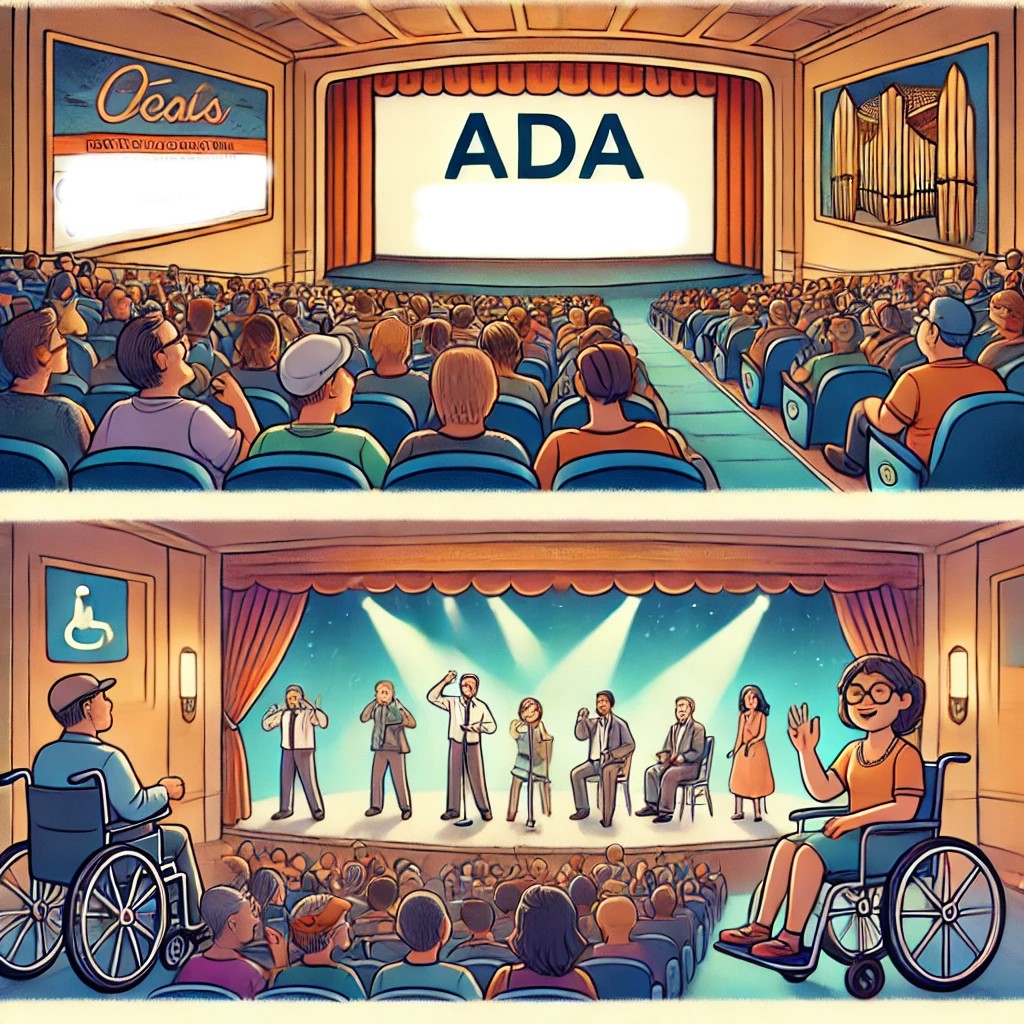
The Americans with Disabilities Act (ADA) has been a cornerstone in advocating for the rights and inclusion of individuals with disabilities in the United States since its enactment in 1990. Nevertheless, the ADA is part of a larger global effort to ensure equal opportunities and accessibility for people with disabilities. Various countries have implemented their own unique policies and legislation to address these issues, reflecting diverse cultural, political, and social environments. By comparing the ADA with international disability laws, we can gain a better understanding of how different regions approach the challenge of building inclusive societies. This article will offer a comprehensive overview of the ADA and juxtapose its key provisions with those of other notable disability laws worldwide. The goal is to illustrate how international efforts align and differ in their approach to disability rights, shedding light on both successful strategies and areas needing improvement.
The Foundation of the ADA
The ADA represents a monumental step towards eradicating discriminatory practices and establishing comprehensive rights and protections for individuals with disabilities in the United States. The act encompasses five primary titles:
- Title I – Employment: Prevents employers from discriminating against qualified individuals with disabilities in job application procedures, hiring, firing, advancement, compensation, job training, and other employment terms.
- Title II – Public Services: Ensures that individuals with disabilities have access to and can participate fully in public services provided by state and local governments.
- Title III – Public Accommodations: Requires that private entities offering public services or serving the public must be accessible to individuals with disabilities.
- Title IV – Telecommunications: Mandates the provision of accessible communication for individuals with hearing and speech impairments.
- Title V – Miscellaneous Provisions: Addresses additional issues, including retaliation and attorney fees, that affect the implementation of the ADA.
Each title works to eliminate barriers and promote integration into all aspects of public life. With its initial passage and through subsequent amendments, the ADA remains a living document, evolving to meet the ongoing needs and challenges of the disability community. Though the ADA has set a significant precedent, it is valuable to explore how other countries are crafting their legislative solutions to similar issues.
European Union and Disability Legislation
The European Union (EU), comprising 27 member states, coordinates regional policies that uphold disability rights across diverse national landscapes. The EU’s primary legislative effort is encapsulated in the European Accessibility Act (EAA), adopted in 2019. The EAA aims to harmonize accessibility standards across member states, reducing disparities in how disabilities are managed across Europe.
Key aspects of the EAA include:
- Accessibility in products and services: The EAA specifically targets accessibility in key areas such as banking services, e-commerce, telecommunications, and urban mobility.
- Public Sector Information: Ensures that public websites and mobile applications are accessible to people with disabilities, echoing similar clauses found in Title II of the ADA.
- Cross-border harmonization: Unlike the ADA, which operates in a single legal entity (the USA), the EAA promotes unified standards across multiple legal jurisdictions.
The EU also implements the European Disability Strategy, which ran from 2010 to 2020 and focused on making Europe barrier-free. Themes in the strategy included accessibility, participation, equality, employment, education, training, social protection, and health services. The new 2021-2030 strategy aims to continue these efforts, bolstered by the European Pillar of Social Rights.
While the ADA remains a blueprint for national legislation, the EU’s approach underlines cooperation and standardization across numerous jurisdictions, providing an instructive case of regional collaboration.
Japan’s Disability Laws
Japan has also made significant strides in addressing disability rights. The Japanese legal framework for disability rights took shape primarily through the Basic Act for Persons with Disabilities, enacted in 1970 and amended subsequently. Key milestones include the 2013 enactment of the Act on the Elimination of Disability Discrimination, which mandates efforts to prevent discrimination and promote reasonable accommodations.
Key Features of Japanese Disability Legislation:
- Basic Act for Persons with Disabilities: Serves as an overarching policy framework, emphasizing comprehensive human rights and participation in society.
- Act on the Elimination of Disability Discrimination: This mirrors the ADA’s nondiscrimination principles, requiring reasonable adjustments in public and private sectors.
- Employment Measures: Japan enforces quotas for employing individuals with disabilities, requiring companies to hire a certain percentage of disabled workers or face levies. The ADA takes a nondiscriminatory approach rather than a quota-based system.
Japan’s legislative landscape for disability rights reflects a blend of broad policy initiatives and specific anti-discrimination measures. Compared to the ADA, Japan’s quota system for employment is particularly noteworthy, offering a different means to increase workplace inclusion.
Australia’s Disability Discrimination Act
Australia’s Disability Discrimination Act (DDA), enacted in 1992, shares several similarities with the ADA while addressing the unique needs within Australian society. The DDA’s comprehensive scope prohibits discrimination across various domains, including employment, education, public accommodations, and access to goods and services.
Key features of the DDA:
- Reasonable Adjustments: Similar to the ADA, the DDA emphasizes the importance of reasonable adjustments to prevent discrimination.
- Complaint Mechanism: Individuals can file complaints with the Australian Human Rights Commission, which investigates and attempts to resolve issues through conciliation.
- Disability Standards: The DDA includes Disability Standards for Accessible Public Transport and Education, providing detailed guidelines and benchmarks for compliance.
Australia’s Disability Strategy, aligned with the DDA, further strengthens these efforts by setting targets and monitoring progress. The DDA’s inclusion of specific disability standards provides detailed compliance frameworks in areas often overlooked, an aspect that potentially enhances enforceability and accountability.
Comparative Analysis: Strengths and Challenges
Comparing the ADA with international disability laws reveals both shared principles and unique approaches. A few key takeaways include:
- Standardization vs. Localization: The European Union’s regional harmonization through the EAA contrasts with the USA’s national approach. The EU’s success shows the value of cross-border standardization, especially for mobile and interconnected populations.
- Quota-Based Employment Systems: Japan’s quota system highlights an alternative to Title I of the ADA, potentially offering more immediate employment outcomes despite some criticisms. Both methods have strengths and drawbacks concerning practicality and enforcement.
- Detail-Oriented Standards: Australia’s DDA sets detailed benchmarks, providing clear standards for compliance. This focus on detail could lead to higher accountability, a feature only partially addressed in the ADA.
- Global Inspiration: Despite differences, the ADA has inspired global legislative efforts, setting a foundational model adaptable to varying contexts and fostering a unified voice in disability advocacy.
While the ADA is a foundational document, some international approaches, like Japan’s quotas and Australia’s detailed standards, provide additional strategies for achieving comprehensive inclusion and accessibility.
Future Directions and Global Cooperation
Moving forward, the landscape of disability rights is increasingly shaped by globalization and digital interconnectedness. Future legislation must consider:
- Technology Access: Enhancing accessibility to digital platforms and communication technologies is crucial. Both the ADA and international laws need to evolve in step with technological advancements.
- Global Agreements: Aligning national policies with global agreements like the United Nations Convention on the Rights of Persons with Disabilities (CRPD) can offer a cohesive framework for international cooperation.
- Dynamic Policy Evaluation: Continuous assessment and real-time updates to laws will be essential to address the rapidly changing environment and emerging challenges faced by persons with disabilities.
Global cooperation, guided by CRPD principles and implemented through robust national and regional frameworks, will pave the way for more inclusive societies. Collaboration and cross-pollination of ideas are key to creating effective disability legislation that can adapt to future needs.
Conclusion
The Americans with Disabilities Act (ADA) stands as a pivotal model in the arena of disability rights, offering critical insights and benchmarks for inclusive legal frameworks worldwide. By examining the ADA alongside legislative efforts in the European Union, Japan, and Australia, we can observe both common principles and unique solutions tailored to distinct cultural and societal contexts. The ADA’s comprehensive approach has inspired a global movement toward universal accessibility and non-discrimination, but it is also clear that additional strategies, such as employment quotas and detailed compliance standards, can further enrich disability rights legislation. Moving forward, the challenge lies in adapting these laws to our evolving digital landscape while fostering global cooperation and alignment with broader international principles like those set forth by the United Nations. This holistic perspective is essential for building a world where individuals with disabilities can achieve true equality and full participation in all aspects of life.
Frequently Asked Questions
1. What are the key differences between the ADA and the international disability laws?
The Americans with Disabilities Act (ADA) is primarily focused on ensuring that individuals with disabilities in the United States have equal opportunities and access to jobs, education, transportation, and public spaces. It mandates that public and private sectors accommodate and create accessible environments for people with disabilities. One of its key features is the requirement for reasonable accommodation in the workplace, which allows individuals with disabilities to perform jobs they are qualified for, with accommodations that are not burdensome to the employer.
Internationally, disability laws vary significantly based on a country’s legal framework, cultural norms, and social priorities. In the UK, for instance, the Equality Act 2010 similarly seeks to prevent discrimination in employment and public services. However, in some countries, disability policies might be less progressive or underdeveloped due to different levels of economic development or cultural perceptions about disability.
Another international benchmark is the United Nations Convention on the Rights of Persons with Disabilities (CRPD), which many countries have ratified. The CRPD emphasizes the full participation of persons with disabilities in society and is a comprehensive framework aimed at guiding countries to formulate their disability laws. It offers a broader spectrum of rights compared to ADA by advocating for education, healthcare, and more inclusive policy-making. However, it doesn’t have direct legislative power within countries, requiring domestic legislation to enforce its principles.
2. How does the enforcement mechanism for the ADA compare to international disability laws?
The ADA has a well-established enforcement mechanism primarily carried out by the Equal Employment Opportunity Commission (EEOC) and the Department of Justice, alongside state and local agencies. These bodies are empowered to investigate discrimination claims, conduct compliance checks, and even bring forth lawsuits to enforce ADA mandates. This enforcement structure is backed by clear litigation pathways, allowing individuals to take legal actions if they encounter violations such as workplace discrimination or inaccessible public services.
Internationally, enforcement mechanisms can be much more variable. In the European Union, for example, the EU sets disability laws, but enforcement often depends on each member state’s legal and administrative framework. Some countries offer very strong protections and active enforcement agencies, while others may have effective laws on paper with limited practical enforcement due to lack of resources or political will.
The CRPD adds another layer by establishing a reporting system where countries must report on their compliance, but it lacks direct enforcement capabilities, relying instead on advocacy and international diplomatic pressure to encourage compliance. This difference in enforcement stringency and capability is crucial as it directly impacts how people with disabilities can seek redress and the level of compliance organizations are held to.
3. What are some effective practices derived from international disability laws that enhance access and inclusion for persons with disabilities?
Various international practices can be seen as effective in fostering access and inclusion. In Canada, for instance, the Accessible Canada Act sets high benchmarks for accessibility, requiring organizations to proactively identify, remove, and prevent barriers. This is coupled with a strong feedback mechanism where individuals can report accessibility issues and expect corrective action, thus promoting more dynamic inclusion.
Another practice comes from Japan, where the use of assistive technologies is heavily integrated into their approach. Programs incentivize businesses and technological firms to innovate solutions that enhance accessibility, making Japan a leader in tech-enabled inclusion for persons with disabilities.
In Nordic countries like Sweden and Norway, inclusion starts at the level of urban planning. Cities are designed to be universally accessible, with comprehensive public transportation systems that ensure people with disabilities can navigate urban spaces comfortably without relying on personal vehicles.
4. Can the ADA be considered more progressive than international disability laws?
The ADA is certainly considered progressive regarding how it shaped the legislative landscape for disability rights in the United States and served as a model for other international frameworks. Its comprehensive nature covers employment, state and local government services, public accommodations, commercial facilities, and telecommunications, and later expansions including internet and technology accessibility.
However, being seen as “more progressive” depends on the lens through which laws are evaluated. Some countries may have adopted more innovative policies in specific areas like inclusive education, mental health, or technology that surpass the ADA’s provisions. The CRPD, for example, expands on rights in areas such as political and public life participation, independent living, and inclusive education, which the ADA addresses but perhaps not as extensively or in the same manner.
Progressiveness also isn’t just a matter of law but of how society embraces and implements these laws, how resource allocation supports these rights, and how strongly enforcement mechanisms are applied. Therefore, it’s vital to look not just at the laws themselves but at the societal impacts they make, supported by cultural, economic, and political contexts.
5. How has the ADA influenced international disability legislation or policies?
The ADA has had a profound and global influence on disability legislation and policies. Its passage was a landmark moment that inspired many countries to examine their practices and consider more inclusive policies. Other countries saw the enforcement mechanisms and social inclusion strategies that emerged from ADA’s implementation and built upon those frameworks to develop their laws.
It set an important benchmark in terms of defining disability rights as human rights and shifted the conversation from charity and medical models to one of rights, dignity, and independence. Many international policies, including the EU’s directives and national laws in Australia, South Africa, and Brazil, were instituted in the spirit of or nodding towards the ADA’s comprehensive approach.
The ADA’s influence is also seen in global forums and movements for disability rights, encouraging a broader understanding of inclusivity and accessibility that transcends borders. Countries continue to learn from the ADA’s successes and challenges as they refine their own approaches to disability legislation, highlighting its ongoing relevance and impact in shaping a more inclusive world.