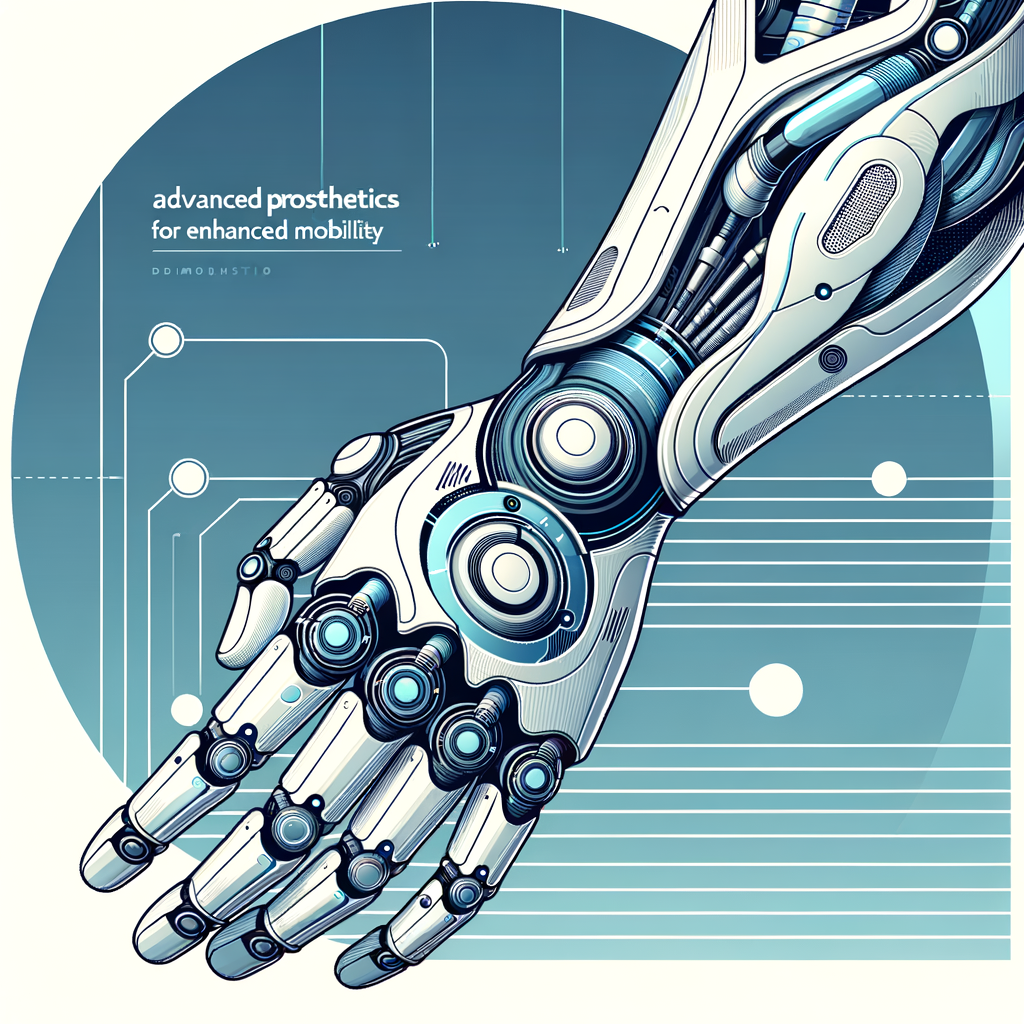
Prosthetic technology has experienced a rapid evolution over the past few decades. Today, advanced prosthetics have transformed lives by offering enhanced mobility and improved quality of life for individuals who have lost limbs. These cutting-edge solutions incorporate a mix of engineering, robotics, and medicine, resulting in devices that mimic natural limb movement more accurately than ever before. As the demand for high-performance prosthetics rises, innovations continue to push the boundaries of what is possible, making prosthetics more intuitive and useful. This article delves into the latest advancements in prosthetic technology, exploring their development, the challenges they address, and their impact on users’ everyday lives.
The rise of advanced prosthetics has been fueled by both technological and societal factors. On one hand, the integration of sophisticated sensors, artificial intelligence, and novel materials has led to devices that are not only more functional but also lighter and more comfortable. On the other hand, growing awareness and advocacy around disability rights have amplified the call for prosthetics that are accessible to broader populations, including those in developing regions. Despite significant progress, there remains a need for continued research and innovation to solve complex problems such as the fine motor skills required for delicate operations, energy efficiency for extended use, and adaptability to varied physical demands.
Understanding the journey from traditional prosthetic limbs to today’s advanced systems facilitates a deeper appreciation of these technological marvels. Historically, prosthetic limbs were crude replacements aimed at basic functionality. However, they have progressed considerably. Modern prosthetics are equipped with motorized joints and enhanced sensory feedback, setting new benchmarks for mobility and dexterity. The introduction of 3D printing, bio-integrated sensors, and real-time data processing has heralded a new era where a prosthetic not only restores functionality but also closely replicates the experience of a biological limb.
Market dynamics supported by governmental incentives and insurance policies have further catalyzed the adoption of advanced prosthetics. Governments across various nations are increasingly investing in research and development in this sector. At the same time, insurance companies are gradually adjusting their policies to accommodate reimbursement for these advanced devices. Such support has helped mitigate the significant cost barrier that often obstructs access to these innovative prosthetic solutions. Additionally, increased collaboration between academia, startups, and established companies is generating a fertile ecosystem for ongoing development and commercialization.
Although challenges remain, the future of prosthetics looks promising, marked by interdisciplinary collaboration and a commitment to enhancing human capability. Proponents of these technologies believe that with comprehensive investments in research and technology, advanced prosthetics could soon become more personalized, offering customized solutions to meet the unique needs of each user. The subsequent sections of this article will delve deeper into specific technological advancements, highlight the support systems that facilitate these developments, and examine future trends poised to redefine the field.
Advancements in Prosthetic Technology
Contemporary prosthetic limbs, powered through the marriage of robotics and artificial intelligence, exhibit remarkable advances in mimicking the movements and functions of natural limbs. Many advanced prosthetics today integrate myoelectric sensors, which capture electrical signals from the user’s remnant muscles. These signals are then translated into movements, effectively allowing the user to control the prosthetic limb simply by thinking about the desired action. This level of intuitive control represents a significant evolution from earlier mechanical and body-powered prosthetics.
Another key development in prosthetic technology lies in the integration of sensory feedback systems. These systems employ embedded sensors to provide users with a sense of touch and temperature, thereby making the artificial limbs seem more natural. Users can feel sensations like pressure and texture, which is a breakthrough in restoring a semblance of natural feeling that had been elusive for a long time in prosthetics development. Techniques such as direct peripheral nerve stimulation and targeted reinnervation are being explored to maximize these sensory responses, offering promising avenues for further advancement.
Biomimetic design has revolutionized the form and function of prosthetics. This approach focuses on recreating the anatomical and biomechanical features of human limbs, taking inspiration from their natural counterparts to enhance prosthetic performance. By utilizing lightweight, durable materials such as carbon fiber composites and titanium alloys, modern prosthetics maintain strength without sacrificing comfort. Many models offer hydraulic or pneumatic actuators that provide smooth and stable movement, closely resembling the natural human gait.
3D printing technology has significantly impacted the development and customization of prosthetic devices. This rapid prototyping method allows for precise, individualized limb production tailored to the user’s specific requirements. The affordability and speed associated with 3D printing have democratized access to prosthetics, particularly for children who quickly outgrow their devices and for populations in developing countries where traditional prosthetics may not be financially feasible.
Furthermore, researchers are exploring the possibilities of bioengineered tissues to create biohybrid prosthetics. These devices aim to integrate living cells with synthetic materials, fostering a new dimension of compatibility and functionality. This nascent field holds the potential to produce prosthetic limbs that grow, repair, and sustain themselves like biological tissues, thereby addressing current limitations related to wear and the need for frequent device replacement.
As technology continues to advance, the incorporation of machine learning algorithms and wireless connectivity are creating smart prosthetics that can adapt to the user’s habits and preferences. These devices leverage cloud-based data analytics for real-time updates and motion pattern learning. The future might see these limbs operating semi-autonomously, assisting the user in dynamic environments by predicting the user’s needs and adjusting their response correspondingly.
Overcoming Challenges in Prosthetics
Despite the leaps made in prosthetic technology, several challenges persist in creating prosthetics that can truly replicate the capabilities of a natural limb. One significant hurdle is achieving fine motor skills and dexterity in prosthetic hands and fingers. While current technology allows for gross motor movements like grasping large objects, pinching or typing with precision remains a complex task due to limitations in control interfaces and actuators.
Energy efficiency is another area of concern in prosthetic research. Motorized prosthetics, especially those that offer advanced functionality like multi-degree joints or complex hand movements, often require substantial power, which diminishes battery life and requires frequent recharging or battery replacements. Engineers are focused on developing more energy-efficient motors and employing regenerative braking systems to harvest energy during movement, thus extending operational time.
User comfort and interface remain critical challenges. Prosthetic sockets, which connect the device to the user’s residual limb, must balance a secure fit with comfort. Poor design can lead to pressure sores and skin issues, negatively impacting user satisfaction and health. Innovations in socket technology, such as vacuum-assisted suction and custom-fitted liners using 3D scanning, are improving comfort, yet there is always room for enhancement.
Ensuring adaptability across diverse environments and activities presents another challenge. While many prosthetics are geared toward everyday tasks, few are versatile enough to handle the varied demands of sports or manual labor without compromising on performance. Specialized prosthetic solutions are being developed for athletic purposes, but wider adoption of versatile prosthetics remains limited due to cost and technical barriers.
Psychosocial factors also play a significant role in prosthetic acceptance. Users often face psychological hurdles when adapting to prosthetic devices, from self-image issues to the effort required to learn and master new movements. Counseling and peer-support systems are crucial in facilitating smoother transitions for new users. Making prosthetics more aesthetically pleasing and offering customization options that reflect personal identity can also aid acceptance.
Affordability and accessibility stand out as significant barriers. Advanced prosthetics are typically costly, making them inaccessible for many potential users. While insurance coverage is slowly expanding to include these sophisticated devices, countless individuals still lack the means for acquisition. Partnerships between technological firms and humanitarian organizations are working to bridge this gap, yet global access remains a pressing issue.
Future Perspectives and Conclusion
Looking ahead, the landscape of prosthetics is poised for transformative changes fueled by rapid advancements in technology and an increased focus on personalized medicine. Interdisciplinary research will likely produce devices that offer closer integration with the user’s nervous system, enabling direct brain-machine interfacing. Such integration could result in a new generation of prosthetics capable of intuitive control with reaction times indistinguishable from natural limbs.
Nanotechnology may play a crucial role in future prosthetic enhancements, potentially leading to the development of more sophisticated sensors that deliver real-time data to the central nervous system. Furthermore, ongoing studies in neuroplasticity aim to enhance adaptability, allowing users to train their brains to interface seamlessly with prosthetic devices.
The prospect of mind-controlled prosthetics offers a tantalizing vision of the future, where individuals with limb loss can achieve functionality indistinguishable from those with biological limbs. Building on current interfaces, enhanced connectivity and smarter algorithms could further augment the user experience, making prosthetics a more natural extension of the human body.
Moreover, as biocompatibility issues are addressed through bioengineering advances, prosthetics may soon include not only mechanical components but also organic materials that integrate with bodily tissues. This could usher in a new era of sustainable, long-lasting prosthetic devices needing minimal maintenance and offering a lifecycle akin to natural limbs.
As these technologies continue to evolve, their societal impact will also increase significantly. Continuous innovation coupled with strategic policy support could lead to a future where advanced prosthetics are not a luxury but a standard available to all in need. Establishing new industry standards that prioritize accessibility and integration will be vital for broader global adoption.
In conclusion, the journey of advanced prosthetics from basic limb replacements to sophisticated, multifunctional devices highlights the incredible progress being made in enhancing mobility and quality of life for those with limb loss. As researchers, engineers, and medical professionals continue their collaborative efforts, the promises and prospects of advanced prosthetics reflect an inspiring blend of technology and humanity, offering a brighter and more inclusive future.
While challenges in technology, accessibility, and perception remain, ongoing advancements suggest a promising trajectory that not only meets but exceeds the expectations of what’s possible. The strides made in advanced prosthetics represent a critical intersection of science, technology, and human ability, promising continued progress that can empower individuals to lead more empowered, active lives.
Frequently Asked Questions
1. What are advanced prosthetics, and how do they differ from traditional prosthetics?
Advanced prosthetics are highly sophisticated devices designed to replace lost limbs and provide enhanced mobility and functionality compared to traditional prosthetics. Unlike their predecessors, which might be basic and largely mechanical, advanced prosthetics incorporate a fusion of cutting-edge engineering, robotics, and medical technology. This integration allows these prosthetics to better mimic the biomechanics and movement of natural limbs. Many of these modern devices are equipped with sensors and are programmable, enabling them to respond to electrical signals sent by the brain to muscles, resulting in more fluid and natural movements. Additionally, advanced materials such as carbon fiber are often used, making these prosthetics lighter and more durable while offering a greater range of motion and comfort to the wearer. Such advancements revolutionize the user experience, significantly improving day-to-day functionality and quality of life for those using them.
2. How do advanced prosthetics enhance mobility for users?
Advanced prosthetics significantly enhance mobility for their users through several innovative technologies. These prosthetic devices often incorporate robotics, allowing for smoother and more precise movements that mimic natural limb function as closely as possible. Many advanced prosthetics are designed to be controlled via myoelectric signals, where sensors pick up electrical activity generated by muscle contractions in the residual limb. This allows users to control the prosthetic limb with their thoughts, resulting in more immediate and intuitive control over the prosthetic’s movements. Furthermore, some advanced models come with built-in software that can adapt to the user’s movement patterns over time, offering customized enhancements for how the individual walks, runs, or performs other daily activities. Additionally, advancements in material science mean these devices are now lighter, stronger, and more adaptable to various activities, providing users with a broad array of mobility options they may not have had before.
3. What role does technology play in the development of advanced prosthetics?
Technology is at the very heart of the development of advanced prosthetics, bringing together the fields of engineering, robotics, and medicine to create revolutionary solutions for limb loss. Robotics technology provides the foundation for mechanical movement, allowing for intricate control systems that offer realistic and natural motion in the prosthetic limb. Similarly, advancements in sensor technology enable these devices to detect and respond to muscle signals, translating them into actions that the prosthetic can execute. Additionally, machine learning and AI are increasingly playing roles in refining prosthetic function by adapting the device to the wearer’s unique movements and habits over time, thereby personalizing the prosthetic’s responses. In terms of materials, technology has led to the development of lighter, more durable, and biocompatible materials, making prosthetics more comfortable and less cumbersome for daily use. These technological advances ensure that today’s prosthetics are not just functional but also an integral part of the user’s body in terms of look, feel, and operation.
4. Can advanced prosthetics be customized to suit individual needs?
Yes, advanced prosthetics are highly customizable to meet the specific needs of each individual user, which is one of their most significant advantages. Customization generally starts with a detailed assessment of the user’s physical and functional requirements, which can include factors like activity level, limb length, and the specific tasks they need to perform. From this assessment, prosthetists design and build a device that fits comfortably and serves the user’s unique lifestyle demands. The flexibility of materials and technological components in advanced prosthetics allows for adjustments that can cater to various sports, hobbies, and occupation-related activities. Furthermore, many advanced prosthetics include programmable features that can be fine-tuned on an ongoing basis. This customization ensures that the prosthetic not only fits well but also aligns with the user’s aspirations for mobility and activity, enhancing both functionality and user satisfaction.
5. What recent innovations have pushed the boundaries of advanced prosthetic technologies?
Recent innovations have dramatically pushed the boundaries of what is possible with advanced prosthetic technologies. One major area of innovation is the development of neural interfaces, which directly connect a prosthetic to the user’s nervous system, potentially allowing for mind-controlled movements with greater precision and speed. This form of direct neural integration represents a groundbreaking step towards creating prosthetics that truly feel like a natural part of the user’s body. Furthermore, there have been advancements in sensor technology, including pressure sensors and haptic feedback, which provide users with sensations like pressure or texture, thus improving the tactile feedback between the prosthetic and the user. Additionally, the use of artificial intelligence and machine learning in prosthetics is an exciting development, enabling these devices to learn and adapt to the user’s movement patterns and anticipations over time. These technological leaps are setting new standards in the field, simultaneously increasing user autonomy and the functionality of prosthetic devices.