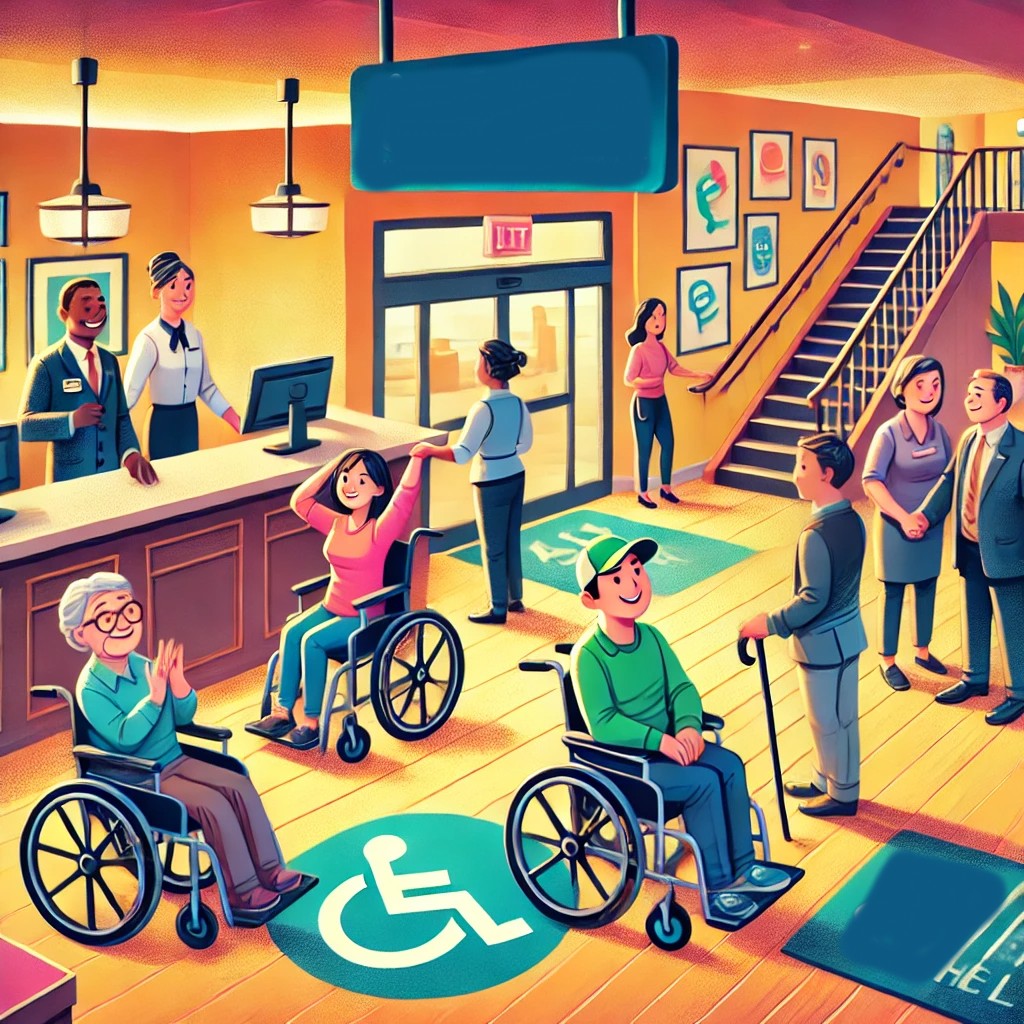
The Americans with Disabilities Act (ADA) is a civil rights law that prohibits discrimination against individuals with disabilities in all areas of public life, including jobs, schools, transportation, and all public and private places that are open to the general public. The purpose of the law is to make sure that people with disabilities have the same rights and opportunities as everyone else.
What is the ADA?
The ADA was signed into law on July 26, 1990, by President George H.W. Bush. It is divided into five titles, each addressing different areas of public life.
Title I: Employment
This title helps people with disabilities access the same employment opportunities and benefits available to people without disabilities. Employers must provide reasonable accommodations to qualified applicants or employees. A reasonable accommodation is any modification or adjustment to a job or the work environment that will enable an applicant or employee with a disability to participate in the application process or to perform essential job functions.
Title II: Public Services: State and Local Government
Title II covers all activities of state and local governments regardless of the government entity’s size or receipt of federal funding. Title II requires that state and local governments give people with disabilities an equal opportunity to benefit from all of their programs, services, and activities (e.g., public education, employment, transportation, recreation, health care, social services, courts, voting, and town meetings).
Title III: Public Accommodations and Services Operated by Private Entities
Title III focuses on private businesses and nonprofit service providers that are public accommodations, with a few exceptions. It requires that all new construction and modifications must be accessible to individuals with disabilities. For existing facilities, barriers to services must be removed if readily achievable.
Title IV: Telecommunications
This title requires telephone and Internet companies to provide a nationwide system of interstate and intrastate telecommunications relay services that allow individuals with hearing and speech disabilities to communicate over the telephone.
Title V: Miscellaneous Provisions
This title includes a variety of provisions relating to the ADA as a whole, including its relationship to other laws, state immunity, its impact on insurance providers and benefits, prohibition against retaliation and coercion, illegal use of drugs, and attorney’s fees.
Compliance and Enforcement
ADA compliance is enforced by several federal agencies, including the Equal Employment Opportunity Commission (EEOC) for Title I, the Department of Transportation for Title II as it relates to public transportation, and the Department of Justice for Titles II and III on public accommodations and services. Non-compliance can result in hefty fines and legal action.
Impact of the ADA
The ADA has transformed American society, enabling millions of people with disabilities to share in and contribute to the mainstream of American life. It has increased access to both public and private spaces, created opportunities in employment and education, and reshaped the culture of American architecture and design.
For businesses, the ADA has necessitated changes in the physical layout of facilities, the provision of auxiliary aids and services, and the implementation of new policies and procedures. While compliance requires investment, many businesses have found that there are substantial benefits to providing accessible products and services, including increased customer base and improved employee satisfaction.
Challenges and Ongoing Issues
Despite the significant progress made, challenges remain in the full implementation of the ADA. Continued advocacy is necessary to address the needs of people with disabilities in new technology, digital services, and emerging industries that were not foreseen at the time the ADA was enacted.
Issues such as the accessibility of websites and online platforms are still subjects of litigation and debate. Ensuring that new buildings and renovations comply with ADA standards also continues to be a significant issue, as does enforcing accommodations in employment.
The ADA is a dynamic and evolving framework that continues to shape the societal landscape in favor of inclusivity and accessibility for all people. By understanding and implementing the ADA, businesses, governments, and individuals can contribute to a more inclusive society, which benefits everyone.

Understanding ADA Compliance in Digital Accessibility
In recent years, digital accessibility has become a critical area under the ADA, particularly as the internet plays a central role in business, government, and everyday life. Digital accessibility involves ensuring that websites, mobile applications, and all forms of digital communication are accessible to people with a wide range of disabilities. This includes those who have visual, auditory, motor, or cognitive disabilities.
Web Content Accessibility Guidelines (WCAG)
To assist organizations in making their digital content accessible, the Web Content Accessibility Guidelines (WCAG) have been developed. These guidelines are part of a series of web accessibility guidelines published by the Web Accessibility Initiative of the World Wide Web Consortium, the main international standards organization for the Internet. They are designed to make web content more accessible to a wider range of people with disabilities, including blindness and low vision, deafness and hearing loss, limited movement, speech disabilities, photosensitivity, and combinations of these.
ADA Digital Compliance
For ADA compliance, U.S. businesses and organizations must ensure that their websites are accessible to individuals with disabilities. This means that web content should be accessible by screen readers, have sufficient color contrast, include captions for videos, and ensure all functionalities are available via keyboard for those who cannot use a mouse, among other requirements.
The Role of State and Local Regulations
It’s important to note that many states and localities have enacted their own regulations that complement or extend the provisions of the ADA. For example, some states have additional requirements for digital accessibility or have established higher standards for the accessibility of physical spaces. Businesses and organizations must ensure compliance not only with federal ADA standards but also with any applicable state or local laws.
Advocacy and the Future of the ADA
Advocacy plays a pivotal role in the continuous development and enforcement of the ADA. Various organizations and advocacy groups work tirelessly to promote the rights of individuals with disabilities and to ensure that the ADA keeps pace with technological and societal changes. These groups not only support individuals in understanding their rights under the ADA but also help businesses and organizations in implementing ADA guidelines effectively.
Future Trends and Adaptations
As technology evolves, the ADA must adapt to cover new scenarios and technologies. This ongoing process ensures that individuals with disabilities can fully participate in all aspects of society. Current trends in technology, such as artificial intelligence, virtual reality, and smart cities, pose new challenges and opportunities for accessibility.
The future of the ADA will likely involve a greater focus on digital accessibility, as well as an ongoing evaluation of how emerging technologies impact accessibility. It will also necessitate a broadened understanding of what constitutes a disability, particularly as mental health issues and invisible disabilities gain more recognition.
Conclusion
Understanding and implementing the ADA is not just about compliance; it’s about affirming the rights and dignity of individuals with disabilities. It’s about making sure that everyone has equal access to opportunities and services, thus enriching our communities and economies. The ADA has made significant strides in promoting inclusivity and accessibility, but continued effort and vigilance are required to ensure that its goals are fully realized in both physical and digital spaces.
The journey of the ADA is a testament to the ongoing societal commitment to equality and inclusion. As we look forward, it remains crucial that all sectors of society continue to engage with and advocate for comprehensive accessibility under the ADA.
Reference Section:
- Americans with Disabilities Act of 1990, as amended
- Web Content Accessibility Guidelines (WCAG)
Frequently Asked Questions
1. What is ADA Compliance and Why is it Important?
ADA Compliance refers to adhering to the standards set by the Americans with Disabilities Act. This is a critical aspect of any organization or business, as it ensures that facilities, services, and practices do not discriminate against individuals with disabilities. This law is applicable in all public and private sectors that are accessible to the general public, including employment, education, transportation, and more.
Being compliant is crucial because it not only fosters an inclusive environment that respects and allows equal access and opportunity for everyone, but it also protects from potential lawsuits and penalties. Non-compliance could lead to legal challenges and financial repercussions. Moreover, ADA Compliance also improves brand reputation, demonstrating a commitment to inclusivity and diversity, which is valued by consumers and employees alike.
2. What Does ADA Compliance Mean for Websites?
Under the ADA, websites are considered as public spaces, which means they must be accessible to people with disabilities. ADA compliance for websites ensures that all users, regardless of their abilities, have access to digital content. This includes making websites friendly for screen readers, providing text transcripts for audio content, ensuring descriptive alt text for images, and having navigation accessible through keyboard shortcuts rather than just a mouse.
Achieving ADA compliance online means observing Web Content Accessibility Guidelines (WCAG), which provide a measure of whether a site’s features are accessible. Meeting these guidelines not only allows users with disabilities to interact more easily but also enhances usability for all, improving SEO and overall site performance.
3. How Does ADA Compliance Impact the Workplace?
ADA Compliance within employment settings is about ensuring a comprehensive work environment that allows individuals with disabilities to have the same employment opportunities and benefits as those without disabilities. This involves practices related to hiring, promotions, training, pay, social activities, and all other employment-related activities.
Employers need to implement reasonable accommodations for qualified employees with disabilities. This might involve making existing facilities readily accessible, job restructuring, modifying work schedules, or implementing other adjustments unless doing so would cause significant difficulty or expense to the business. Embracing ADA compliance in the workplace cultivates a diverse and inclusive culture that benefits everyone by leveraging broad perspectives and skills.
4. Are There Any Other Laws Similar to the ADA?
Yes, there are several laws and regulations that complement and supplement the ADA with the aim of protecting the rights of individuals with disabilities. Some of these include Section 504 of the Rehabilitation Act, which prohibits discrimination based on disability in programs receiving federal funding. There’s also the Fair Housing Act, which requires housing providers to accommodate people with disabilities.
Additionally, the Individuals with Disabilities Education Act (IDEA) ensures that children with disabilities are entitled to a free appropriate public education, tailored to their individual needs. Each of these laws works alongside the ADA to create an environment that respects and protects individuals with disabilities across various aspects of life.
5. What Steps Can My Business Take to Achieve ADA Compliance?
To achieve ADA Compliance, businesses can initiate by conducting an accessibility audit to identify current barriers in facilities, programs or services. They should develop a plan for how these barriers will be addressed and ensure that all employees are trained on the importance of ADA compliance.
For facilities, this might include making entrances accessible, providing adequate signage, or retrofitting restrooms. In terms of digital presence, ensure your website meets the WCAG standards, which may involve updating the site’s code, improving navigation, or modifying content presentation. It is also vital to maintain ongoing educational programs about ADA requirements and to keep abreast of any changes in the law, ensuring that compliance is not only achieved but is maintained over time.