The relentless march of technology has brought about significant advancements in Virtual Reality (VR) and Augmented Reality (AR). These technologies, initially seen as mere tools for entertainment and gaming, have transcended their roots and emerged as transformative instruments within various industries. However, as VR and AR seep gradually into the fabric of everyday life, the matter of accessibility cannot be overlooked. The Americans with Disabilities Act (ADA) compliance, integral to the physical world, is starting to echo in the virtual realm. As we delve into the importance of ADA compliance in VR and AR environments, the quest for inclusivity is more critical than ever. But what do ADA compliance, VR, and AR really mean in harmony, and why does it matter?
ADA compliance refers to the adherence to standards set by the Americans with Disabilities Act, aimed at preventing discrimination based on disability in all areas of public life. As technology evolves, the need for inclusivity is paramount. Virtual Reality immerses users in a completely digital environment, while Augmented Reality overlays digital elements over the real world. When combined with ADA guidelines, these technologies can significantly enhance accessibility for disabled individuals, offering them unprecedented opportunities to engage with digital content in ways they never could before. This article explores the emerging trends on ADA compliance within the VR and AR domains, examining how these technologies are reshaping the landscape of accessibility, and why businesses and developers need to stay attuned to these changes.
Revolutionizing Accessibility: The Impact of VR on Disabilities
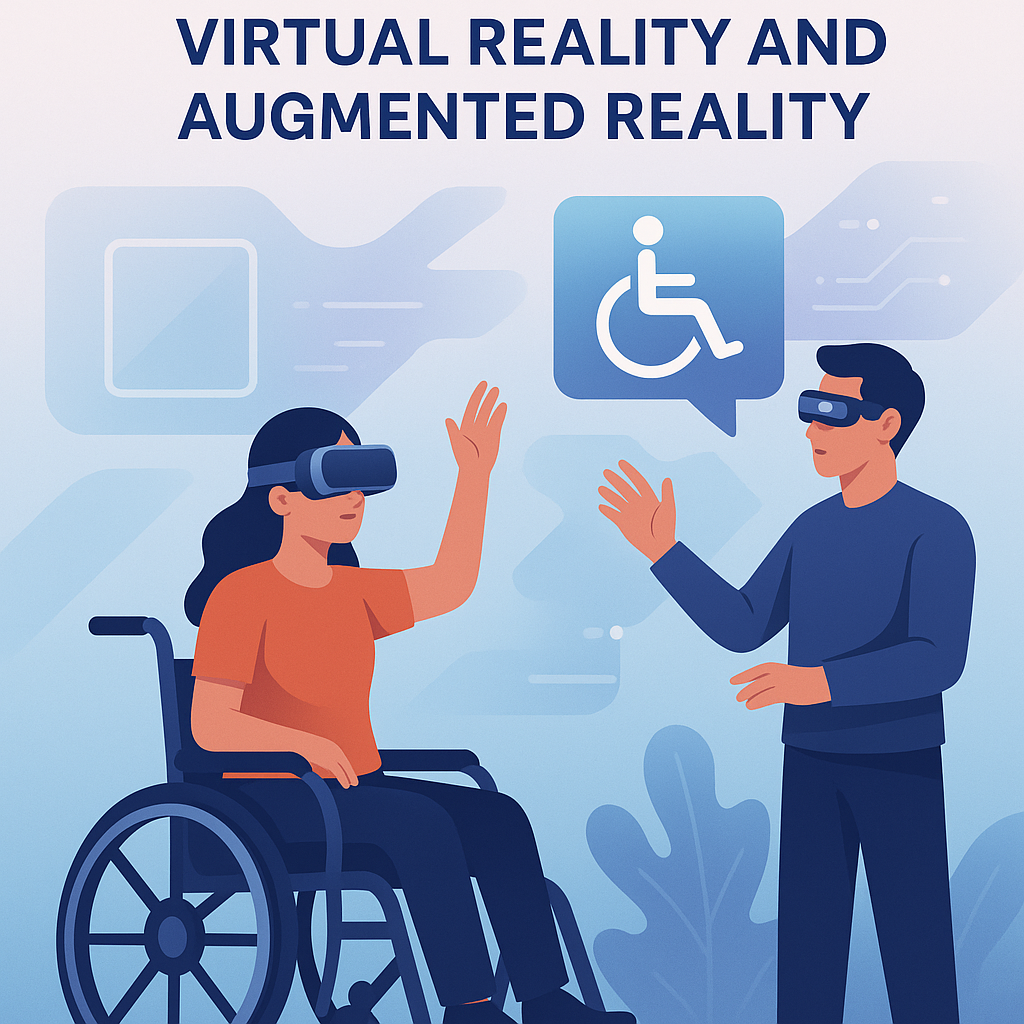
Virtual Reality has shown immense potential in terms of accessibility for individuals with disabilities. By creating immersive environments, VR offers possibilities previously deemed impossible. For example, people with mobility impairments can explore inaccessible locations, like ancient ruins or vast natural landscapes, through VR’s virtual simulations.
A real-world example of this is the partnership between Oculus, a leading VR hardware company, and the United Nations. This collaboration enabled the creation of a VR experience for a Syrian refugee camp. Users could virtually walk through the camp, experiencing residents’ daily lives. Importantly, this VR experience was designed to be fully ADA compliant, ensuring that people with mobility disabilities could navigate the virtual environment using hand controllers and voice commands.
Integrating ADA compliance with VR technologies involves creating alternative navigation systems, offering voice-activated commands, and ensuring that interactive elements are accessible via multiple input sources. These adaptations not only expand VR’s usability among disabled individuals but also pave the way for the technology to serve a wider audience, proving that accessibility and innovative design are not mutually exclusive.
Augmented Reality: Bridging Worlds for the Visually Impaired
Augmented Reality holds transformative potential for the visually impaired. By superimposing digital information onto the real world, AR can enhance real-world interactions for individuals with visual disabilities. For instance, AR applications can audibly describe objects that a user points to using their smartphone camera, providing crucial context and detail that would otherwise be inaccessible.
An example of this is Microsoft’s Seeing AI app, an AR application specifically designed for the visually impaired. Using computer vision, Seeing AI converts visual data into audio descriptions, narrating everything from text to environmental cues. This AR technology complies with ADA standards by ensuring that close captioning and screen reader compatibility are priorities within the user interface design.
| AR Feature | ADA Compliance Benefit | Example Application |
|---|---|---|
| Object Recognition | Provides audible descriptions of physical surroundings | Seeing AI by Microsoft |
| Text-to-Speech | Reads printed text aloud to the user | Google Lookout |
| Navigation Assistance | Gives audible cues for directions and obstacles | AR City Navigation |
However, to fully realize AR’s accessibility potential, developers must prioritize ADA compliance from inception. Adhering to usability guidelines ensures that applications are more than just functional; they serve as gateways bridging the gap between abilities and disabilities, enhancing life quality and promoting independence among visually impaired users.
Legal Implications: Navigating ADA Compliance in VR and AR
The legal landscape is steadily evolving, stressing the importance of ADA compliance in digital environments. With growing awareness of accessibility, failure to adequately design VR and AR applications for disabled users can result in legal consequences for developers and businesses. Lawsuits regarding digital accessibility have already been filed, highlighting the need for companies to integrate compliance into their development processes proactively.
A notable instance is the lawsuit against Domino’s Pizza concerning their website and app accessibility for blind customers. Though not directly related to VR or AR, it set a precedent for digital compliance under the ADA, underscoring the need for virtual and augmented realities to adhere to similar standards.
Developers engaged in VR and AR must work with legal teams to ensure their innovations are compliant, involving continuous testing, feedback loops from disabled users, and adapting existing guidelines to the evolving landscape. Understanding legal implications and actively engaging in developing accessible applications protects businesses from litigations and serves as a good moral practice.
The Business Case: Why Compliance Makes Sense
Incorporating ADA compliance in VR and AR is not merely about avoiding potential legal challenges; it also makes good business sense. Accessible applications broaden the market reach, tapping into the large demographic of disabled users, often underserved by traditional technological models. This inclusivity can serve as a distinctive competitive advantage.
Consider the example of AxonVR, which developed a VR suit allowing full-body experiences for disabled users to engage with digital environments innovatively. These suits primarily serve rehabilitation purposes, allowing users to feel environmental cues that enhance motor skills through sensory feedback. By ensuring ADA compliance, AxonVR opened up new avenues in both healthcare and gaming sectors, thus expanding their market considerably.
Moreover, companies actively promoting inclusive designs often see boosts in their reputations and consumer loyalty. By positioning themselves as pioneers in accessible technology, businesses can build a brand that resonates with values like inclusivity and empathy. Employment opportunities within these inclusive businesses are also on the rise, encouraging diverse talent pools and perspectives in tech innovation.
Spotlight on Emerging Technologies: The Role of AI in Compliance
Artificial Intelligence (AI) is rapidly becoming an integral part of ensuring ADA compliance in VR and AR spaces. AI can provide personalized accessibility settings adjusting to the user’s specific needs autonomously. For instance, AI can tailor VR experiences by dynamically altering the difficulty level for games based on a user’s physical capabilities.
- AI-driven customizable interfaces: Ensures that interface complexities are reduced or expanded based on user abilities.
- Predictive text and speech recognition: Enhances communication for users with disabilities, offering real-time translation and transcription.
- Machine learning algorithms: Analyze usage patterns to refine accessibility features over time.
Companies integrating AI into their design processes focus on creating seamlessly accessible experiences. Google’s AI division is already pioneering efforts in this realm, working on algorithms that identify VR content gaps in ADA compliance. By preemptively addressing these issues, AI not only facilitates compliance but strengthens VR and AR software’s user experience.
Challenges and Opportunities: The Road Ahead
Despite significant advancements, the journey towards universal ADA compliance in VR and AR is laden with both challenges and opportunities. Technological limitations, such as hardware restrictions and software compatibility, remain obstacles needing attention. For instance, speech recognition in high-noise AR environments or translating intricate tactile cues into simple audio descriptions for VR remain formidable challenges.
Nonetheless, these challenges open opportunities for innovation. Companies with foresight are investing in adaptive technologies, fostering collaborations across sectors to develop inclusive solutions. Microsoft’s inclusive design toolkit is an example of such efforts, providing developers with resources to incorporate accessibility from concept to execution.
The road ahead requires a collective effort from VR and AR developers, hardware manufacturers, legislators, and users themselves. Through collaboration, the digital divide can be bridged, fostering an environment where technology truly serves all humanity.
Conclusion: Embracing Accessibility for a Better Tomorrow
The convergence of ADA compliance with VR and AR technologies unfolds a landscape brimming with potential for enhanced accessibility and inclusivity. By understanding and implementing accessible design principles, developers can create virtual worlds accessible to everyone. Through initiatives fostering inclusivity and continued discourse in legal and business domains, ADA compliance in VR and AR is not merely a regulatory requirement, but also a moral and business imperative.
As we move forward, the challenge lies in continuing to innovate while keeping accessibility at the forefront of technological design. Developers must stay informed of evolving guidelines, actively integrating feedback from disabled users, and striving for inclusivity in every aspect. By doing so, the digital world can see a future where limitations are lifted, fostering communities where everyone can engage, participate, and thrive.
We must collectively embrace the challenges and aim for a tomorrow where technology creates equal opportunities. For businesses, the call to action is clear: prioritize accessibility in VR and AR spaces not just to comply, but to lead, innovate, and inspire.
Frequently Asked Questions
1. What is ADA compliance in the context of Virtual Reality (VR) and Augmented Reality (AR)?
ADA compliance refers to adherence to the regulations set forth by the Americans with Disabilities Act. The goal of this act is to ensure equal accessibility and opportunities for individuals with disabilities. In the realm of Virtual Reality (VR) and Augmented Reality (AR), ADA compliance is critical to making these cutting-edge technologies accessible to everyone, regardless of their physical or cognitive abilities. This involves implementing features and functionalities in VR and AR applications that accommodate the needs of users with disabilities. For instance, visual content should be made accessible to users with vision impairments through audio descriptions, while haptic feedback or alternative input methods can assist those with limited manual dexterity. As VR and AR increasingly integrate into various sectors, from education to healthcare, making these experiences ADA compliant is not just a moral obligation but a legal one that facilitates inclusive participation in this rapidly evolving digital landscape.
2. How are companies ensuring VR and AR experiences are ADA compliant?
Companies are actively adopting a range of strategies to ensure their VR and AR products are ADA compliant. One of the primary approaches is incorporating universal design principles from the outset of development. This means designing experiences that are usable by the widest range of people possible, without the need for adaptation. Additionally, companies are engaging with accessibility experts and involving people with disabilities in testing and feedback to identify and rectify potential barriers in VR and AR environments. Another method is the implementation of customizable settings that allow users to modify the experience according to their abilities, such as adjusting contrast, implementing subtitles, or providing sign language interpretations for audio content. Moreover, many organizations are investing in research and development to create innovative accessibility solutions like voice commands and gaze tracking, which help users navigate and interact with VR and AR applications more effectively. The key to ADA compliance lies in a commitment to inclusivity, continually updating and refining experiences to meet and exceed accessibility standards.
3. What challenges do developers face in creating ADA-compliant VR and AR experiences?
Creating ADA-compliant VR and AR experiences presents several challenges for developers. One major hurdle is the inherent complexity of these technologies, which combine multiple sensory modalities – visual, auditory, and sometimes tactile – in a single experience. Ensuring that each mode of interaction is accessible to users with different types of disabilities requires comprehensive planning and testing. Budget and resource constraints can also pose significant challenges, as making apps and devices accessible often requires additional time, specialized skills, and possibly more expensive technologies. Developers must balance the need for compliance with other business priorities such as innovation, speed to market, and user experience. Another challenge is the lack of standardized guidelines specifically tailored to VR and AR, as the ADA was established long before these technologies became prevalent. This makes it difficult to predict or define what constitutes as accessible design within this context. Developers often have to rely on general accessibility guidelines and adapt them creatively to the immersive environments of VR and AR.
4. How does ADA compliance in VR and AR benefit individuals without disabilities?
ADA compliance in VR and AR extends beyond its benefits for individuals with disabilities, offering enhancements that improve the experience for all users. For one, many accessibility features—such as subtitles or customizable interaction modes—can be beneficial in non-disability contexts. Subtitles help users in noisy environments or those who prefer to consume content quietly. Customizable settings that allow changes in visual and auditory output can also accommodate personal preferences and enhance comfort. Additionally, by focusing on simplicity and clarity required for accessibility compliance, developers often create user interfaces that are more intuitive and user-friendly for everyone. Such thoughtful design can reduce cognitive load, making interfaces easier to navigate and engage with. As VR and AR technologies are applied in professional settings, ADA compliance also supports workplace diversity, ensuring broader participation and input from all employees, ultimately fostering an inclusive culture and yielding innovation from a diverse range of perspectives. In short, ADA compliance contributes to a more versatile and universally appealing product, extending the reach and usability of VR and AR technology.
5. What future trends can we expect in ADA compliance for VR and AR?
As VR and AR continue to evolve, several emerging trends are expected to shape the future of ADA compliance in these fields. One anticipated trend is the development and integration of artificial intelligence (AI) in creating dynamically accessible content. AI technologies can potentially personalize experiences in real-time based on user needs, such as automatically adjusting levels of interaction complexity or offering voice-to-text services. Another trend is the expansion and refinement of hardware options tailored specifically for users with disabilities, including haptic feedback suits or advanced headsets with built-in eye-tracking for navigation purposes. Augmented reality wearables that can translate environmental sounds to visual cues, or the conversion of text to braille through smart tactile interfaces, are also on the horizon. Additionally, as AR and VR hardware become more compact, affordable, and mainstream, there will likely be more widespread implementation of inclusive design standards across the industry. Finally, a crucial trend will be the development and standardization of formal accessibility guidelines for VR and AR by both government and industry bodies, providing clearer benchmarks for developers to achieve ADA compliance. These trends indicate a promising shift towards a more inclusive future, with VR and AR experiences designed to accommodate the diverse needs of all individuals.