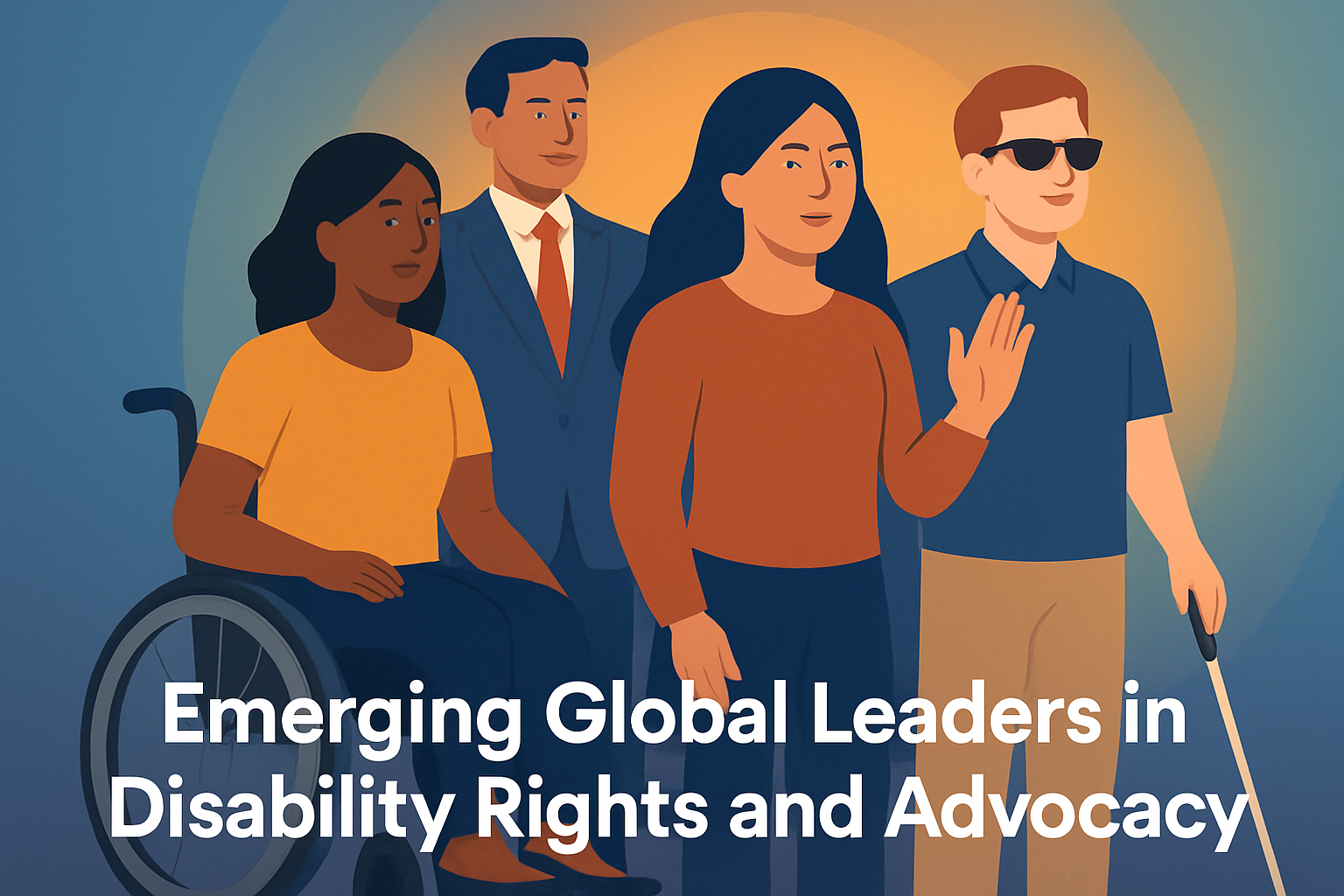
In a world constantly striving for progress and equality, the leaders and visionaries advocating for disability rights have emerged as pivotal figures in the fight for justice and true inclusivity. As society evolves, issues of accessibility, representation, and equity become more pronounced, necessitating an urgent response from global leaders committed to advancing the rights of persons with disabilities. Disability rights and advocacy are no longer just matters of health and welfare; they have become central to discussions on human rights, social justice, and international development. The recognition of the complexity and variability of disability, as well as the pressing need for systemic change, leads us to explore the work of emerging leaders in this critical arena. These leaders, hailing from various sectors and continents, are uniting under the banner of disability rights, promising transformative changes towards a more inclusive world.
Key terms such as “disability rights,” “advocacy,” “accessibility,” and “inclusivity” have taken center stage in the conversations surrounding global human rights. Disability rights refer to equal opportunities and equal rights for individuals with disabilities, ensuring their full participation in societal activities. Advocacy involves activities by individuals or groups aimed at influencing decisions within political, economic, and social systems. Accessibility pertains to the design and implementation of environments and services to accommodate people of all abilities. Inclusivity goes a step further by ensuring that diversity is embraced, and all individuals feel valued and integrated into various aspects of life. Understanding these concepts is crucial for recognizing why the work of leaders in this field matters and how they are shaping a more equitable future.
Fostering Global Change Through Policy and Legislation
A pivotal aspect of advancing disability rights is the introduction and enforcement of policies and legislation that secure accessible environments and equal opportunities. Leaders in this field are advocating for policies that not only comply with international standards but also cater to the specific needs of diverse populations. For instance, the UN Convention on the Rights of Persons with Disabilities has been fundamental in shaping national policies globally. Its influence can be seen in the work of leaders like Maria Soledad Cisternas, the Special Envoy of the United Nations Secretary-General on Disability and Accessibility, who has been instrumental in promoting the ratification and implementation of the UNCRPD across nations.
Esteemed personalities such as Judy Heumann, often dubbed the “mother” of the disability rights movement, have dedicated their careers to influencing legislative victories. Her activism led to the passing of the Americans with Disabilities Act (ADA) in 1990, revolutionizing the landscape of rights for disabled communities in the United States. These efforts have served as blueprints for contemporary policy-oriented advocacy worldwide. To inspire national and global change, leaders are focused on amplifying a legislative approach to achieve sustainable advancements in disability rights, ensuring that legal frameworks are continuously evolved to address emerging challenges and intricacies of disabilities.
Innovative Technology and Accessibility Solutions
Technological advancement offers boundless possibilities for improving the lives of individuals with disabilities, making everyday activities more accessible and empowering. Emerging leaders in disability advocacy are leveraging technology to revolutionize accessibility, pushing boundaries and challenging the status quo. This drive has led to groundbreaking innovations such as assistive devices, communication tools, and smart home technologies tailored for various disabilities.
A remarkable example is the work of Haben Girma, the first Deafblind graduate of Harvard Law School, who advocates for increased tech innovation to improve access. Her efforts spotlight the importance of marrying technology with advocacy, as seen in her endeavors to influence tech giants like Apple and Google to enhance product inclusivity. Voice recognition software, adaptable keyboards, and screen readers represent just a few of the tools emerging from these collaborations, mitigating barriers that historically hindered engagement in professional and personal settings.
| Technology | Impact on Accessibility |
|---|---|
| Screen Readers | Facilitates computer and web navigation for visually impaired users. |
| Voice Recognition | Enables hands-free operation of devices, aiding users with mobility impairments. |
| Adaptive Keyboards | Offers customizable typing utilities for individuals with dexterity challenges. |
By advocating for open standards and sharing knowledge with innovators, leaders like Girma ensure that accessibility becomes inherent within the DNA of new technologies, rather than an afterthought. This embrace of technological progress and inclusion serves as a powerful catalyst for societal change, advancing the cause of disability rights exponentially.
Empowering Grassroots Movements and Communities
The power of grassroots movements in the disability rights arena cannot be overstated. These movements galvanize communities by fostering a sense of agency, ensuring voices from all corners are heard. At the forefront of this empowerment are leaders who identify closely with the communities they represent, thus understanding firsthand the challenges and aspirations driving their cause.
An inspiring example is Eddie Ndopu, a South African disability activist, who, despite living with spinal muscular atrophy, has actively worked towards shattering the glass ceiling for disabled individuals worldwide. Ndopu’s pursuits include launching the African Youth with Disabilities Network and securing leadership roles in global organizations like the World Economic Forum.
Additionally, grassroots movements gain momentum via campaigns and local organizations focusing on advocacy, education, creating employment opportunities, and influencing policy change within their regions. Online platforms and social media campaigns represent novel methods to amplify such movements, allowing global leaders to connect directly with supporters and reinforce the movement’s values. By nurturing this grassroots approach, emerging leaders ensure that disability advocacy is not only inclusive but married tightly to the real-world contexts of the individuals it aims to serve.
Championing Inclusive Education
Inclusive education is pivotal in shaping an equitable society, providing persons with disabilities equal opportunities to thrive academically and socially. Championing inclusive education involves dismantling barriers that inhibit education access and reforming curricula and teaching methodologies to accommodate diverse learning needs.
One compelling leader in this space is Malvika Iyer. Following an accident that resulted in her becoming a bilateral amputee, Iyer emerged as a fervent advocate for inclusive education, delivering TEDx talks and working with organizations such as the United Nations. Her message has resonated globally, inspiring educational reforms and drawing attention to the imperative of accommodating and embracing diversity within educational systems.
- Accessible Physical Environments: Implementing ramps, elevators, accessible restrooms, and sensory-friendly spaces within educational facilities.
- Flexible Curriculum: Developing diverse curricula that recognize various learning styles and abilities, paired with adaptive learning materials.
- Training Educators: Equipping educators with the knowledge and tools to support inclusive teaching practices and foster an empathetic environment.
- Assistive Technology: Incorporating technology that aids learning for students with disabilities, such as Braille tools and interactive software.
Promoting inclusive education requires endeavoring to cultivate a culture that values diversity within educational settings, ultimately underpinning broader societal change through knowledge empowerment.
Conclusion
The emergence of global leaders in disability rights and advocacy is a powerful testament to the significant progress being made worldwide towards achieving a more inclusive, equitable society. These leaders, through their relentless pursuit of change, policy implementation, innovative technology solutions, grassroots empowerment, and education reform, are delineating a future where individuals with disabilities no longer face myriad barriers. By championing the cause of disability rights, they illuminate the profound importance and depth of impact that inclusivity holds for all sectors of society.
For readers, acknowledging the stories and actions of these dynamic individuals offers an insightful perspective on the tangible impact of advocacy efforts within our communities and beyond. Each stride made in this domain benefits not only those directly impacted by disabilities but also enriches the social fabric, promoting empathy, understanding, and unity. As we recognize the strides made by these leaders, it compels us to not only support their efforts but actively participate in the journey towards a globally inclusive society. Whether through supporting policies, engaging with advocacy groups, or simply increasing accessibility awareness within our social spheres, the invitation to join this movement is open to all. It’s time to transform our cognizance into committed action, benefitting society as a whole.
Frequently Asked Questions
1. Who are some of the current emerging global leaders in disability rights and advocacy?
There are numerous inspiring individuals dedicating their lives to advancing disability rights and advocacy worldwide. A few key figures include:
Judy Heumann: Often referred to as one of the pioneers in the disability rights movement, Judy Heumann has been an influential figure in real-world advocacy and policy-making. Her work in the U.S. government and her activism have paved the way for critical legislative changes benefiting persons with disabilities.
Salome Afia Sakyi: A Ghanaian advocate who has been at the forefront of fighting for the rights of persons with disabilities in Africa. Her work largely focuses on increasing accessibility to education and employment opportunities for individuals with disabilities in the African continent.
Robert Kayombo: A leader from Tanzania, Robert has significantly contributed to creating awareness and understanding of the needs of persons with disabilities in East Africa. He has been instrumental in pushing for policy reforms and inclusive public spaces.
Haben Girma: As the first deafblind graduate from Harvard Law School, Haben Girma is a powerful advocate for disability rights, focusing on accessibility and the opportunities technology presents in advancing inclusivity.
These leaders, among many others, work tirelessly to ensure that disability is considered and prioritized in discussions about rights and inclusivity at local, national, and international levels.
2. Why is representation important in disability rights and advocacy?
Representation is key in disability rights and advocacy because it ensures that the voices, experiences, and needs of persons with disabilities are accurately and effectively communicated. When individuals with disabilities are included in decision-making processes:
Accurate Perspectives: They bring lived experiences that provide accurate insights into the obstacles faced daily. This unique perspective promotes solutions that are practical and impactful.
Empowerment: Representation empowers disabled individuals by affirming their identity and value within society, encouraging more persons with disabilities to step forward and engage in advocacy.
Informed Policy-Making: Policies crafted with input from disabled individuals are more likely to address real needs, leading to sustainable and meaningful changes in communities worldwide.
Breaking Stereotypes: Representation challenges existing stereotypes and dismantles misconceptions surrounding disability, thereby reducing stigma and fostering a culture of inclusivity.
Ultimately, when disabled individuals actively participate in shaping the policies and narratives that affect their lives, it leads to more equitable and just systems of governance.
3. How can technology support the goals of global leaders in disability rights and advocacy?
Technology plays a transformative role in advancing the goals of global leaders advocating for disability rights. It serves as both an equalizer and an enabler by:
Improving Accessibility: Assistive technologies—such as screen readers, speech-to-text programs, and adaptive hardware—make digital content and tools accessible to a wider audience, thereby bridging communication gaps.
Creating Inclusive Communities: Online platforms and social media provide spaces for communities (both global and local) to form, share experiences, and advocate collectively for policy changes and awareness.
Facilitating Independence: Innovative products, like smart home systems and mobility solutions, empower individuals with disabilities to lead more independent lives, enhancing their ability to work and engage socially.
Enabling Remote Engagement: Particularly highlighted during the COVID-19 pandemic, technology allows individuals with disabilities to attend virtual meetings, conferences, and events, ensuring their voices are heard on global platforms without needing to overcome physical barriers frequently encountered in public spaces.
As technology continues to advance, it offers an ever-expanding toolkit for advocates and leaders striving to make the world a more inclusive place.
4. What are the main challenges faced by emerging global leaders in disability rights?
Emerge global leaders in the realm of disability rights often confront a range of significant challenges, including:
Funding Limitations: Securing sufficient funds to initiate and implement programs tailored to the needs of people with disabilities can be a daunting task. This financial barrier often limits the scope and reach of advocacy efforts.
Societal Attitudes: Prevalent discriminatory attitudes and persistent stigma towards people with disabilities are deeply rooted in many cultures worldwide. This often presents a formidable obstacle to introducing or expanding inclusive policies.
Policy Resistance: Enacting legislation or policy changes that advocate for disability rights can be met with resistance from political entities or institutional barriers, often leading to sluggish progress.
Internal Disparities: Even within the disability community, there can be disparities in representation and resource allocation, making it critical to balance the diverse needs of all subgroups within the disability spectrum.
Global leaders must navigate these hurdles with resilience and tenacity, continuously working to dismantle these obstacles to create genuinely inclusive societies.
5. How do disability rights intersect with other social justice issues globally?
Disability rights are intrinsically interconnected with various other social justice issues, given that individuals with disabilities often face multiple layers of marginalization and discrimination. These intersections include:
Gender Equality: Women with disabilities are at greater risk of violence, discrimination, and socioeconomic disadvantages. Thus, gender equality initiatives must also be inclusive of the needs and rights of women with disabilities.
Economic Justice: Economic independence is a critical need, but persons with disabilities are frequently excluded from employment opportunities due to biases and accessibility barriers. This interlinks with broader efforts to ensure fair wages and dignified work for all.
Education Access: The right to education intersects heavily with disability rights, as education often provides the foundation for achieving independence and empowerment. Advocacy groups push for inclusive educational systems where all students learn together regardless of abilities.
Healthcare Access: Health inequities are prevalent, with many persons with disabilities struggling to access essential healthcare services. This intersects with broader initiatives aimed at universal healthcare access and equity in health outcomes.
By recognizing and addressing these intersections, advocates and leaders can formulate more comprehensive strategies that support the overarching cause of social justice and equality for all marginalized groups.