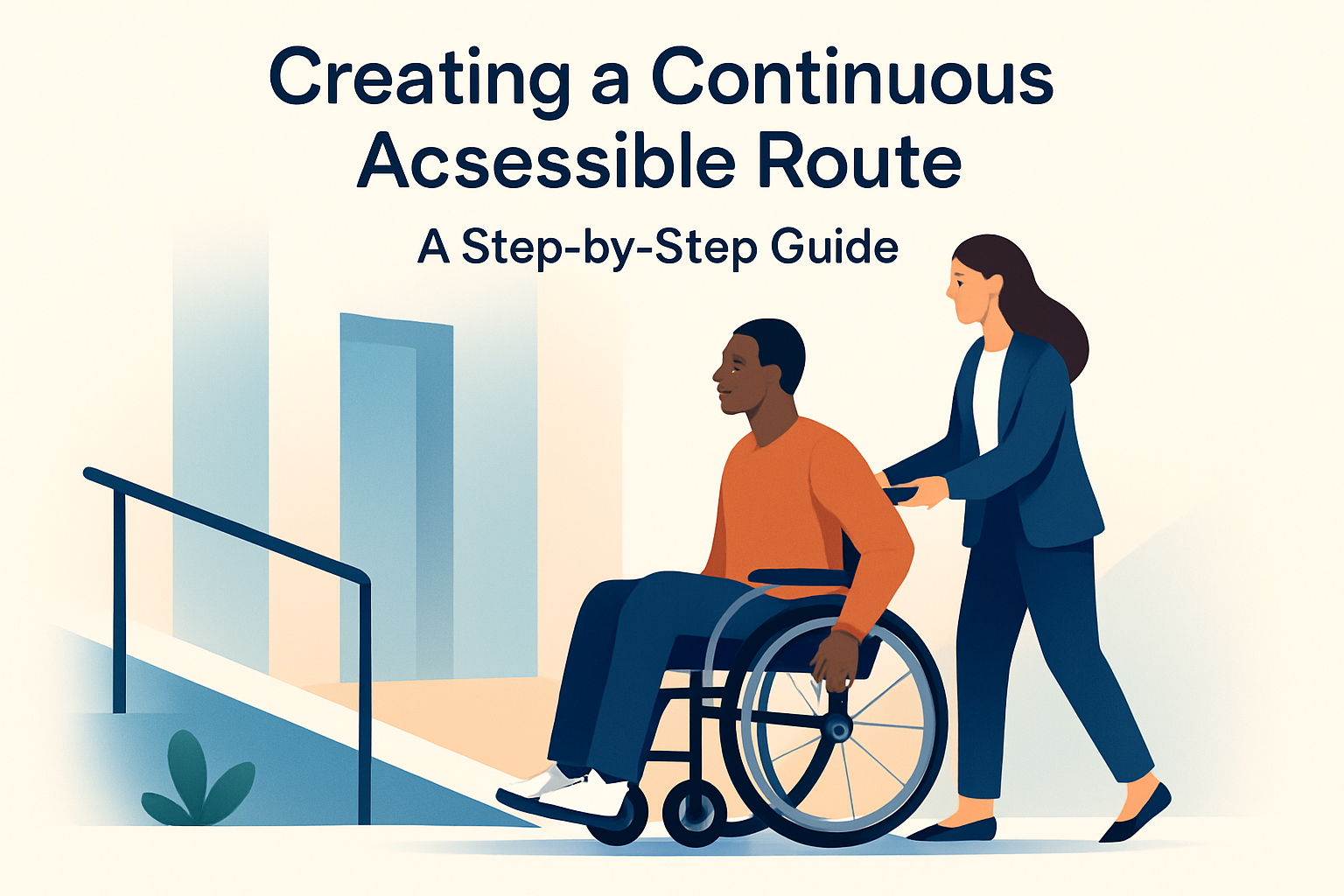
When designing spaces, accessibility is not just an option but a necessity. The creation of continuous accessible routes ensures that individuals of all abilities can navigate environments effortlessly and safely. But what exactly does this entail? A continuous accessible route is an unobstructed path that connects all accessible elements and spaces of a building or site. These routes are crucial for individuals with disabilities, providing equal access as mandated by various accessibility standards, including the Americans with Disabilities Act (ADA). Designing such routes is not merely about compliance; it’s a matter of inclusivity and equality. Ensuring that buildings and public spaces are fully navigable by everyone promotes a more harmonious society where physical barriers do not hinder participation or independence. In this guide, we’ll uncover the methods and principles for creating continuous accessible routes, demonstrate their real-world applications, and empower designers and planners with the knowledge needed to make inclusive environments a reality.
Understanding the Components of Accessible Routes
A crucial step in creating accessible routes is understanding their components. An accessible route typically includes walkways, ramps, entrances, elevators, and doorways. Each component must meet specific criteria to be considered accessible. For instance, walkways should be wide enough to accommodate wheelchairs, with smooth and slip-resistant surfaces.
Consider a shopping mall; its accessible route might begin at the parking lot, proceed through automatic doors, include ramps where necessary, and go through wide aisles that are easy for wheelchair users to navigate. Elevators provide access between floors, and tactile signage assists visually impaired individuals. Designing each component with accessibility in mind ensures that every visitor can enjoy the mall comfortably.
Components of accessible routes aren’t crafted in isolation; they must function cohesively. Continuity between these elements is key. For instance, an accessible walkway that leads to a non-accessible ramp fails its purpose. Therefore, consistent design thinking and thorough planning are vital for the seamless integration of all components.
Designing for Accessibility: Key Principles and Standards
Designing continuous accessible routes involves adhering to key principles and recognized standards. The ADA provides guidelines for accessibility, covering dimensions, slopes, hardware, and spatial relationships. A successful route melds these regulations with practical design considerations. For ramps, a gentle slope is critical, ideally a 1:12 ratio, which ensures mobility devices can maneuver with ease.
Take for example an educational institution. The campus must consider paths that connect dormitories to classrooms, libraries, and dining areas. By integrating ramps with proper handrails, accessible entrances, bathroom facilities, and adequate lighting, the institution creates an environment where students with disabilities can navigate fully and independently.
A holistic approach is necessary—one that encompasses the nuances of dimensional specifications while considering the real-world environment. Planners and architects need to be current with evolving standards and technology, ensuring that the solutions they implement meet and often exceed baseline expectations.
- Ensure all paths have a minimum clear width as per standards.
- Provide tactile ground surface indicators where necessary.
- Implement adequate reach ranges for fixtures and controls.
- Use contrasting colors for enhanced visibility.
The Role of Building Layout in Accessibility
Building layout plays a pivotal role in establishing accessible routes. It begins with strategic planning that anticipates the diverse needs of future users. It’s essential to consider how people with different abilities will enter, exit, and navigate the space, from parking facilities to interior pathways.
Consider a multi-level office building. To meet accessibility needs, the design should feature elevators close to main entries, ramps where level differences occur, and clear signage directing to accessible facilities and emergency exits. Emergency planning must include accessible egress routes to showcase full inclusivity.
Moreover, the internal organization of spaces, such as positioning waiting areas or reception desks for wheelchair users, is a notable consideration. Spaces need to reflect inclusivity not just via access but also in the interaction within the environment. The essence of layout planning rests in its user-centered focus, shaping an environment where everyone feels welcome.
Incorporating Technology and Innovation in Accessible Design
As technology advances, it provides opportunities to enhance accessibility beyond traditional measures. Solutions such as smart elevators with voice commands or app-driven navigation assistance are evolving how individuals interact with accessible routes.
An example can be seen in smart city initiatives where technology is integrated with accessibility. Cities are incorporating beacons that communicate with smartphone apps, offering real-time navigation cues for visually impaired individuals as they traverse urban spaces. This technological adoption represents an exciting frontier in accessibility.
Indeed, technology can boost engagement and autonomy. However, accessible route design must maintain a balance between technological integration and users’ varying competencies. Traditional methods like Braille, tactile maps, and audible signals remain crucial components of a comprehensive approach to accessibility.
Real-World Examples and Case Studies
Successful implementation of continuous accessible routes can be found in numerous real-world contexts, providing learning opportunities for other developers and planners. The Sydney Opera House, for example, underwent significant renovations ensuring accessibility. The project enhanced pathways with ramps and added accessible entrances and wayfinding signage, all while preserving the iconic architectural integrity.
Similarly, the Smithsonian Institution’s National Museum of African American History & Culture exemplifies optimal accessible design. The museum features wide pathways, tactile signage, audio descriptions, and elevators, all integrated into a comprehensive route opening the museum to visitors of all abilities.
These examples highlight the positive impact of thoughtful design. The endeavor to create accessible routes manifests in enhanced user experience, allowing everyone to engage in cultural, educational, and social activities seamlessly.
Steps to Implementing Accessible Routes
Implementing accessible routes starts with careful planning, considering both new constructions and retrofitting existing structures. Here’s a step-by-step plan:
- Assess the existing environment and identify accessibility barriers.
- Consult with accessibility experts and users groups.
- Develop detailed plans meeting ADA standards and beyond.
- Draft a timeline, considering construction phasing to limit impact.
- Conduct regular inspections during and post-construction.
- Incorporate feedback mechanisms for ongoing improvement.
Toronto’s Path, a vast underground pedestrian network, demonstrates effective implementation. The system connects multiple downtown buildings, prioritizing wide, clear passages, strategic signage, and important linkages such as accessible public transport points.
This methodical approach ensures clarity and efficiency, providing a proactive trajectory to achieve comprehensive accessibility across varied environments.
Challenges and Common Pitfalls in Route Design
Despite best intentions, challenges exist. Limited space, historical preservation requirements, and budget constraints often influence the scope of accessible route designs. Understanding potential pitfalls can avert oversights.
For instance, the preservation of heritage buildings can pose significant accessibility challenges. Susceptible to rigid constraints, alterations must be sympathetic, often requiring innovative solutions like portable ramps or external lifts.
Another common issue is the assumption that accessibility solely benefits those with disabilities. In reality, families with strollers, elderly individuals, and even delivery workers find accessible routes useful. Acknowledging diverse needs leads to more inclusive design practices, benefitting a wider population.
| Challenge | Resolution |
|---|---|
| Space Constraints | Innovative design solutions, such as vertical stacking |
| Budget Limitations | Prioritize essential access points in initial phases |
| Preservation Needs | Create reversible changes that respect historical integrity |
Cost Considerations and Budgeting for Accessibility
Addressing costs in accessibility planning ensures sustainability and value. While upfront expenses may appear higher, the return on investment relating to usability and compliance minimizes potential legal and reputational risks.
Phoenix’s Sky Harbor Airport demonstrates strategic budgeting by integrating accessibility from the outset, reducing retrofitting needs. The airport utilizes universal design principles in their newest terminals, emphasizing access without exorbitant rework costs.
Creating a transparent and flexible budget is key, prioritizing critical areas. Investments in training for staff and regular audits will also aid in maintaining accessibility, proving cost-efficient in the long term by averting the necessity for future overhauls.
Conclusion: The Future of Accessibility and Continuous Routes
Creating a continuous accessible route demands a holistic and forward-thinking approach. This guide has highlighted the essential components, practical applications, and potential challenges in designing for accessibility. Understanding that these routes do more than meet regulations—they transform environments into inclusive spaces—is vital.
By addressing accessibility, designers and planners contribute to a community that values all individuals equally. The ultimate benefit is a world where physical barriers appear less daunting, promoting independence and enhancing quality of life for everyone.
As urban landscapes and technology evolve, so too will the standards for accessibility. Remaining committed to this endeavor involves constant learning and adaptation. As a next step, consider conducting an accessibility audit of your current environment and apply the insights gained from this guide to make meaningful improvements.
Embrace the challenge of creating continuous accessible routes, and realize the profound impact this has on society as a whole. By unlocking accessible pathways, you unlock endless possibilities and a more equitable future.
Frequently Asked Questions
1. What is a continuous accessible route and why is it important?
A continuous accessible route is an unobstructed pathway that connects all accessible elements and spaces within a building or site. These routes are designed to ensure that individuals of all abilities, including those with disabilities, can navigate the environment with ease. These routes are crucial for providing equal access and are often mandated by accessibility standards and regulations, such as the Americans with Disabilities Act (ADA). By implementing these routes, we ensure that everyone, regardless of physical ability, has the opportunity to move freely, safely, and independently throughout a space. The importance of this lies in promoting inclusivity, reducing barriers, and upholding the dignity and independence of individuals with disabilities.
2. What are the key components to consider when creating a continuous accessible route?
When designing a continuous accessible route, several key components must be considered to ensure accessibility and safety for all users. First, the route must be unobstructed, meaning it should be free of barriers or hazards such as steps, uneven surfaces, or clutter. The pathway itself must be wide enough to accommodate wheelchairs, usually at least 36 inches wide, with an even, stable, and slip-resistant surface. Secondly, there must be appropriate signage placed at visible locations to guide individuals along the accessible route. Additionally, ramps instead of stairs with a gentle slope, handrails for support, and adequate lighting to enhance visibility are crucial features. Elevators or lifts should also be part of the design for multi-level buildings. Moreover, attention to detail is important in terms of small elements such as tactile indicators and sufficient contrast between the pathway and surrounding areas to cater to individuals with visual impairments. By focusing on these components, the development of an effective accessible route that caters to a wide spectrum of needs can be achieved.
3. How do you ensure that an accessible route remains continuous and unobstructed?
Maintaining a continuous and unobstructed accessible route involves regular inspection, maintenance, and routine checks. This ensures that any issues that may obstruct the path, such as debris, temporary structures, signage, or other items left in the path, are promptly addressed. Accessibility features like ramps should be regularly inspected to make sure they have not deteriorated and the surfaces remain slip-resistant. Keeping a detailed log of inspections and any maintenance work carried out can help to ensure compliance with accessibility standards. Engaging with individuals who rely on these routes for their daily navigation can also provide valuable feedback to improve or revise existing pathways. Collaboration with experienced accessibility consultants during design and development stages can help anticipate potential issues and mitigate them before they arise. By being proactive, the integrity and functionality of an accessible route can be maintained over time.
4. What are some common mistakes to avoid when developing accessible routes?
There are several common pitfalls to be wary of when designing accessible routes. One frequent mistake is failing to maintain a consistent width throughout the pathway, which can present difficulties for wheelchair users or individuals using mobility aids. Another is the omission of tactile guides or surface indicators that assist visually impaired individuals in navigating the space. Overlooking the need for appropriate lighting is another common oversight, as inadequate lighting can pose safety risks. Failing to provide clear signage or directions that are both visible and easy to understand can confuse users and make navigation difficult. Additionally, failing to consider the full user experience—such as placing amenities like restrooms or exits too far from the continuous route—can impact the effectiveness of the design. It’s crucial to consider these elements from the perspective of the end-user to craft routes that truly enhance accessibility. By avoiding these errors, the development of a functional and user-friendly accessible route can be largely ensured.
5. How can technology aid in the creation and maintenance of continuous accessible routes?
Technology plays a significant role in enhancing the design, implementation, and maintenance of continuous accessible routes. State-of-the-art design software can assist architects and engineers in creating accurate models that comply with accessibility standards, allowing them to visualize and adjust the design beforehand. Once constructed, technology such as sensors can be used to monitor the conditions of pathways, identifying wear and tear or areas that require maintenance in real-time. Digital signage or smartphone applications can assist individuals in navigating these routes, providing up-to-date information about accessible pathways. Moreover, virtual reality and augmented reality can be used during planning stages to simulate the experience of navigating the space with various disabilities, enabling designers to foresee potential obstacles or design flaws. By leveraging these technologies, the reliability, efficiency, and inclusivity of accessible routes can be significantly improved, ensuring that they remain unobstructed and user-friendly over the long term.