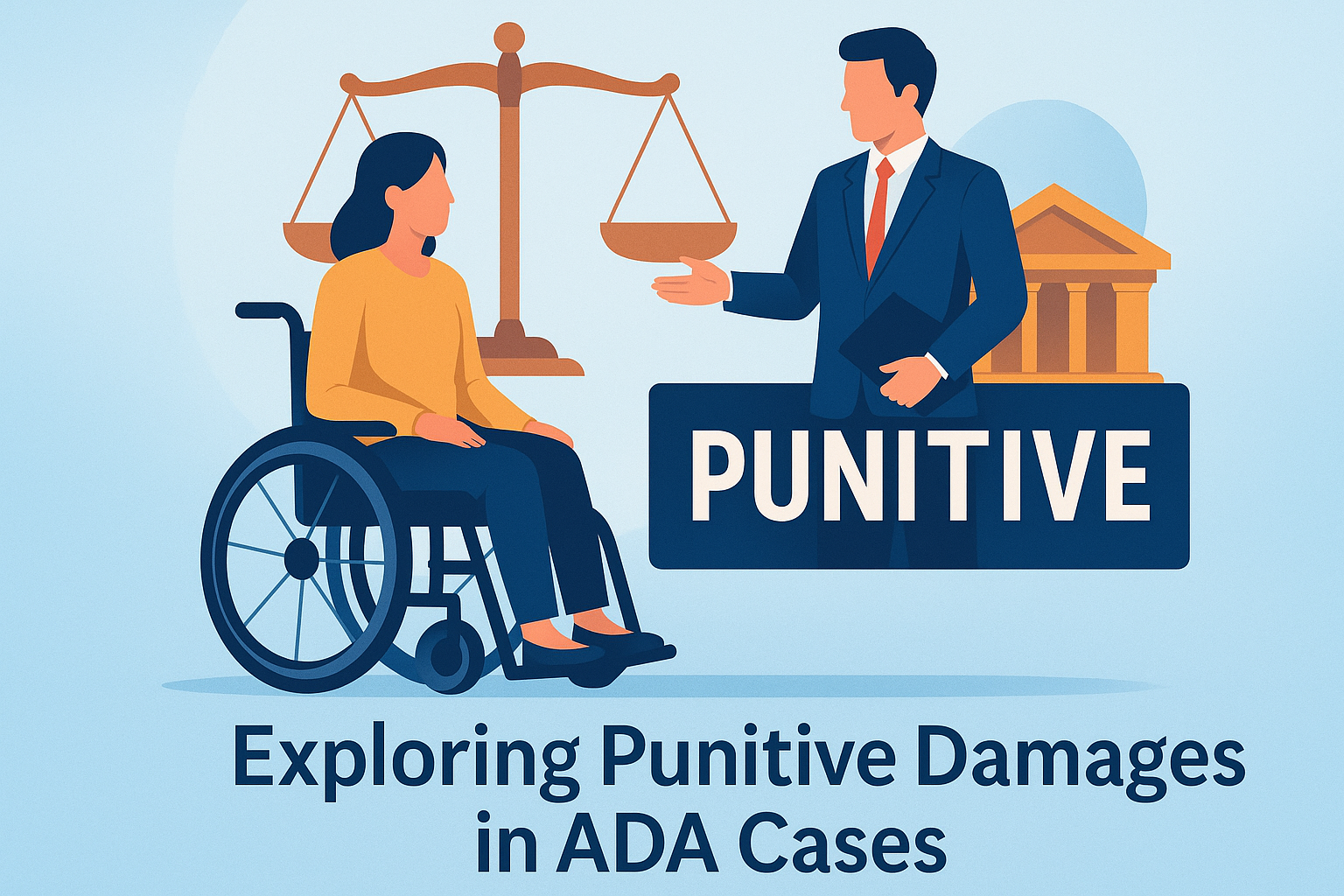
Introduction to Barnes v. Gorman and Its Importance
In the realm of disability rights, legal cases like Barnes v. Gorman stand as pivotal touchstones that clarify and shape the interpretation of the Americans with Disabilities Act (ADA). This landmark case, decided by the Supreme Court in 2002, grapples with the complex issue of punitive damages in ADA cases. Understanding this case is crucial not only for legal professionals but for advocates, individuals with disabilities, and policy makers, as it intricately examines the boundaries of financial recompense. Simply put, Barnes v. Gorman helps define the extent to which individuals can pursue justice and redress under the ADA when their rights are violated.
Key terms central to the discussion include “punitive damages,” which refer to monetary compensation awarded in lawsuits as a punishment to the defendant and a deterrent against future violations. The ADA, a pivotal law passed in 1990, aims to prevent discrimination based on disability in various sectors, including employment, public accommodations, and transportation. Together, these concepts stir a vital conversation around the scope and limitations of justice and compensation offered to those who experience discrimination.
Understanding the implications of Barnes v. Gorman transcends legal technicalities. It sheds light on the broader discussion of how society values the rights and dignity of people with disabilities. As such, this case matters deeply, offering insights into the legal landscape that determines the balance between enforcing rights and deterring violations through financial penalties. The decision offers a framework within which judges, lawyers, and advocates must navigate, ultimately impacting the lives of millions. In this article, we will delve into various facets of the case, providing a comprehensive understanding of its implications.
Background and Legal Groundwork of Barnes v. Gorman
The roots of Barnes v. Gorman extend back to 1992, when Jeffrey Gorman, a paraplegic individual relying on a wheelchair, encountered a troubling experience. Arrested for trespassing in Kansas City, Missouri, Gorman sustained significant injuries due to the lack of accessibility accommodations in a police van and subsequent holding procedures. This led to Gorman pursuing legal recourse under the Americans with Disabilities Act and the Rehabilitation Act of 1973, arguing that his rights had been violated.
The legal crux of the case revolved around whether punitive damages could be awarded under these acts. Gorman’s argument posited that, much like other civil rights laws, the ADA and the Rehabilitation Act should permit such damages as a form of deterrent and justice. On the other hand, the city of Kansas City contended that the statutes in question simply did not authorize punitive damages, given their non-contractual nature.
Ultimately, the Supreme Court grappled with the interpretation of these statutes, particularly analyzing whether the language of these laws analogously mirrored contract law, allowing for punitive damages. The court’s examination critically hinged on the intersection of legislative intent and the foundational purpose of these laws, setting the stage for a detailed judicial interpretation that would echo into the future.
Analysis of the Supreme Court’s Decision
In 2002, the Supreme Court delivered its judgment, ruling that punitive damages were not permissible under the ADA and the Rehabilitation Act. The decision was unanimous, reflecting a clear consensus on the statutory interpretation. Essentially, the court argued that the compensatory framework within these statutes, akin to a form of spending clause legislation, did not envisage punitive damages as such laws are rooted in contract principles where punitive damages are generally not recognized.
Chief Justice William Rehnquist, writing for the court, elucidated the rationale by emphasizing that when Congress legislates under the spending clause, it does so akin to entering into a contract with the states. Therefore, any expectations of liability must be explicitly communicated, and since the statutes did not clearly state availability for punitive damages, such liabilities could not be assumed.
This decision highlighted a nuanced interpretation of federal lawmaking and clarified the boundaries of legal recourse available under the ADA and related statutes. It brought to the forefront the delicate interplay between statute language, congressional intent, and established legal principles, resulting in a decision that provided much-needed clarity, albeit reducing the scope of deterrent damages available to plaintiffs.
Real-World Implications of the Decision
The Supreme Court’s decision in Barnes v. Gorman bears significant practical implications. For individuals seeking justice under the ADA, the unavailability of punitive damages means they must look to alternative methods to secure substantial remedies. Compensatory damages, aiming to address direct losses such as medical expenses, loss of income, or emotional distress, remain available options. However, the punitive aspect, intended to deter future violations and hold violators accountable in a more impactful manner, was curtailed by this decision.
From a broader societal perspective, the decision raises questions about the robustness of legal protections against disability discrimination. For instance, without the threat of punitive damages, organizations and entities may lack sufficient motivation to thoroughly comply with ADA requirements, potentially eroding the law’s efficacy over time. Thus, advocates and policymakers are prompted to reconsider avenues for strengthening enforcement and compliance mechanisms, perhaps through legislative amendments or advocacy for more stringent oversight and penalties in state laws.
A Closer Look at a Judicial Shift: Comparing Precedent
To fully appreciate the impact of Barnes v. Gorman, it is vital to reflect on previous legal precedents regarding punitive damages. Prior instances, particularly cases under Title VII of the Civil Rights Act, had seen courts award punitive damages in discrimination contexts. The Title VII cases often set a broader framework where such damages were deemed essential for justice and deterrence.
However, the step taken by the Supreme Court in Barnes v. Gorman indicated a shift, underlining the specifics of federal statutes under spending clause legislation compared to the broader civil rights context. By drawing clear distinctions grounded in statutory language, the court reinforced a tailored interpretation strategy, influencing how courts evaluate potential liabilities under federal civil rights laws moving forward.
Therefore, while punitive damages remain a central punitive mechanism in other discrimination contexts, their exclusion in ADA cases necessitates reevaluation of existing compliance and protection structures, guiding advocates towards innovation in ensuring comprehensive protections under the ADA.
Rethinking Legal Strategies and Advocacy
In light of Barnes v. Gorman, legal practitioners and advocates are tasked with rethinking strategic approaches to disability rights cases. Ensuring robust compensatory damages becomes a focal point, demanding meticulous documentation and expansive narratives surrounding the personal impact of discrimination. Moreover, the emphasis may shift toward utilizing state laws where punitive damages might still be accessible, broadening the scope for effective deterrence and advocacy.
Furthermore, the ruling spurs a call to action for legislative advocacy. Policymakers are urged to consider amendments to existing laws, enhancing compliance mechanisms and exploring innovative solutions for adding compensatory and deterrent provisions within ADA frameworks. This could involve introducing additional penalties or sanctions for non-compliance, reinforcing the ADA’s intent and ensuring that all individuals with disabilities can access full, barrier-free participation in society.
Concluding Reflections and Path Forward
In summary, Barnes v. Gorman marks a critical illuminating point in the ADA’s legal landscape, providing clarity on the non-availability of punitive damages under the statute. This ruling challenges stakeholders—ranging from advocates to policymakers—to continuously seek robust solutions that strengthen protections and accountability mechanisms. While the door on punitive damages might have temporarily closed, new avenues for justice, emphasis on compensatory claims, and legislative innovation remain the pathways forward.
As we reflect on the case, it becomes apparent that the conversation around disability rights requires a dual approach, involving both legal advocacy and policy refinement. Those engaged in the fight for disability justice are encouraged to leverage this understanding to amplify the voices and rights of individuals with disabilities, ensuring that the ADA’s legacy continues to thrive in an ever-evolving socio-legal landscape.
Ultimately, the lessons from Barnes v. Gorman offer an opportunity not only for introspection but also for progressive action, harboring the promise of a more inclusive and equitable society for all. It remains a calling for collective effort, innovative thinking, and unwavering commitment to upholding the dignity and rights of every individual. The path ahead, while challenging, is one filled with potential and purpose, beckoning us to engage, reflect, and advocate with renewed vigor.
Frequently Asked Questions
What was the Barnes v. Gorman case about?
The Barnes v. Gorman case is a landmark Supreme Court decision from 2002 that addressed the issue of whether punitive damages are available under the Americans with Disabilities Act (ADA) and the Rehabilitation Act of 1973. The case originated when Jeffrey Gorman, a paraplegic man, sued the Kansas City Police Department after he was injured during his arrest, claiming that the department failed to accommodate his disability as required under the ADA. Gorman sued for both compensatory and punitive damages. The case eventually reached the Supreme Court, where the focus was on whether punitive damages, which are intended to punish the defendant and deter future misconduct, could be awarded under these federal statutes.
What was the Supreme Court’s decision in Barnes v. Gorman?
The Supreme Court unanimously decided that punitive damages are not available under the ADA or the Rehabilitation Act of 1973. The Court’s rationale was based on the fact that these statutes operate under a “contractual” nature, as they are tied to federal funding. Institutions receiving federal funds are required to comply with certain anti-discrimination statutes, much like a contractual obligation. Since punitive damages are generally not available for breach of contract cases, the Court determined that similarly, they should not be available under these civil rights statutes. It held that compensatory damages, which are intended to make the plaintiff whole, are sufficient for addressing these kinds of statutory violations.
Why is the Barnes v. Gorman decision important for the ADA?
The Barnes v. Gorman decision has significant implications for how violations of the ADA and the Rehabilitation Act of 1973 are remedied. By ruling that punitive damages are not available, the Supreme Court set a precedent that limits the financial repercussions for entities that violate these statutes. This means that individuals who suffer from discrimination or a lack of accommodation might only receive compensatory damages, which cover direct losses such as medical expenses or lost wages, but do not include additional sums meant to punish wrongful conduct. Advocates and policymakers must navigate this landscape knowing that the threat of punitive damages is off the table, potentially impacting the severity of consequences for violators and influencing future litigation strategies.
How does Barnes v. Gorman affect individuals with disabilities seeking justice under the ADA?
For individuals with disabilities, the Barnes v. Gorman decision underscores the importance of understanding the types of remedies available under the ADA and the Rehabilitation Act. While they can still pursue claims for compensatory damages, they cannot seek punitive damages as a means of addressing their grievances under these statutes. This may affect the likelihood of pursuing certain cases, particularly if the financial costs of litigation outweigh potential compensatory outcomes. However, the decision also highlights the vital role of government enforcement and advocacy groups in ensuring compliance with disability rights, as the absence of punitive damages places a greater onus on these entities to uphold the law and deter discrimination through other means.
What impact does this case have on policy makers and legal practitioners?
For policymakers and legal practitioners, Barnes v. Gorman serves as a critical point of reference for understanding the limitations and scope of remedies under federal disability rights laws. Legal practitioners must navigate these limitations when advising clients and strategizing litigation, ensuring that expectations are managed and that clients understand the potential outcomes of their cases. For policymakers, the decision may stimulate discussions about whether the existing framework of remedies is sufficient to deter violations and protect individuals with disabilities. It also challenges them to explore alternative measures for strengthening compliance and enforcement of disability rights, possibly by considering legislative amendments or promoting increased public and private sector accountability.