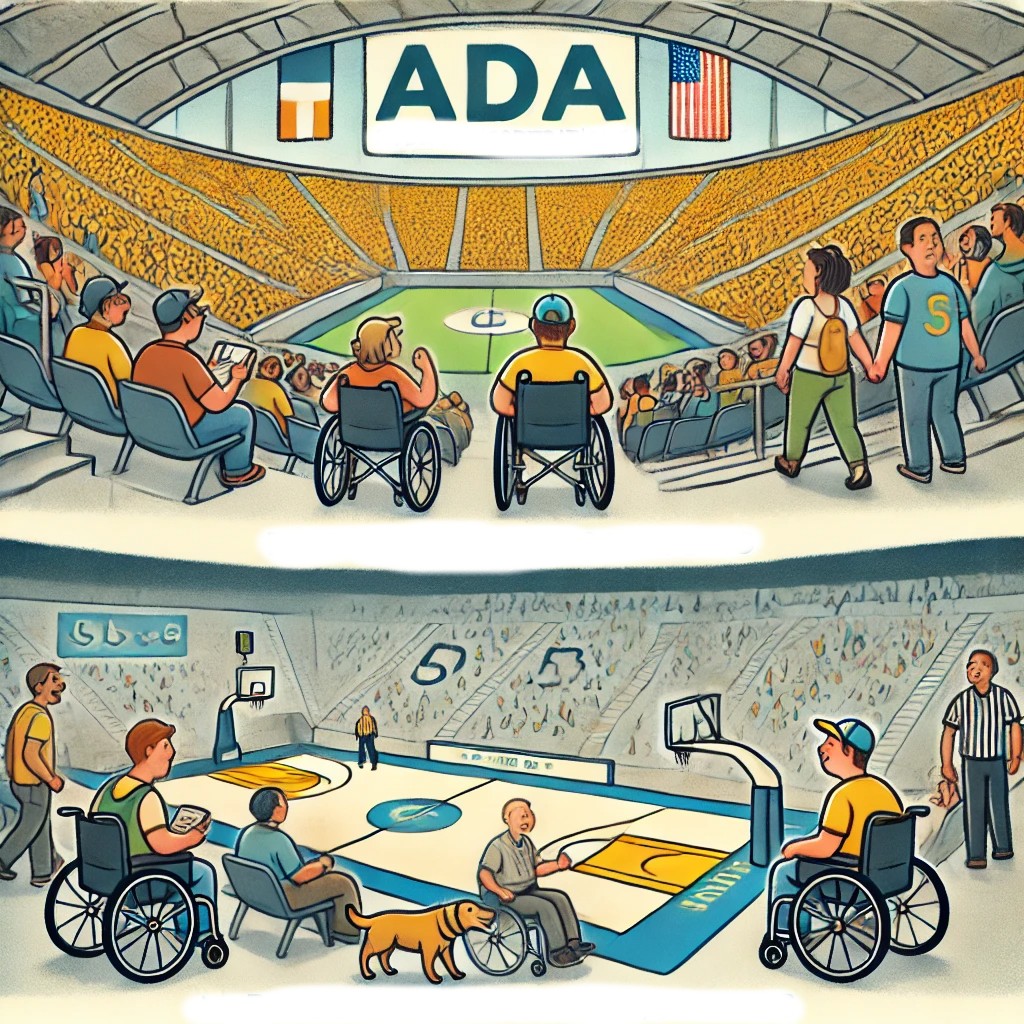
The Americans with Disabilities Act (ADA), enacted in 1990, is a landmark federal legislation that prohibits discrimination against individuals with disabilities. Over the years, the legislation has been expanded and refined to cover various aspects of daily life, including employment, transportation, public accommodations, communications, and access to state and local government programs and services. This article will focus on an advanced topic within ADA rights: the obligations and requirements that apply to public accommodations, such as sports arenas and large venues. Understanding these specialized requirements is crucial for venue operators, event organizers, and patrons to ensure compliance and promote inclusivity.
Sports arenas and large venues pose unique challenges in accommodating individuals with disabilities. These venues must address not only architectural and physical barriers but also programmatic and operational aspects to make sure all individuals have equal access to the services and experiences offered. Federal regulations, including the ADA Standards for Accessible Design, guide how facilities should be constructed or altered to meet accessibility requirements. Beyond physical access, these venues must also consider accessible communication methods, ticketing policies, and differentiated services to make events more inclusive.
Understanding ADA Standards for Accessible Design
The ADA Standards for Accessible Design provide comprehensive guidelines to ensure newly constructed or altered facilities are accessible to individuals with disabilities. Sports arenas and large venues must abide by these standards, which cover a wide range of elements such as accessible seating, restrooms, concessions, parking, and routes within and around the venue. One critical area of focus is seating arrangements, which should include a designated number of wheelchair spaces, companion seats, and seats with removable armrests based on the overall capacity of the venue.
Furthermore, accessible routes must be provided so that individuals with disabilities can navigate the arena with ease. This includes the provision of elevators, ramps, and appropriate signage. The goal is to ensure that individuals with disabilities can enjoy the venue in a manner comparable to non-disabled guests. Bathrooms, concession stands, and emergency exits should also be readily accessible to comply with ADA standards, ensuring a seamless experience for all attendees.
Ticketing and Admission Policies
ADA guidelines have specific provisions regarding ticketing and admission to sporting events and large-scale functions. Venue operators must ensure that individuals with disabilities have the same purchasing opportunities and experiences as others. This entails offering accessible seating options during all stages of ticket sales, including presales and promotions, as well as providing accurate information about accessible seating locations.
Moreover, ticket policies should ensure that companions of individuals with disabilities can obtain tickets adjacent to the accessible seating areas. In the event of resale, the venue must ensure that accessible seating remains available and that tickets sold in these areas are verified for use by individuals with disabilities. Clear communication about the availability and location of accessible seating helps in reducing confusion and enhancing the overall guest experience.
Service Animals and Supportive Devices
The presence of service animals and the use of supportive devices are critical aspects addressed by the ADA to make sports arenas and large venues accessible. Venue policies should explicitly permit service animals for individuals with disabilities, providing clear guidelines on where these animals are allowed to roam. Additionally, staff should be trained to understand the difference between service animals and pets and know how to interact appropriately with guests accompanied by service animals.
Supportive devices, such as wheelchairs and scooters, should also be accommodated within these venues. Policies must ensure that users of these devices have access to all areas of the venue, including seating, restrooms, and concession stands. Charging stations for electric wheelchairs and mobility scooters can also be a valuable addition to enhance accessibility.
Communication and Assistive Technology
Effective communication is vital for ensuring that individuals with disabilities can fully enjoy events in sports arenas and large venues. ADA guidelines necessitate the provision of auxiliary aids and services to facilitate communication for individuals with hearing or vision impairments. This includes offering assistive listening devices, captioning services, audio descriptions, and video relay services.
Furthermore, digital accessibility measures, such as ensuring that websites and mobile apps used for ticketing and information dissemination are accessible, should be considered. This involves compliance with the Web Content Accessibility Guidelines (WCAG), which set the standard for accessible digital content. Venues should also consider offering real-time communication options, such as live chat or text messages, to address any immediate concerns that individuals with disabilities may have.
Training and Awareness
Ensuring accessibility goes beyond just addressing physical barriers; it requires a commitment to training and raising awareness among venue staff and management. Staff should undergo regular training sessions to understand the requirements and best practices for accommodating individuals with disabilities. This training should cover topics such as how to offer assistance respectfully, the proper use of assistive technology, and emergency evacuation procedures tailored for individuals with disabilities.
Raising awareness about the ADA and the venue’s commitment to accessibility can also be achieved through community outreach and partnerships with local disability advocacy organizations. By involving the community and receiving feedback, venues can better tailor their accessibility efforts and identify areas for improvement.
Conclusion
The Americans with Disabilities Act plays a crucial role in ensuring that sports arenas and large venues are accessible to all individuals, regardless of their abilities. The comprehensive guidelines provided by the ADA Standards for Accessible Design cover a myriad of aspects, from structural accommodations to ticketing policies and communication methods. Implementing these standards not only ensures legal compliance but also promotes inclusivity and equal access for all patrons.
For venue operators and event organizers, understanding and adhering to these advanced ADA requirements is essential in delivering a positive experience to all attendees. This includes providing accessible seating, supporting service animals, ensuring effective communication, and thorough staff training. As societal awareness and technological capabilities evolve, ongoing efforts and adaptations will be necessary to keep pace with the needs of individuals with disabilities.
Ultimately, the goal is to create an environment where everyone, regardless of their abilities, can participate fully and enjoy the events and experiences offered by sports arenas and large venues. By embracing the principles of accessibility and inclusivity, we can work towards a more equitable society where everyone has the opportunity to share in the excitement and joy of communal activities.
Frequently Asked Questions
1. What are the ADA requirements for accessible seating in sports arenas?
The ADA mandates that sports arenas provide accessible seating for individuals with disabilities. These requirements ensure equal access and enjoyment of events. Accessible seating includes spaces for wheelchair users, as well as companion seats, which are seats kept open for friends or family members. The number of accessible seats in a venue depends on the overall capacity of the arena, but generally, it must adhere to specific guidelines set forth by the ADA. These include easily reachable locations without having to navigate stairs or other barriers, providing clear sightlines over standing spectators, and ensuring that accessible routes connect all areas of the arena, including restrooms and concessions.
Additionally, sports arenas must offer a proportionate number of these seats dispersed throughout the venue, providing wheelchair users with a choice of ticket prices and viewing angles similar to the options available to non-disabled spectators. This helps ensure that individuals with disabilities have the same range of experiences as all attendees. To further cater to a diverse audience, venues should also consider auxiliary aids like assistive listening devices for spectators with hearing impairments. By meeting these requirements, sports arenas not only comply with ADA guidelines but also create a more inclusive and welcoming environment for all fans.
2. How do sports arenas ensure effective communication for attendees with disabilities?
Effective communication is a crucial aspect of ADA compliance and necessities for accessible public accommodations such as sports arenas. This requirement means that all forms of communication with the general public, from announcements to printed information, must also be accessible to individuals with disabilities. For attendees who are deaf or hard of hearing, this might involve providing sign language interpreters or real-time captioning during events. Real-time captioning can be displayed on monitors or screens visible from accessible seating areas.
For those with vision impairments, venues should offer programs or schedules in large print or Braille. Additionally, technology solutions like mobile apps can also assist in providing narratives or context to enhance the event experience for visually impaired attendees. Furthermore, arena staff should be adequately trained in communicating with and assisting individuals with disabilities, ensuring a seamless and inclusive interaction from ticket purchase to event attendance. The goal is to foster an environment where all attendees can fully engage with the event.
3. What physical accessibility features are mandatory in sports arenas under the ADA?
Under the ADA, several physical attributes in sports arenas are required to be designed or retrofitted to accommodate individuals with disabilities. Key features include accessible parking spaces that are close to entrances, with clear and level pathways leading to the venue’s entry points. Entrances themselves must be accessible, often meaning that they feature ramps or lifts, along with automatic or easy-to-use doors. Inside the arena, elevators must serve all levels of seating areas, especially given that many sports venues feature multiple tiers or seating decks.
Other required accommodations include accessible restrooms and water fountains that are usable by individuals using mobility aids like wheelchairs or walkers. Seating and standing areas within the arena need to include options that accommodate individuals with limited mobility. Concourses, retail areas, and food service counters should be designed to allow wheelchair access, and counter heights at concession stands are recommended to be ni-friendly heights for those seated. Moreover, emergency alarm systems, which might include both audio and visual warnings, need to be accessible to ensure the safety of all patrons.
4. Are sports arenas required to allow service animals, and if so, what are the stipulations?
Yes, sports arenas are required under the ADA to permit service animals that accompany individuals with disabilities. Service animals, primarily dogs, are trained to perform specific tasks directly related to the disability of the handler, such as guiding individuals who are visually impaired, alerting deaf or hard of hearing individuals, or calming individuals with PTSD during anxiety episodes. Sports arenas must allow service animals into all public areas, ensuring that seating accommodates both the patron and the service animal.
It is important to note that while service animals must be allowed, sports arenas can ask if the animal is required because of a disability and what task the animal is trained for. However, they cannot demand documentation or charge additional fees for a service animal. The animal must behave properly and be controlled by the handler at all times. Should an animal pose a direct threat to the health or safety of others and the handler does not control it, the arena has the right to request its removal.
5. How have advancements in technology improved ADA compliance in sports arenas?
Technological advancements have provided numerous opportunities for sports arenas to enhance ADA compliance and improve the overall experience for attendees with disabilities. Assistive technology, such as high-quality hearing loops and RF or infrared listening systems, can amplify audio for those with hearing impairments, allowing them to enjoy the commentary and atmosphere of the event without straining. Some arenas have also adopted smart app-based solutions that provide real-time captions and sign-language interpretation streamed directly to smartphones or tablets.
For individuals with visual impairments, apps providing verbal descriptions of the event or venue layout can significantly enhance their experience, giving them greater independence. High-definition screens offering clear and accurate captioning throughout the venue also help ensure those with auditory challenges are not left out. Furthermore, advances in mobile ticketing and NFC technology allow easier access for individuals who may have difficulty handling traditional paper tickets, streamlining the process at entry points and minimizing barriers.
These technological solutions not only meet ADA requirements but also demonstrate a commitment to enhancing accessibility, helping venues to not only comply with legal standards but also embrace inclusivity as a fundamental aspect of their operational philosophy.