The Americans with Disabilities Act (ADA), enacted in 1990, stands as a crucial piece of civil rights legislation in the United States. Its purpose is to prohibit discrimination against individuals with disabilities and to ensure that they have the same opportunities as everyone else to participate in the mainstream of American life. It applies to both public and private spaces, including older buildings that were constructed before the law was established. Compliance with ADA mandates is not merely a legal obligation but also a moral imperative to foster inclusivity and accessibility for all.
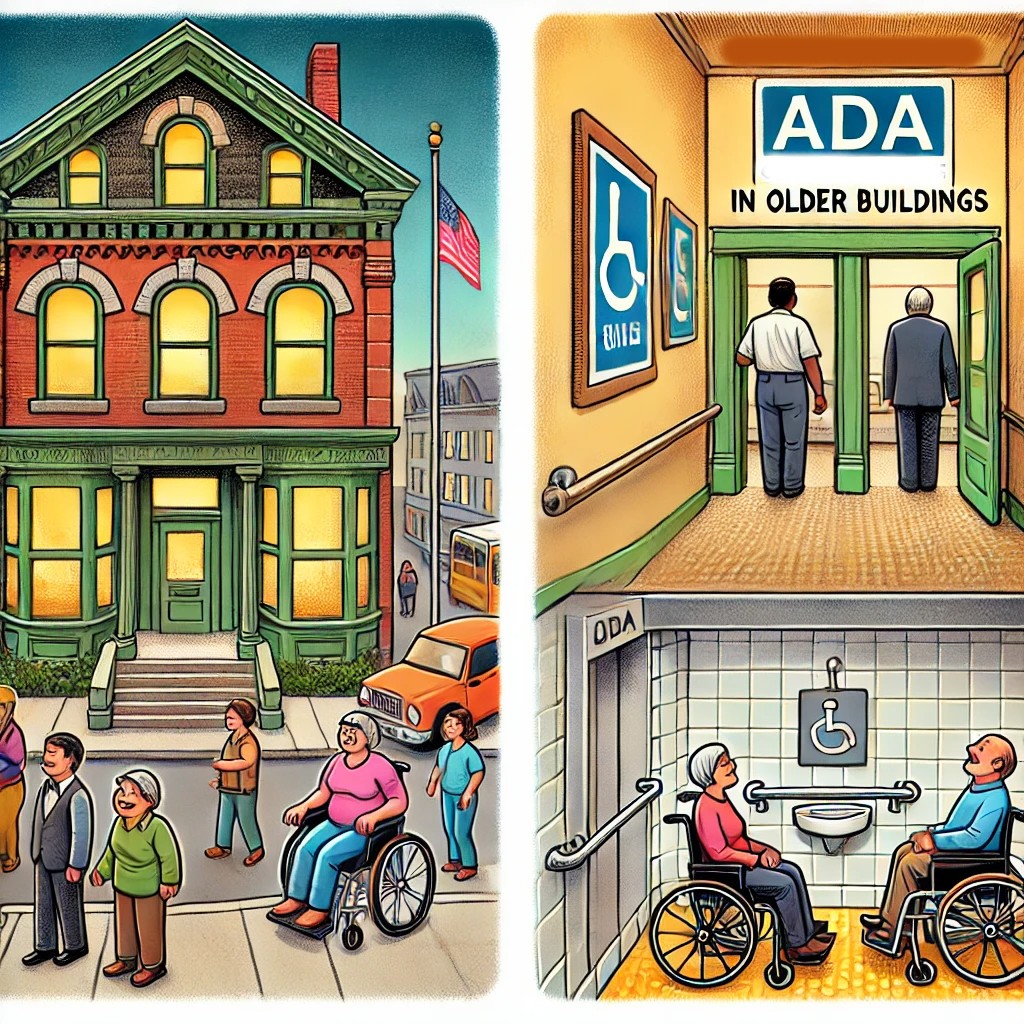
For older buildings, adhering to ADA standards can be particularly challenging and often necessitates significant modifications. These structures were not designed with accessibility in mind, making retrofitting a complex and sometimes costly endeavor. Despite these challenges, many building owners and managers are committed to updating their facilities to comply with ADA requirements. However, understanding the specifics of what is required can be daunting. This article will explore the nuances of ADA compliance for older buildings, offering a breakdown of the key elements necessary to bring these structures up to modern accessibility standards.
The importance of ADA compliance cannot be overstated. Beyond avoiding legal penalties, compliance is about creating a more inclusive environment where everyone, regardless of physical ability, can navigate and use a building’s facilities without unnecessary barriers. This article intends to provide a comprehensive guide on how to address ADA compliance in older buildings, covering common challenges and effective strategies for implementation.
Understanding ADA Compliance Requirements
Before diving into the strategies for making older buildings compliant, it’s crucial to understand what the ADA requires. The full requirements are detailed in the ADA Standards for Accessible Design, which outlines the minimum criteria for making a space accessible. These standards apply to various aspects of a building, from entrances and exits to restrooms, hallways, and amenities.
The first step in addressing ADA compliance is to conduct a thorough assessment of the existing structure. This will help identify areas that fall short of ADA standards. Common issues in older buildings include inaccessible entrances, narrow doorways, and lack of elevator access. Each of these elements must be evaluated and addressed to meet compliance.
ADA compliance also extends to signage, parking, and communication aids. Properly placed and legible signs can significantly enhance accessibility for individuals with visual impairments. Similarly, ensuring that there are adequate parking spaces reserved for individuals with disabilities is a crucial aspect of compliance. Communication aids, such as assistive listening systems, can improve the experience for individuals with hearing disabilities.
Understanding these requirements is the foundation for any retrofit or modification project. Building owners and managers must familiarize themselves with the ADA Standards for Accessible Design and consult with experts if necessary to ensure they fully grasp the scope of the work needed.
Common Challenges in Retrofitting Older Buildings
Retrofitting older buildings to meet ADA standards presents unique challenges. These structures were often designed and built long before accessibility was a consideration, leading to a lack of space, structural constraints, and aesthetic concerns that complicate compliance efforts. Here are some of the most common challenges:
- Space Constraints: Older buildings may have limited space, which can make it difficult to install ramps, widen doorways, and accommodate other necessary modifications. In some cases, creative solutions or significant restructuring may be required.
- Structural Limitations: The integrity of a building’s structure can limit the types of retrofits that are possible. For example, installing an elevator in a historic building may not be feasible without compromising the building’s stability or historical value.
- Compliance Costs: Achieving ADA compliance can be expensive, particularly for extensive modifications. Budget constraints may necessitate prioritizing certain modifications over others or seeking financial assistance programs and grants.
- Aesthetic and Historical Considerations: Many older buildings have significant historical or architectural value. Modifications must balance the need for accessibility with the desire to preserve these elements, which can be challenging to achieve.
Addressing these challenges requires careful planning and often the input of specialists who can identify the most effective and feasible solutions. It is essential to approach retrofitting with a strategic mindset, focusing on high-impact changes that will make the most significant difference in accessibility while staying within budget and preserving the building’s character as much as possible.
Strategies for Successful ADA Compliance Implementation
Successfully retrofitting older buildings to meet ADA standards involves a combination of strategic planning, expert consultation, and phased implementation. Here are some strategies to consider:
- Prioritize High-Impact Areas: Start by addressing areas that will have the most substantial impact on accessibility. Entrances, restrooms, and main pathways are critical points that can significantly improve the overall accessibility of a building.
- Engage Experts: Work with ADA consultants, architects, and engineers who specialize in accessibility. Their expertise can provide valuable insights and creative solutions for overcoming structural and space constraints.
- Phased Approach: If budget constraints are an issue, consider a phased approach to compliance. Prioritize the most critical modifications first and plan for gradual improvements over time. This can make the process more manageable and economically feasible.
- Utilize Financial Assistance: Explore grants, tax incentives, and other financial assistance programs designed to support ADA compliance efforts. These resources can help offset the costs of necessary modifications.
- Accessible Design Thinking: Incorporate principles of Universal Design into the retrofitting process. This approach goes beyond minimum compliance to create spaces that are more usable and inclusive for everyone, regardless of ability.
By following these strategies, building owners and managers can effectively plan and implement modifications that will bring their structures into compliance with ADA standards. It is a process that requires commitment, but the benefits of creating accessible and inclusive environments are well worth the effort and investment.
Case Study: Successful ADA Retrofitting
To illustrate how these strategies can be applied, let’s look at a case study of a successful ADA retrofitting project. Consider an early 20th-century office building in a bustling downtown area that faced significant challenges in becoming ADA compliant. The building owners were committed to the project but needed to navigate space limitations, structural challenges, and budget constraints.
First, a comprehensive assessment was conducted, identifying critical areas that required modifications. The focus was placed on improving entrance accessibility, installing an elevator, and updating restrooms. Creative solutions were used to address space constraints, such as installing a compact lift instead of a full-sized elevator and widening doorways where possible without compromising structural integrity.
Historical preservation experts worked alongside ADA consultants to ensure that modifications respected the building’s architectural significance. This collaboration resulted in the installation of handrails and ramps that blended seamlessly with the building’s existing design elements.
Financial assistance was secured through a combination of grants and tax credits, helping to mitigate the costs of the retrofit. The project was completed in phases, initially focusing on the most critical areas and gradually addressing additional accessibility improvements over time.
This case study highlights the importance of strategic planning, expert collaboration, and leveraging available resources in successfully retrofitting older buildings for ADA compliance. The outcome was a building that not only met legal requirements but also provided a more inclusive and welcoming environment for all users.
Conclusion
Ensuring ADA compliance in older buildings is a multifaceted challenge requiring careful planning, a solid understanding of regulatory requirements, and a commitment to inclusivity. Despite the complexities and potential costs, the benefits of creating accessible environments cannot be overstated. Compliance not only fulfills legal obligations but also demonstrates a commitment to equity and inclusivity, providing equal access and opportunities for all individuals, regardless of their abilities.
Building owners and managers must begin with a thorough assessment to identify areas requiring modifications. Addressing common challenges such as space constraints, structural limitations, and budget concerns will be central to successful compliance. By prioritizing high-impact modifications, engaging experts, adopting a phased approach, and leveraging financial assistance, these challenges can be effectively managed. The case study of the early 20th-century office building underscores the practicality and benefits of a well-planned retrofit project. It showcases how ADA compliance can be achieved without sacrificing aesthetic or historical value, ultimately creating a more inclusive environment. In conclusion, retrofitting older buildings to meet ADA standards is a critical step toward fostering an inclusive society. The challenges are significant, but with the right strategies and resources, they are surmountable. This commitment to accessibility reflects broader societal values and ensures that everyone, regardless of physical ability, can participate fully in all aspects of life. By addressing ADA compliance in older buildings, we take an important step towards a more equitable and inclusive future for all.
Frequently Asked Questions
1. What is ADA compliance and why is it important for older buildings?
ADA compliance refers to the adherence to the stipulations of the Americans with Disabilities Act, which ensures facilities are accessible to individuals with disabilities. This includes making sure that buildings, whether newly constructed or older ones, provide equal access to all people regardless of their physical capabilities. The essence of ADA compliance is not just a legal obligation, but a commitment to creating inclusive environments where individuals with disabilities can enjoy the same opportunities as everyone else. For older buildings, which may have been constructed when accessibility standards were different or non-existent, this means making necessary modifications without compromising historical value to ensure that everyone can safely and comfortably navigate these spaces.
2. What are some of the common challenges in achieving ADA compliance in older buildings?
Achieving ADA compliance in older buildings can present a unique set of challenges, primarily due to the fact that these buildings were not initially designed with modern accessibility standards in mind. Some common obstacles include structural limitations, such as narrow doorways or staircases that make it difficult to install ramps or lifts. Historical preservation concerns are also significant, as there is often a need to maintain the original architecture and style of an older building. Additionally, the cost of renovations can be high, and the process of retrofitting modern accessibility features in a way that doesn’t detract from the building’s original character can be technically complex. Overcoming these challenges requires a careful balance of innovation, compromise, and, sometimes, creative problem-solving to achieve full compliance while preserving the building’s integrity.
3. Are there specific ADA requirements that apply to historical buildings?
Yes, the ADA acknowledges the significance of historical buildings and has provisions that allow for certain flexibilities. While the goal remains to make these buildings as accessible as possible, the act provides some leeway to ensure historical features aren’t unnecessarily altered or destroyed. However, the responsibility still lies with the building owners to make alterations wherever possible. For instance, alternative methods such as providing services in a different accessible location are sometimes permitted if structural modifications would impair the building’s historical significance. The key is to explore and exhaust all potential accommodations creatively while keeping historical preservation in mind.
4. What steps can building owners take to assess ADA compliance and identify necessary modifications?
To assess ADA compliance in older buildings, property owners should initiate a thorough accessibility audit. Hiring a professional who specializes in ADA compliance is often a prudent decision, as they can offer expert evaluation and insight. The audit process involves checking access routes (such as entrances, hallways, and bathrooms) and accessible amenities. Once the assessment is completed, a detailed report outlines the necessary modifications. After the audit, owners should prioritize changes based on severity of compliance failure and feasibility of implementation. In some cases, considering feedback from individuals with disabilities who use the building can also provide valuable perspective on what changes would be most impactful.
5. What financial resources are available to support ADA compliance in older buildings?
There are various financial resources available to aid in bringing older buildings up to ADA standards. These include tax incentives such as the Disabled Access Credit, which offers a non-refundable credit for small businesses that incur expenses for making their facilities ADA compliant. Additionally, the Architectural Barrier Removal Tax Deduction allows businesses to deduct costs related to removing barriers to accessibility. Moreover, numerous grants are available from federal and state governments as well as private organizations, aimed specifically at promoting and assisting with the cost of accessibility enhancements. Building owners should research these financial aids extensively as they plan their modifications, as these resources can significantly offset the cost of compliance.